Decide the Wastewater Route Before Selecting Equipment
Indonesian industrial estates generally use a shared central plant, called an IPAL terpusat or IPAL terpadu. The estate provides the sewer, treatment plant and outfall; tenants pre-treat wastewater to the estate’s influent limit. Under Minister of Industry Regulation No. 2 of 2026, a tenant discharging through the estate plant does not need separate wastewater technical approval, while a tenant whose waste cannot enter the plant must obtain its own approval. Process selection should then follow the effluent through equalisation, solids separation, biological treatment, polishing and sludge handling. The 2016 guideline influent design values are BOD 400–600 mg/L, COD 600–800 mg/L, TSS 400–600 mg/L and pH 5.5–8 (Ministry of Industry guideline, 2016, as summarised by SIIPE, 11 November 2026).
The route decision is therefore not simply a choice between two equipment suppliers. It determines who owns the sewer, outfall and approval, which tenant streams may enter the plant, and how commissioning is handled. The estate must also reconcile tenant start-up dates with the central plant’s availability.
| Decision field | Shared central route | Tenant-independent or hybrid route |
|---|---|---|
| Wastewater pathway | Tenant pretreatment → estate sewer → IPAL terpusat or IPAL terpadu → estate outfall | Tenant-owned treatment → tenant-controlled discharge or reuse; an approved hybrid stream may connect only if the estate plant accepts it |
| Infrastructure owner | Estate company owns and operates the sewer, central plant and outfall | Tenant owns the independent treatment and associated discharge responsibility |
| Technical approval | A tenant discharging through the estate plant does not require separate wastewater technical approval under Minister of Industry Regulation No. 2 of 2026, Article 6 | Separate technical approval is required where the estate has no plant or cannot accept the tenant’s waste, under Article 5 |
| Fill in before design freeze | Receiving water body; accepted tenant waste; outfall owner; technical approval holder; SLO holder; central-plant commissioning date | Receiving water body; tenant discharge point; tenant technical approval; tenant SLO; independent commissioning date |
| Start-up contingency | Assign every early tenant a lawful interim route before the central plant is operational | Confirm whether interim storage or temporary treatment is lawful and who owns its operation |
For a general comparison of central and industrial treatment arrangements, see the shared versus independent wastewater decision framework. The key rule for Indonesia remains the actual discharge pathway and the waste acceptance conditions of the estate plant, not the label used for the arrangement.
Map Tenant Effluent to Pretreatment Duties
The Ministry of Industry’s 2016 guideline design values provide an initial screening check, not a universal tenant permit. They are BOD 400–600 mg/L, COD 600–800 mg/L, TSS 400–600 mg/L and pH 5.5–8; the estate’s contractual limits ultimately bind tenants (Ministry of Industry guideline, 2016, as summarised by SIIPE, 11 November 2026). A tenant whose proposed flow or pollutant profile is outside the accepted envelope must pre-treat before discharge to the estate sewer.
Start by identifying the process stream, not merely the tenant’s industrial sector. Plantation processing and palm-oil refining require local treatment for oily, high-organic wastewater. Chemical and pharmaceutical streams require segregation and neutralisation because extreme pH, solvents and inhibitory compounds can damage a shared biological process. Food and beverage wastewater is biodegradable but may be strong and variable, while rubber processing can introduce ammonia. These profile-based duties are identified in the SIIPE industrial-estate treatment guide dated 11 November 2026.
| Tenant waste profile | Central-plant risk | Tenant pretreatment decision | Information required |
|---|---|---|---|
| Plantation processing or palm-oil refining | Oil, organic overload and solids can interfere with transfer and biological treatment | Provide oil and solids removal before the estate connection; assess anaerobic treatment where appropriate to the stream | Expected flow and operating schedule; pH, BOD, COD, TSS, oil and grease |
| Chemical or pharmaceutical production | Extreme pH, solvents or toxic compounds may inhibit the biological culture | Segregate incompatible streams and neutralise before discharge | Flow; pH; BOD and COD; process-specific contaminants and batch-release pattern |
| Food and beverage processing | Biodegradable but variable organic load can cause hydraulic and load shocks | Establish equalisation and strength control at the tenant boundary | Average and peak flow; operating schedule; pH, BOD, COD, TSS, oil and grease, ammonia |
| Rubber processing | Ammonia can increase treatment demand and affect effluent compliance | Assess ammonia pretreatment and provide flow/load control | Expected flow; ammonia; BOD, COD and TSS; operating schedule |
| Hazardous B3 waste | Waste classification may fall outside the central plant’s accepted waste profile | Keep responsibility with the tenant under the guideline summary | Waste classification; origin; handling method; proposed treatment or disposal route |
Use the industrial pretreatment compliance decision path to identify segregation and acceptance controls, and the industrial ETP process selection guide to structure the vendor enquiry. An industrial DAF pretreatment system may be relevant for an oil-and-solids separation duty, but selection should follow the tenant profile rather than precede it.
Build the Treatment Train in Protection Order
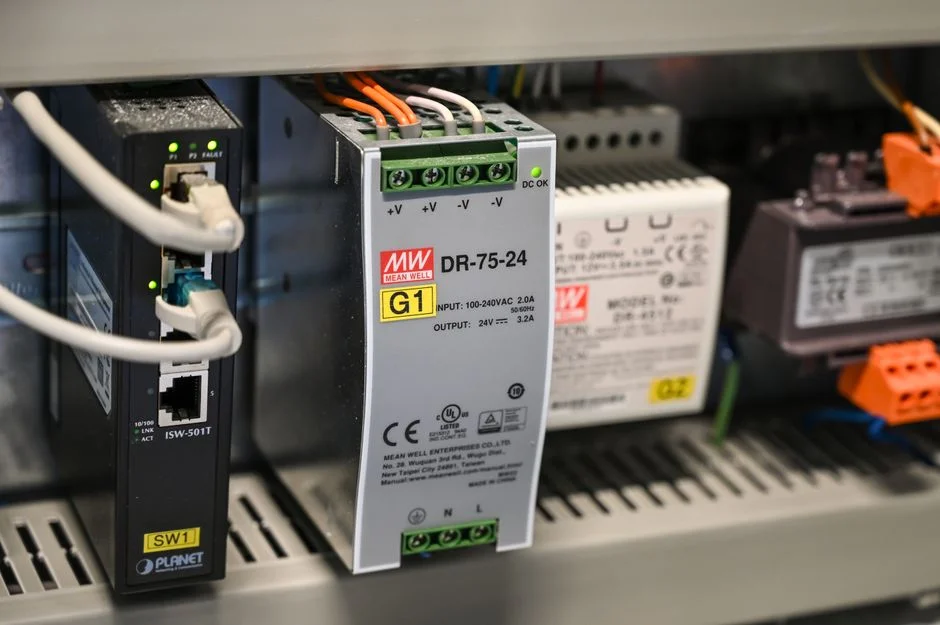
The main estate treatment train should follow the sequence equalisation, solids separation, biological treatment and sludge treatment. The Ministry of Industry guideline says an integrated estate plant normally addresses BOD, COD, pH and TSS (Ministry of Industry guideline, 2016, as summarised by SIIPE, 11 November 2026). Each unit protects the next stage, so equipment should be selected against the complete flow and load profile rather than against outlet capacity alone.
- Equalisation: balance hydraulic and organic variations before biological treatment and make upstream pretreatment more reliable.
- Solids and oil separation: remove debris, grit, suspended solids and free oil that could overload downstream units.
- Biological treatment: remove biodegradable organics measured by BOD and COD; include nitrification where the ammonia load and effluent objective require it.
- Sludge treatment: thicken and dewater solids removed in the upstream stages before lawful disposal.
- Final polishing: add filtration, disinfection or nutrient removal where the discharge limit or reuse specification requires them.
Protect the biological stage from tenant slug loads. Acid, solvent, biocide and other inhibitory discharges can kill the active culture; the SIIPE industrial-estate treatment guide, updated 11 November 2026, identifies such slug loads as a common cause of biological-process failure. The control therefore has two layers: tenant pretreatment and estate-side equalisation. Neither should be used to conceal a non-compliant tenant stream.
| Stage | Primary function | Equipment to define | Procurement check |
|---|---|---|---|
| Tenant pretreatment | Bring wastewater within the estate influent limit | Oil trap, neutralisation, DAF, chemical precipitation or equivalent local units as justified | Excluded parameters and tenant responsibilities are explicit |
| Equalisation and screening | Remove debris and balance flow and load | Screen, grit chamber, equalisation tank and required mixing | Design flow covers the relevant peak and operating scenario |
| Solids separation | Remove suspended solids and, where applicable, oil | Clarifier or DAF, including the recovered-solids route | Hydraulic and solids loading are stated |
| Biological treatment | Remove BOD and COD and, where designed, ammonia | Activated sludge, sequencing batch reactor or moving-bed biofilm reactor | Biological loading, toxicity controls and aeration duty are documented |
| Polishing | Meet the selected discharge or reuse requirement | Filtration, disinfection, nutrient removal or membranes where required | Guarantee is linked to the applicable outlet specification |
| Sludge handling | Thicken, dewater and route separated solids | Thickener and filter press or centrifuge | Residual moisture, operating hours and disposal route are defined |
For solids-handling comparisons, the filter press versus decanter centrifuge engineering comparison provides the appropriate basis for evaluating sludge-dewatering duty. An MBR wastewater treatment system should be assessed where the required effluent or reuse specification justifies the additional treatment and solids-retention barriers.
Size the Plant from Verified Inputs
The Ministry of Industry’s 2016 guideline estimates estate wastewater at 60–80% of daily clean-water consumption, but that estimate must be validated against measured or contracted tenant discharges before the plant is sized (Ministry of Industry guideline, 2016, as summarised by SIIPE, 11 November 2026). It is a planning basis, not a substitute for the tenant flow schedule, pollutant inventory and operating peaks.
Size from several linked inputs: average and peak flow, hourly and batch discharge patterns, BOD and COD load, TSS and oil-and-grease loading, ammonia, biological treatability, discharge or reuse targets, available land, and the selected sludge route. Hydraulic treatment capacity alone does not demonstrate that the biological or solids-handling sections can accept the pollutant load.
| Sizing or procurement input | Buyer entry | Vendor response required |
|---|---|---|
| Verified wastewater flow | Measured tenant discharge or contracted data; operating schedule; peak conditions | Design basis and selected capacity |
| Pollutant load | pH, BOD, COD, TSS, oil and grease, ammonia and process-specific contaminants | Mass and hydraulic loading calculations |
| Outlet and reuse objective | Applicable estate, provincial and AMDAL limits; intended reuse quality | Guaranteed outlet values and test conditions |
| Pretreatment interface | Tenant acceptance limits and prohibited discharges | Explicit pretreatment exclusions and alarm response |
| Redundancy and controls | Availability, power and operating-response requirements | Redundancy philosophy, control scope and fail-safe arrangements |
| Installation and O&M | Land, utilities, access, waste route, labour and maintenance assumptions | Installation basis, exclusions, consumables, staffing and maintenance assumptions |
The product catalogue lists DAF capacities of 4–300 m³/h, MBR capacities of 10–2,000 m³/day and WSZ package-plant capacities of 1–80 m³/h. These are catalogue selection ranges, not recommendations for an unspecified estate (HydropureWater product catalogue, 2026). A supplier should demonstrate that its proposed configuration meets the estate’s design basis rather than offer a package based only on headline flow.
Use the MBR system sizing guide to interrogate assumptions behind packaged biological treatment, then require design-basis, guarantee, exclusion, redundancy, installation and O&M statements in the tender.
Verify Discharges, Monitoring and Operating Ownership

Minister of Environment Regulation No. 3 of 2010 sets the central-estate outfall standards at pH 6–9, BOD 50 mg/L, COD 100 mg/L and TSS 150 mg/L, with additional limits for ammonia, oil and grease, phenol and metals; stricter provincial or AMDAL limits take priority (Minister of Environment Regulation No. 3 of 2010, as summarised by SIIPE, 11 November 2026). The purchase specification should therefore cite the applicable final limit, not only the national baseline.
Minister of Environment and Forestry Regulation P.93 of 2018, as amended by P.80 of 2019, requires listed activities including industrial estates to install SPARING at the compliance point. The supplied source identifies pH, COD, TSS, ammonia and flow, with hourly reporting to the ministry’s data centre (SIIPE, 11 November 2026). The monitoring specification should define instrument location, signal outputs, data transmission, calibration, verification and the responsible operator.
| Responsibility | Shared central plant | Independent tenant treatment | Evidence required |
|---|---|---|---|
| Tenant influent control | Tenant meets the estate’s influent limit | Tenant controls the complete treatment train | Tenant agreement, sampling method, enforcement and non-compliance response |
| Outfall approval and SLO | Estate holds the approval and SLO as the party discharging to the water body | Tenant holds its own approval and SLO | Approval document, SLO and monitoring compliance point |
| Continuous monitoring | Estate operates SPARING for the central outfall | Tenant operates monitoring for its discharge route | SPARING scope, reporting frequency, calibration and data-access procedure |
| Tariff and charging | Estate sets the tariff; tenant pays it | Tenant bears its own treatment and disposal costs | Written tariff, metering method, load surcharge and revision mechanism |
| Sludge management | Estate manages the central treatment route and assigns tenant responsibilities | Tenant manages sludge from its independent system | Generated quantity, handling route and lawful disposal evidence |
The supplied regulations do not establish one national tariff. Before procurement, obtain the estate’s tariff rules in writing, including whether volume is metered, whether load-based surcharges apply and how tariff revisions are handled. The automatic sampling and monitoring equipment guide can support the technical scope discussion, but the monitoring point and duties must match the selected discharge route.
Frequently Asked Questions
Does a tenant need separate wastewater technical approval when it uses the estate IPAL?
No, not for a tenant discharging through the estate company’s plant under Article 6 of Minister of Industry Regulation No. 2 of 2026. The tenant remains subject to the estate’s influent limits and monitoring arrangements. Separate approval is needed under Article 5 where the estate has no plant or cannot accept the tenant’s waste.
What information is needed before setting a wastewater-treatment budget?
Request verified average and peak flow, operating schedules, pH, BOD, COD, TSS, oil and grease, ammonia, process-specific contaminants, the applicable discharge or reuse specification, land constraints and the sludge-disposal route. Ask each supplier for its design basis, price exclusions, guarantees, installation basis and O&M assumptions. The supplied research provides no defensible national equipment price for this estate, so a budget should not be selected without site-specific inputs and quotations.
How should an owner select a wastewater equipment supplier?
Compare suppliers on the same design basis and require evidence of outlet performance, pretreatment exclusions, hydraulic and pollutant loading, redundancy, control scope, installation conditions and commissioning performance. Also request references for comparable operating duties and a clear O&M responsibility matrix. A catalogue capacity alone does not demonstrate suitability for the estate’s tenant mix.
How can the buyer verify local discharge and pretreatment requirements?
Create a compliance register naming the receiving water body, final outlet limit, estate influent limit, provincial or AMDAL conditions, technical-approval holder, SLO holder and SPARING operator. Confirm these items with the estate company and the relevant environmental authorities, then check that the treatment specification, tenant agreement, sampling plan and commissioning plan use the same parameters and boundaries.