
Confirm the Wastewater Separation Duty
A decanter centrifuge continuously separates bulk solids or sludge from a liquid and is used in wastewater treatment, sludge dewatering and pulp-and-paper processing (Wikipedia; Dolphin Centrifuge). A two-phase configuration separates solids from water; a three-phase configuration separates solids from water and an immiscible liquid such as oil (Wikipedia). The equipment selection begins with the required separation products, not the nominal feed flow.
Decide whether recovered wood solids will be discarded, reused or sent to energy recovery. That destination affects the required cake dryness, acceptable residual moisture and the handling system needed after discharge. For example, a wet fibre cake intended for combustion must meet the receiving system’s moisture requirement; a cake sent to a landfill or compost operation may have a different handling specification. Those acceptance conditions must be stated separately from the clarified-water requirement.
Define the clarified-water objective next. Specify the suspended-solids concentration required for discharge to the receiving sewer, return to process water or downstream treatment. If the decanter will only provide bulk-solid removal, residual fibres may remain and polishing may be necessary. The applicable receiving-sewer or reuse specification must be obtained from the site authority or process owner.
| Procurement question | Required written answer | Equipment implication |
|---|---|---|
| What must leave the centrifuge? | Recovered solids, clarified water and any separate oil or other liquid phase | Two-phase separation, or three-phase separation when an immiscible liquid must be discharged independently |
| Where will recovered solids go? | Disposal, reuse or energy recovery, with receiving moisture limits | Sets the required cake dryness and downstream handling basis |
| How will clarified water be used? | Discharge, reuse or further polishing, with applicable quality specification | Determines whether residual suspended solids require a polishing step |
| Is a separate liquid phase required? | Measured presence and quantity of free oil or another immiscible liquid | Supports selecting three-phase separation only where independent liquid recovery is required |
Characterize the Wood-Processing Feed
A decanter can only be specified from a representative feed sample and operating record. Obtain samples across the relevant production campaign rather than sizing from average plant flow. Record flow, suspended-solids concentration, solids type, particle-size distribution, pH, temperature and viscosity. Also document grit, sand, bark fragments, plastics and other coarse debris. The product flow associated with a wastewater stream may change with production, cleanup cycles and batch releases, so the supplier needs both typical and peak conditions rather than one nominal value.
Wood-processing wastewater may contain pulp fibres, wood fines, bark, chips, fillers and process chemicals. Determine whether the fibres are free, entangled or chemically conditioned. Particle shape and density difference affect sedimentation, while viscosity influences the separation rate (Wikipedia). A fibrous feed can therefore create a different transport and dewatering problem from a feed of dense mineral particles even when both have the same suspended-solids concentration.
Dolphin Centrifuge describes pulp and paper wastewater as containing significant wood fibre and pulp that a decanter can concentrate with less residual water for more economical disposal. That is an application description, not a guarantee for every wood-processing stream. The recovered-solids moisture and clarified-water quality still need to be established on representative material.
Flag abrasive solids, sharp bark fragments and grit during characterization. Flottweg identifies wear protection as a specific requirement for abrasive or corrosive applications and describes corrosion-resistant stainless steel as a material option. The selected construction and replaceable wear components should be tied to the measured feed chemistry and solids characteristics, rather than to a generic material assumption.
Test for free oil or another immiscible liquid. A three-phase machine is justified only when that phase is present and must leave independently; otherwise, specify a two-phase arrangement. If an industrial DAF pretreatment system is already used, review its role in removing suspended solids, oil and grease before deciding whether those duties remain upstream of the centrifuge.
| Feed-characterization input | How to establish it | Why it affects selection |
|---|---|---|
| Flow and suspended-solids concentration | Measure representative and peak conditions across the production cycle | Establishes liquid throughput and dry-solids load |
| Solids composition and structure | Identify pulp fibres, wood fines, bark, chips, fillers and any applied conditioning | Indicates sedimentation, cake structure, transport and entrainment risk |
| Particle-size distribution | Measure the full solid fraction, including fines | Supports clarification-zone and polishing decisions |
| pH, temperature and viscosity | Analyse representative feed and clarified liquid | Influences separation behaviour and material selection |
| Grit, sand and sharp debris | Inspect and analyse the solids fraction | Drives upstream protection, wear protection and maintenance provisions |
| Free oil or other immiscible liquid | Use a representative phase-separation test | Determines whether three-phase separation is necessary |
| Process variability | Record batch releases, cleanup flows and peak suspended-solids events | Identifies transient loads and control requirements |
Match the Decanter Configuration to the Separation
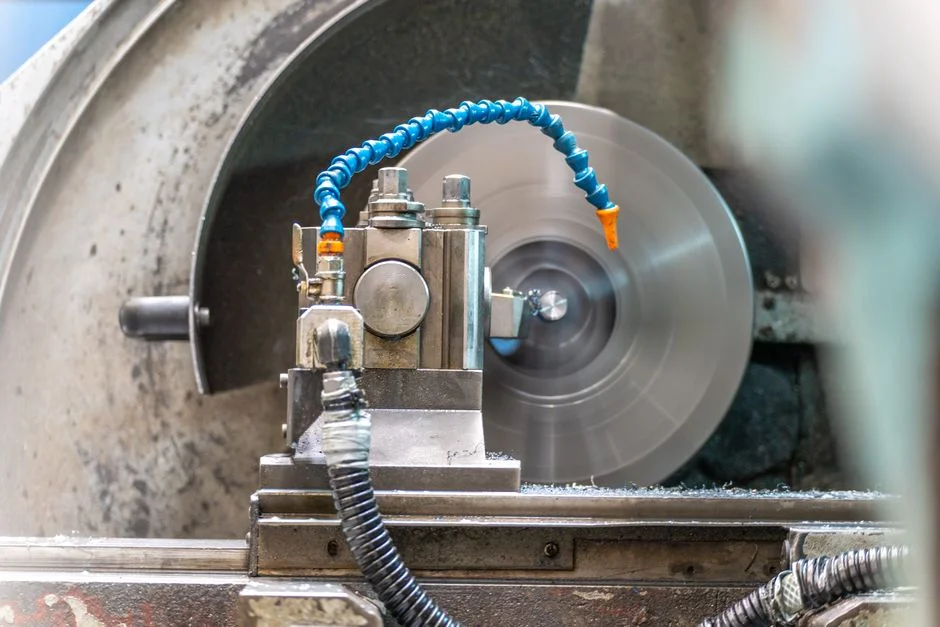
A solid bowl centrifuge uses a cylindrical-conical bowl in which dense solids collect against the wall while an internal scroll transports the compacted solids towards discharge (Wikipedia). Flottweg states that bowl length, diameter and taper angle are customised to optimise the clarification zone and solids transport. The machine should be matched to the measured feed and target cake, not chosen from liquid throughput alone.
Two-phase separation is the default for a solids-water duty. It produces a clarified-liquid stream and a solids cake. Three-phase separation adds an independently drawn liquid phase, such as oil, between the solids and water (Wikipedia). Select it only when the feed contains that phase and the project requires independent discharge or recovery.
Differential speed sets the relative movement of the bowl and scroll. Flottweg states that it influences solids residence time, compaction and total dry solids. Increasing it generally moves the cake more quickly and reduces residence time, while reducing it can favour clarification but may compromise solids throughput. The correct setting must be established with the selected feed and bowl configuration, not transferred from another wastewater application.
Pond depth controls liquid retention and the lengths of the clarification and drying zones (Flottweg). Wikipedia identifies the resulting trade-off: a shallow pool can improve separation and centrate clarity, while a deeper pool can help retain a thicker cake and reduce fine-particle entrainment. Pool depth and bowl speed also affect whether dry cake is transported effectively. Specify adjustable pond-depth and differential-speed control, then establish their operating window during pilot testing.
Materials and wear protection should be selected from feed evidence. Flottweg identifies corrosion-resistant stainless steel and application-specific wear protection for abrasive or corrosive service. The quotation should identify wetted materials, replaceable wear parts and any erosion-control arrangement. The comparison framework in the decanter centrifuge sizing and selection method can be applied to the wood-processing duty once the feed data are complete.
| Selection variable | Two-phase configuration | Three-phase configuration | Decision basis |
|---|---|---|---|
| Separated products | Recovered solids and clarified water | Recovered solids, clarified water and a separate immiscible liquid | Required products and destination of each stream |
| Bowl geometry | Selected for fibre handling, clarification, cake transport and drying | Selected with additional liquid-phase extraction requirements | Representative separation test and target cake condition |
| Pond depth | Sets liquid retention and the clarification and drying zones | Must also support stable withdrawal of the separate liquid phase | Centrate quality, entrainment and cake dryness |
| Differential speed | Balances solids residence time, compaction, transport and throughput | Must preserve stable separation of both liquid phases and the solids cake | Pilot-test operating window |
| Materials and wear protection | Based on measured chemistry and abrasive content | Also based on the composition of the separate liquid phase | Representative feed analysis and corrosion or abrasion assessment |
Size From Dry-Solids Load and Pilot Results
Calculate dry-solids load from measured feed flow and suspended-solids concentration before comparing supplier proposals. Liquid feed rate alone does not describe the separation duty: the same flow can carry materially different dry-solids loads depending on the solids concentration. Use a consistent measurement basis across quotations and include representative peak conditions and the operating schedule.
Machine capacity limits provide reference boundaries, not automatic selections. Wikipedia reports horizontal decanters with capacities up to 40,000 pounds (18,000 kg) of solids per hour, liquid feed rates up to 300 US gallons (1.1 m³) per minute, and operation up to 250 cubic metres per hour. These figures are general source claims; none establishes suitability for a particular wood-processing wastewater stream.
Likewise, Dolphin states that a typical industrial wastewater decanter can reduce sludge content from 40% to less than 1%. This is a general industrial-wastewater claim, not a guaranteed pulp-and-paper result. Do not use it as the project’s cake-dryness acceptance criterion.
Require pilot or representative separation testing with the actual wood-processing feed. The test should record clarified-liquid quality, recovered-solids dryness, fibre entrainment, energy demand and abrasive wear. It should also demonstrate whether the selected differential-speed and pond-depth settings remain stable during representative flow and solids-load changes.
- Establish flow, suspended-solids concentration and dry-solids load from representative sampling.
- Test the proposed bowl configuration and adjustment range using the actual feed.
- Measure solids capture, clarified-water quality, fibre carryover and cake dryness.
- Record energy demand, stable operating conditions and observed wear.
- Write the verified results into the purchase specification and acceptance test.
| Quotation field | Information to request | Acceptance evidence |
|---|---|---|
| Design duty | Representative feed flow, suspended-solids concentration and dry-solids load | Supplier calculation and stated basis |
| Separation performance | Clarified-water quality, solids capture and recovered-solids dryness | Representative pilot or site acceptance results |
| Operating controls | Bowl speed, differential-speed range, pond-depth control and feed control | Demonstration at the agreed feed conditions |
| Fibre behaviour | Fibre entrainment and cake discharge stability | Measured carryover and operating record |
| Durability | Wear protection, replaceable parts and inspection access | Specified materials and maintenance plan |
| Maintainability | Cleaning, inspection, lubrication and spares | Documented maintenance scope |
Build the Treatment Train Around the Centrifuge
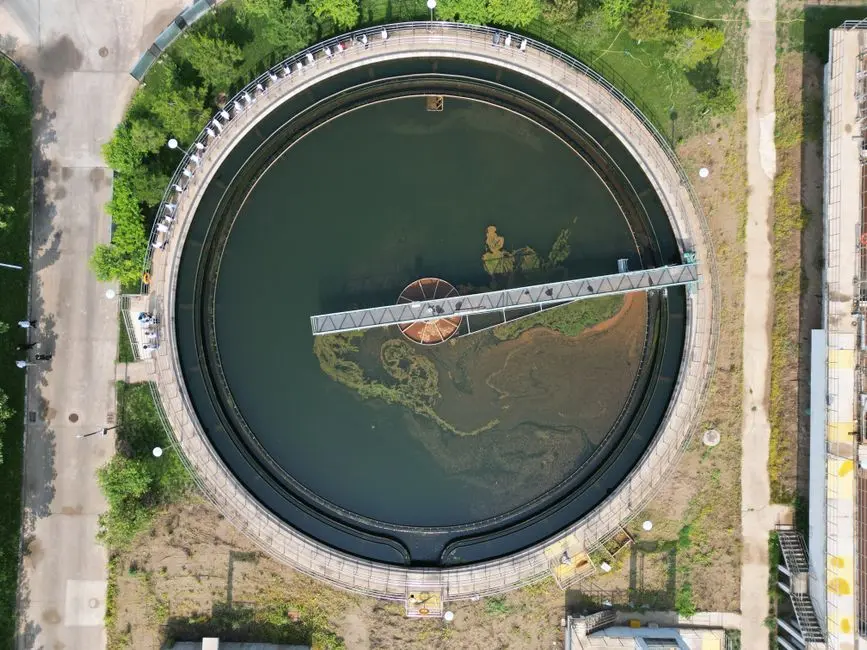
Protect the centrifuge from coarse solids before feed enters the bowl. Position screening or coarse-solids removal upstream to remove bark, chips, plastics and other fibrous debris that could wrap around the scroll, interrupt cake transport or increase wear. A rotary mechanical bar screen may be evaluated as part of that protection duty, subject to site-specific screening requirements.
Use chemical conditioning only after confirming that the objective cannot be met through the mechanical configuration and operating adjustments. Additional polymer or other treatment can alter the feed and increase the separation duty; it should be an explicit design decision rather than an unquantified assumption. If DAF is already installed, establish whether it removes the relevant suspended solids and oil before the decanter or polishes the decanter’s clarified liquid.
Select downstream solids treatment according to the recovered-fibre destination. Where further sludge dewatering is required, a plate and frame sludge dewatering press can be evaluated as a downstream or alternative solids-concentration step. Do not assume that it is required: the centrifuge trial should first establish whether the target cake dryness and handling condition can be met mechanically.
The final treatment train must match the receiving sewer or reuse specification. Obtain those criteria before finalising equipment scope, and identify whether residual suspended solids require filtration, flotation, clarification or another approved polishing process.
Frequently Asked Questions
What inputs are needed for a decanter centrifuge price for wood-processing wastewater?
Request a quotation based on representative feed flow, suspended-solids concentration, dry-solids load, feed analysis, required separation products, cake dryness, clarified-water quality and materials of construction. Use a measured-basis quotation rather than a generic price per machine.
How should a supplier be selected for this application?
Ask each supplier to define the proposed bowl geometry, drive and scroll arrangement, differential-speed controls, pond-depth adjustment, wear protection and acceptance-test method. Require evidence from representative separation testing and ask how fibre entrainment, abrasive wear and variable feed conditions will be assessed.