
Map the Wastewater Stream Before Choosing Equipment
A decanter centrifuge is a credible option for coffee processing wastewater when the feed contains a substantial suspended-solids load and the objective is continuous solids recovery, liquid clarification, or separation of an entrained oil phase. Flottweg identifies decanters as the preferred equipment for coffee feeds with roughly more than 5% v/v solids, while also stating that disc-stack machines generally achieve better particle removal and liquid clarity. Selection should begin with an actual feed analysis rather than a generic machine specification.
Classify each stream separately. Does it contain suspended coffee particles, soluble coffee extract, entrained oil, wash water, or more than one liquid phase? Flottweg identifies soluble-solids recovery, oil recovery and clarification as distinct centrifuge duties. These objectives impose different discharge requirements: a clarified liquid for reuse or further treatment, dewatered solids for handling or recovery, and a separately collected oil phase where present.
For the solid phase, obtain particle size and shape, density difference, viscosity and solids concentration. The decanter overview identifies all five as characteristics affecting sedimentation and separation performance. Flottweg also provides useful coffee-process context: spent grounds blown from extraction contain 20% dry matter and are then pressed to around 45% (Flottweg, How to Manufacture Instant Coffee Using Clarifiers, Decanters, and…). These figures describe that reported coffee-ground condition; they are not universal specifications for every wastewater stream.
| Decision input | Information to establish | Equipment implication |
|---|---|---|
| Suspended coffee solids | Solids concentration, particle size distribution and shape, density difference and viscosity | Determines settling behavior and whether continuous solids handling is justified |
| Soluble coffee extract | Whether recovery or clarification is the objective, and the required liquid quality | Sets the centrate acceptance criterion and possible downstream processing |
| Entrained oil | Oil presence, phase proportion and required recovery quality | A three-phase duty may require a tricanter configuration |
| Wash water or mixed stream | Feed rate, solids loading and variability | Defines throughput, residence time and feed-control requirements |
| Discharge route | Reuse, biological treatment, sludge handling, recovery or disposal | Sets liquid clarity and cake-dryness requirements |
Choose a Decanter, Tricanter or Disc Stack
Choose a two-phase decanter when the primary duty is continuous solid-liquid separation. In a conventional decanter, denser solids are compacted against the bowl wall while clarified liquid exits separately; the scroll conveys the solids toward the discharge opening (Wikipedia, Decanter centrifuge). This arrangement suits streams dominated by coffee solids where the main objective is high-solids handling and dewatering rather than maximum clarification of very fine particles.
Choose a three-phase decanter, or tricanter coffee processing arrangement, when water, solids and an immiscible oil phase must be discharged separately. The decanter overview states that a three-phase machine can separate two immiscible liquid phases from a solids phase in one process step. A tricanter is relevant where entrained oil must be recovered separately rather than remaining in the clarified water.
Use the reported solids indication as an initial screening rule: Flottweg states that, for coffee feeds with roughly more than 5% v/v solids, decanter centrifuges are preferred because of their high solids-handling capacity and forced continuous discharge (Flottweg, How to Manufacture Instant Coffee Using Clarifiers, Decanters, and…). This is a screening threshold, not proof of suitability. Flottweg also states that decanters are designed for the rough workload and normally do not achieve the particle-removal and clarity levels of disc-stack machines. If fine-particle capture or maximum liquid clarity is the controlling requirement, retain or select disc-stack clarification.
| Equipment decision | Select when | Main separation result | Principal limitation to verify |
|---|---|---|---|
| Two-phase decanter | The feed is primarily water and suspended solids, with continuous solids recovery as the main duty | Clarified liquid and compacted solids leave separately | May not match disc-stack clarification for fine-particle removal or high clarity |
| Three-phase decanter or tricanter | An immiscible oil phase is present and must be separated from water and solids | Water, oil and solids are discharged separately | Each liquid phase and the cake require separate acceptance criteria |
| Disc-stack clarifier | Very fine particle removal or maximum liquid clarity is the primary objective | Clarified liquid with the ejected solids suspension removed | The ejected suspension may still require a decanter or tricanter for solids recovery |
| Downstream clarification or polishing | The required clarity cannot be demonstrated by the centrifuge alone | Additional removal before reuse or further treatment | Adds capital, operating and solids-handling requirements |
Specify the Operating Variables That Control Performance
Treat centrifuge performance as a result of coordinated settings rather than a fixed operating point. Feed rate and residence time must be tested together because throughput affects settling conditions; the decanter overview notes that a higher flow rate can reduce centrate clarity (Wikipedia, Decanter centrifuge). The buyer should require evidence at the proposed feed rate, not only at the supplier’s maximum rated capacity.
Bowl speed and centrifugal force are linked variables. Higher centrifugal force improves particle separation and clarified-liquid clarity, but it also affects cake dewatering and transport. Differential speed requires particular attention: it is the speed difference between the bowl and the scroll, and it controls cake transport, residence time and discharge dryness. Lower differential speed can improve clarity but reduce solids throughput, while higher differential speed increases transport rate and shortens cake residence time (Wikipedia, Decanter centrifuge).
Liquid pool depth, set through adjustable weir discs or weir plates, creates another operating compromise. A shallower pool can improve separation by retaining more centrifugal force in the liquid zone, while a deeper pool can reduce fine-particle entrainment. The balance between centrate clarity and cake dryness is an application-specific issue that requires testing. Differential speed and pool depth should be optimized together at the required throughput rather than specified independently.
Equipment acceptance should state the operating condition at which liquid clarity and cake discharge are demonstrated. Otherwise, a result achieved at low feed rate or one extreme of differential speed cannot support sizing for the project duty.
Build the Pilot Test and Supplier Acceptance Brief
Request a representative pilot test, not a trial with clean water or an unrepresentative coffee slurry. The feed sample and test protocol should establish solids concentration, particle size distribution, density difference, viscosity, oil content and required throughput. These are the characteristics identified in the decanter overview as influencing separation performance. The test should also preserve the expected variability in incoming feed, because coffee-processing streams can change with the production schedule and the material presented to the separation equipment.
Define acceptance criteria in two linked outputs. For the liquid, specify centrate clarity using an agreed measurement method and sampling point. For the solids, specify cake dryness or residual moisture and the required discharge condition. The criterion for each must be achieved simultaneously at the agreed throughput. Differential speed and pool depth affect both outputs, so demonstrating either one in isolation is insufficient.
For a tricanter, require separate confirmation of the water, oil and solids discharges, including the condition and recovery route of each stream. For a two-phase machine, state explicitly whether only water and solids are required. The pilot brief should also ask the supplier to document feed rate, bowl speed, differential speed, pool-depth setting, G-force, residence time and any variable feed condition used during testing.
Request project-specific commercial information rather than relying on public machine descriptions: capital price, delivery schedule, operator requirements, maintenance routines, spare-parts availability and site utility demands. The supplied research provides no coffee-equipment price, lead time or duty-cycle commitment, so those values must come from the selected supplier after the feed and duty are defined.
| Pilot-test element | Information or measurement required | Buyer’s acceptance requirement |
|---|---|---|
| Representative feed | Solids concentration, particle size distribution, particle shape, density difference, viscosity, oil content and variability | Documented characterization of the proposed wastewater |
| Liquid separation | Centrate clarity at an agreed sampling point | Project-specific clarity limit demonstrated at required throughput |
| Solid discharge | Cake dryness or residual moisture, discharge consistency and transport condition | Acceptable handling condition without loss of required clarification |
| Three-phase separation | Separate water, oil and solids discharge observations | Each phase identified and suitable for its intended destination |
| Operating settings | Feed rate, bowl speed, differential speed, pool depth and residence time | Complete operating window recorded with the results |
| Commercial package | Price, delivery, utilities, operator requirements, maintenance and spare parts | Supplier quotation based on the defined feed and duty |
Integrate Clarification with the Downstream Treatment Train
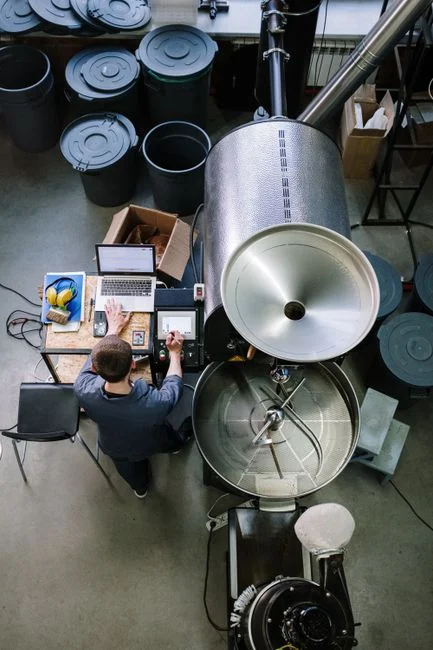
Plan a route for the dewatered coffee solids rather than treating the centrifuge as the final disposal stage. In a conventional decanter, the scroll conveys compacted solids toward the discharge opening (Wikipedia, Decanter centrifuge). Whether that discharge is recovered, composted, further dewatered or disposed of affects the required cake dryness and therefore the operating settings selected during testing.
If additional solids dewatering is required after clarification or biological treatment, evaluate a plate-and-frame filter press for coffee sludge. Where suspended solids, FOG and colloidal material must be removed before clarification or biological treatment, consider DAF pretreatment for coffee wastewater. The supplied DAF product range covers 4–300 m³/h across 13 standard models; this is equipment-range information, not a statement that any model fits the coffee stream.
The treatment train must also preserve the destination of the clarified liquid. Reuse, further biological treatment, sludge handling and discharge impose different separation objectives. A comparison of DAF versus clarification for food and beverage wastewater in 2026 can support that train-level decision. The centrifuge should be selected only after the required centrate clarity, oil-recovery objective and solids-discharge route are agreed.
Frequently Asked Questions
How should I choose between a decanter, tricanter and disc-stack clarifier for coffee processing wastewater?
Choose a two-phase decanter for continuous solid-liquid separation, a tricanter when oil, water and solids must be discharged separately, and disc-stack clarification when fine-particle removal or maximum clarity is the controlling requirement. Screen the feed against the roughly more than 5% v/v solids indication cited by Flottweg, then verify the selected duty with representative feed testing.
What feed data should I require before sizing a coffee sludge centrifuge?
Require solids concentration, particle size distribution and shape, density difference, viscosity, oil content, feed rate and feed variability. Also define the required centrate clarity, cake dryness, throughput and discharge destination. These inputs connect the actual coffee processing wastewater to the separation task rather than relying on a machine selected only by nominal capacity.
What should the supplier demonstrate during a representative pilot test?
Require liquid clarity and solid discharge condition to be demonstrated simultaneously at the proposed throughput, with the feed rate, bowl speed, differential speed, pool depth and residence time recorded. For a tricanter, add separate confirmation of the water, oil and solids outlets. Public equipment information does not establish project-specific performance, so the acceptance limits must be agreed before the test.
How should I request cost and delivery information without relying on an unsupported price estimate?
Send the supplier the characterized feed, required throughput, outlet specifications, installation location and utility conditions, then request a project-specific quotation and delivery schedule. Also request operator requirements, maintenance scope, spare-parts availability and utility demands. Because the supplied research contains no price, lead time or duty-cycle data for this application, any fixed figure must come from the vendor after scoping the duty.