
Confirm the Wastewater Treatment Boundary
No defensible MBR capacity can be assigned to Ford’s new EV plant in Vietnam from the supplied evidence. The Vietnam Membrane Bioreactor Market report by 6Wresearch (2025–2031) describes MBR as a compact process combining biological treatment with membrane filtration, but it provides no Ford-specific flow, pollutant load, reuse target or discharge limit. The first engineering step is to define the treatment boundary, not to select a headline capacity.
Request separate average and peak flows for sanitary sewage, process wastewater, cooling or washwater, stormwater, and contaminated floor drainage. Also obtain the operating schedule, batch-production patterns, sampling points, and any planned changes in vehicle or battery production. These streams should not be combined until Ford and the EPC contractor confirm which are continuous, intermittent, or first-flush flows.
Define what the MBR must accomplish to bridge the gap between initial site assessment and final equipment specification. An integrated MBR wastewater treatment system may combine biological treatment and membrane separation, or the MBR may serve as pretreatment before disinfection, polishing, or reuse equipment. The discharge route must then be established with the responsible Vietnam authority. The 6Wresearch Vietnam MBR market report notes that the absence of MBR-specific standardized local guidelines creates uncertainty; market growth does not establish a project-specific compliance route.
| Boundary input | Evidence currently available | Decision required |
|---|---|---|
| Ford wastewater flow and peak conditions | No Ford-specific values in the supplied research | Collect verified stream flows, operating schedules, and batch data |
| Pollutant characteristics | No Ford-specific COD, BOD, oil, solids, or toxicity data supplied | Set biological and pretreatment design loads |
| Treatment role | MBR generally combines biological treatment with membrane filtration, according to 6Wresearch (2025–2031) | Define final biological, membrane, disinfection, polishing, and reuse duties |
| Compliance route | No project-specific permit, discharge, or reuse requirement supplied | Confirm the applicable authority and written requirements |
Build the MBR Capacity Basis from Verified Plant Data
MBR capacity must be calculated from verified plant data and checked against the selected system’s permitted design envelope. The supplied research contains no Ford flow, peak-factor, COD, BOD, or reuse data, so a plant-specific hydraulic loading rate or membrane area calculation cannot yet be completed. Any number quoted before that verification would be an assumption, not an engineering basis.
- Build a stream-by-stream flow schedule. For each discharge, record verified daily flow, operating duration, average flow, peak factor, minimum flow, and the frequency and duration of batch discharges.
- Calculate the design flow that the MBR must receive after upstream segregation, equalization, precipitation, and return flows are identified.
- Characterize COD, BOD, suspended solids, oil and grease, pH, temperature, conductivity, and any process-specific inhibitors using representative sampling.
- Calculate hydraulic and organic loading from the confirmed flow and contaminant characteristics. Compare those duties with the selected membrane system’s stated design basis before determining membrane area.
- Separate equal-flow treatment from variable-flow duty. Confirm whether equalization can absorb batch peaks or whether pretreatment and multiple trains are required.
Establish sizing parameters by referencing equipment catalog boundaries while awaiting finalized plant data. HydropureWater’s integrated MBR catalog covers 10–2,000 m³/day, while the listed DF flat-sheet MBR modules cover 32–135 m³/day. These are catalog selection bounds, not proof of adequate Ford capacity. They establish which configurations should be screened before the verified design flow and loading envelope are known.
| Fillable sizing field | Confirmed value | Source and date | Status |
|---|---|---|---|
| Sanitary sewage: average flow, peak flow, duration | Enter verified value | Ford or operator record | Required |
| Process wastewater: average flow, peak flow, batch duration | Enter verified value | Ford or operator record | Required |
| Cooling/washwater and contaminated drainage | Enter verified value | Ford or operator record | Required |
| COD, BOD, suspended solids, oil and grease, pH | Enter representative result | Dated sampling report | Required |
| Equalization volume and return flow | Enter verified value | EPC hydraulic design | Required |
| Design flow, hydraulic loading, organic loading | Calculate after inputs are approved | EPC calculation | Open |
| Membrane area and train configuration | Calculate after system envelope is selected | Supplier calculation | Open |
| Discharge or reuse standard | Enter confirmed requirement | Responsible Vietnam authority | Open |
Record every assumption, its owner, its source, and its revision date. That audit trail is what allows the preliminary calculation to change when Ford or its EPC contractor releases verified operating data.
Match Treatment Risks to the Pretreatment Train
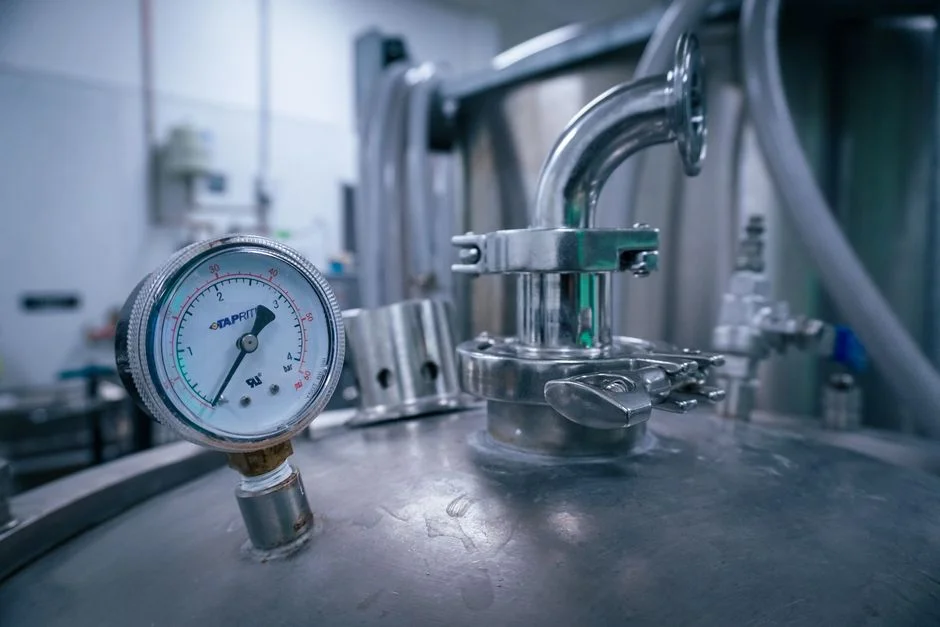
Pretreatment should be selected from confirmed stream characteristics, not from a generic equipment list. Screening protects downstream biological and membrane stages from rags, plastics, and fibrous material; the GX rotary mechanical bar screen is described in the supplied product information as designed for continuous-duty industrial and municipal headworks.
Evaluate dissolved air flotation when the wastewater contains removable oil, grease, suspended solids, or colloidal material. HydropureWater’s DAF pretreatment machine covers 4–300 m³/h across 13 standard models. That range can screen possible configurations, but it does not establish which model is appropriate without verified flow, contaminant concentrations, and removal targets.
Use chemical dosing only where process characterization demonstrates a treatment need. The supplied automatic dosing-system information covers coagulants, flocculants, pH adjusters, and specialty chemicals with PLC-controlled injection. Selection still requires the chemical, dose, mixing response, control objective, and downstream compatibility to be defined.
| Confirmed treatment risk | Pretreatment check | Information required before selection |
|---|---|---|
| Rags, plastics, fibrous material | Assess mechanical screening before biological and membrane treatment | Stream inventory, peak flow, screen opening, reject-handling method |
| Oil, grease, suspended solids, or colloids | Evaluate DAF with an agreed removal objective | Representative pollutant data, flow profile, required effluent quality |
| pH or chemical demand | Assess controlled dosing only if characterization supports it | pH range, chemical inventory, mixing and control requirements |
| Membrane fouling and maintenance exposure | Include cleaning, inspection, and maintenance access in the comparison | Expected operating sequence, cleaning method, spare-parts and access plan |
Address the operational impact of treatment choices to ensure long-term system viability. The 6Wresearch Vietnam MBR market report identifies membrane fouling and maintenance requirements as barriers to wider MBR adoption, and also notes high capital cost and operational complexity. The pretreatment decision must therefore address both equipment removal performance and the operating burden it adds.
Select Packaged, Module-Based or Engineered Capacity
A packaged MBR is credible only when its verified design duty, loading envelope, and operating scenario match the plant requirement. HydropureWater’s integrated MBR range of 10–2,000 m³/day provides an initial catalog boundary; the DF flat-sheet configurations listed at 32–135 m³/day provide a second boundary for module-based screening. Neither range determines the required Ford capacity.
Use a decision sequence to determine the most effective system architecture:
- If the confirmed design flow and loads fit one integrated system, its permitted operating envelope, peak-flow behavior, and pretreatment scope still require demonstration.
- If verified peaks, batch discharges, redundancy, maintenance access, or future expansion cannot be accommodated by one train, compare staged or parallel trains.
- If the required flow, loading, controls, or civil integration exceeds the packaged envelope, develop an engineered multi-train system with explicit hydraulic, biological, membrane, and operational redundancy.
Request a supplier design showing membrane area calculation, design flow, hydraulic and organic loading basis, peak operation, equalization assumptions, cleaning strategy, redundancy, controls, pretreatment, utilities, and included accessories. A catalog capacity without this design package is not a procurement-ready answer.
| Selection criterion | Packaged integrated MBR | Module-based or engineered system |
|---|---|---|
| Catalog boundary | 10–2,000 m³/day | DF configurations listed at 32–135 m³/day |
| Best fit | Verified duty fits the supplier’s stated envelope and operating scenario | Higher duty, staged operation, special redundancy, or expansion requires multiple trains |
| Required evidence | Supplier calculation, membrane area, loading basis, peak operation, cleaning, and controls | System architecture, train allocation, redundancy, civil and utility interfaces, and performance tests |
| Decision status | Do not select from nominal capacity alone | Do not infer a multi-train requirement without confirmed peak and resilience criteria |
The DF series is listed with a 0.1 μm pore size and claimed energy use 10–20× lower than external cross-flow systems. Treat both as screening criteria, then require project-applicable evidence and guarantees covering verified effluent duties, peak operation, cleaning recovery, membrane replacement assumptions, and energy consumption.
Convert the Sizing Basis into a Procurement Package
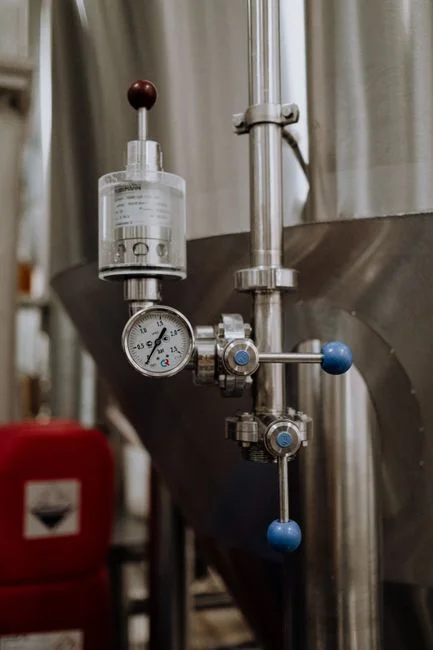
Procurement should proceed through a responsibility-based information release, not a request for a single vendor to infer the project from public market reports. The step-by-step MBR sizing guide provides a useful sizing sequence, while the EV and auto plant pretreatment requirements provides relevant context for separating automotive plant risks before final equipment selection.
| Party | Information or deliverable | Procurement hold point |
|---|---|---|
| Ford or plant operator | Verified wastewater flows, batch operations, pollutant characterization, sampling results, discharge route, reuse objectives | No capacity calculation is released without approved data |
| EPC consultant | Treatment boundary, process criteria, civil interfaces, utilities, controls, commissioning tests, acceptance limits | No technical bid comparison until the basis is common |
| Equipment supplier | Design calculations, membrane area, train configuration, pretreatment requirements, O&M assumptions, performance guarantee | Catalog capacity alone does not constitute a compliant offer |
| Relevant Vietnam authority | Confirmed permit, discharge or reuse route, and project-specific requirements | Compliance route remains open until written confirmation |
The request for quotation should require separate pricing for pretreatment, equalization, MBR trains, controls, membranes, sludge handling, utilities, commissioning, training, and maintenance. It should also require the bidder to identify excluded civil work, utility assumptions, sample points, guarantee conditions, and the data needed to close each engineering gap. This creates a comparable bid without converting unverified assumptions into an apparent Ford capacity.
Frequently Asked Questions
What MBR capacity is required for Ford’s new EV plant in Vietnam?
No defensible Ford-specific capacity can be stated from the supplied evidence. Capacity must be calculated after verified stream flows, peak conditions, COD and BOD loads, pretreatment requirements, treatment boundary, and discharge or reuse targets are approved. The 10–2,000 m³/day integrated range and 32–135 m³/day DF range are catalog bounds, not a calculated plant requirement.
How should cost and budget be evaluated when comparing MBR alternatives?
Request a total-cost and lifecycle comparison covering membranes, pretreatment, controls, energy, cleaning, sludge handling, maintenance, and replacement assumptions. Require each bidder to state the design flow and loading basis behind its price, as well as exclusions and guarantee conditions; no project-specific quotation can be inferred from the supplied research.
How should a buyer select and size an MBR supplier?
Ask each supplier to demonstrate membrane area, design flow, hydraulic and organic loading, peak operation, redundancy, cleaning strategy, and acceptance tests. Confirm that every bidder is sizing to the same Ford-approved treatment boundary, rather than comparing catalog capacities or manufacturer claims.
What should be confirmed about Vietnam discharge and reuse requirements?
Confirm the applicable permit, discharge or reuse route, and project-specific requirements with the responsible Vietnam authority. The 6Wresearch Vietnam M