Treat the acquisition as a permit-transfer and capacity-risk project
A legal acquisition does not reset an acquired Hungarian fab’s wastewater obligations. Before closing, TSMC should verify the site-specific Hungary industrial wastewater permit, the existing pollution profile, treatment-plant capacity, and whether the planned production or reuse strategy materially changes the authorized discharge envelope. The supplied 2026 analysis states that a semiconductor fab discharging more than 10 m³/day falls within IED Annex I. The governing stack includes EU Industrial Emissions Directive 2010/75/EU, the 2024 Common Waste Water and Waste Gas Treatment BAT conclusions, Hungary’s Act LVII of 2013, Government Decree 1155/2023, and Decree 27/2004 (XII. 25.) KvVM where BAT-AELs are silent. Ownership, compliance and operating capacity must therefore be assessed separately. Because the acquired fab, permit and final design parameters are unidentified, this is a diligence framework rather than a site-specific compliance determination.
The practical acquisition review should also test whether historical under-reporting, bypass events or deferred maintenance created legacy liability. The legacy wastewater liability due-diligence checklist provides a structure for reviewing permit records, sampling history, treatment residuals and outstanding corrective actions before those liabilities are priced into the transaction.
Build the legal notification plan backward from closing
The supplied 2026 analysis requires the change-of-operator notification to the county water authority within 15 days after legal transfer under Act LVII of 2013, while an IED installation discharging more than 10 m³/day must submit a NeKI pre-transfer notification at least 30 days before transfer. These obligations run in parallel: the pre-transfer filing supports registry and permit review, and the post-transfer filing records the operator change. Neither filing authorizes additional capacity or a changed treatment train.
Work backward from the signing and closing dates, assign one accountable owner to every regulatory interface, and prohibit a production-ramp decision until the operator identity and permit status are confirmed. The deliverables should be reviewed by Hungarian environmental counsel and the county water authority before the acquisition agreement is finalized.
| Sequence | Required action | Accountable owner | Release evidence |
|---|---|---|---|
| Pre-signing | Review the water permit, operator registration, monitoring plan, discharge envelope and treatment-plant records. | EHS and environmental counsel | Permit and liability register |
| At least 30 days before transfer | Submit the NeKI pre-transfer notification for an installation discharging more than 10 m³/day. | Permit manager | Submission receipt and NeKI registry query |
| Before closing or ramp | Confirm whether the permit transfers, requires modification or needs broader IED review. | Legal and EHS | Authority route decision |
| Within 15 days after legal transfer | Notify the county water authority of the operator change. | Legal operations owner | Notification receipt |
| Post-closing | Update operator code and NeKI records; confirm training, monitoring, chemicals, spares and bypass arrangements. | Site environmental manager | Completed commissioning gate |
Decide whether the permit transfers or must be modified
The supplied 2026 analysis concludes that an existing site-specific water permit can transfer when the acquired site’s effluent profile already falls within the applicable 2024 CWWT BAT-AEL ranges. A material change to pollutant envelope, authorized capacity or treatment train requires permit modification; a broader IED review is necessary when the installation or operating envelope must be reassessed.
Where both regimes govern the same parameter, the binding discharge requirement is the stricter of the BAT-AEL and the Danube River Basin Management Plan-derived value. The supplied analysis gives fluoride as a BAT-AEL range of 5–30 mg/L, with 30 mg/L identified as the KvVM default, and lists boron at 1–5 mg/L. These values are compliance benchmarks, not equipment-sizing capacities. The site permit, receiving-water classification and any stricter RBMP condition must be checked before relying on them.
| Route | Use when | Evidence required | Consequence |
|---|---|---|---|
| Administrative transfer | Pollution profile, capacity and treatment train remain materially unchanged. | Current permit; historical monitoring; confirmed operator and NeKI records. | Operator change with continued permit conditions. |
| Permit modification | Capacity, pollutant envelope or treatment train changes materially. | Stream characterization; treatment validation; updated mass balance; authority consultation. | Modified discharge and monitoring conditions before the change. |
| Broader IED review | The installation or operating envelope requires reassessment. | IED applicability review; BAT comparison; monitoring plan and technical proposal. | Regulatory approval before implementation where required. |
A corporate target from Taiwan or Arizona cannot substitute for a Hungarian permit value. Use those projects to frame engineering questions, then apply the binding Hungarian site conditions.
Characterize every fab wastewater stream before selecting equipment
The supplied 2026 process guide identifies six source families whose chemistry makes a single mixed influent an unreliable design basis: UPW reject, CMP slurry wastewater, acid and alkali rinse, photoresist and developer organics, and scrubber or burn-box blowdown. UPW reject carries dissolved ions and silica; CMP wastewater contains colloidal solids and trace metals; rinse streams contain fluoride, pH excursions and sulfate; photoresist streams contain slowly biodegradable organics and TMAH; and scrubber blowdown carries particulates, acid gases and combustion products.
TMAH belongs in the acquisition baseline even though the supplied 2026 analysis says it is not a traditional permit parameter at many Hungarian sites. The file should request treatability data and evaluate wet oxidation followed by biological polishing rather than assume that a generic biological plant will remove it. A chip-fab heavy-metal wastewater treatment blueprint can support initial technical screening, but site data must determine the final configuration.
| Stream | Principal challenge | Diligence evidence |
|---|---|---|
| UPW reject | Dissolved ions and silica | Locked flow and conductivity; ionic profile; silica; campaign composites. |
| CMP slurry wastewater | Colloidal solids and trace metals | Particle-size distribution; suspended solids; silica or ceria; metals. |
| Acid and alkali rinse | Fluoride, pH excursions and sulfate | Flow-weighted pH; fluoride; sulfate; acidity or alkalinity. |
| Photoresist and developer organics | Slowly biodegradable organics and TMAH | COD; TOC; solvent profile; TMAH; biodegradability and treatability tests. |
| Scrubber or burn-box blowdown | Particulates, acid gases and combustion products | Flow; pH; suspended solids; acidity; relevant gas and combustion analytes. |
Request a locked water balance, flow measurements, 24-hour and campaign composites, complete analytical profiles and existing plant mass balances before equipment sizing. TSMC’s 2025 sustainability disclosure, as reported in the supplied 2026 analysis, tracks COD, fluoride, suspended solids, ammonia nitrogen, nitrate nitrogen, arsenic, boron, copper, cobalt and total phosphorus. Add TMAH and PFAS to acquisition testing rather than waiting for a treatment-train change.
Match the treatment train to the pollutant, not to a generic wastewater label
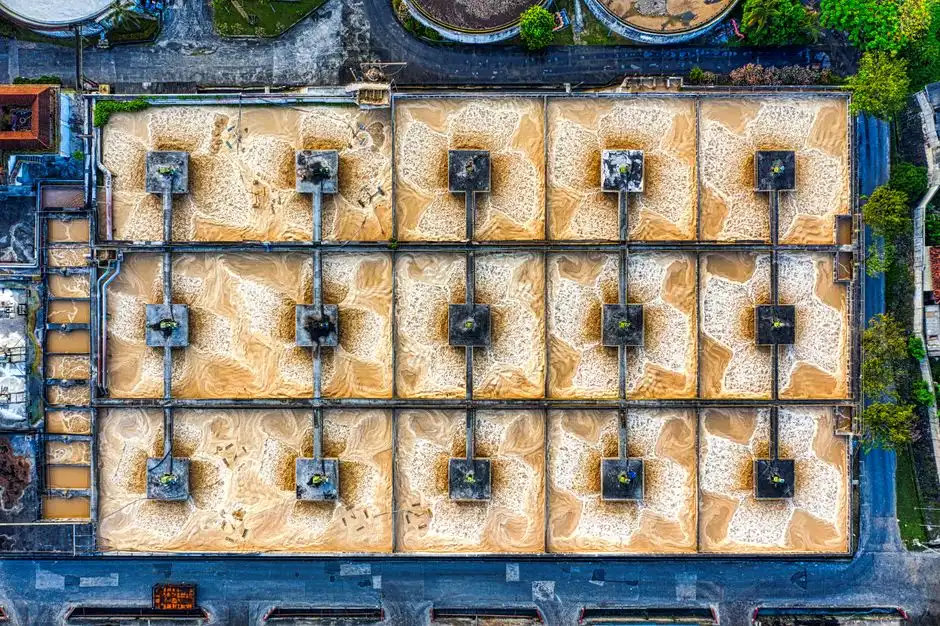
The supplied 2026 process guide uses physical pretreatment for suspended solids and colloidal material, biological treatment for biodegradable organics, and membrane polishing for dissolved salts and reuse. These functions may occur in one train, but each should be tied to a characterized stream and a defined compliance point. DAF is identified for suspended solids, FOG, oil and grease and colloidal matter; actual selection depends on the fab stream. A DAF versus clarifier comparison for semiconductor wastewater can support that decision.
| Treatment function | Applicable challenge | Design condition | Compliance relevance |
|---|---|---|---|
| DAF, filtration or clarification | Suspended solids, colloidal material, oil and grease | Confirm stream properties and bypass arrangements. | Protects downstream biological and membrane units. |
| Precipitation and ion exchange | Metals, fluoride and boron | Base selection on full influent characterization. | Boron BAT-AEL example: 1–5 mg/L; fluoride: 5–30 mg/L, per the supplied 2026 analysis. |
| MBR and biological polishing | Biodegradable organics, COD and ammonia | Validate variable organic loading and nitrification. | Ammonia-N and total nitrogen are separate BAT points: 0.5–5 mg/L and 10–25 mg/L, respectively, per the supplied 2026 analysis. |
| Wet oxidation and biological polishing | TMAH and resistant organics | Require treatability evidence and downstream polishing validation. | Supports the proposed permit addendum for TMAH. |
| UF before RO | Residual colloids and biomass | Establish membrane-fouling basis and pretreatment performance. | Protects RO and supports reuse reliability. |
| RO | Dissolved ions and reuse preparation | Select recovery, redundancy and concentrate route from site data. | Potential industrial water reclamation; permit headroom remains controlling. |
| Granular activated carbon, ion exchange or concentrate treatment | PFAS and selected dissolved contaminants | Confirm analytes, methods and waste-disposal route. | Supports PFHxA-related phase-in under EU Restriction 2023/707 on 10 October 2026, per the supplied 2026 analysis. |
The supplied 2026 analysis reports Hungary-specific PFAS surface-water values aligned with BAT-AEL ranges, but the site permit must confirm the applicable analytes and limits. For reuse, evaluate an MBR membrane bioreactor for semiconductor wastewater and an industrial RO system for fab water reuse as candidate process blocks, not as a predesigned train. Concentrate treatment remains part of the design basis.
Use TSMC reclamation projects as benchmarks, not copied designs
TSMC’s Phoenix reclamation project demonstrates an Arizona design precedent, not a Hungarian permit or sizing rule. KTAR reported on 2025-09-01 that the project occupies 15 acres, targets near-zero liquid discharge, is designed to raise recycling from about 85% to 90%, and is expected to operate in 2028. Data Center Dynamics reported on 2025-09-05 that the first Phoenix fab consumed approximately 4.75 million gallons per day before construction, with demand expected to fall below 1.2 million gallons per day after construction.
The Tainan reference illustrates a different reuse architecture. The supplied 2026 process guide, citing Electronics Weekly in 2021-04, reports a design target of 67,000 tons per day by 2024, approximately 43% of the 156,000 tons-per-day fab water demand quoted in the same source. The supplied 2026 analysis reports TSMC’s 2025 corporate indicators as 18% reclaimed-water substitution at Taiwan fabs and 23.53 million m³ of cumulative reclaimed-water use.
None of these Arizona or Taiwan figures establishes Hungarian permit headroom or the acquired site’s economic performance. The investment comparison should include fresh-water supply, discharge authorization, energy, chemicals, sludge or concentrate disposal, recovery and the permit envelope. If reuse reduces discharge, it may support a modification application, but the supplied research does not establish a guaranteed approval timetable or return on investment.
Verify compliance before production ramps
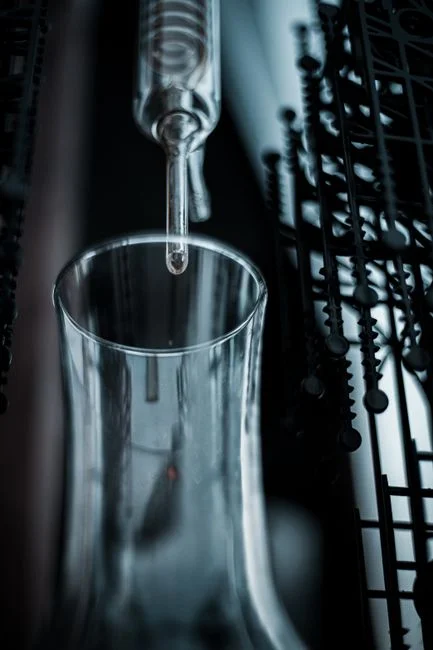
Commissioning should begin with source-by-source sampling and a mixed-influent baseline before chemical dosing changes or higher-load operation. Verify COD, suspended solids, fluoride, ammonia-N, total nitrogen, arsenic, boron, copper, cobalt, total phosphorus, TMAH and PFAS against the binding permit and BAT framework. Ammonia-N and total nitrogen must remain separate reporting parameters.
Build the first monitoring campaign around the PFHxA-related phase-in on 10 October 2026 identified in the supplied 2026 analysis, subject to confirmation of the applicable Hungarian permit conditions and analytical methods. Retain laboratory records, calibration evidence, mass balances, treatment operating data and chain-of-custody information. Consumables and bypass arrangements should be audited through the treatment-parts, valves and filter-media planning process.
| No-ramp gate | Required evidence | Release decision |
|---|---|---|
| Legal status | Valid operator registration; permit or modification record; completed notifications. | No ramp if unresolved. |
| Treatment performance | Source and mixed-influent baselines; verified treatment performance; stable mass balance. | No ramp if any compliance point is unverified. |
| Monitoring readiness | Approved methods; laboratories; sampling plan; calibration records; retained data. | No ramp without an executable campaign. |
| Operational readiness | Trained operators; chemical supply; critical spares; preventive maintenance; tested bypass arrangements. | No ramp if operational controls are incomplete. |
Frame supplier selection around application proof and permit risk
The supplied research provides no Hungarian equipment price, quotation or delivery lead time, so procurement should not rank bids on generic capacity claims or invented economics. Require each vendor to map proposed equipment to the characterized stream, removal mechanism and applicable permit condition. A proposal should be tied to verified flow, composition, peak factors, reuse targets, recovery, redundancy and concentrate management—not total plant flow alone.
Request semiconductor wastewater references, chemical-compatibility data, membrane or media replacement strategy, control-system integration, FAT or SAT scope, and a complete utility and chemical-consumption estimate. For MBR, UF and RO trains, ask for projected transmembrane pressure, cleaning frequency, recovery, permeate quality, redundancy and performance guarantees linked to the acquisition wastewater characterization.
Procurement should also score lead time, bypass design, maintainability, operator competence and permit-documentation quality. Where legacy treatment performance is uncertain, validate or upgrade the wastewater before finalizing an acquisition price adjustment or production commitment. This protects the closing decision from a treatment system that works only under historical loading.
Frequently Asked Questions
Can TSMC use the existing Hungarian wastewater permit after acquiring the fab?
Only if the site-specific permit remains valid for the transferred operator and the pollution profile, capacity and treatment train do not change materially. The supplied 2026 analysis permits an administrative transfer where the effluent profile is already within the 2024 CWWT BAT-AEL ranges. Confirm the route with the county water authority; completing a change-of-operator notification does not approve new capacity.
What is the main technical risk when acquiring a semiconductor fab in Hungary?
The main risk is treating mixed semiconductor wastewater as ordinary industrial effluent. Acids, fluorides, metals, CMP colloids, solvents and TMAH require different pretreatment, biological and polishing functions. The acquisition file should therefore contain source-specific chemistry, treatability data and a verified mass balance rather than rely on historical plant averages.
How much will the wastewater treatment upgrade cost, and what should the budget include?
The supplied research contains no site-specific price or quotation, so a defensible budget cannot be stated without the acquired fab’s stream flows and compositions, permit route, reuse target, treatment capacity, recovery basis and concentrate-disposal plan. Request itemized capital cost, installation, utilities, chemicals, membranes or media replacement, sludge and concentrate disposal, commissioning, training and maintenance. Do not accept a price based only on nominal plant flow.
How should an operator select and size MBR, UF and RO equipment?
Size from verified stream flows, compositions, peak factors, reuse targets, recovery, redundancy and permit constraints. Request pilot or operating data, projected transmembrane pressure, cleaning frequency, permeate quality, redundancy and guarantees tied to the characterized wastewater. Select from verified application performance rather than a generic product range.
What should a wastewater equipment supplier provide during acquisition due diligence?
Request application references, chemical and membrane compatibility, utility demands, FAT or SAT scope, controls integration, maintenance support, bypass provisions and a clear performance baseline. Require treatment claims to identify the stream, pollutant, removal mechanism and corresponding permit condition. This check is more useful than a generic capacity statement because it exposes whether the proposed equipment matches the acquired site’s actual wastewater.