Start with the Site, Not the Equipment Catalog
Domestic sewage treatment in Quito should be selected from verified site conditions, not population estimates or product capacity alone. First establish whether sewer connection is available, then document average and peak flows, wastewater characteristics, groundwater, access, outlet conditions, and the applicable approval route. The available WSZ package combines anoxic/aerobic contact oxidation, sedimentation, and disinfection for 1–80 m³/h, while the MBR combines activated sludge with submerged PVDF filtration specified below 1 μm for 10–2,000 m³/day. These are product boundaries, not proof of suitability.
The sewer-connection assessment determines whether the project belongs in a network-extension program or needs decentralized treatment. The El Rosario case documented by the Ecuador domestic sewage treatment systems guide describes households across 47 hectares discharging domestic wastewater directly into a stream connected to the Daule River. The same source reports that the Daule is the primary drinking-water source for more than 4 million people in Guayas Province. That is a receiving-water concern, but it does not establish conditions at another Quito site.
Before selecting a process, establish the current and future service boundary, average and peak flow, seasonal variation, and every commercial or industrial contributor. Characterize pH, suspended solids, organics, and any non-domestic inputs before assigning biological-process duty. Record the discharge point, seasonal water conditions, required outlet quality, and the Ecuadorian approval route applicable to that point.
The Ecuador guide also cites a commercial estimate that only 10% of wastewater generated in Ecuador receives treatment before discharge to the Daule-Guayas River. This is explicitly a commercial estimate, not an official national statistic, and should not be used as a quantitative basis for sizing or approval.
| Project input | Evidence a buyer needs | Decision affected |
|---|---|---|
| Sewer availability | Connection authority, network route, capacity confirmation, extension responsibility | Network connection versus off-site treatment |
| Flow and service area | Average flow, peak-hour flow, seasonality, current and future contributors | Treatment capacity and collection design |
| Wastewater quality | pH, suspended solids, organics, commercial or industrial inputs | Pretreatment and biological-process duty |
| Outlet and approval | Discharge point, seasonal water conditions, permit route, applicable outlet requirements | Required treatment stages and monitoring |
How the Domestic Sewage Treatment Train Should Work
Screenable solids must be removed before wastewater reaches pumps or sensitive biological equipment because plastic, textiles, personal-care products, and other debris can obstruct or overload the downstream train. The rotary mechanical bar screen provides an equipment reference for screening, but suitability depends on the selected inlet flow and actual debris characteristics.
Grit removal has a different function from screening. Screening intercepts larger floating or suspended material; grit removal captures denser particles such as sand and coffee grounds. Neither stage substitutes for biological treatment, aeration control, solids separation, or final treatment required by the project’s outlet objective.
A conventional treatment train therefore proceeds through pretreatment, pumping where required, biological treatment with appropriate aeration and organic-loading control, and clarification or solids separation. The biological stage must be matched to the verified wastewater characteristics rather than selected from the outlet category alone.
Final filtration or disinfection should be included only where the confirmed outlet or reuse objective requires it. The supplied research does not establish a universal removal rate for every WSZ, MBR, or decentralized configuration. It also does not provide a complete Ecuadorian national effluent-limit table, so the buyer must obtain the requirements that apply to the specific discharge point and intended use.
The complete train must also remain maintainable. The general arrangement should provide a safe route for sludge removal, filter or membrane servicing, instrumentation inspection, and eventual component replacement. Screening, aeration, pumping, controls, solids handling, and sampling should not be treated as accessories that can be added after the main unit arrives.
Compare WSZ, MBR, and Decentralized Treatment for Quito
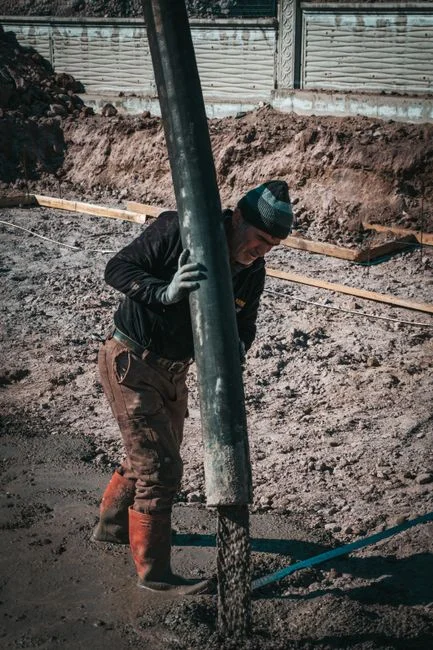
The WSZ and MBR options differ in process architecture, installation arrangement, and documented capacity boundaries, so they should be compared against the same project data. The [integrated underground sewage treatment plant](https://www.hydropurewater.com/product/1-wsz-underground-integrated-sewage-treatment.html) provides a below-grade package option; the [MBR membrane bioreactor](https://www.hydropurewater.com/product/2-mbr-integrated-wastewater-treatment.html) adds membrane separation to activated sludge.
The HydropureWater verified product catalog states that the WSZ handles 1–80 m³/h and integrates anoxic/aerobic biological contact oxidation, sedimentation, and disinfection in one buried package. It is fully automated, requires no operator, and can also be mounted on a trailer for mobile deployment. The catalog states that the MBR handles 10–2,000 m³/day and uses submerged PVDF membrane filtration specified below 1 μm.
For a decentralized alternative, IntechOpen’s academic study Application of Vermifiltration for Domestic Sewage Treatment describes vermifiltration as combining filtration with earthworms. The study reports that it is efficient, viable, requires less expertise, can be decentralized, and has been applied to domestic septic-tank sewage. It supports decentralized deployment, not adoption without site-specific hydraulic and biological design.
The MBR catalog states a 60% smaller footprint than conventional systems. That comparison should be accepted only after the bidder discloses its basis: reactor volume, aeration, membrane modules, pumping, controls, and sludge handling can alter the complete installation footprint.
| Option | Documented architecture and boundary | Best-supported screening question | Main evidence still required |
|---|---|---|---|
| WSZ | Anoxic/aerobic contact oxidation, sedimentation, and disinfection; 1–80 m³/h; buried or trailer-mounted | Does verified flow fit the envelope, and can the integrated installation and service access fit the site? | Design flow, load, excavation, groundwater, power, controls, and maintenance arrangements |
| MBR | Activated sludge with submerged PVDF filtration; 10–2,000 m³/day; catalog filtration below 1 μm | Does the confirmed outlet or reuse objective justify membrane separation and its mechanical burden? | Design flow, load, membrane-replacement assumptions, footprint basis, outlet requirements |
| Vermifiltration | Earthworm-assisted filtration applied to domestic septic-tank sewage; decentralizable | Can the decentralized biological and hydraulic arrangement handle the actual influent and emptying cycle? | Septic-tank flows, emptying intervals, collection route, land area, receiving-water conditions |
Do not treat any product range as proof of suitability. Size from measured flow and load, then evaluate whether the selected arrangement can be installed and maintained.
Size the Plant from Flow and Load Evidence
A defensible sewage treatment plant sizing basis separates the treatment unit’s design flow from the collection-system basis. The design record should state average flow, peak-hour flow, hydraulic peak assumptions, seasonal variation, the planned growth horizon, and the current and future service boundary.
Identify stormwater entry, sewer leakage, illegal connections, and non-domestic contributors before finalizing hydraulic capacity. Infiltration and inflow can otherwise distort the design flow and lead to avoidable oversizing or hydraulic overload.
For decentralized systems receiving septic-tank flows, document emptying intervals, collection routes, and storage or buffering arrangements. Ask whether the proposed capacity includes the receiving condition during the relevant septic-tank emptying period or requires equalization.
The quotation should state the actual design flow, hydraulic peak assumptions, process stages, duty allocation, and installation conditions. A supplier that cannot reconcile its offer with the project flow data has not demonstrated sizing suitability.
The supplied research contains a commercial example for 100 people: 15–20 m³/day hydraulic capacity plus a 20% peak-flow buffer. It also gives generic per-capita flow and load assumptions. These are not Quito statutory rules and should be treated only as examples to challenge against measured project data. The same research warns that equipment capacity must be derived from wastewater flow and load, not population alone.
| Sizing input | Buyer instruction | Question the bidder must answer |
|---|---|---|
| Hydraulic basis | Provide average, peak-hour, seasonal, and future-growth data | What design flow and hydraulic peak assumption support the quoted capacity? |
| Organic and solids load | Provide wastewater analysis and identify non-domestic inputs | How do these characteristics affect process selection and duty allocation? |
| Inflow sources | Document leakage, stormwater entry, and illegal connections | Which peak and seasonal conditions are included in the hydraulic design? |
| Decentralized collection | Record emptying intervals, routes, storage, and buffering | Does the price include equalization and peak receiving conditions? |
Check Quito Site Conditions Before the Quotation
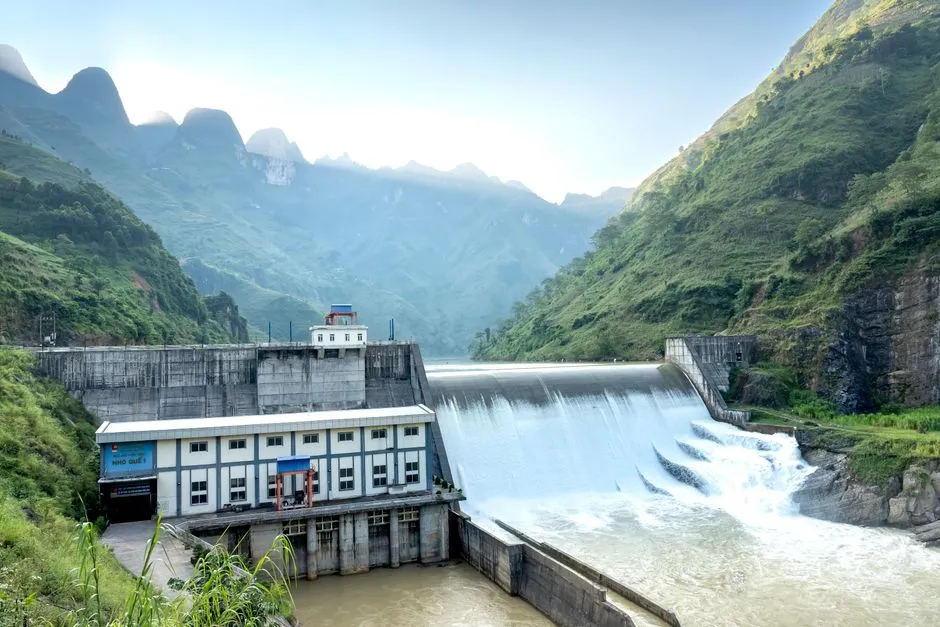
An otherwise suitable treatment package can become impractical if its installation assumptions do not match the site. For a below-grade WSZ installation, verify excavation access, soil and groundwater conditions, burial depth, lifting requirements, electrical supply, and the surface area available for landscaping above the unit.
The WSZ catalog confirms both below-grade and trailer-mounted deployment. Neither configuration removes the need for project-specific installation design. A mobile arrangement still requires a stable base, access route, wastewater connection, power arrangement, and a safe method for loading and servicing the unit.
Confirm that the general arrangement includes the reactor, aeration, pumps, controls, sludge handling, access risers, sampling points, and maintenance clearances. It should show where equipment can be inspected, sludge extracted, and membranes or filters serviced without dismantling the installation.
Quito site elevation, rainfall, infiltration, groundwater, and access conditions must be evaluated through project-specific civil and geotechnical design. Product literature cannot establish the excavation method, dewatering requirement, structural installation condition, or suitability of the proposed arrangement.
Before accepting the layout, ask each bidder to reconcile it with the full process scope, including upstream screening and grit removal where required. The installation must also preserve a safe route for component replacement and provide access for instrumentation inspection. If reuse is contemplated, obtain the project-specific irrigation and health requirements before including that use in the technical scope.
Turn the Technical Scope into a Supplier Request
Comparable proposals require the same technical and commercial inputs from every bidder. Include verified flow data, wastewater analysis, site drawings, soil and groundwater information, outlet conditions, access constraints, and the required commissioning schedule in the request for quotation.
Require each bidder to separate factory-integrated equipment from civil works. The offer must identify who performs installation, training, commissioning, and maintenance support. State whether civil works, excavation, electrical supply, controls, sludge handling, sampling, and disposal routes are included.
For a WSZ proposal, request confirmation that the proposed design flow falls within the stated 1–80 m³/h operating envelope, together with explicit statements on automation, buried installation, mobile deployment, service access, and site works. For an MBR proposal, request confirmation of the stated 10–2,000 m³/day range, the below-1-μm filtration specification, membrane-replacement assumptions, and the basis of the catalog footprint comparison.
Request a project quotation rather than a unit price. The supplied research contains no verified Quito-specific equipment price. Civil works, excavation, installation, controls, commissioning, training, and spares materially affect the installed scope, so a packaged-unit price alone cannot establish comparable cost.
Do not accept a general statement of compliance as a substitute for identifying the specific permit, outlet requirements, test methods, and acceptance criteria. The supplied research does not contain a complete Ecuadorian national effluent-limit table; require the bidder to state the documents and standards on which its offer depends.
| Quotation schedule | Required content | Comparable-response check |
|---|---|---|
| Design basis | Design flow, wastewater characteristics, peak assumptions, service boundary | Every bidder uses the same verified project inputs |
| Equipment and process | Stages, duty allocation, product envelope, controls, pretreatment, sludge handling | Scope gaps and exclusions are explicit |
| Installation | Civil works, excavation, groundwater assumptions, power, access, commissioning | Responsibility for each work package is named |
| Commercial | Equipment, installation, commissioning, training, spares, exclusions, taxes | Offers can be compared on the same installed scope |
| Compliance | Permit route, outlet requirements, test methods, acceptance criteria | No unsupported claim of general compliance |
Commission Against a Defined Performance and Handover Plan

Acceptance should be tied to the project’s applicable statutory requirements and the verification approach described in IntechOpen’s vermifiltration study. The supplied evidence does not include a complete Ecuadorian national effluent-limit table, so the approval team must obtain the requirements for the specific outlet and any reuse application before defining acceptance values.
Require start-up, hydraulic and process performance testing, mechanical checks, and automation checks. Mechanical verification should cover the installed equipment, connections, controls, and service arrangements. Process testing should confirm that measured treated-water parameters satisfy the requirements confirmed for the site.
The handover package should include maintenance intervals, operating procedures, required documents, spare parts, troubleshooting responsibility, and a clear defects and corrective-work process. Name the responsible party for resolving defects and identify how unresolved performance failures are handled before final acceptance.
Make future performance monitoring, sludge-removal access, and membrane or filter servicing contractual requirements rather than informal assumptions. The acceptance schedule should identify sampling points, monitoring responsibilities, required records, and the conditions that trigger corrective action.
Frequently Asked Questions
Is a package plant or a sewer connection preferable for a Quito site?
Use sewer connection when an authorized network route, capacity, connection conditions, and approval path are confirmed and the site can use that infrastructure. Use off-site treatment when no suitable sewer exists or the connection scope is infeasible. The decision must compare verified flows, access, site constraints, outlet conditions, and responsibility for network extension—not merely whether a treatment package is available.
Is population enough to size a domestic sewage treatment plant in Quito?
No. Population may support an initial flow estimate, but the final design must also use verified average flow, peak-hour variation, wastewater load, seasonal conditions, and future growth. Infiltration, stormwater entry, illegal connections, and commercial or industrial contributors can change both hydraulic and process duty.
What should a buyer request when comparing treatment-plant prices in Quito?
The supplied evidence provides no verified Quito-specific equipment price, so request a project quotation with a common scope. It should identify design flow, wastewater characteristics, process stages, civil works, excavation, installation, controls, commissioning, training, spares, outlet requirements, exclusions, and taxes. Compare installed scope rather than standalone equipment rates.
How should a WSZ proposal be evaluated against an MBR proposal?
Compare the proposals using verified flow and load, process architecture, land requirement, maintenance access, outlet objectives, and lifecycle obligations. Confirm the WSZ design basis against the 1–80 m³/h envelope and the MBR basis against the 10–2,000 m³/day envelope and below-1-μm filtration specification. For MBR, also request membrane-replacement assumptions and the basis of the catalog’s 60% smaller-footprint comparison.
Which compliance documents are needed before accepting a domestic sewage treatment system?
The available evidence does not provide a complete Ecuadorian effluent-limit table. Obtain the approval route applicable to the site, the discharge or reuse conditions confirmed by the authority, applicable sampling and test methods, and project-specific acceptance criteria. These documents should be incorporated into the quotation and commissioning schedule before equipment selection is finalized.