What an Ozone Oxidation System Must Achieve
An ozone oxidation system for phenol wastewater must convert a defined effluent target into a complete process train, rather than specify only an ozone generator. The ScienceDirect paper on phenol ozonation states that many countries adopted effluent limits below 1 ppm for phenol, but the applicable requirement must be verified for the actual discharge point. Phenol removal is not automatically mineralization: the paper identifies catechol, hydroquinone, formic acid, oxalic acid, glyoxylic acid, aldehydes and carbon dioxide as intermediates or products. A technically defensible scope therefore includes feed preparation, ozone generation, gas-liquid contact, off-gas treatment and post-treatment.
Define the objective before selecting equipment. If the requirement is phenol destruction, test whether residual intermediates or TOC remain material. If it is TOC reduction, odor control or biological pretreatment, establish the corresponding acceptance criterion rather than assuming that lower phenol automatically means lower carbon load or toxicity.
Industrial wastewater pretreatment affects how evenly ozone reaches the contaminant phase. Where suspended solids, oil and grease or colloids could interfere, evaluate DAF pretreatment for phenol wastewater against the specific wastewater rather than assigning it an assumed phenol-removal duty. The DAF scope should remain separate from the oxidation performance guarantee.
How Ozone Oxidation Removes Phenol
Ozone reacts rapidly with soluble organic compounds, but the engineering challenge is controlling the pathway, dose and downstream consequences of that reaction. The Environmental Engineering and Management Journal study evaluated four enhancement arrangements: raising pH, adding hydrogen peroxide, applying UV irradiation, and combining UV with hydrogen peroxide. Its kinetic model divides phenol degradation into direct and indirect components and represents the process with an apparent first-order rate constant whose functional form depends on the process configuration.
This distinction affects pilot design. Direct ozone oxidation and indirect oxidation should not be treated as interchangeable, especially when pH, peroxide addition or UV changes the oxidant species and competition within the wastewater matrix. The enhanced processes are potential design options, not automatic upgrades: each must demonstrate a net benefit on the actual feed.
Catalytic ozonation introduces another variable. The EWRI study on a graphene oxide/magnesium oxide nanocomposite notes that graphene oxide contains epoxide, hydroxyl and carboxyl groups and provides high surface area for pollutant adsorption. The modified nanocomposite was investigated as a catalyst for phenol ozonation. This establishes a mechanism that combines adsorption with oxidation, but it does not establish a transferable commercial removal efficiency. Catalyst selection requires testing against the plant’s phenol concentration, pH, alkalinity and competing contaminants.
| Process option | Mechanistic role | Evidence boundary |
|---|---|---|
| Direct ozonation | Phenol reacts directly with ozone | Performance remains dependent on transfer, dose, pH and wastewater matrix |
| Ozone-H2O2 oxidation | Peroxide changes the oxidant pathway | Compare with base ozonation using the plant wastewater |
| Ozone-UV advanced oxidation | UV supports an enhanced oxidation pathway | Power demand and process benefit require pilot evidence |
| Ozone-UV-H2O2 oxidation | UV and peroxide act together with ozone | Requires validation of residual oxidants and intermediate formation |
| Catalytic ozonation | Catalyst may adsorb and oxidize phenol | GO/MgO research does not establish drop-in commercial performance |
Reactor and Ozone-Transfer Design
Ozone utilization depends on gas-liquid mass transfer because the ScienceDirect paper identifies ozone production cost as a major concern and explains that ozone must move from the gas phase into the wastewater. Transfer performance depends on interfacial area, bubble characteristics and turbulence. The paper’s Venturi-based bubble column used a Venturi nozzle to create bubbles, increase contact time and improve ozone transfer into the liquid phase.
The study found that the volumetric mass-transfer coefficient, kLa, increased with gas flow and compared TOC removal against a conventional bubble-diffuser arrangement. That comparison supports a pilot evaluation of both configurations; it does not establish that the Venturi design will automatically be optimal for every refinery, dye or pesticide wastewater. The selected geometry must be justified under representative flow, gas rate, liquid depth and wastewater composition.
| Design comparison | Venturi-based bubble column studied | Conventional bubble diffuser studied |
|---|---|---|
| Gas introduction | Venturi-type nozzle creates bubbles | Bubble diffusion through the liquid |
| Transfer focus | Increase contact time and mass-transfer rate | Conventional gas dispersion |
| Reported observation | kLa increased as gas flow increased | Used as the comparison for TOC removal |
| Buyer requirement | Verify kLa, bubble size and utilization on site wastewater | Use the same feed and operating basis in the comparison |
Measure kLa, bubble size, ozone solubility, ozone decomposition, phenol removal, TOC removal and off-gas ozone during pilot work. These measurements distinguish a true transfer improvement from an apparent consumption increase caused by decomposition or competing oxidation demand.
The equipment scope must also include ozone destruction, off-gas treatment and ventilation. A contactor should not be treated as a closed oxidation step. Ozone generation and control equipment is available in portable, benchtop and cabinet formats, but catalog equipment intended for water-tank sterilization must be technically re-selected for continuous phenol-duty oxidation, including duty cycle, gas production basis, cooling, controls, safety provisions and contactor integration.
Operating Parameters That Must Be Validated
The pilot matrix should test initial phenol concentration, ozone flow rate or inlet ozone concentration, and pH because these were the operating variables examined in the ScienceDirect bubble-column study. Temperature must also be recorded because the phenol-oxidation kinetics in that study were evaluated at 25°C; that value is a research condition, not a universal plant setpoint.
Measure ozone decomposition rather than estimating demand from feed phenol alone. The ScienceDirect paper reports that ozone decomposition followed first-order kinetics and states that the decomposition rate was slower at higher flow rates. Pilot testing should therefore quantify the difference between ozone supplied, ozone transferred, ozone consumed by the target reaction, ozone lost through decomposition and ozone leaving in the off-gas.
| Pilot variable or measurement | Engineering purpose | Decision supported |
|---|---|---|
| Initial phenol concentration | Test phenol removal across the relevant feed range | Reaction rate and achievable endpoint |
| Ozone flow rate or inlet concentration | Separate oxidant supply from transfer performance | Generator and contactor utilization |
| pH | Evaluate direct and indirect oxidation conditions | Base ozone versus enhanced operation |
| Wastewater temperature | Record the actual condition; 25°C was the cited research condition | Transfer and reaction assumptions |
| Alkalinity and competing organic demand | Characterize matrix effects | Ozone dose and downstream demand |
| Suspended solids | Assess fouling, dispersion and pretreatment need | Feed-preparation scope |
| kLa and ozone decomposition | Separate transfer, decomposition and oxidation | Contactor and ozone-utilization design |
| Phenol, TOC, intermediates and residual ozone | Measure treatment and secondary effects | Acceptance criteria and post-treatment |
Run at least the intended base ozone configuration and any proposed enhancement with matched controls. Compare phenol and TOC removal together with identified intermediates and residual ozone. A configuration that removes more phenol but produces a larger residual oxidizable carbon load may still require biological or chemical polishing.
Build a Complete Phenol Treatment Process
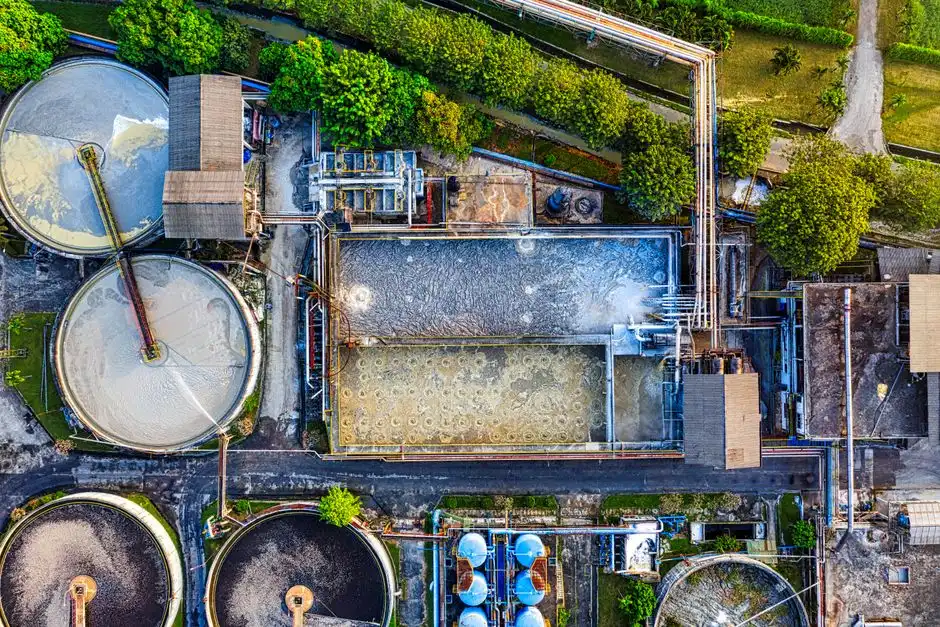
A complete treatment train should follow this sequence:
- Characterize phenol, pH, temperature, alkalinity, suspended solids, COD or TOC and relevant industrial contaminants.
- Equalize flow and load, then remove oil, grease, solids or colloids where they could impair ozone distribution.
- Generate ozone, transfer it into a controlled contactor and separate the gas and liquid phases.
- Destroy residual ozone in the off-gas and monitor the atmosphere and working area.
- Aerate after contact to strip residual ozone and support the next treatment stage.
- Apply biological or chemical polishing where biodegradable intermediates or residual TOC require it.
- Monitor the final effluent against the locally applicable phenol and TOC limits.
DAF can be evaluated where suspended solids, oil and grease or colloids could interfere with uniform ozone distribution, but it should not be credited with phenol oxidation performance. The broader DAF configuration and pretreatment guide illustrates why equipment selection must follow feed characterization rather than a generic application label.
Downstream treatment is not optional. The ScienceDirect paper notes that conventional biological treatment may not reduce phenol to the permissible discharge level within a reasonable process time, while also identifying intermediates that may remain after ozonation. Biological treatment may still be appropriate for biodegradable products, but pilot data should establish its ability to treat the actual post-ozone stream.
Use an automatic pH and peroxide dosing system only where the selected process requires pH adjustment or peroxide addition. The chemical compatibility, metering range, control sequence and storage arrangement must match the specified duty. Post-ozone aeration and residual-ozone monitoring belong in the overall process scope, with final compliance verified against the actual discharge standard.
Choose a System Through Pilot Testing and Procurement
A procurement package should transfer the validation burden to evidence rather than to a generic removal claim. Start with wastewater characterization covering phenol concentration, pH, temperature, alkalinity, suspended solids, COD or TOC and contaminants that may consume ozone or interfere with transfer.
Require each bidder to define the treatment objective, contactor configuration, ozone-generation basis, design flow, gas-liquid transfer method, control sequence, off-gas arrangement and downstream-treatment responsibility. Require pilot results or a formal validation plan reporting phenol removal, TOC removal, kLa, ozone decomposition, off-gas ozone, by-product indicators and operating stability.
| Procurement item | Evidence to request | Commercial risk if omitted |
|---|---|---|
| Treatment basis | Defined feed ranges, design flow and required effluent performance | Equipment cannot be sized against the actual duty |
| Contactor | Configuration, kLa method, gas rate, bubble data and transfer basis | Generator capacity may be mistaken for treatment capacity |
| Ozone system | Production basis, duty cycle, cooling and control requirements | Capacity and operating-cost mismatch |
| Performance | Phenol, TOC, intermediates, residual ozone and stability data | Unverified endpoint or secondary pollution |
| Safety | Off-gas destruction, ventilation, alarms and residual-ozone monitoring | Uncontrolled ozone release |
| Downstream treatment | Defined biological, chemical or polishing scope | Incomplete treatment train |
| Commercial boundary | Utilities, maintenance, catalysts, sensors and performance exclusions | Low purchase price masked by operating and validation costs |
Compare complete-scope bids rather than generator price alone. The supplier must define performance boundaries and acceptance criteria. No removal efficiency or dosage from the cited studies should be accepted unless the wastewater, operating conditions and test method match the plant application.
Frequently Asked Questions
What should a buyer include in an ozone system budget?
The ScienceDirect paper identifies ozone production cost as an important concern but provides no universal budget figure for an ozone oxidation system for phenol wastewater. Request a complete operating-demand comparison covering electricity or oxygen use, cooling, chemicals, catalyst or peroxide consumption, off-gas treatment, sensors, maintenance and pilot validation. Request the inputs and calculation basis behind each quoted cost rather than comparing generator price alone.
Is ozone-generator capacity the same as treatment capacity?
No. Generator capacity establishes how much ozone can be produced, while treatment capacity depends on flow, phenol load, mass transfer, ozone utilization and required effluent performance. Ask the supplier to state design flow and feed range separately from ozone production capacity, and require pilot evidence for kLa, phenol removal, TOC removal, decomposition and off-gas ozone.
How should a supplier be selected for phenol wastewater?
Select against evidence from the plant wastewater rather than phenol solution alone. Require a validation plan that compares the proposed contactor and enhancement options using the actual pH, alkalinity, suspended solids, competing contaminants and temperature. The quotation should separate equipment, utilities, controls, downstream treatment and any guaranteed performance criteria.
What are the main compliance risks in ozone oxidation of phenol?
The main risks are incomplete conversion, formation of phenol oxidation intermediates, residual ozone in the treated liquid, ozone in the off-gas and a final effluent that does not meet the locally applicable phenol or TOC requirement. Verify the discharge standard, monitor residual ozone, identify transformation products during pilot work and assign downstream biological or polishing treatment a clear performance boundary.
Related Equipment
- DAF pretreatment for phenol wastewater — specifications, capacity range, and technical data