What Ozone Oxidation Systems Do in Industrial Wastewater
Industrial ozonation earns its place when a wastewater objective requires selective oxidation, microbial control, or both and the water matrix supports reliable ozone contact. It can attack complex organic pollutants, including non-biodegradable COD and micropollutants, but it is normally a targeted polishing or advanced oxidation stage rather than a universal replacement for biological treatment. The main advantages of an ozone oxidation system are rapid oxidation without a persistent chemical residue and effective disinfection; the main disadvantages are capital and operating cost, matrix sensitivity, safety controls, and possible byproducts. Equipment selection therefore belongs at the treatment-train level.
The Pollution Sustainability Directory overview describes ozonation as an advanced oxidation process in which ozone chemically oxidises and breaks down complex organic pollutants. Its three practical outcomes must be separated during evaluation: pollutant oxidation, disinfection, and oxidation of taste, odour and colour compounds. These outcomes may be useful together, but a supplier’s disinfection claim does not demonstrate refractory-COD removal, and COD performance does not establish hygienic suitability.
Ozone is generated on demand rather than stored as the treatment oxidant. It decomposes rapidly to oxygen, which supports the overview’s description of treatment without a persistent chemical residue. The industrial equipment format for an industrial ozone generator and tank sterilization system therefore also has to be assessed as part of an operating process involving generation, transfer, contact and off-gas management.
Academic relevance does not establish universal applicability. The Catalysts review, “Recent Advances in Advanced Oxidation Processes for Degrading Pharmaceuticals in Wastewater—A Review,” published in 2026, DOI 10.3390/catal14030189, includes ozone-based processes among the advanced oxidation methods reviewed for pharmaceutical contaminants in wastewater and natural water. Compound-specific treatability still requires evidence from the actual stream.
Where Ozone Treatment Has the Strongest Case
Industrial wastewater ozonation is most defensible where the target resists biological degradation or where disinfection must accompany oxidation. The Pollution Sustainability Directory identifies non-biodegradable COD and micropollutants as pollutant classes suitable for ozonation, while the 2026 Catalysts review supports pharmaceutical-contaminant treatment as a current research focus. Neither source establishes that every compound or industrial stream will respond adequately; the appropriate conclusion is that ozone should enter the shortlist when these targets are present and demonstrably difficult to remove.
Storage and water-treatment applications have a different case basis. HydropureWater’s verified ozone equipment catalogue lists bacterial-regrowth prevention in storage tanks and oxidation of taste, odour and colour compounds among its stated applications. Those functions can justify ozone where hygienic control or aesthetic treatment is the primary requirement, even where bulk COD reduction is not the objective.
Textile wastewater demonstrates why matrix analysis cannot be separated from process configuration. The Chemical Engineering Journal study “Coupling of electrocoagulation and ozone treatment for textile wastewater reuse,” DOI 10.1016/j.cej.2018.10.093, characterises post-dyeing industrial wastewater as having high pH, intense colour and extremely high salinity. The study evaluated one-step EC + O3 and two-step EC → O3 operations, showing that treatment integration changes the operating case rather than leaving ozone as an isolated choice.
| Candidate application | Primary ozone function | Decision evidence required |
|---|---|---|
| Refractory industrial wastewater | Oxidation of non-biodegradable COD and selected organic contaminants | Representative COD characterisation, compound analysis and pilot removal results |
| Pharmaceutical-contaminant removal | Advanced oxidation of target micropollutants | Compound-specific treatability and analytical validation |
| Storage-tank disinfection | Microbial control and bacterial-regrowth prevention | Water-quality conditions, contact arrangement and hygienic performance evidence |
| Taste, odour and colour control | Oxidation of compounds associated with aesthetic complaints | Identity and cause of the compounds, with representative before-and-after data |
| Textile wastewater reuse | Oxidation following or coupled with suitable pretreatment | pH, colour, salinity, toxicity and EC/O3 configuration data |
Where suspended solids, oil and grease, free oil and colloidal material would impair contact, DAF pretreatment for industrial wastewater may be relevant. Its inclusion must follow wastewater characterisation rather than becoming a default stage.
Advantages of an Ozone Oxidation System
The strongest technical advantage of ozone is its ability to oxidise complex organic pollutants that conventional biological degradation may not remove. The Pollution Sustainability Directory identifies high efficiency against complex organic pollutants, non-biodegradable COD and micropollutants. The operational qualification is important: “high efficiency” applies to suitable targets under defined water conditions, not automatically to every compound passing through the vessel.
Disinfection provides a second, distinct benefit. Where microbial control is required alongside oxidation, ozone can address both objectives without relying on a persistent disinfectant residual. This is particularly relevant to storage-tank hygiene and applications where the treated water is held before use. Disinfection performance should nevertheless be demonstrated for the actual water, contact arrangement and operating conditions rather than inferred from oxidation performance.
Rapid decomposition is a third advantage. The Pollution Sustainability Directory states that ozone breaks down quickly to oxygen and leaves no chemical residue. That characteristic is valuable when avoiding a persistent chemical residual is part of the reuse or discharge strategy. It does not mean that all treatment products are harmless: the same source identifies possible formation of undesirable byproducts, which require separate evaluation.
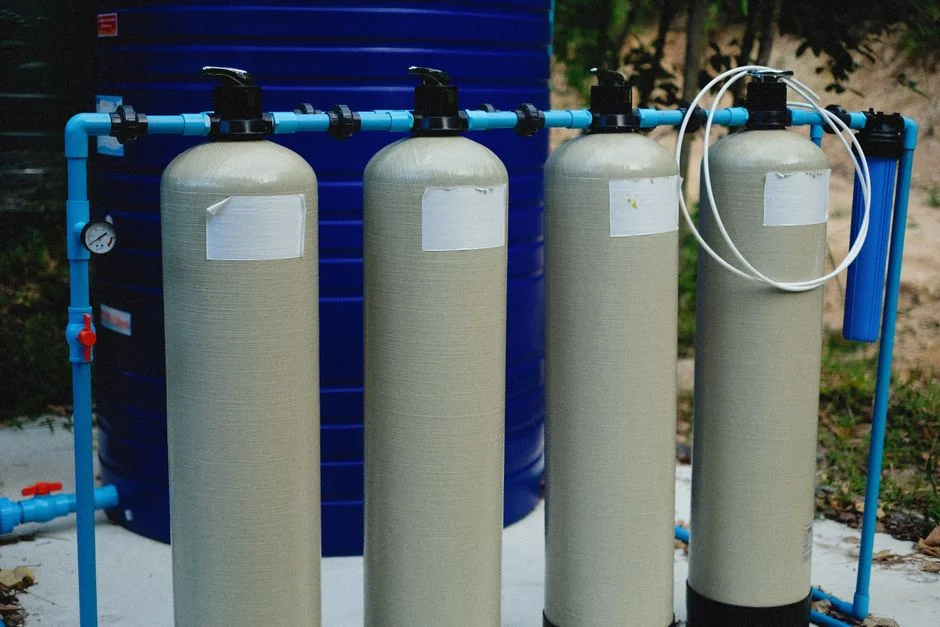
On-site generation provides operating flexibility. HydropureWater’s verified catalogue includes portable, benchtop and cabinet ozone generators, together with water-tank self-cleaning disinfectors, AOT photo-oxidation catalytic sterilizers and silver ion processors. These formats support different industrial and tank-disinfection duties, but the catalogue does not establish suitability for a specific high-strength wastewater flow or matrix.
Process integration can strengthen the case for ozone. In the textile study, electrocoagulation and ozonation were assessed both as EC + O3 and as EC → O3. The study’s combination worked well in the salty environment and was evaluated with real industrial wastewater. This supports considering ozone alongside upstream physical or electrochemical treatment instead of assuming it should handle all load in isolation.
Disadvantages, Failure Modes, and Compliance Risks
High capital expenditure is a principal disadvantage because the ozone-generation package must be funded in addition to contact, control and safety infrastructure. The Pollution Sustainability Directory identifies capital cost, especially for ozone generation, as a material drawback. Purchase price alone is therefore incomplete: the evaluation should distinguish equipment, gas-transfer provisions, pretreatment, installation, instrumentation, off-gas treatment and commissioning.
High operating expenditure is the second principal disadvantage identified by the Pollution Sustainability Directory. The relevant cost drivers are electricity, oxygen or feed-gas supply, maintenance, monitoring and gas-transfer performance. The supplied research contains no universal energy consumption, ozone dosage, contact time or operating-cost rate, so these values must come from representative pilot data and supplier proposals.
Potential byproducts can change the compliance and reuse assessment. The Pollution Sustainability Directory states that undesirable, though often less toxic, byproducts may form. Candidate products and their relevance depend on the contaminants and receiving water, so representative testing is needed against the intended discharge or reuse criteria.
Matrix sensitivity can prevent an otherwise suitable chemistry from delivering acceptable process performance. The textile study identifies high pH, intense colour and extremely high salinity in post-dyeing wastewater. Each can alter the treatment context, while suspended solids or colloidal material can also restrict effective ozone mass transfer. This is why water characterisation and pilot testing precede a full-scale commitment.
| Risk or failure mode | Engineering consequence | Information required before purchase |
|---|---|---|
| Ozone generation and transfer underperform | Treatment objective is not achieved consistently | Pilot dose-response, transfer method, power demand and control response |
| Wastewater matrix interferes | Residual COD, colour, micropollutants or microbial risk remains | Representative pH, colour, salinity or conductivity, solids and toxicity data |
| Undesirable byproducts form | Discharge or reuse compliance may be affected | By-product identification and validated effluent data |
| Off-gas and exposure controls are inadequate | Worker-safety and permitting risk | Generation, ventilation, off-gas, interlocks and monitoring provisions |
| Pretreatment is omitted or unsuitable | Mass transfer and operating reliability decline | Solids, oil, grease and colloid characterisation plus pilot comparisons |
Safety must be designed as part of the system, not appended after equipment selection. The decision package should address ozone generation, off-gas handling, operator exposure, interlocks, ventilation and monitoring. The supplied research does not provide a universal gas concentration, regulatory threshold or exposure limit, so those controls must be specified against the applicable local requirements.
A second limitation is evidentiary. The supplied sources do not provide universal removal efficiencies, ozone dosages, contact times or lifecycle costs. A credible selection therefore depends on representative pilot results and a complete supplier proposal, not a generic performance table.
How to Select the Right Ozone Treatment Train

Selection should begin with the treatment objective because oxidation, disinfection and reuse preparation impose different design duties. A refinery should first decide whether the primary requirement is refractory COD reduction, micropollutant control, disinfection, colour and odour treatment, storage-tank sanitation or preparation for reuse. Each objective then needs a defined analytical endpoint and water matrix.
- Define the target. Name the contaminants or organisms responsible for the problem, the required treatment result and the receiving or reuse condition. Avoid treating “ozone” as the objective.
- Characterise the wastewater. Request COD, BOD, pH, colour, salinity or conductivity, suspended solids, toxicity, target-contaminant data and flow variability. Acceptance limits cannot be assigned without site data.
- Map upstream removal requirements. Assess whether suspended solids, oil and grease, free oil or colloidal material should be removed before ozone contact. For streams containing these fractions, DAF pretreatment for industrial wastewater is a relevant option to test rather than an automatic choice.
- Compare treatment-train configurations. Evaluate standalone ozonation, ozone after biological treatment, ozone after physical pretreatment and combined processes. The textile study’s EC + O3 and EC → O3 arrangements provide a useful example of comparing sequence configuration, not merely ozone versus no ozone.
- Request complete operating evidence. A supplier should define the analytical objective, ozone-production approach, transfer method, power and oxygen demand, control strategy, off-gas arrangements, maintenance, monitoring and validated by-product results.
- Evaluate whole-life suitability. Compare capital, operating demand, pretreatment, pilot validation and expected lifecycle performance. Both capital and operating costs are material disadvantages in the supplied evidence.
Biological treatment remains relevant where bulk biodegradable organics dominate. An integrated membrane bioreactor treatment system can be compared as the upstream biological stage when the objective is to reduce biodegradable load before a targeted ozone stage, although no supplied source establishes a universal MBR-to-ozone configuration.
The pilot should challenge the proposed train with representative wastewater, including seasonal or production-cycle variation. Test the chosen pretreatment, ozone-transfer arrangement and control settings against the stated analytical endpoint. Include by-product analysis and mass-transfer observations; otherwise, a high headline removal rate may conceal poor process robustness.
Ozone System Options for Industrial Wastewater and Water Storage
Equipment format should follow the duty rather than precede it. HydropureWater’s verified catalogue includes portable, benchtop and cabinet ozone generators, water-tank self-cleaning disinfectors, AOT photo-oxidation catalytic sterilizers and silver ion processors. These options cover generator formats and supplementary disinfection approaches, but the catalogue summary provides no industrial-flow capacities, ozone concentrations, turndown ranges or validated removal claims.
| Equipment or format | Catalogue-defined application | Selection question |
|---|---|---|
| Portable, benchtop and cabinet ozone generators | Industrial ozone generation in different equipment formats | Does the duty require a packaged generator or an engineered continuous system? |
| Water-tank self-cleaning disinfectors | Storage-tank disinfection and bacterial-regrowth prevention | Have tank conditions and microbial control requirements been characterised? |
| AOT photo-oxidation catalytic sterilizers | Catalogue-listed sterilization equipment | Does the specified duty require this process rather than ozone contact? |
| Silver ion processors | Catalogue-listed water-treatment equipment | Is the intended application compatible with this treatment principle? |
| Engineered industrial ozonation system | Wastewater oxidation or disinfection with engineered transfer, controls and off-gas provisions | What pilot and site data support the proposed duty? |
The industrial ozone generator and tank sterilization system should therefore be assessed against the actual application. For storage and disinfection, the relevant questions include tank geometry, water quality, microbial risks and residence conditions. For industrial wastewater oxidation, the package must also address mass transfer, power, control, maintenance and off-gas provisions beyond a general catalogue summary.
For high-strength wastewater with suspended solids, oil and grease, free oil or colloidal matter, pretreatment may be necessary before ozone contact. Whether DAF pretreatment for industrial wastewater is suitable depends on contaminant distribution and pilot performance; for operating details, compare DAF operation and maintenance guidance with the site’s actual runbook requirements.
Frequently Asked Questions
What are the main advantages and disadvantages of ozone oxidation for industrial wastewater?
The principal advantages are oxidation of selected complex or non-biodegradable contaminants, disinfection capability and rapid decomposition to oxygen without a persistent chemical residual, according to the Pollution Sustainability Directory. The principal disadvantages are high capital and operating costs, dependence on electricity and gas transfer, matrix sensitivity, safety requirements and possible byproduct formation. Suitability depends on the target, wastewater characteristics and treatment train.
How much does an industrial ozone oxidation system cost?
The supplied evidence identifies capital and operating costs as material disadvantages but provides no universal price or lifecycle-cost figure. A buyer should request a quote that separates the industrial ozone generator and tank sterilization system, contact equipment, power and oxygen requirements, off-gas provisions, pretreatment, pilot testing, maintenance and monitoring. Compare alternatives over the operating scenario rather than using purchase price alone.
What data are needed to size an ozone generator system?
Flow and contaminant loading are not sufficient. Required inputs include the treatment objective, COD and BOD, pH, colour, salinity or conductivity, suspended solids, toxicity, target contaminants, flow variability, ozone-transfer configuration and representative pilot evidence. These inputs determine whether ozone should act alone or follow physical, biological or electrochemical pretreatment.
How should an ozone system supplier be evaluated?
Evaluate demonstrated application fit, the validation method, control and safety provisions, representative by-product data and after-sales support. The proposal should identify the analytical endpoint, transfer method, power and oxygen demand, off-gas arrangements, maintenance and monitoring. Ask for pilot data from comparable wastewater and treatment objectives rather than relying on generic performance claims.
When is ozone most defensible in an industrial wastewater treatment train?
Ozone is most defensible as an advanced oxidation stage for refractory COD or selected micropollutants, or as a disinfection stage where microbial control is required. The 2026 Catalysts review supports pharmaceutical-contaminant treatment as an active research area, but compound-specific pilot evidence remains necessary. Where solids, oil, grease or colloids interfere, establish whether pretreatment improves ozone mass transfer and lifecycle performance before selecting the final sequence.
Related Equipment
- DAF pretreatment for industrial wastewater — specifications, capacity range, and technical data