Start with the receiving sewer authority's permit
The enforceable pretreatment requirements for a food or beverage plant near Emporia come from the receiving sewer authority’s industrial pretreatment permit, local regulations, and applicable sector requirements—not from a generic equipment catalog. EPA’s National Pretreatment Program under 40 CFR Part 403 establishes the federal framework, while the control authority, commonly the publicly owned treatment works, sets enforceable local limits and monitoring conditions. For a plant discharging directly to surface waters, the NPDES permit pathway applies instead. A structured review of the controlling documents in pretreatment permit review before sewer discharge prevents the plant from sizing equipment against requirements that do not apply to its discharge.
Ask the authority whether the facility is a Significant Industrial User, or SIU, and obtain the current industrial pretreatment permit. Identify the discharge point, local limits, prohibited discharges, monitoring parameters, sample locations and frequencies, reporting dates, record-retention requirements, compliance contacts, and surcharge methodology. Also request local pretreatment regulations, categorical or sector requirements applicable to the product line, approved-equipment rules, and any alternate limits or local amendments.
| Document or decision | What it establishes for the buyer | Before equipment procurement |
|---|---|---|
| Current industrial pretreatment permit | Facility-specific discharge limits, monitoring, reporting, and compliance terms | Translate each condition into a design requirement |
| Local pretreatment regulations | Prohibited discharges, local requirements, enforcement provisions, and surcharges | Confirm whether proposed equipment and operating practices are acceptable |
| Applicable sector or categorical requirements | Requirements that may apply to the plant’s products or processes | Confirm scope with the control authority |
| Approved-equipment and monitoring rules | Constraints on equipment, sampling, analysis, or reporting | Include compliance in bid criteria and acceptance testing |
Do not treat the commonly cited 250 mg/L thresholds for BOD and TSS as automatic Emporia limits. Hixson describes those values as common indirect-discharger thresholds, but the receiving POTW’s permit controls. The supplied research does not establish Emporia’s numerical limits, surcharge rates, or monitoring frequencies; those inputs must come from the applicable sewer authority before a treatment train is selected.
Characterize every production and sanitation stream
Food-processing wastewater can vary materially within a single production day, so average discharge data is not a sound equipment-sizing basis. Map washing, cooking, cooling, packaging, floor-washing, equipment-cleaning, and CIP streams separately, then identify whether each contains product loss, suspended food solids, fats, oils and grease, acids, caustics, sanitizers, or cleaning chemicals. Hixson reports that food-processing effluent can be 10 to 100 times stronger than domestic wastewater in BOD and COD terms; that source-specific observation supports detailed characterization rather than use of a nominal domestic-sewer profile.
Base the sampling program on production schedules, product changes, batch releases, sanitation cycles, and seasonal operating peaks. Record flow, BOD₅ or COD, TSS, FOG, pH, and temperature across normal production and CIP conditions; include nitrogen and phosphorus where the permit or waste profile makes them relevant. A high-COD industrial wastewater treatment approach is useful only after the plant’s load variation and stream composition have been established.
| Stream to characterize | Key process variables | Design implication |
|---|---|---|
| Product-loss and high-strength liquids | Flow, BOD or COD, TSS, FOG, pH | Determine whether segregation, on-site treatment, or permitted off-site handling is appropriate |
| Washdown and floor washing | Peak flow, solids, detergent or sanitizer carryover | Establish screening, equalization, and solids-removal duties |
| Acidic or caustic CIP streams | pH, flow, chemical type, dosing sequence | Define segregation and pH-control requirements |
| Cooling and equipment-cleaning water | Flow, temperature, lubricant or chemical contribution | Confirm compatible treatment and monitoring conditions |
For beverage plants, Hixson’s typical brewery figures—BOD₅ of about 338 mg/L, COD of about 1,118 mg/L, and relatively low nitrogen—can guide sampling questions, but they are not substitutes for plant measurements. Segregate or characterize strong product-loss liquids, spent caustic, and acid streams before deciding whether they belong in the common treatment train. If a stream cannot be safely neutralized on site, obtain the local rules and permitted off-site disposal or treatment terms before including it in the design basis.
Build a treatment train that removes each contaminant in sequence

Each treatment step should have one defined contaminant-removal objective and a measurable outlet condition. The practical sequence is collection and segregation, screening, equalization, DAF or clarification, pH adjustment, biological treatment where required, optional polishing, compliance sampling, and sewer discharge. Adding a unit does not create compliance unless its performance contributes to the final permit condition.
- Source control and screening: Remove packaging debris, food particles, grit, and other material before it reaches pumps, meters, biological equipment, or chemical controls.
- Equalization: Buffer production surges, batch changes, and CIP chemical spikes so downstream treatment receives a controlled flow and load.
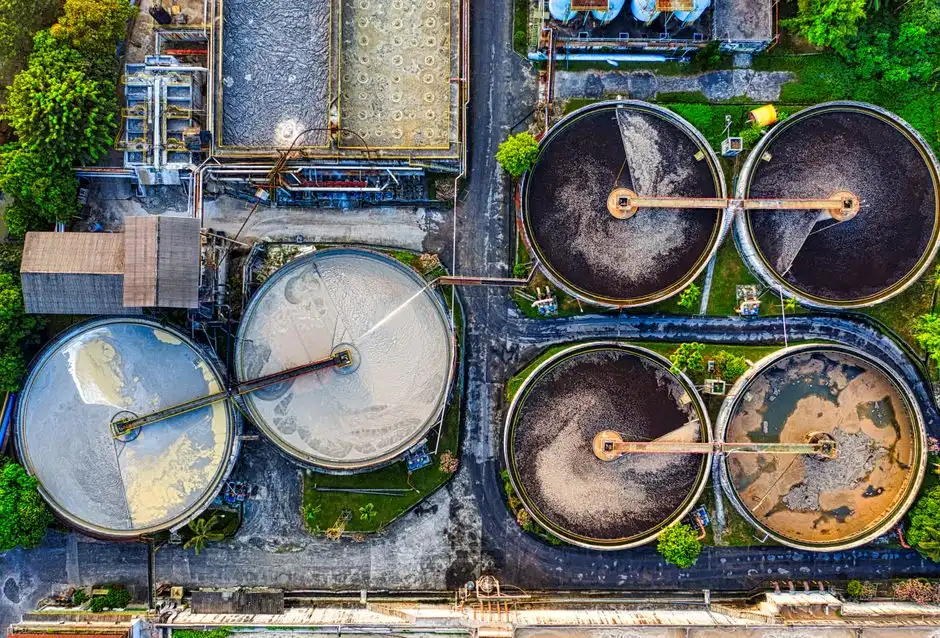
- DAF or clarification: Remove suspended solids, buoyant FOG, oil and grease, or colloidal material before biological treatment when the wastewater profile and permit objective require it.
- pH adjustment: Neutralize acidic product streams and acidic or caustic CIP discharge when local limits require it and the composition creates a documented pH risk.
- Biological treatment: Reduce dissolved BOD and other biodegradable organics that remain after physical separation.
- Optional polishing: Apply MBR or another advanced process when low suspended solids, high-quality discharge, reuse, or site constraints justify it.
| Process step | Primary function | Required decision evidence |
|---|---|---|
| Source control and screening | Protect downstream equipment | Debris and grit sources |
| Equalization | Buffer flow and concentration variation | Peak, batch, and simultaneous-cleaning conditions |
| DAF or clarifier | Remove suspended solids and FOG where required | Actual contaminant profile and treatment objective |
| pH adjustment | Control acidic or alkaline discharge | Permit range and stream chemistry |
| Biological treatment | Reduce remaining dissolved BOD | Organic loading and downstream permit condition |
| Optional MBR or polishing | Improve solids or organic removal and support reuse | Final effluent target and site constraints |
DAF is often appropriate when FOG and buoyant material are priorities; gravity clarification depends on actual solids characteristics, settling performance, and available footprint. The food and beverage DAF buyer criteria provide a useful comparison framework.
Hixson reports anaerobic digestion COD removal of 89.8–96.5% in food-processing applications, with methane yields of 0.27–0.33 liters CH₄ per gram of COD removed. These are source-specific application results, not guarantees for a plant. Hixson also cites beverage-facility MBR pilot results of 16.9 mg/L effluent COD, 3.8 mg/L TSS, and 92.6% COD removal. MBR remains a site-specific choice where low solids, high-quality effluent, reuse, or footprint constraints justify it.
Size DAF and equalization around verified operating conditions
A DAF or equalization system should be sized from verified operating conditions, not headline removal percentages. Give vendors the design flow, average and peak organic loading, wastewater profile, target pH, FOG or TSS objective, footprint, utilities, residuals destination, and applicable permit conditions. The design flow must address peak production and concurrent cleaning; average flow supports chemical and biological loading, while equalization detention must cover the relevant batch and CIP variability.
| Vendor input | Why it is needed | Evidence the buyer should supply |
|---|---|---|
| Hydraulic basis | Prevents equipment from being selected for average flow during a batch or washdown | Production schedule, measured peak flow, and concurrent-cleaning case |
| Organic and solids loading | Establishes treatment and equalization duties | Plant-specific BOD or COD, TSS, FOG, and variability data |
| Removal objective | Defines whether DAF or clarification is technically appropriate | Permit condition and intermediate removal targets |
| Physical constraints | Tests whether the proposed arrangement fits | Available footprint, utilities, access, and residuals-handling route |
Hixson reports poultry-slaughterhouse DAF field studies showing 74% suspended-solids removal and 99% oil-and-grease removal under optimized conditions. More recent poultry operations reportedly achieved up to 99% TSS removal and 85% BOD₅ reduction with appropriate coagulant selection and operating parameters. These figures provide source-specific context only. The supplied research provides no universal DAF sizing factor, and performance cannot be transferred to an Emporia plant without comparable wastewater and operating conditions.
Require each proposal to identify the wastewater basis, design flow, operating solids loading, recycle ratio, skimming arrangement, control strategy, and performance-test method. A supplier that cannot state those assumptions has not supplied a verifiable basis. The DAF versus clarifier comparison for food and beverage wastewater can be used to compare the objectives rather than assume that either technology has universal superiority.
Turn the permit into an operating and audit checklist
Commissioning does not establish ongoing compliance; the operating program must reproduce the permit conditions under representative production and cleaning cycles. Oxmaint identifies BOD, TSS, FOG, and pH as typical pretreatment limits, while noting that temperature and nutrients may also matter depending on the permit and production profile. Verify every parameter and frequency against the applicable permit rather than adopting a generic checklist.
| Control area | Records to retain | Audit-ready evidence |
|---|---|---|
| Sampling | Parameters, locations, frequency, sample type, chain of custody, analytical method | Results tied to production and operating conditions |
| Preventive maintenance | DAF skimming, equalization mixers, chemical feeds, flow meters, pH instruments, samplers, and alarms | Scheduled work orders, calibration results, and completed checks |
| Operations | Production shifts, chemical additions, sludge or float removal, maintenance, and abnormal events | Dated operating log and supporting work orders |
| Corrective action | Exceedance, root cause, response, verification sample, and closure | Documented investigation and verified closure |
| Reporting and billing | Permit reports and applicable surcharge calculations | Timely submissions with calculation support |
Oxmaint’s example maintenance program—daily operating checks, weekly skimmer inspection, monthly chamber cleanout, and weekly pH-probe calibration—is a source-specific illustration, not a universal Emporia schedule. The permit, manufacturer instructions, and site risk determine actual frequencies.
Include reporting and surcharge administration in the operating budget. Hixson’s San Antonio Water System example charges $1.32 per mg/L of BOD above 250 mg/L and $3.05 per mg/L of TSS above 250 mg/L, multiplied by monthly discharge volume. That demonstrates a surcharge structure, but it is not an Emporia tariff. The applicable Emporia formula must be obtained from the receiving authority before financial approval.
Use a supplier-selection and acceptance framework
A comparable bid should state the same design basis, treatment objective, performance conditions, controls scope, residuals plan, and acceptance method. Headline capacity alone does not establish application fit or compliance risk. For each supplier, request an application-specific proposal that identifies design flow, contaminant-loading basis, equipment arrangement, utilities, controls, residuals handling, installation requirements, and performance-test protocol.
| Procurement check | Acceptable vendor response | Buyer decision |
|---|---|---|
| Performance basis | Guaranteed conditions, influent envelope, test method, and representative sampling stated | Reject unqualified removal claims |
| Controls | Instrument list, alarms, interlocks, calibration provisions, and control narrative | Confirm compliance-critical functions are included |
| Residuals | Float or sludge quantity, characteristics, and destination | Confirm handling capacity and destination |
| Support | Manuals, training, spare-parts plan, and service-response process | Assess maintainability and response obligations |
| Acceptance | Stable level, removal, pH control, metering, alarms, sampling access, and records demonstrated | Define pass/fail conditions before award |
Require commissioning to demonstrate stable water level, float or sludge removal, pH control, flow measurement, alarms, sampling access, and recordkeeping. Define whether the acceptance sample will be grab or composite and whether it must represent full production and CIP operation. A proposed industrial DAF system for food-processing pretreatment should fit the plant’s actual wastewater and permit conditions, not merely reproduce published performance from another sector.
Where pH control is required, evaluate an automatic chemical dosing and pH-control system as part of the complete control architecture, including reagent storage, metering, alarms, calibration, and residual handling. The supplied sources establish no universal Emporia equipment price, lead time, payback period, or guaranteed compliance margin. Request a site-specific capital and operating proposal and compare lifecycle costs under the same verified design basis.
Frequently Asked Questions
What sewer limits apply to a food and beverage plant near Emporia?
EPA’s National Pretreatment Program under 40 CFR Part 403 provides the federal framework, while the receiving POTW’s industrial pretreatment permit and local rules establish enforceable facility-specific limits and monitoring conditions. Request the current permit, local regulations, applicable sector requirements, and surcharge formula. Do not substitute the commonly cited 250 mg/L BOD and TSS thresholds for confirmed Emporia requirements.
What wastewater parameters should be tested before ordering a DAF system?
Test flow, BOD₅ or COD, TSS, FOG, pH, and temperature across production, batch-change, and CIP conditions; include nitrogen and phosphorus when relevant to the permit and waste profile. Measure variability rather than relying on averages, and separately characterize product-loss, acidic, and caustic streams so the design and any diversion decision reflect actual loads.
When is MBR justified instead of DAF plus conventional biological treatment?
MBR is justified when the required effluent needs low suspended solids, advanced organic removal, reuse capability, or a smaller treatment footprint. Hixson cites beverage-facility MBR pilot results of 16.9 mg/L COD and 3.8 mg/L TSS, but those pilot values are not an automatic design target or guaranteed performance. The final decision should follow the permit target, biological loading, reuse requirements, utilities, and site constraints.
How should a buyer compare DAF and clarifier suppliers?
Issue every bidder the same measured wastewater basis, design flow, treatment objective, permit conditions, footprint, utilities, controls scope, residuals requirements, and representative performance-test protocol. Require each proposal to state guarantee conditions and identify operating assumptions. Compare like-for-like results rather than accepting generic removal percentages or headline capacity.
How much does pretreatment cost, and how long will delivery take?
The supplied research establishes no Emporia cost range or equipment lead time. Request a site-specific capital and operating proposal based on measured wastewater, treatment objectives, utilities, available space, controls, residuals handling, performance guarantees, and schedule constraints. For a budgeting decision, require both initial capital and lifecycle operating components; for schedule approval, require a vendor-delivery date tied to the approved design and acceptance plan.
Related Equipment
- industrial DAF system for food-processing pretreatment — specifications, capacity range, and technical data