What the Jhang Sadr Project Must Establish Before Equipment Is Selected
A data center in Jhang Sadr, Pakistan, needs separate treatment trains for sanitary wastewater and cooling-tower blowdown because their flows, contaminants and reuse requirements differ. Equipment sizing depends on a verified water balance, baseline chemistry, operating profile and confirmed discharge or reuse route; the supplied research does not establish a defensible flow or cost for this location. The design should therefore begin with measurement and source segregation, not with a selected membrane or packaged plant.
Create a source-separated water balance covering cooling makeup, evaporation, blowdown, domestic sewage, process wastewater, firewater testing, laboratory drains and rainwater entering the design drainage system. Document maximum and minimum hourly flows, operating schedules, storage, dry-weather demand, peak-day demand and planned expansion. Require baseline testing for temperature, pH, conductivity or total dissolved solids, suspended solids, hardness, silica, alkalinity, residual chlorine and the biocide or anti-scalant constituents present at the facility.
The discharge route materially changes the objective. Confirm whether the outlet is a municipal sewer, an industrial pretreatment receiver, an irrigation channel, lined soakaway, surface-water body or closed-loop reuse destination. Pakistan environmental compliance must then be assessed for that actual route rather than inferred from a generic data-center standard.
| Design input | Evidence required | Decision affected |
|---|---|---|
| Water balance | Makeup, evaporation, blowdown and wastewater flows at representative operating conditions | Treatment flow, storage and reuse yield |
| Water chemistry | Temperature, pH, conductivity/TDS, suspended solids, hardness, silica, alkalinity and site chemicals | Process selection and scaling control |
| Duty profile | Maximum and minimum hourly flow, operating schedule, dry-weather and peak-day conditions, expansion | Equipment sizing and redundancy |
| Discharge or reuse route | Confirmed receiving authority, permit pathway, temperature and quality constraints | Treatment objectives and residuals |
Follow the staged sequence described by Genesis Water Technologies in its data-center cooling blowdown treatment framework: establish measurement and baseline data, optimize existing systems, review the chemical program, implement blowdown treatment and reuse, and add advanced integration only where scale and operating capability justify it.
How Jhang’s Climate Changes the Water-Reuse Decision
Jhang’s climate is a design driver, but evaporation and reuse yield cannot be estimated from the city name alone. The buyer needs at least one cooling season of meter and water-balance data from the actual cooling configuration, including operating hours, makeup, evaporation and blowdown. North Carolina State University reports that open-loop evaporative cooling withdraws and evaporates water every day, while blowdown can carry concentrated salts and chemical additives into receiving waters (North Carolina State University, 2026-09).
Temperature is also a discharge constraint. North Carolina State University identifies warm-water discharge as thermal pollution that can disrupt aquatic ecosystems and lower oxygen levels (North Carolina State University, 2026-09). A reuse design that removes heat and returns water to a controlled service may therefore be more defensible than sending warm blowdown to a sensitive receiving environment.
Compare the total cost of freshwater withdrawal, sewer discharge and waste transport against treatment energy, chemicals, media or membrane replacement, operator attention and residual disposal. Genesis Water Technologies states that the business case should reflect total cost of water rather than utility charges alone (Genesis Water Technologies, current webpage). Do not treat freshwater savings as the entire return.
Prioritize practical non-potable uses only after confirming demand and regulatory acceptance: toilet flushing, equipment washing, landscape irrigation or process water may have lower quality requirements than cooling-tower make-up. Cooling-tower make-up reuse demands tighter control of scaling, corrosion, microbiological risk and residual chemicals. It should therefore be treated as a more demanding design stage, not an automatic extension of non-potable reuse.
Separate Sanitary Wastewater from Cooling-Tower Blowdown
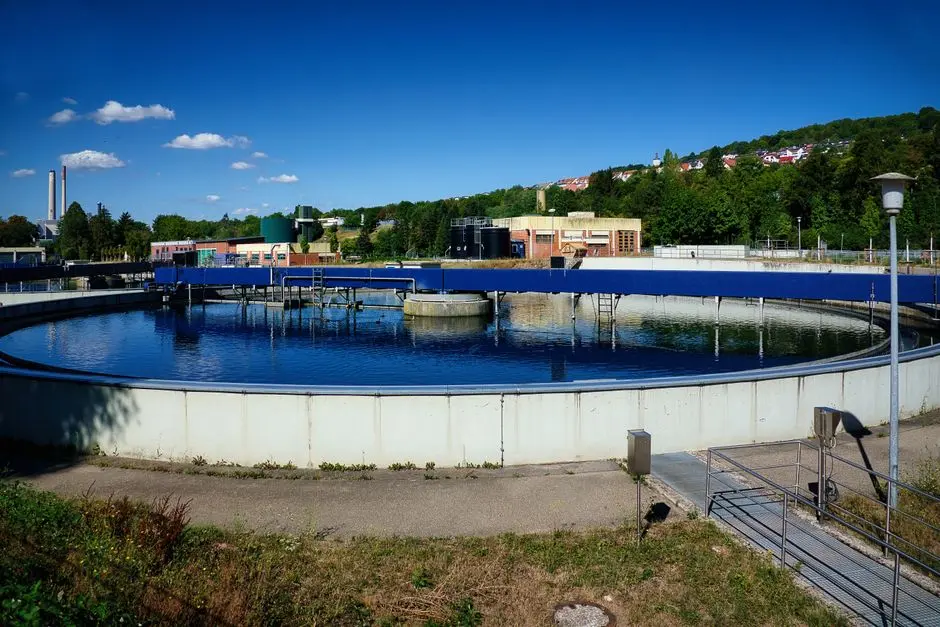
Cooling-tower blowdown is a chemically conditioned, salt-concentrated stream, while sanitary wastewater requires a biological treatment objective. Mixing them can complicate biological loading, chemical control and reuse quality. Unless the combined water balance and treatment objectives support it, route domestic sewage, canteen wastewater and washwater separately.
For sanitary flows, assess an appropriately designed biological package plant. The supplied WSZ catalogue describes an underground A/O biological contact-oxidation unit for community, hotel, hospital, factory and rural applications, with a handling range of 1–80 m³/h across the stated series. The relevant underground integrated sewage treatment unit must still be checked against the Jhang Sadr design flow, wastewater strength, soil conditions, odor controls and disposal route.
For industrial wastewater, dissolved air flotation is applicable where analysis confirms suspended solids, oil and grease, colloids or floatable contaminants. The supplied DAF catalogue states a range of 4–300 m³/h across 13 standard models; use that as a product-selection reference, not as proof that a DAF unit is required. A DAF system for industrial wastewater pretreatment should follow a wastewater characterization and pilot where the contaminants or flow variability are uncertain.
For cooling blowdown, start with controlled filtration and, where membrane protection or reuse requires it, ultrafiltration. The supplied hollow-fiber UF catalogue states 2,000–40,000 L/h capacity, 0.03 micron PVDF membranes, automatic backwash and air scour. Compare those specifications with an UF system for cooling blowdown pretreatment against actual flow, feed chemistry and operating conditions.
Do not select reverse osmosis from energy or recovery claims alone. Feed treatment, scaling risk, concentrate destination, pretreatment and operational skill form one design problem.
| Stream | Primary treatment objective | Possible unit | Key design check |
|---|---|---|---|
| Domestic sewage and canteen wastewater | Biological treatment and solids separation | A/O biological package plant | Flow, loading, odor, effluent destination and site conditions |
| Process wastewater with floatables, oil or colloids | Suspended-solids and floatable removal | DAF | Contaminant characterization, chemicals and sludge handling |
| Cooling-tower blowdown | Solids control and preparation for reuse | Filtration and potentially UF | Scaling, suspended solids, corrosion and target water quality |
Build a Treatment Train That Scales from Reuse to Disposal
The treatment train should advance only as the required water quality and operating envelope become more demanding. The sequence is: characterize; control the cooling system; remove physical contaminants; control chemistry; disinfect where necessary; and add advanced membrane treatment only for a defined reuse duty.
- Characterize: Meter makeup, blowdown, evaporation and wastewater flows. Test conductivity, pH, suspended solids and contaminants relevant to the intended reuse.
- Control the cooling system: Repair leaks, eliminate unnecessary once-through cooling where feasible, optimize blowdown controls and reduce suspended solids that otherwise force unnecessary discharge.
- Separate solids: Apply filtration, DAF or lamella clarification where testing identifies suspended solids, oil and grease, colloids or floatables that would interfere with reuse or membranes. A high-efficiency lamella clarifier is one equipment option, subject to the selected duty.
- Control chemistry: Use an PLC-controlled chemical dosing skid for pH adjustment, coagulants, flocculants or specialty chemicals. Set the dose from jar tests and representative pilot work rather than a generic specification.
- Disinfect where required: Apply UV or chlorine dioxide when the reuse route, microbial risk or permit requires it. The supplied chlorine dioxide catalogue states a range of 50–20,000 g/h and identifies industrial cooling loops and process wastewater among its applications; evaluate a chlorine dioxide generator for industrial cooling loops against the actual dosing demand and controls.
- Add advanced reuse: Use UF, RO or another membrane process only after solids removal, scaling analysis, concentrate management and confirmed reuse demand.
| Design stage | Decision trigger | Evidence required before advancing |
|---|---|---|
| Cooling optimization | Measured losses or unnecessary blowdown | Leak survey, controls review and metered water balance |
| Physical separation | Suspended solids, oil, colloids or floatables identified | Representative analysis and pilot performance |
| Chemical control | pH or treatment chemistry affects reuse or fouling | Jar testing, compatibility review and dose-response data |
| Disinfection | Microbial requirement or permit condition | Target log reduction and site risk assessment |
| RO or advanced reuse | Confirmed demand for higher-quality make-up water | Scaling model, pilot results, energy review and concentrate plan |
For controlled salt precipitation, IDE Technologies reports that conventional brackish-water RO typically reaches 75–80% recovery before scaling becomes difficult to manage. Its specialized industrial example operated at around 95% recovery and produced permeate silica of about 1 mg/L (IDE Technologies, 2026). These figures describe the cited configurations, not a guaranteed Jhang Sadr result. An industrial RO system for advanced water reuse must therefore be evaluated together with pretreatment, scaling and concentrate management.
Treat RO reject as a separate design stream. Establish whether it can return to the cooling system, receive further treatment, be evaporated or be discharged under an approved route.
Calculate Blowdown Recovery Without Inflating the Savings
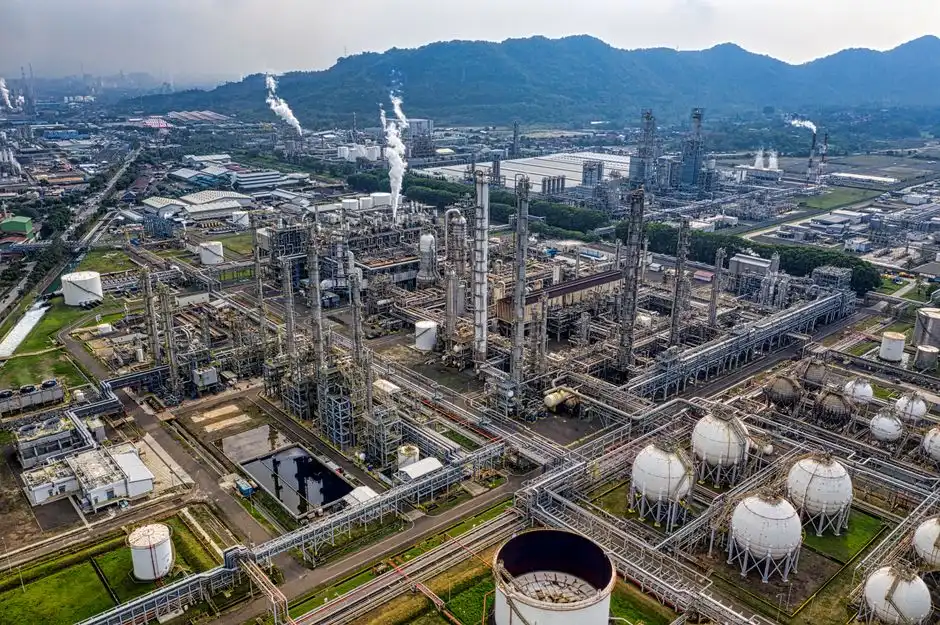
Blowdown must be calculated from cycles of concentration, not assumed from a generic reuse percentage. Genesis Water Technologies gives the relationship as blowdown as a fraction of makeup water equal to 1 divided by cycles of concentration minus one. At 4 cycles of concentration, blowdown is 25% of makeup-water volume; at 6 cycles, it is 20%. The absolute reduction is therefore 5 percentage points, while the relative reduction is 20% (Genesis Water Technologies, current webpage).
This calculation also exposes a common error: moving from 4 to 6 cycles does not halve blowdown. Genesis Water Technologies cautions that biological and scaling risks increase above 5–6 cycles without advanced treatment, so any increase requires review of water chemistry, corrosion, fouling and cooling equipment.
The water balance must then be reconciled with operations. Genesis Water Technologies reports that measured blowdown can exceed theoretical calculations by 15–30% because of unmeasured losses and emergency dumps (Genesis Water Technologies, current webpage). A bankable case therefore needs actual meter data, including event logs and emergency operating practices.
| Cycles of concentration | Calculated blowdown as a fraction of makeup | Interpretation |
|---|---|---|
| 4 | 25% | Baseline calculation |
| 6 | 20% | Five-percentage-point absolute reduction and 20% relative reduction from 4 cycles |
Calculate avoided freshwater, sewer-discharge and waste-handling costs together with energy, chemicals, membranes, operator attention, downtime and residual disposal. Do not count the same water as both reduced consumption and reduced discharge without checking the water balance. Genesis Water Technologies gives 15–25% makeup-demand reduction for physical separation plus targeted treatment as a feasibility reference; it is not a guaranteed result for a Jhang Sadr data center (Genesis Water Technologies, current webpage). Use the supplied effluent treatment plant buyer’s guide to structure the commercial comparison.
Build a Local Compliance and Contractor-Selection Package
Generic bids should not be accepted as proof of a Jhang Sadr treatment concept. Require bidders to submit the selected process train, guaranteed flows, influent and effluent limits, chemical consumption, utility demand, footprint, control philosophy and solids or concentrate-handling plan. Every guarantee must identify the tested duty and operating envelope.
Require site-representative data or representative pilot work where scaling, silica, hardness, suspended solids or chemical compatibility remains uncertain. The pilot should measure removal performance, chemical demand, pressure loss or fouling, energy use and residual quality.
Ask vendors to identify the applicable Pakistani environmental consent and any local sewer, trade-license or water-withdrawal requirements for the actual site and discharge route. Do not publish numerical effluent limits without confirming them against current official requirements. Temperature, salts, suspended solids and treatment chemicals all need to be addressed for the selected receiving route.
Evaluate the whole-life burden, not only recovered water. Open Engineering’s 2026 life-cycle analysis found that the wastewater-reuse scenario had about twice the global warming potential of the freshwater case, with treatment energy accounting for roughly 80% of the difference. Its UF-plus-RO scenario used over five times the energy of the freshwater case, although the associated improvement in cycles of concentration reduced blowdown and chemical consumption (Open Engineering, 2026). That evidence supports a lifecycle comparison, not rejection of reuse.
| Bid requirement | Acceptable evidence | Commercial consequence if absent |
|---|---|---|
| Guaranteed flow and water quality | Duty-specific guarantee, test methods and operating conditions | Unallocated risk or conservative equipment selection |
| Utility and chemical consumption | Design basis, calculation and measured pilot data where available | Unverified operating cost |
| Controls and commissioning | Cause-and-effect list, training, spares and local support plan | Automation risk and delayed handover |
| Residual management | Mass balance, collection route and disposal basis | Incomplete environmental scope |
| Pakistani approvals | Named consent pathway and site-specific regulatory responsibilities | Permitting and discharge risk |
Use the 2026 Kuala Lumpur buyer’s guide as a vendor-question checklist, then adapt it to Pakistani utilities, discharge rules and site conditions. Do not transfer a foreign approval or design assumption into the Jhang Sadr tender.
Implementation Sequence for a Jhang Sadr Data Center
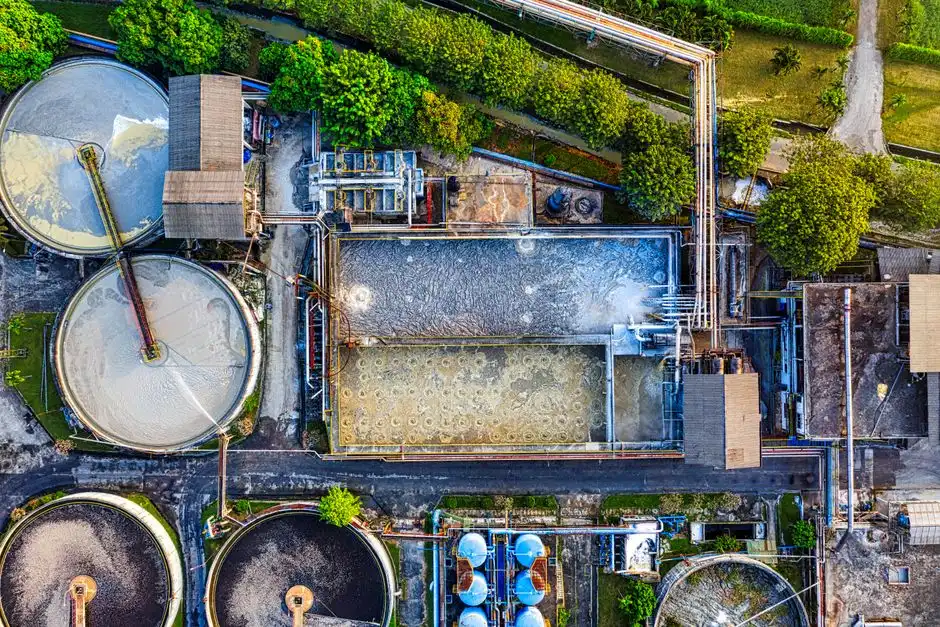
Implementation should be staged to avoid an oversized or underperforming first installation. Complete source mapping, metered water-balance work, water-quality sampling and confirmation of the discharge or reuse destination before detailed equipment design.
Pilot the proposed train on representative cooling blowdown and wastewater. Measure treatment performance, chemical demand, membrane or media pressure loss, temperature, energy use and concentrate quality. For sanitary flows, verify the biological process under the expected hydraulic and organic loading rather than relying only on packaged-unit capacity claims.
Install segregated pretreatment and a controlled reuse tie-in before replacing wider facility infrastructure. Provide isolation, bypass, sample points and an operating response for off-specification water.
Commission with flow meters and online conductivity measurement at minimum. Verify pH, suspended solids, microbiological status and any permit-defined parameters before transferring treated water to its intended service.
Track actual blowdown against the model after stabilization. Recalculate cycles of concentration and reuse yield using measured operation, and update the treatment and financial cases if emergency dumps, seasonal demand or cooling configuration changes the original assumptions.
Frequently Asked Questions
How much should a Jhang data center budget for cooling blowdown treatment?
No sourced local cost or quotation is available for Jhang Sadr, so a defensible budget cannot be calculated from the city name or equipment catalogue alone. Request itemized bids based on measured maximum and minimum hourly flows, water chemistry, selected treatment duty, reuse targets, energy demand, operator attendance and concentrate disposal. The quote should also state excluded civil work, utilities, chemicals, media or membrane replacement and performance testing.
Should the project install DAF, UF, RO or a complete reuse plant?
DAF is considered where testing confirms suspended solids, oil and grease, colloids or floatables. UF provides solids separation and can protect downstream membranes or improve reuse quality. RO is an advanced separation step whose feasibility depends on scaling, pretreatment, energy and concentrate management. Select a complete reuse plant only after the water balance, target quality and residuals are defined; equipment preference is not a design basis.
Can cooling-tower blowdown be reused as cooling-tower make-up?
Yes, but only after the blowdown is treated to control scaling, suspended solids, corrosion risk, residual chemicals and microbial contamination. This target is more demanding than toilet flushing, washing or irrigation because the water enters the cooling circuit and concentrates again. Require representative analysis, pilot evidence and a defined operating envelope before designing cooling water makeup reuse.
What should a supplier guarantee in a Pakistani data-center bid?
Require guaranteed process performance at stated flows and influent conditions, chemical and utility consumption, control functionality, commissioning evidence, operating documentation, operator training and local spare-parts support. Also require a residual-management plan and identification of the environmental approvals and discharge responsibilities that apply to the actual Jhang Sadr site. A peak-flow capacity statement without performance and operating data is insufficient.