What Treatment Does a Yaroslavl Data Center Actually Need?
A Yaroslavl data center needs a two-stream treatment strategy: biological treatment for sanitary wastewater and a separate cooling-tower blowdown train sized from the actual water balance. KETOS reports that 20–30% of water used in evaporative cooling is normally returned as liquid wastewater. The likely blowdown train is filtration and UF pretreatment followed by RO or NF, with the final route selected from cooling-makeup reuse, compliant discharge or zero liquid discharge. Final sizing requires the cooling configuration, makeup-water analysis, blowdown flow, target cycles of concentration, winter design conditions and current Volga-basin discharge requirements.
Do not combine these streams at the preliminary design stage. Sanitary wastewater has an organic and biological load; cooling blowdown contains concentrated dissolved salts, scaling species, suspended solids and residual cooling chemicals. Their hydraulic loads, treatment objectives and permitted destinations require separate design calculations. More context is available in the Russian cold-climate data center treatment guide and the data center blowdown treatment decision framework.
Five inputs gate equipment selection:
- Cooling configuration, circulating flow and makeup demand.
- Makeup-water analysis and the target cycles of concentration.
- Measured blowdown flow, including drains and emergency discharges.
- The facility’s winter ambient design temperature.
- Current discharge requirements for the specific Volga receiving segment.
KETOS reports that approximately 75–90% of data centers worldwide rely on water-based cooling, but this is a screening statement, not proof that the proposed Yaroslavl facility uses evaporative towers. The cooling configuration must be confirmed before applying a generic blowdown percentage.
The supplied research contains no current numeric discharge limits for the relevant Yaroslavl or Volga receiving segment. Limits from another Russian basin must not be substituted. Confirmation from the responsible Russian environmental authorities is a formal design gate, not a closing administrative task.
Build the Cooling-Water Balance Before Choosing Equipment
The blowdown mass balance must be anchored to measured flows because unmeasured losses and emergency dumps can make actual discharge exceed a theoretical estimate.
KETOS reports that in evaporative cooling, typically 70–80% of withdrawn water is lost through evaporation and 20–30% is discharged as liquid wastewater. Genesis Water Tech gives a more operational relationship: at four cycles of concentration, blowdown equals 25% of makeup-water volume; at six cycles, it equals 20%. Moving from four to six cycles therefore reduces blowdown by five percentage points, or 20% relative to the four-cycle stream. That reduction does not make six cycles automatically preferable because scaling, biological growth and chemical accumulation become more demanding.
Install metering for makeup, blowdown and drain flows, and determine evaporation where practicable through the cooling configuration or an approved water-balance method. Include filter and media backwash, sampling waste, laboratory drains and emergency dumps. The design flow should represent a documented operating case rather than a single nominal tower value.
| Input | Measurement or required information | Design use |
|---|---|---|
| Makeup water | Continuous or campaign flow measurement | Calculates evaporation and blowdown |
| Blowdown | Continuous flow plus drain and emergency-discharge records | Sets treatment-plant capacity |
| Circulating chemistry | Conductivity, pH, suspended solids, hardness, alkalinity, silica, chloride, sulfate and residual treatment chemicals | Sets cycles, pretreatment and membrane limits |
| Makeup chemistry | The same analytical suite, with a current makeup analysis | Establishes scaling baseline and concentrate chemistry |
| Seasonal operating mode | Summer peak, winter minimum and abnormal operating cases | Determines hydraulic and storage requirements |
Water Usage Effectiveness alone cannot distinguish water permanently consumed through evaporation from water recovered, reused or discharged. The project model must report consumption, reuse and final discharge separately. Genesis Water Tech also warns that measured blowdown can exceed theoretical calculations by 15–30% because of unmeasured losses and emergency dumps, so metering and contingency capacity should remain in the sizing basis.
Use the four-cycle and six-cycle relationships for screening only. Final equipment flow comes from the facility’s own makeup and blowdown measurements, operating schedule and selected cycles of concentration.
Select the Wastewater Treatment Route
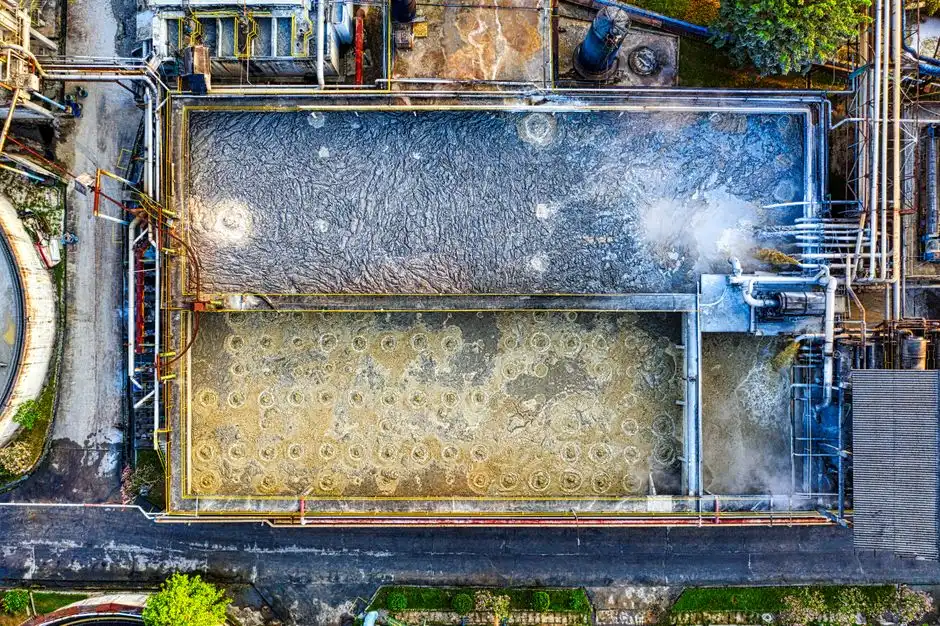
Sanitary wastewater and cooling blowdown should enter separate treatment trains because their required treatment endpoints and receiving routes are fundamentally different.
For sanitary wastewater, first establish flow, organic load, seasonal variation and the intended endpoint: municipal sewer acceptance, on-site biological treatment or direct reuse. The supplied research does not establish current Yaroslavl sanitary discharge limits, so acceptance must be confirmed with the receiving utility and current permit conditions.
HydropureWater’s WSZ integrated sewage treatment system covers 1–80 m³/h and combines anoxic and aerobic biological contact oxidation, sedimentation and disinfection in a buried package for sites where surface area is constrained. The company’s MBR integrated wastewater treatment system covers 10–2,000 m³/day and uses filtration below 1 μm; it is a more compact option where the project requires a high-quality reuse train. These ranges are equipment-selection boundaries, not recommended capacities for a Yaroslavl data center.
Cooling blowdown follows a different sequence because its primary contaminants are dissolved salts and scaling chemicals rather than domestic organics. Source control and filtration come first; UF protects the downstream membrane system; RO or NF is added when the endpoint requires desalination or substantial dissolved-solids reduction.
| Stream and endpoint | Indicative process route | Critical information before procurement |
|---|---|---|
| Sanitary wastewater to municipal sewer | Equalization and screening, biological treatment, clarification and disinfection as required | Measured flow and load; sewer acceptance criteria; current local permit |
| Sanitary wastewater for on-site reuse | Package biological treatment or MBR, followed by the reuse-specific polishing step | End-use quality specification; storage and distribution requirements |
| Cooling blowdown for cooling-makeup reuse | Filtration, UF, then RO or NF, with blending and chemistry control | Makeup analysis, target cycles, recovery and blend criteria |
| Cooling blowdown for compliant discharge | Filtration, UF, then treatment needed to meet current limits | Authorised receiving route and current Volga-basin limits |
Keep the final sanitary and industrial discharge decisions conditional on permits and receiving-utility requirements. A selected membrane train cannot compensate for an unresolved discharge route.
Protect the Membrane Train from Scaling and Fouling
Blowdown pretreatment must control both particulate fouling and membrane scaling; filtration and UF alone do not make high-salinity feed suitable for RO.
The source research identifies suspended solids of 10–50 mg/L from corrosion products, biofilm fragments and airborne dust. It also identifies biological loading from planktonic bacteria and biofilm formers. The specified pretreatment arrangement is side-stream or multimedia filtration ahead of UF, with feed filtration below 10–15 microns before membrane systems.
HydropureWater’s multi-media filtration equipment can form the solids-removal stage. Its UF pretreatment for cooling-tower blowdown uses 0.03 μm PVDF hollow-fiber membranes, handles 2,000–40,000 L/h and accepts turbidity up to 300 ppm, with automatic backwash and air scour. These are the manufacturer’s stated equipment specifications, not site performance guarantees.
Antiscalant must be dosed according to measured calcium, magnesium, silica and alkalinity, with pH adjustment where required for membrane compatibility. The automatic chemical dosing system should be specified against the actual chemistry rather than a fixed generic dose. Bidder guarantees should identify the feed basis, proposed dose and control response.
| Protection layer | Function | Specified monitoring or acceptance item |
|---|---|---|
| Source control and side-stream filtration | Remove corrosion products, dust and biofilm fragments | Filter rating, differential pressure, backwash and feed suspended solids |
| UF | Remove suspended solids, colloids and microorganisms before RO or NF | Filtrate turbidity, transmembrane pressure, backwash and recovery |
| Chemical control | Reduce scale formation and maintain membrane compatibility | Antiscalant dose, pH, hardness, alkalinity and silica |
| RO or NF | Remove dissolved salts or hardness | Permeate flow and TDS, concentrate flow and chemistry, cleaning triggers |
The source research gives UF a recovery of 90–95%. UF concentrate should normally return to the blowdown stream because UF’s primary purpose is membrane protection rather than water yield. Returning concentrate also increases the dissolved-solids load that must be handled by the following process.
Residual biocides, corrosion inhibitors, scale inhibitors and dispersants accumulate as cycles of concentration increase. Their presence must be considered in membrane compatibility, reuse quality and discharge strategy. Require bidders to define cleaning triggers and provide normalized permeate and concentrate flow, differential pressure, conductivity, silica, hardness and antiscalant dosing as monitored parameters.
Compare Reuse, Compliant Discharge and Zero Liquid Discharge
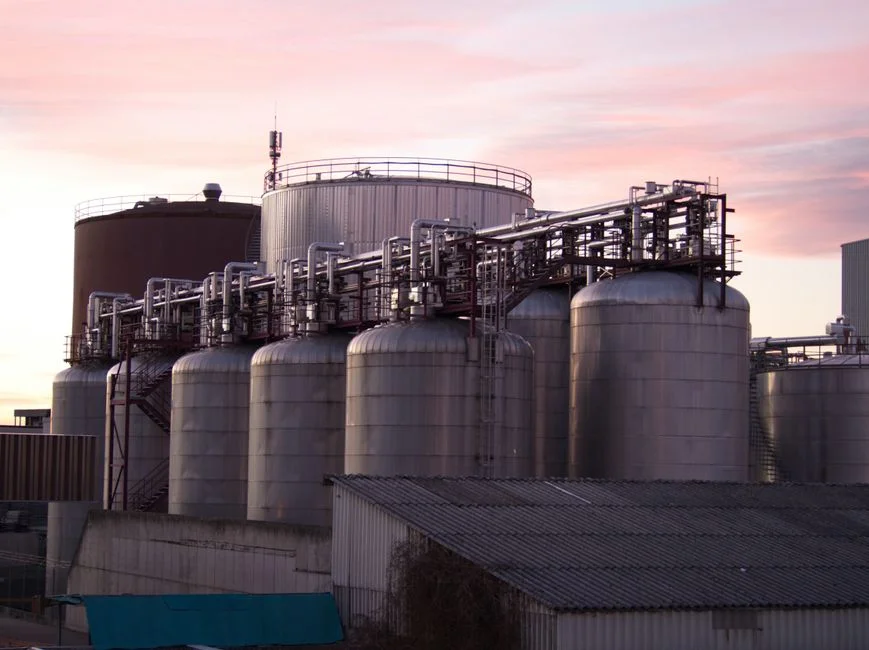
Cooling-makeup reuse is usually the highest-value endpoint, but the chosen route must follow from water chemistry, receiving restrictions, energy availability and lifecycle cost.
Genesis Water Tech reports 60–85% recovery from the blowdown stream for cooling-tower makeup reuse. Simpler process-water uses such as washdown, toilet flushing or irrigation can accept a less stringent treatment train and lower recovery, subject to their own quality requirements.
Industrial RO removes 95–99% of dissolved solids and produces permeate at 10–50 mg/L TDS. Recovery from blowdown is reported at 50–85%, depending on scaling potential. An industrial RO system for blowdown reuse therefore needs a chemistry-specific recovery guarantee rather than a generic percentage.
NF is reported at 70–85% recovery, with permeate TDS at 30–50% of feed TDS. It is more appropriate when hardness, rather than total dissolved solids, governs the requirement. IDE Tech reports conventional brackish-water RO at 75–80% recovery because scaling constrains further concentration. Its MAXH2O case achieved approximately 95% recovery with about 1 mg/L permeate silica through controlled salt precipitation and dynamic RO; that is a project-specific architecture, not a default performance claim for every feed.
Full zero liquid discharge combines RO, mechanical vapor compression or another brine concentrator, and crystallization. The source reports 95–99% overall recovery and 1–3% solid waste. This route should be reserved for a prohibited discharge, unavailable freshwater or another demonstrated site-specific constraint.
| Endpoint | Reported performance | Selection condition | Principal risk |
|---|---|---|---|
| Cooling-makeup reuse | 60–85% blowdown recovery | Permeate chemistry is compatible with the cooling system and concentrate has a route | Scaling and chemical accumulation |
| Lower-grade process reuse | Recovery depends on treatment and end use | Washdown, toilet flushing or irrigation quality can be met | Distribution, storage and cross-contamination controls |
| RO discharge reduction | 95–99% dissolved-solids removal; 10–50 mg/L permeate TDS; 50–85% blowdown recovery | Current Volga limits and a permitted receiving route are confirmed | Concentrate disposal and fouling |
| NF | 70–85% recovery; permeate TDS at 30–50% of feed | Hardness is the controlling contaminant | Residual salt reduction may remain insufficient |
| Full ZLD | 95–99% overall recovery; 1–3% solid waste | Discharge is effectively prohibited or freshwater is unavailable | Energy demand and solids handling |
Do not assume discharge is prohibited because a concentration limit exists elsewhere. Obtain the current limits for the actual receiving segment. Likewise, do not assume reuse is acceptable without checking cooling chemistry, blending, chemical residuals and continuous operational demand.
Design for Yaroslavl Winter Conditions and Utility Constraints
Winter operability must be included in the equipment specification and not added after the process selection.
The supplied research does not provide a Yaroslavl winter ambient design temperature. The facility therefore needs to establish its own design temperature and define the operating mode during shutdown, low-load and power-outage periods before outdoor equipment is selected.
For outdoor membrane skids, specify an enclosure, heat tracing, freeze-protected chemical dosing lines and safe drainage or shutdown arrangements for idle periods. RO and UF replacement logistics should also account for storage conditions and the time required to reach operating temperature. HydropureWater’s RO and UF membrane elements and treatment parts, valves and media are relevant procurement categories, but replacement logistics and temperature requirements must be confirmed in the supplier’s proposal.
Evaluate whether municipal heating infrastructure or generator waste heat can support a thermal concentration stage. The Krasnoyarsk research notes that sufficient waste heat may not be available without purpose-built heat; that limitation remains a design question in Yaroslavl until a credible heat source is identified.
Mechanical vapor compression is reported at 15–25 kWh per 1,000 gallons, with capital cost of $1–3 million for 10,000–30,000 GPD systems. These figures are screening anchors from Genesis Water Tech, not a quotation for a Yaroslavl installation. The business case must use local electricity prices, expected operating hours and available thermal energy.
Before approving a complex recovery train, confirm electricity capacity, chemical delivery arrangements, operator competence, membrane replacement access and maintenance space. A simpler train with reliable operation may be more defensible than a high-recovery system that the site cannot maintain.
Cost, Risk and Contractor Due Diligence

Comparable bids should state the treatment basis, recovery, product quality, concentrate destination and winter operating conditions in contractual terms.
The source cost anchors are suitable only for initial screening: $50,000–$200,000 for typical self-cleaning side-stream filtration, $250,000–$500,000 for a 50,000 GPD RO skid, $1–3 million for mechanical vapor compression at 10,000–30,000 GPD, and $3–8 million for full data-center zero liquid discharge. ZLD operating cost is reported at $5–15 per thousand gallons treated. These are Genesis Water Tech benchmarks, not current Yaroslavl quotations.
| Screening item | Source cost anchor | Information required for a firm estimate |
|---|---|---|
| Side-stream filtration | $50,000–$200,000 | Flow, filtration rating, materials, controls and installation scope |
| RO skid | $250,000–$500,000 for 50,000 GPD | Feed analysis, recovery, pretreatment, controls and concentrate disposal |
| Mechanical vapor compression | $1–3 million for 10,000–30,000 GPD | Feed salinity, energy source, redundancy and building utilities |
| Full ZLD | $3–8 million | Entire process scope, crystalliser, solids handling and operating assumptions |
| ZLD operation | $5–15 per thousand gallons treated | Local power price, run hours, chemicals, labour and maintenance |
Each bid should state measured or guaranteed feed flow, the feed-water chemistry basis, target cycles of concentration, recovery, permeate TDS and silica, concentrate chemistry and destination, antiscalant dose and performance-test conditions. The selected endpoint should also state whether the guarantee applies continuously, at hourly peaks or under a defined composite sample.
Require documented cold-climate references covering outdoor skid enclosures, heat tracing and freeze-protected chemical dosing. The references should be tied to the facility’s winter design conditions rather than presented as generic experience. The 2026 effluent treatment buyer’s guide provides a useful structure for technical and commercial bid review.
Require bidders to disclose assumptions for membranes, antiscalant, other chemicals, solids disposal, operator labour, redundancy, controls and replacement parts. Regulatory coordination, imported-equipment lead times and local commissioning support should also appear in the programme risk register; the supplied research contains no numerical lead-time estimate for Yaroslavl.
Frequently Asked Questions
What treatment capacity is needed for a Yaroslavl data center?
Capacity must be calculated from measured cooling makeup, blowdown and sanitary wastewater flows. KETOS reports that 20–30% of water used in evaporative cooling is normally returned as liquid wastewater, while Genesis Water Tech gives blowdown of 25% of makeup at four cycles of concentration. These are screening benchmarks, not universal design values. Size each train from site metering, seasonal operation, drains, emergency discharges and the selected recovery.
Is UF alone sufficient for cooling blowdown?
No, not when the objective is to reduce dissolved salts for cooling makeup or discharge. UF removes suspended solids, colloids and microorganisms and protects downstream membranes, but it does not remove the dissolved salts that cause conductivity and scaling. RO or NF is needed when desalination or substantial hardness reduction is required. For less demanding washdown or toilet-flushing reuse, a simpler endpoint may be sufficient after site-specific quality checks.
What should a supplier guarantee, and how should bidders be selected?
Require a documented feed basis, design flow, recovery, permeate TDS, silica, concentrate chemistry and destination, antiscalant dose, winter operability and performance-test conditions. Check cold-climate references, local commissioning capability and operator training. A comparable structure for reviewing supplier submissions is set out in the 2026 effluent treatment buyer’s guide.
When is zero liquid discharge justified?
ZLD is justified when discharge is prohibited, freshwater is unavailable or another project-specific constraint makes it necessary. The source reports 95–99% overall recovery, 1–3% solid waste, $3–8 million typical data-center capital cost and $5–15 per thousand gallons treated in operating cost. Before selecting it, obtain current Volga-basin limits: the supplied research provides no numeric limits for the relevant receiving segment, so prohibited discharge must be confirmed rather than assumed.