Start With the Wastewater, Not the Centrifuge
Designing a decanter centrifuge for frozen food wastewater requires more than peak flow: specify wastewater flow, suspended-solids concentration, particle characteristics, fat and protein content, temperature, centrate limits and cake-disposal requirements. The centrifuge must separate solids continuously, so bowl geometry, pond depth, differential speed, wear resistance and torque control must be matched through representative testing. Published sludge-dewatering models at 15–20–25 m³/h reported minimum specific energy of 1.88–1.76–1.57 kWh/m³, but these are benchmarks—not guaranteed frozen-food results. Final sizing should follow pretreatment review and site-specific pilot testing.
A frozen-food plant’s wastewater is not a single uniform stream. Production losses, blood and fat, protein, starch, ice fragments, soil and cleaning chemicals may enter through separate drains or arrive in batch dumps. The design basis therefore needs normal and peak hourly flow, daily production, batch-dump frequency, cleaning-cycle flow, wastewater temperature and the proportion of each solid source. A production-line capacity figure cannot substitute for a measured hydraulic and solids profile.
The characterization package should request total and suspended-solids concentrations, solids density, particle-size distribution, particle shape and viscosity. The supplied decanter overview identifies particle size, shape, density difference and viscosity as factors affecting sedimentation. Samples should also distinguish soluble organic load from settleable or filterable solids: a decanter removes the solid phase, not dissolved COD. Where soluble load is high, the downstream biological or pretreatment route may control whether centrate can be recycled or discharged.
The supplied research provides no universal frozen-food suspended-solids loading, centrate-quality limit or cake dry-matter target. Those values must come from representative samples and pilot testing. The food and beverage plant sewer pretreatment guide is useful for identifying discharge constraints, but it does not replace site characterization.
| Design-basis input | What to request | Why it affects the centrifuge |
|---|---|---|
| Hydraulic profile | Normal and peak hourly flow, batch dumps, cleaning cycles and daily production | Sets feed capacity, residence-time risk and equalization needs |
| Solid composition | Total and suspended solids; blood, fat, protein, starch, ice and soil fractions | Defines loading, abrasiveness and cake behavior |
| Particle properties | Size distribution, shape, density and viscosity | Influences sedimentation and centrate solids |
| Operating envelope | Wastewater temperature, production schedule and downstream acceptance criteria | Determines pretreatment, materials, controls and guarantees |
Pretreatment Gates That Protect Centrifuge Performance
Upstream treatment should remove hazards before they reach the bowl. Screening and grit removal protect against blockage and abrasive wear; equalization reduces flow and solids-loading peaks; temperature management addresses viscosity, equipment limits and freeze protection. The order and severity of these gates depend on the actual stream, not on generic food-processing assumptions.
Oil, grease, colloids and low-density solids require a different separation route. The industrial DAF pretreatment system is described as handling 4–300 m³/h across 13 standard models for industrial wastewater pretreatment. DAF may remove recoverable oil and floatable material before decanting, but its suitability must be confirmed from wastewater chemistry and pilot performance.
Chemical flocculation can improve sedimentation, as noted in the supplied decanter overview, but it should be considered only after checking downstream biological treatment, chemical compatibility and the final cake destination. A PLC-controlled chemical dosing system can support a controlled trial, but the polymer or coagulant dose and resulting centrate effect remain site-specific.
Fibrous material needs a dedicated exclusion point. The GX rotary mechanical bar screen is designed to remove suspended solids, rags, plastics and fibrous debris. Screening reduces the chance of bowl or scroll blockage, while grit removal and abrasion-resistant solids contact parts address a different risk: gradual erosion. Pretreatment should therefore be specified from the waste inventory, not from one generic flow sheet.
How Decanter Separation Translates to Frozen-Food Performance
Inside a decanter centrifuge, denser solids migrate toward the rotating bowl wall, the screw transports them along the beach, and clarified liquid exits through adjustable weir or discharge components. The commercial source states that centrifugal force can be up to 4000 times gravitational force. That is a capability statement, not a design instruction: maximum G-force is not automatically the best operating point for a soft, greasy or temperature-sensitive frozen-food solids stream.
The supplied design overview identifies the central trade-off. Higher centrifugal force assists dewatering but can hinder transport of dry cake on the beach. The operating point must balance separation, cake conveyance and torque. Bowl geometry, pond depth and differential speed control are therefore coupled variables. A bowl setting that produces acceptable centrate may still produce a sticky or unstable cake if the solids cannot be moved at the available differential speed.
Pond depth changes the separation environment. A shallow pool can improve separation by reducing the distance solids must travel; a deeper pool can reduce entrainment of fine solids by providing a thicker liquid buffer. The overview states that the optimal pool for a particular application should be identified through testing. For frozen-food wastewater, that test should include the fine-particle fraction and the desired centrate quality rather than relying on a generic pond-depth setting.
Two-phase separation handles solids and water. Three-phase separation also separates an immiscible liquid, such as oil, from water. If the plant has substantial free oil or grease, the equipment basis must state whether the objective is simply solids-water separation or recovery of a distinct liquid phase. Pretreatment may change that answer. The canned food wastewater decanter design guide provides the general mechanical sequence, but it is not a frozen-food performance guarantee.
Build and Validate the Centrifuge Design Basis
Size the feed and solids load from measured hourly flow and suspended-solids concentration, not from nameplate production capacity. Calculate the hourly water load and the corresponding suspended-solids load for normal and peak conditions, then check whether those loads fit the selected bowl without pushing the differential-speed control toward a sustained torque limit. Use the resulting envelope—not the average flow alone—as the basis for pilot and guarantee discussions.
Bowl proportions also determine the operating space. The supplied design overview identifies length-to-diameter ratios of 2, 3 and 4 as commonly used. A longer bowl can increase solids-conveying capacity and suspension volume and can improve settling of fine solids. The correct ratio remains an application decision: a long bowl does not compensate for unsuitable particle properties, excessive feed loading or poor pretreatment.
Beach angle must reflect material behavior. The same overview indicates that a low cone angle lowers slippage force and wear and can assist movement of soft or compact solids. Ask the supplier to state the proposed angle, its reasoning for the measured cake structure and the wear-management strategy. It should not be left as an unqualified equipment preference.
Set pond depth, bowl speed and differential speed as linked variables. The 2024 study in Energy Conversion and Management X found that cake dry matter content decreased as differential speed or feed rate increased. That result justifies an acceptance test under representative solids loading and load variation; it does not establish a universal differential-speed value for frozen-food wastewater.
Abrasion-resistant solids contact parts should be specified where ice, soil or other abrasive material is present. The commercial source describes wear protection for the feed zone, solids discharge, bowl and scroll. The bidder should identify each wear zone, proposed material, inspection access and replacement criterion rather than offering a generic “heavy-duty” claim.
| Selection item | Bidder’s required basis | Buyer’s validation method |
|---|---|---|
| Feed and solids load | Measured normal and peak water and suspended-solids loads | Representative feed mass balance and pilot throughput |
| Bowl geometry | Diameter, length-to-diameter ratio and beach-angle rationale | Capacity, residence time and cake-conveyance review |
| Pond depth and speed controls | Adjustable range, bowl speed and differential-speed strategy | Centrate solids and cake dry matter at representative load |
| Wear protection | Material and thickness by identified wear zone | Feed abrasivity review and inspection plan |
Specify Controls, Materials and Maintenance for Variable Loads
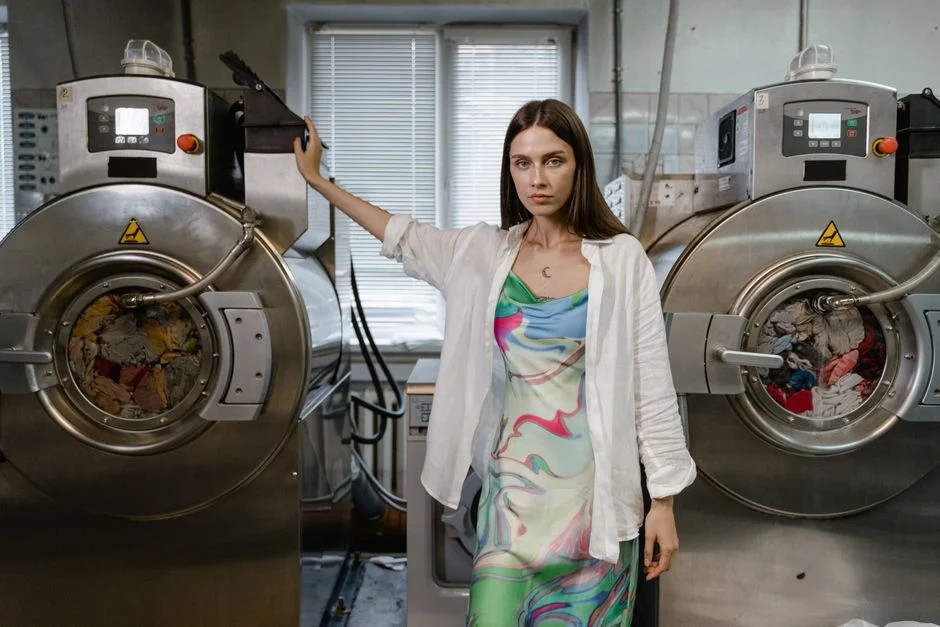
Variable loads require controls that protect separation quality and equipment availability. A 2024 review in Energy Conversion and Management X notes that contemporary decanters commonly use variable-frequency drives for the bowl and screw, with the back-drive able to recover energy during braking. The specification should therefore define VFD-driven bowl and scroll drives, regenerative capability where applicable, and the operating envelope of each drive.
Torque-based differential-speed control is the practical response to changing suspended-solids loading. The commercial source describes automatic screw-speed adjustment combined with torque monitoring: when loading rises, the system changes differential speed to avoid torque overload and maintain stable discharge dryness. That logic should be written into the control philosophy, with limits, alarms and manual override behavior defined.
Materials should follow the wastewater and operating schedule. Require corrosion-resistant wetted parts, accessible solids and centrate outlets, washdown capability and clear access to wear parts. Instrumentation should cover feed rate, differential speed, torque, bowl speed, vibration, temperature and centrate solids. Centrate-solids monitoring provides direct feedback on separation deterioration; torque and vibration identify mechanical overload or changing cake behavior.
Preventive maintenance should reflect the actual abrasive-solids risk and the plant’s frozen-food operating schedule. A useful schedule states what is inspected, what condition triggers replacement and how wear-part lead time affects production risk. If the facility operates in subfreezing conditions or sends cold wash water to the machine, freeze-protection and temperature-management measures belong in the performance and commissioning scope. Do not accept a generic service interval detached from the actual feed.
| Control or maintenance item | Specification requirement | Acceptance evidence |
|---|---|---|
| Drive architecture | VFD bowl and scroll drives; regenerative braking where justified | Control narrative, functional test and electrical load data |
| Differential speed | Torque-responsive control with defined limits | Load-change demonstration and recorded torque response |
| Process monitoring | Feed, speed, torque, vibration, temperature and centrate-solids signals | Alarm and data-recording demonstration |
| Wear management | Named wear parts, inspection access and replacement criteria | Drawing, parts list and maintenance schedule |
Use Energy and Pilot Data to Compare Bids
Energy claims are comparable only when the feed basis is comparable. The 2024 study in Energy Conversion and Management X reported minimum specific energy values of 1.88, 1.76 and 1.57 kWh/m³ at 15, 20 and 25 m³/h, respectively. These results came from a wastewater-sludge model, not frozen-food wastewater, so they are useful benchmarks for question design but not guaranteed performance values.
The same study reported energy-recovery values of 5.88, 0.31 and 12.10 kW at those respective flow rates. Its central procurement lesson is important: high recovered power does not necessarily mean a larger reduction in net energy consumption. Compare electrical input, recovered power and net consumption rather than treating regenerative capability as a guaranteed saving. A plate-and-frame sludge filter press bid should be evaluated on the same basis if the alternative is being considered.
Model credibility also depends on validation scope. The study validated its general model at 18–20 m³/h, with R² above 97% and RMSE of 2.59E-02 kWh/m³. These figures support comparison of that model’s operating range; they do not establish accuracy for a different feed, bowl or temperature.
Require each bidder to pilot the centrifuge with representative frozen-food wastewater. Compare centrate solids, cake dry matter, throughput, differential speed, torque and net energy consumption under the same feed conditions. The test record should state feed rate, feed composition, wastewater temperature, duration, sampling points and acceptance criteria. Without that record, a performance guarantee is an assertion rather than a procurement-grade commitment.
| Bid-comparison item | 2024 sludge-model benchmark | Required frozen-food evidence |
|---|---|---|
| Specific energy | Minimum 1.88–1.76–1.57 kWh/m³ at 15–20–25 m³/h | Measured net energy on representative feed |
| Recovered power | 5.88–0.31–12.10 kW at the corresponding flow rates | Input, recovered and net power under pilot load |
| Model validation | 18–20 m³/h; R² above 97%; RMSE 2.59E-02 kWh/m³ | Site pilot with complete operating record |
| Separation performance | Not a frozen-food guarantee | Centrate solids, cake dry matter, throughput and solids capture |
Decanter Centrifuge or Plate-and-Frame Filter Press?
A decanter centrifuge is generally the more appropriate route when sustained flow, high throughput and repeatable continuous solids handling justify the equipment and operating complexity. It removes the need to open and close a batch filter for routine operation, but introduces rotating equipment, differential-speed control, wear management and continuous maintenance requirements.
A plate-and-frame filter press may suit intermittent batches, a smaller sludge volume or a requirement for very high cake dryness where batch operation is acceptable. It also introduces its own operating issues: plate handling, cloth maintenance, chemical conditioning, labor and batch-cycle interruption. Neither route should be selected from generic sludge data alone.
Use the same acceptance tests for both. Compare centrate solids, cake dry matter, solids capture, net energy use, chemical use, labor, continuous-operation capability and cake disposal route using representative frozen-food wastewater. The supplied research provides generic sludge-dewatering evidence rather than a frozen-food side-by-side comparison, so a firm selection requires test data or a defensible engineering comparison.
| Decision factor | Decanter centrifuge | Plate-and-frame filter press |
|---|---|---|
| Flow pattern | Continuous | Intermittent batch |
| Primary strengths | Sustained throughput and repeatable solids handling | Batch dewatering and potential for high cake dryness |
| Operating burden | Rotating parts, controls, wear management | Plate handling, cloth maintenance and labor |
| Required comparison | Same feed, centrate solids, cake dry matter, net energy, chemicals, labor and disposal route | |
Procurement Checklist for a Frozen-Food Wastewater Centrifuge
A bid-ready package should contain the feed-characterization report, hourly solids-loading calculation, process-flow diagram, equipment data sheet, material specification, control philosophy, utility demand and pilot-test protocol. These documents let bidders respond to the same design basis instead of quoting different assumptions about flow, solids or cake quality.
Ask each bidder to identify the basis for bowl geometry, pond-depth settings, expected differential-speed range, torque control and wear-part selection. Require a proposed operating envelope for normal and peak loads, with the logic for reducing differential speed, increasing bowl speed or protecting the machine when torque rises. The supplier should also state the limits of its guarantee.
Include start-up, cleaning, freeze-protection or temperature-management, operator training, maintenance and spare-parts proposals aligned with the site schedule. State acceptance tests for feed rate, centrate quality, cake dry matter, continuous operation, electrical consumption and any site-specific noise or vibration limits. Where relevant, compare the effluent treatment plant buyer’s guide approach: define receiving constraints before equipment selection.
Do not request an unsupported universal solids-loading, removal-efficiency or energy guarantee. The defensible commitment is the tested condition: defined feed composition, flow, temperature, duration, sampling method and acceptance threshold. If a supplier cannot demonstrate that relationship, the risk belongs in the purchase decision.
Frequently Asked Questions
How much wastewater flow is needed to size a decanter centrifuge for a frozen food plant?
Use the measured peak hourly flow and suspended-solids load, including batch dumps and cleaning cycles, rather than production-line nameplate capacity. Confirm that the selected bowl can carry the resulting water and solids loads at an acceptable differential speed and torque. The supplied research does not provide a universal frozen-food sizing flow, so representative sampling and pilot testing are required before final selection.
Can a supplier guarantee centrate quality and cake dryness before testing the actual frozen food wastewater?
A supplier may propose performance targets, but the guarantee should be conditional on a defined feed composition, wastewater temperature, feed rate, test duration and sampling method. The 2024 study’s energy and dry-matter findings came from a wastewater-sludge model, not frozen-food wastewater. Accept an unconditional guarantee only when the proposed test demonstrates the actual application.
What should a buyer compare when selecting a decanter centrifuge supplier?
Compare the proposed bowl geometry and solids-conveying basis, pond-depth adjustment range, differential-speed control, torque response, wear-zone materials, instrumentation, maintenance access and pilot results. Ask each bidder to document how its design addresses measured particle properties, abrasiveness, centrate solids and cake handling. A generic energy or throughput statement is less useful than a traceable design calculation and test record.
How much does a decanter centrifuge for frozen food wastewater cost?
The supplied research provides no quotation for this application, so a defensible budget cannot be inferred from flow or the sludge-model energy values. Request a budgetary and capital-cost proposal tied to feed basis, bowl configuration, materials, motors, controls, pilot testing, installation, commissioning, wear parts and warranty. Also request net-energy and chemical-consumption terms so operating costs are compared consistently.
Should differential speed be fixed, and how does changing it affect cake dry matter?
Do not specify a fixed differential speed without a solids-behavior test. The 2024 study in Energy Conversion and Management X found that cake dry matter decreased as differential speed increased; the supplied commercial source also associates higher differential speed with increased solids throughput and reduced cake residence time. Use adjustable, torque-responsive control and define acceptable centrate and cake limits during representative loading.
Related Equipment
- industrial DAF pretreatment system — specifications, capacity range, and technical data