Which System Fits Apache Junction Fabricated Metals Wastewater?
Fabricated metals factories near Apache Junction should select an industrial wastewater DAF when oil, grease, paint-related residues, or conditioned light solids dominate and testing confirms reliably floatable flocs. A lamella sedimentation tank is stronger when dense metal fines settle consistently and a compact gravity-separation train is required. Clearwater Industries, dated April 27, 2026, describes 30–50 micron microbubbles for lifting conditioned contaminants; HydropureWater specifies lamella surface loading rates of 20–40 m/h. Because the supplied research contains no Apache Junction discharge limits, final selection requires representative wastewater testing, written receiving-authority confirmation, and comparable supplier quotations.
Begin by separating the plant’s wastewater into three practical fractions: dense solids from cutting, stamping, and welding; floatable oils, cutting fluids, and paint residues; and dilute washdown or cleanup water. A DAF addresses the second fraction by skimming floatable material. Clarification addresses the first when the solids have a reliable settling behavior. If both fractions occur together, test a hybrid arrangement rather than assuming one unit will remove both efficiently.
This is the decision framework developed in the broader fabricated metals DAF and clarifier guide. It matters because average flow alone cannot establish whether the equipment will handle recurring oily flow, a cleanup surge, a concentrated batch dump, or the solids and chemicals generated during normal production.
Before setting a performance guarantee, obtain written limits and pretreatment requirements from the sewer authority or other receiving permitting authority. No site-specific limits were supplied in the research. Preliminary equipment selection can proceed, but procurement should not convert catalog capacity or generic removal claims into an Apache Junction compliance commitment.
Diagnose the Wastewater Before Choosing Equipment
Representative sampling, rather than one clean production sample, determines whether the wastewater needs flotation, gravity clarification, or sequential treatment. Build the sampling plan around normal production and representative cleanup, upset, and batch-discharge conditions.
For each condition, request flow rate and duration together with TSS, FOG, oil and grease, pH, settleable solids, dissolved and particulate metals, turbidity, COD/BOD where relevant, and current chemical use. Keep cutting oils and coolant, rinse-water oil, paint residues, washdown, and cleanup or batch discharges as distinct sample streams until testing establishes whether equalization or segregation is appropriate.
| Wastewater fraction | Key characterization inputs | Primary separation question |
|---|---|---|
| Dense metal fines, grinding and welding residues | Particle size, settleable solids, TSS, observed settling rate, particulate metals | Do the solids settle reliably, or is conditioning needed before gravity separation? |
| Cutting oil, coolant, rinse-water oil, and paint residues | FOG, oil and grease, emulsification, pH, solids, existing separator performance | Does jar-tested conditioning create consistently floatable flocs? |
| Dilute washdown and cleanup discharge | Instantaneous and batch flow, duration, TSS, FOG, turbidity and contaminant concentrations | Does hydraulic volume dominate sizing while carrying lower pollutant loading? |
| Combined plant effluent | All parameters above, including dissolved metals and confirmed effluent targets | Can a hybrid train reduce the combined sludge-handling and disposal burden? |
Use a jar-test flotation program for cutting oil, coolant, rinse-water oil, and paint streams. Examine FOG, oil and grease, emulsification, existing separator performance, pH, solids, and whether the selected chemical program produces reliable floc attachment. This work defines the basis for a PLC-controlled chemical dosing system; a generic dose is not a defensible design input.
Evaluate dense fines through particle size, settleable solids, TSS, and observed settling rate. If they settle consistently, gravity clarification deserves priority. Treat dilute washdown separately because its flow can dominate the hydraulic calculation even when its pollutant concentration is lower. This staged diagnosis prevents a DAF from being selected for a solids-removal problem or a clarifier from being assigned a floatable-oil duty it was not shown to handle.
How DAF and Lamella Clarification Separate Different Contaminants
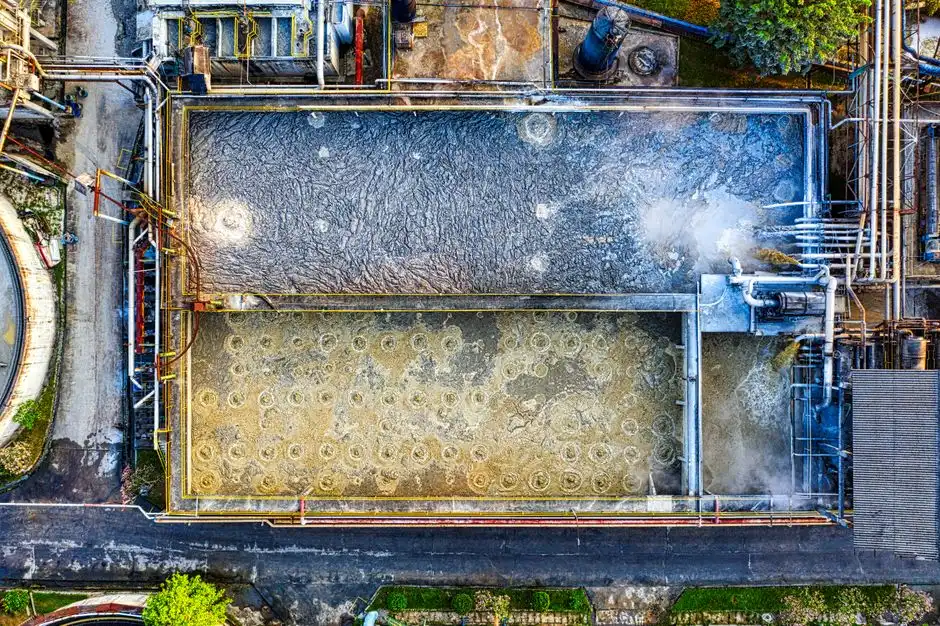
A DAF separates floatable contaminants by attaching conditioned particles to microbubbles and recovering them at the water surface; a lamella clarifier separates flocculated solids by inclined-plate settling. Their mechanical differences determine which wastewater fraction each unit should address.
In a recycle-saturation DAF system, clarified water is pressurized and recycled into the influent. Pressure release creates microbubbles that attach to conditioned contaminants. A skimmer removes the floating material, while heavier material enters a separate bottom collection zone. Clearwater Industries, dated April 27, 2026, identifies microbubbles in the 30–50 micron range and states that chemical coagulation and flocculation improve particle size and bubble contact. The applicable process sequence is:
- pH adjustment;
- coagulation;
- flocculation;
- DAF flotation; and
- surface skimming.
The DAF’s removal performance therefore depends on more than tank volume. Chemical contact, mixing, recycle saturation, bubble attachment, freeboard, skimming, and sludge withdrawal all belong in the operating review. The industrial DAF system for metalworking wastewater should be assessed as an integrated treatment train.
Lamella clarification follows a different sequence: flocculation, sludge recirculation, inclined-plate separation, and hopper withdrawal. HydropureWater specifies lamella surface loading rates of 20–40 m/h. The inclined plates increase effective separation area, but the installed arrangement still needs space for conditioning, recirculation, sludge collection, access, and utilities. Evaluate the high-efficiency lamella clarifier against measured settling behavior and the confirmed hydraulic duty.
Neither supplied source establishes universal dissolved-metal removal performance for DAF or clarification. Particulate metals and dissolved metals must remain separate design questions, and neither system should be treated as a substitute for dedicated dissolved-metal treatment without supporting test evidence.
DAF vs. Clarifier: Application-Matched Comparison
The defensible comparison is based on contaminant behavior, pretreatment, recovered solids, hydraulic duty, controls, utilities, and sludge handling—not generic removal percentages or nominal capacity alone.
| Criterion | DAF | Lamella clarification |
|---|---|---|
| Best-matched contaminants | Floatable oils, FOG, paint residues, and conditioned low-specific-gravity solids | Dense solids and other reliably settleable solids |
| Pretreatment | pH control, coagulation, and flocculation must support reliable bubble attachment | Flocculation may be needed to establish suitable settling behavior |
| Hydraulic design | Flow range, flotation area, freeboard, recycle system, clean-water startup, skimming, and sludge withdrawal | Flow range, plate loading, recirculation stability, sludge withdrawal, hopper management, and installation clearances |
| Recovered solids | Skimmed float plus a separate bottom settled-solids zone | Hopper withdrawal with integrated sludge recirculation |
| Construction | Clearwater Industries specifies standard 304SS, with 316SS, polypropylene, and other materials available on request | Obtain the bidder’s materials schedule and corrosion assumptions |
| Controls and packaging | Clearwater Industries describes a turnkey COMPACT DAF package with conditioning, sensors, instruments, and a control panel | Define controls, instrumentation, recirculation, and sludge scope explicitly |
| Comparison discipline | Request application-matched test results and chemical conditions | Request application-matched settling results and hydraulic duty |
HydropureWater’s DAF models cover 4–300 m³/h across 13 standard models, while its lamella clarifiers specify 20–40 m/h surface loading. These supplier specifications identify offered configurations; neither establishes suitability for the plant’s wastewater without confirmed flow, loading, conditioning, and effluent targets.
Controls scope also affects risk. Clearwater Industries, dated April 27, 2026, describes its COMPACT DAF as pre-assembled with chemical conditioning, sensors, instruments, and a control panel. Require bidders to state what remains outside their package, including reagent storage, installation, utility connections, sludge withdrawal, field wiring, training, and local service.
Do not turn source-specific performance claims into guarantees. Industrial & Environmental Services states that FOG and TSS removal are typically 95%–97% with proper chemical pretreatment; HydropureWater advertises up to 30% chemical-consumption reduction for its lamella systems. Neither claim was demonstrated on the same Apache Junction wastewater in the supplied research. Compare instead measured flotation or settling behavior, chemical demand, sludge characteristics, and downstream disposal burden.
Size the System Around Peak, Batch, and Sludge Duties
A defensible size basis includes average, peak, cleanup, and batch flows, their durations, and the associated pollutant concentrations; nominal capacity or average flow alone is not sufficient.
Define each operating condition using TSS, FOG, oil and grease, settleable solids, observed flotation or settling behavior, and the effluent target confirmed in writing by the receiving authority. Separate dilute washdown from concentrated process streams so the hydraulic peak does not obscure the mass loading.
| Sizing element | DAF | Lamella clarifier |
|---|---|---|
| Hydraulic duty | Average, peak, cleanup, and batch flow with duration and contaminant loading | Same duty conditions, including any batch or cleanup contribution |
| Process basis | Conditioned floatability, oil and FOG behavior, TSS, flotation area, freeboard, recycle, and skimming | Settling behavior, TSS, plate loading, recirculation, hopper withdrawal, and sludge management |
| Chemical scope | Reagent type, tested dosing range, pH adjustment, mixing, controls, and maintenance access | Flocculant selection, mixing, recirculation, controls, and maintenance access |
| Utilities and controls | Clean-water startup, pressurized recycle, instrumentation, power, skimming, and sludge withdrawal | Recirculation, instrumentation, power, sludge withdrawal, and installation clearances |
| Downstream scope | Characterize float and bottom solids separately | Characterize hopper sludge, moisture, and withdrawal behavior |
Include the chemical system in the DAF scope rather than treating it as an accessory. The selected sequence and mixers must deliver the tested chemical program, while the control system should expose dosing rate, pH condition, and relevant equipment status for operator review.
Scope sludge handling before award. DAF produces skimmed float and bottom settled solids; lamella clarification produces hopper sludge. Their moisture, volume, composition, and disposal requirements may reverse an equipment preference when dewatering and disposal costs are included. HydropureWater’s plate and frame filter press covers filtration areas from 1 m² to 500 m², but selection should follow measured sludge-solids properties and the available disposal route. An industrial sludge dewatering filter press should therefore appear in the process basis of design, not as an after-the-fact accessory.
Build a Supplier Comparison That Reduces 2026 Compliance Risk
Comparable quotations and test data reduce procurement risk because each bidder must answer the same wastewater, operating, and compliance questions.
Require representative wastewater results by production condition, jar-test or pilot results, chemical doses, and the observed separation behavior. Give each bidder the same average, peak, cleanup, and batch flow data, together with TSS, FOG, oil and grease, settleable solids, confirmed effluent targets, footprint, utilities, and sludge-disposal assumptions.
Request drawings, dimensions, materials schedules, controls and instrumentation lists, utility requirements, startup procedures, training, warranty terms, local service capability, and performance conditions. Each guarantee must identify the tested wastewater, operating range, chemical assumptions, exclusions, remedies, and responsibilities for parties outside the equipment package.
Compare lifecycle inputs rather than purchase price alone: chemical consumption, floor space, utilities, maintenance access, controls, sludge moisture, downstream dewatering, and disposal cost. The supplied research contains no comparable DAF and clarifier purchase prices, so generic online ranges would create false precision. Ask both bidders to quote the same defined scope and separately price exceptions.
Require a written response to batch discharges, cleanup flows, chemical demand, sludge withdrawal, controls access, and the plant’s receiving-authority requirements. Use the fabricated metals sewer pretreatment guide to organize the pretreatment question, and consult the industrial heavy metals removal methods comparison when distinguishing particulate and dissolved-metal obligations.
A compliant proposal should identify what the equipment will achieve on the characterized waste, under stated operating conditions, and where additional treatment remains necessary. Generic claims do not establish Apache Junction permit compliance.
Frequently Asked Questions
How much does a DAF or clarifier cost for fabricated metals wastewater?
The supplied sources do not provide comparable purchase prices for DAF and lamella clarifier systems. Request quotations against one scope covering equipment, conditioning, controls, utilities, installation, startup, maintenance, and sludge handling. Compare chemical consumption, footprint, utilities, service requirements, recovered-sludge moisture, dewatering needs, and disposal cost. Do not use generic online price ranges as a procurement budget.
How should Apache Junction wastewater be sampled to size a DAF or clarifier?
Sample normal production plus representative cleanup, upset, and batch-discharge conditions. Measure flow rate and duration, TSS, FOG, oil and grease, pH, settleable solids, dissolved and particulate metals, turbidity, COD/BOD where relevant, and current chemical use. Use separate samples for concentrated process streams and dilute washdown, then use jar tests to establish flotation or settling behavior. One clean sample cannot define the equipment duty.
Which supplier should be selected for a metalworking wastewater treatment package?
Select the bidder that supplies application-matched test data, a defined duty point, drawings, materials schedule, utilities, controls, instrumentation, performance conditions, startup support, warranty terms, local service capability, and a practical sludge route. The supplier should explain how the proposed configuration handles batch discharges, cleanup flows, chemical demand, and sludge withdrawal. Supplier capacity ranges are not sizing recommendations.
What permit information is needed before ordering treatment equipment?
Obtain written confirmation from the sewer authority or other receiving permitting authority before setting performance guarantees because no Apache Junction-specific limits were supplied in the research. Ask for applicable discharge limits, monitoring requirements, pretreatment standards, sampling protocols, force majeure or upset provisions, and any restrictions on equipment operation or sludge disposal. The final equipment basis should reflect those written requirements.