Start with the Clinton discharge requirement
Food and beverage plants near Clinton, Tennessee, meet sewer pretreatment limits by controlling wastes at the source, treating process wastewater before discharge to the municipal sewer, and documenting compliance under Clinton Utilities Board rules. The required train depends on pollutants and flow, but food-processing streams with fats, oils and grease commonly call for physical separation followed by polishing and monitoring. A plant may qualify as a Significant Industrial User if it discharges at least 25,000 gallons per day of process wastewater, contributes at least 5% of dry-weather capacity, or is designated by the control authority. Confirm current requirements with CUB.
CUB’s 2021 Wastewater Rules & Regulations establishes the local framework for indirect dischargers in its service area. Its stated objectives include preventing interference with the municipal system, physical damage, pass through, and violations of CUB’s National Pollutant Discharge Elimination System permit. A permitted sewer connection is not permission to discharge pollutants merely because they are accepted by a treatment plant; the discharge must satisfy the applicable permit, local limits, pretreatment requirements, and categorical standards where they apply.
The controlling documents therefore form a hierarchy: current CUB sewer-use requirements, the plant’s industrial user permit, applicable categorical pretreatment standards, and enforceable local limits. A federal categorical rule does not replace CUB’s local permit conditions, and a general treatment description does not establish compliance. The supplied CUB document is dated 2021, so the plant must ask CUB for any later amendments, current discharge criteria, forms, and the permit terms applicable to its facility.
Also keep the discharge route distinct. A discharge to a municipal sewer is an indirect discharge regulated through pretreatment requirements. A discharge directly to a river, stream, wetland, or other waters of the United States may require a separate NPDES permit and is outside the scope of this guide.
Determine whether the plant is a Significant Industrial User
CUB’s three-part Significant Industrial User test determines whether enhanced monitoring, reporting, and compliance requirements apply.
Under the CUB 2021 rules, an industrial user qualifies as an SIU if it: discharges an average of at least 25,000 gallons per day of process wastewater to the POTW; contributes a process-waste stream representing at least 5% of the POTW treatment plant’s average dry-weather hydraulic or organic capacity; or is designated by the control authority because it has a reasonable potential to interfere with plant operation or violate a pretreatment requirement. The flow calculation excludes sanitary wastewater, non-contact cooling water, and boiler blowdown.
Evaluate SIU status even if no categorical standard appears to apply. CUB can designate an industrial user based on operational risk, and food or beverage processing can contribute substantial organic solids, oil, and hydraulic variability. Before purchasing treatment equipment, request the plant’s written designation status, industrial user permit, local limits, monitoring points, sampling frequency, analytical methods, reporting forms, and any applicable compliance schedule.
| CUB SIU criterion | What the plant must establish | Practical action |
|---|---|---|
| Process wastewater flow | Average flow of at least 25,000 gallons per day, excluding sanitary wastewater, non-contact cooling water, and boiler blowdown | Prepare a metered process-water balance that separates excluded streams |
| POTW contribution | At least 5% of average dry-weather hydraulic or organic capacity | Request CUB’s capacity basis and submit representative flow and pollutant data |
| Control-authority designation | Reasonable potential to adversely affect POTW operation or violate pretreatment requirements | Ask CUB for written status and the basis for designation |
Consistent monitoring matters because CUB defines a chronic violation as at least 66% of measurements for the same pollutant parameter exceeding a numerical pretreatment standard during a six-month period. A Technical Review Criteria violation occurs when at least 33% of measurements equal or exceed the applicable numerical limit multiplied by its TRC. These definitions identify repeated or near-limit performance; they are not substitutes for the underlying legal limit.
Map food and beverage waste streams to pretreatment risks
A source-by-source inventory establishes which flows may enter the sewer and which pollutants must be controlled before collection-system exposure.
Begin with production-area washdown, floor and equipment cleaning, product loss, cooling-water blowdown, boiler blowdown, sanitation chemicals, and episodic releases such as product dumps. Separate contact and non-contact water, sanitary wastewater, and clean cooling streams rather than combining them in one flow total. Confirm each stream’s disposition in the industrial user permit; “process wastewater” is not automatically permission to discharge every washdown stream.
Food scraps, packaging fragments, fibrous material, and other solids should be excluded before they enter the collection system. A rotary mechanical bar screen for wastewater solids exclusion can protect downstream equipment, but the selected mechanism must match the material type and flow condition. For valves, media, and other water-treatment parts and media, require compatibility with the plant’s wastewater chemistry and treatment objectives.
| Waste stream | Primary risks to characterize | Design implication |
|---|---|---|
| Floor and equipment washdown | Fats, oils and grease; suspended solids; biochemical oxygen demand; sanitizers; episodic solids | Source segregation, physical removal, equalization, and representative sampling |
| Product loss or dump | High solids, organic load, FOG, and slug flow | Containment, controlled release, and documented event response |
| Cooling-water blowdown | Flow variability, heat, and chemical residuals | Determine whether it qualifies as non-contact cooling water and document its use |
| Boiler blowdown | Heat, pH, and dissolved solids | Exclude from SIU flow calculation as specified; assess treatment separately |
| Sanitation and cleaning releases | pH, oxidants, detergents, and biological interference | Chemical compatibility review and controlled dosing |
CUB prohibits wastewater that could inhibit biological activity at the POTW. At introduction into the POTW treatment plant, wastewater may not exceed 40 °C (104 °F), unless the Approval Authority authorizes an alternate limit, according to the CUB 2021 rules.
Assess both hydraulic and organic loading. A plant with modest average flow can still create a significant BOD or solids contribution, while a high-flow dilute stream can produce a slug or hydraulic event. Review cleaner, sanitizer, acid, and caustic compatibility before selecting chemical dosing or biological polishing.
Build a treatment train that protects the POTW
A defensible food-processing treatment train begins with source control, equalization, physical separation, and monitored final discharge.
- Screen and exclude solids. Remove food scraps, packaging fragments, and fibrous material before pumps, clarifiers, and biological equipment.
- Equalize the flow. Use sufficient buffering to dilute peak concentrations and control slug loads before the principal treatment step.
- Remove FOG and oil. Provide physical separation appropriate to measured wastewater characteristics.
- Separate suspended solids. Use DAF or clarification, supported by chemical dosing if testing demonstrates a need.
- Apply polishing where justified. Add biological or chemical treatment only when load, temperature, pH, and discharge objectives support it.
- Monitor the final stream. Sample at the location and frequency established in the permit and operating program.
A DAF system for food-processing wastewater is a compact option for capturing suspended solids, FOG, oil and grease, and colloidal material. The referenced DAF catalog includes 13 standard models spanning 4–300 m³/h; those are product-range attributes, not proof of treatment performance at a particular plant.
DAF should follow adequate equalization. Select it from representative FOG, TSS, BOD, flow, and operating data rather than peak flow alone. Where the wastewater supports solids separation without the same flotation objective, a lamella clarifier for wastewater solids separation is an alternative. Its stated surface-loading range is 20–40 m/h, with sludge recirculation, flocculation, and inclined-plate features; the supplier must still demonstrate suitability for the actual wastewater and required capture.
| Process stage | Primary function | Critical design input |
|---|---|---|
| Screening | Exclude large solids and fibrous material | Material type, size, flow, and debris-loading data |
| Equalization | Buffer peak flow, concentration, temperature, and slug events | Production-cycle and release data |
| DAF or clarification | Remove oil, FOG, suspended solids, and associated material | FOG, TSS, BOD, hydraulic profile, and required capture |
| Chemical control | Support coagulation, flocculation, or pH adjustment | Jar-test results and chemical compatibility |
| Optional biological polishing | Reduce biodegradable organics where justified | BOD, temperature, pH, nutrients, and discharge objective |
Where treatment requires coagulants, flocculants, or pH adjustment, an automatic chemical dosing and pH control should be sized from verified chemical demand and flow response. Jar tests establish need; automatic dosing does not replace that testing.
Choose DAF or clarification using plant data

Representative wastewater analysis is the first procurement gate for choosing between DAF and clarification.
Request flow, FOG, TSS, BOD, pH, temperature, and slug-event data from both the plant and CUB. Then compare equipment against the treatment objective, hydraulic variability, solids loading, footprint, utilities, recovered-material handling, controls, and monitoring requirements.
| Decision factor | DAF | Lamella clarification |
|---|---|---|
| Process fit | Strong fit when removal objectives include FOG, oil and grease, suspended solids, and colloidal matter | Potential fit where the duty is primarily solids separation and the wastewater profile supports it |
| Stated treatment targets | Suspended solids, FOG, oil and grease, and colloidal matter | Solids separation through inclined plates |
| Hydraulic design | Model range of 4–300 m³/h must be checked against measured demand | Stated surface-loading range of 20–40 m/h must be checked against the selected geometry and wastewater profile |
| Chemical and auxiliary systems | Evaluate saturation, recycle, flocculation, and skimming requirements | Evaluate flocculation, recirculation, and sludge handling requirements |
| Recovered material | Automatic skimming concentrates floatable material for removal | Clarified sludge requires collection and controlled handling |
| Acceptance test | Define FOG, TSS, oil and grease, and hydraulic performance criteria | Define TSS and solids-capture criteria with the measured influent |
Do not make a universal DAF-versus-clarifier decision from product descriptions. A plant with substantial free oil, emulsified FOG, and colloidal solids may place DAF at the center of the train; a plant dominated by settleable solids may justify clarification after equalization. For a broader comparison, see the guide to DAF versus clarifier for food and beverage wastewater.
Size from average and peak flow, operating variability, solids loading, required capture, and treatment objectives. The catalog ranges are screening tools for bid evaluation, not regulatory guarantees.
Prove compliance with monitoring and operating controls
The operating program must convert permit requirements into daily controls, traceable sampling, and corrective-action records.
Build the monitoring plan around the permit, local limits, categorical requirements, sampling locations, sampling frequency, and analytical methods agreed with CUB. The CUB 2021 rules define TRC multipliers of 1.4 for BOD, TSS, oils and grease, and 1.2 for other pollutants except pH. These multipliers identify repeated near-limit performance; they do not change the legal discharge limit or authorize continued operation at a trigger level.
Daily operating checks should cover equalization level, pump run time, DAF or clarifier condition, skimming or sludge removal, chemical inventory, pH, and temperature. Operators also need defined responses for high-level tank conditions, chemical shortages, floating-solids buildup, abnormal odor or color, and failed instruments.
CUB defines a slug discharge as one with a flow rate or concentration that could cause a prohibited discharge violation, including a non-routine episodic discharge with reasonable potential to cause interference, pass through, or another violation of local limits or permit conditions. Establish procedures for spills, product dumps, cleaning releases, and production discharges: contain the event, sample it, obtain required approval, discharge it at an acceptable rate, and document the response.
- Retain flow-meter records and production-cycle data.
- Retain laboratory results, calibration records, and chain-of-custody documentation.
- Log chemical use, sludge removal, bypass events, maintenance, and operator checks.
- Document corrective actions, responsible personnel, completion status, and evidence of sustained performance.
For biological-process considerations, the equipment guide to biological treatment options for beverage wastewater provides a separate evaluation framework; biological polishing should not be specified as mandatory without supporting plant data and objectives.
Plan implementation without compromising compliance
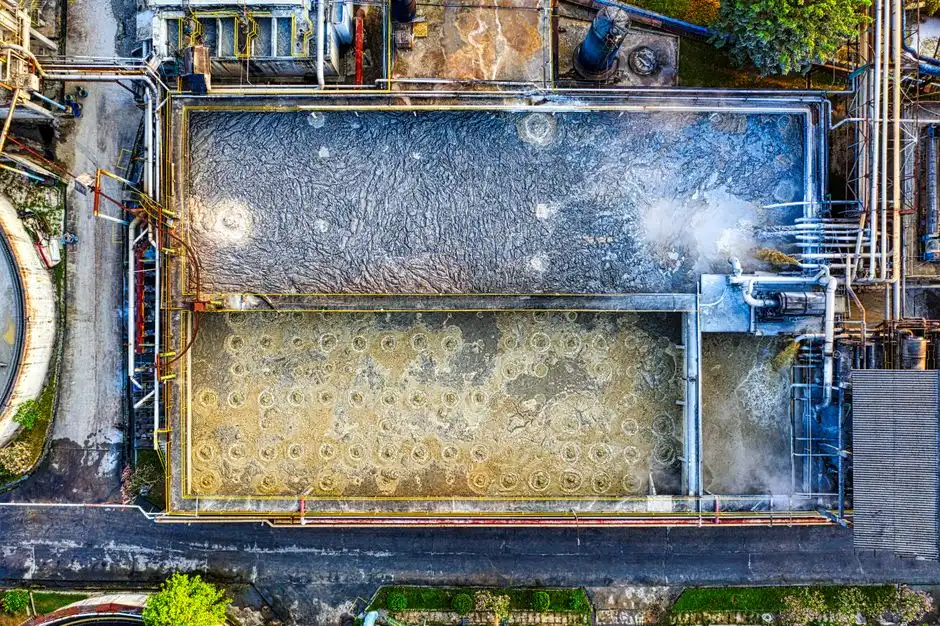
A staged implementation reduces the risk of buying equipment before the permit, wastewater profile, and treatment objectives are defined.
- Obtain the current requirements. Request current CUB rules, amendments, permit, local limits, and forms.
- Characterize every stream. Measure flow, FOG, TSS, BOD, pH, temperature, slug events, and relevant production variables.
- Define performance criteria. Translate permit obligations into equipment acceptance criteria.
- Test the process. Complete bench work, jar tests, or pilot testing where uncertainty remains.
- Select and size the train. Compare DAF, clarification, equalization, controls, and supporting systems against plant data.
- Install and validate. Verify installation, controls, safety provisions, and performance before normal discharge.
- Train and document. Establish operator procedures, sampling routines, records, and corrective-action responsibilities.
Provide bidders with average and peak flow, FOG, TSS, BOD, pH, temperature, expected solids or sludge yield, available footprint, utilities, and planned production changes. Require each bidder to state guaranteed process objectives, proposed test protocol, controls scope, installation requirements, operator training, commissioning plan, and support for CUB permit documentation.
Treat the DAF range of 4–300 m³/h and the lamella surface-loading range of 20–40 m/h as catalog attributes. They do not establish a project price, delivery period, or guaranteed permit performance. Comparative regional experience in regional food-plant sewer pretreatment compliance can help structure the procurement questions, but Clinton’s current permit and CUB requirements remain controlling.
Frequently Asked Questions
Does a food or beverage plant automatically qualify as a Significant Industrial User under Clinton Utilities Board rules?
No. CUB’s three-part test applies: at least 25,000 gallons per day of process wastewater, at least 5% of average dry-weather hydraulic or organic capacity, or designation by the control authority because of reasonable potential for adverse effects. The flow test excludes sanitary wastewater, non-contact cooling water, and boiler blowdown. Ask CUB for written confirmation of the plant’s status rather than inferring it from production activity alone.
Should the plant choose DAF or a lamella clarifier for food-processing wastewater?
Choose from measured treatment objectives rather than a generic rule. DAF is generally strongest when the design objective centers on FOG, oil and grease, suspended solids, and colloidal matter. Clarification remains viable for solids-separation duties when the wastewater data supports it. Procurement should begin with representative FOG, TSS, BOD, flow, pH, and temperature results, followed by pilot or performance testing where needed.
What inputs should a buyer request before comparing equipment cost?
Request itemized quotations tied to the complete treatment train, civil work, controls, chemical systems, sludge handling, commissioning, training, and monitoring. A product capacity range cannot support a project price. The quotation should identify design assumptions, guarantees, test protocol, exclusions, installation requirements, and schedule dependencies so reviewers can compare like-for-like scopes.
What should a supplier provide to reduce permit and implementation risk?
Require documented process guarantees, proposed test methods, control narratives, operator training, commissioning support, and assistance with CUB permit documentation. The supplier should also state the wastewater data used for sizing and identify any performance limitation. These documents allow the plant to test whether the offered equipment supports its actual permit conditions rather than a catalog application.
What should happen before normal production discharge begins?
Complete baseline wastewater testing, verify installation, train operators, conduct performance testing, establish sampling at permit locations, and activate recordkeeping before relying on the system for normal discharge. A startup plan should also define responses to slug events, high temperature, chemical failures, bypasses, and equipment upset, with evidence retained for compliance review.