
The system Durban hotels actually need in 2026
A Durban hotel or resort generally needs a peak-flow biological treatment system, not a unit selected from average daily flow alone. HydropureWater’s 2026 South Africa guide uses 200–250 L/bed-day for full-service hotels and a 2.5–3.0 peak factor; its 100-key example produces approximately 40–45 m³/day mean flow and 100–135 m³/day peak flow. A buried WSZ A/O package suits smaller, low-staff sites, while an MBR is compelling where footprint, reuse quality or dependable solids separation dominates. Durban projects must confirm current eThekwini sewer limits, Section 39 water-use requirements and applicable IRWQ&O reuse conditions.
Hotel wastewater is variable-strength domestic wastewater, not constant municipal sewage. Morning showers, breakfast service, laundry cycles, banqueting and kitchen cleaning create concentrated peaks and pollutant loads. HydropureWater’s 2026 guide assigns approximately 60% of flow to guest rooms, 20% to the kitchen, 10% to laundry and 10% to staff and other operations. The kitchen and laundry fractions therefore need separate characterisation even though the biological process receives the blended flow.
A complete train normally includes preliminary solids protection, flow equalisation, biological treatment, solids separation and appropriate disinfection. Reuse polishing should be added only where the intended water-reuse route requires it; ordinary sewer discharge does not automatically justify an MBR. A buried WSZ A/O treatment plant integrates anoxic and aerobic zones, sedimentation and disinfection for simpler, landscaped installations. An MBR membrane bioreactor combines activated sludge with membrane filtration where compactness and high-quality effluent justify added operating complexity.
Durban’s local wastewater context must be handled carefully. University of KwaZulu-Natal research on activated sludge in Durban investigated biodegradation of pentachlorophenol, a persistent, bio-accumulative and toxic xenobiotic. The study supports the need to characterise persistent or xenobiotic inputs, but it does not establish a hotel-wide PCP design threshold. Wastewater characterisation, rather than transferring an unrelated study result into a specification, is the defensible engineering approach.
Calculate the Durban design flow before comparing equipment
The biological reactor must be sized to the peak flow, not the daily mean, because the hydraulic and organic loads overlap during short operating surges. The calculation should remain auditable: establish occupied beds or rooms, apply a verified per-bed demand, calculate mean daily flow, apply the peak factor and then identify the kitchen and laundry contributions separately.
HydropureWater’s 2026 worked example uses 225 L/bed-day and 1.8 guests per room for a 100-key lodge. It produces approximately 40–45 m³/day mean flow and 100–135 m³/day peak flow after applying the 2.5–3.0 factor. For a larger or differently occupied property, occupancy pattern and water-using fixtures must be verified rather than scaling that example mechanically.
- Record the number of keys or beds and the design occupancy.
- Select the applicable per-bed water demand and document fixture assumptions.
- Calculate daily average flow and apply the site’s agreed peak factor.
- Separate kitchen, laundry, pool, spa and other operational discharges.
- Confirm the resulting peak with monitoring before final equipment selection.
Equalisation should be considered before biological sizing. HydropureWater’s 2026 guide recommends 8–12 hours of average-flow equalisation and reports a 20–30% reactor-volume saving compared with designing directly to peak. The South African BOD discharge requirements explain why reactor or tank under-sizing can trigger approval revisions.
| Design input | Procurement basis | Evidence to request |
|---|---|---|
| Average flow | Rooms or beds multiplied by verified demand | Occupancy and fixture schedule |
| Peak flow | Mean flow multiplied by the agreed peak factor | Hourly metering or verified operating profile |
| Equalisation | 8–12 hours of average daily flow as the 2026 guide’s starting point | Level-based control, duty/standby arrangement and storm exclusion |
| Special streams | Kitchen, laundry, pool and spa loads identified separately | COD, BOD, TSS, ammonia, pH, FOG and flow data |
Before requesting a compliant quotation, confirm occupancy, low-flow fixtures, laundry frequency, kitchen operating hours, banqueting, pool or spa discharges, storm ingress and actual flow monitoring. Average daily flow alone does not establish the biological duty or the equalisation volume.
Choose between a buried A/O plant and an MBR
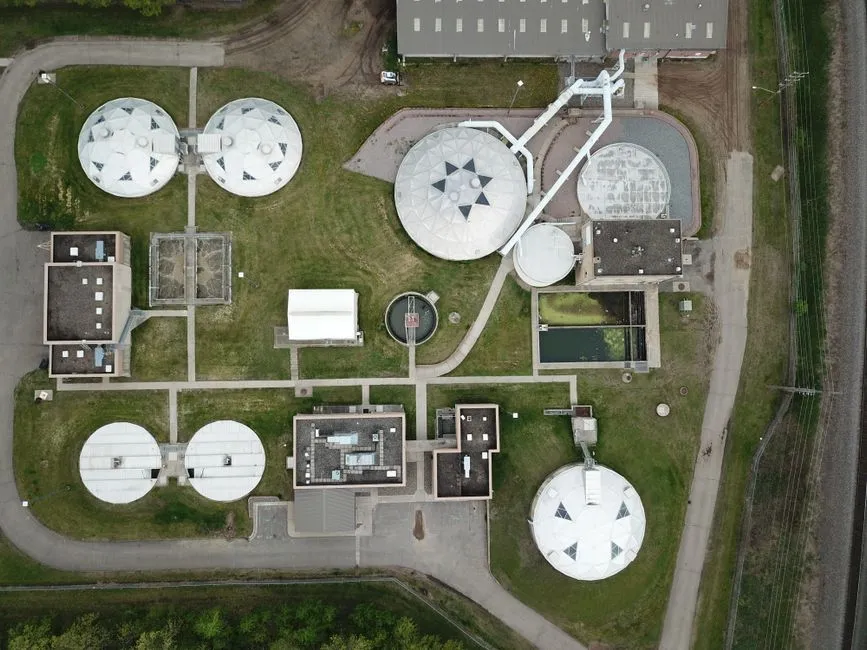
The appropriate architecture depends on the property’s footprint, staffing, discharge route and reuse objective. A buried A/O package reduces visible plant infrastructure and routine operator intervention; an MBR adds membrane separation, tighter solids control and a smaller footprint, but introduces membrane maintenance, replacement and specialist operating requirements.
HydropureWater’s 2026 guide describes the WSZ as a buried anoxic/aerobic package with an integrated settler and disinfection chamber. It is the practical option for smaller properties with landscaped areas, limited specialist staffing and straightforward sewer-discharge duties. The guide also identifies SBR as suitable for a 100–300-key resort where land is available. It gives a constructed-wetland land requirement of 0.5–1.0 ha, which excludes that route from an urban hotel site.
The 2026 guide reports an MBR footprint 60% smaller than conventional activated sludge and filtered effluent below 1 µm. Its stated operating envelope is 6–8 hours HRT, 8,000–12,000 mg/L MLSS, 0.1 µm nominal PVDF pore size and 12–18 L/m²·h operating flux. These are selection inputs, not a substitute for a supplier’s duty-specific calculation.
| Decision factor | Buried WSZ A/O | MBR |
|---|---|---|
| Best fit | Lower-complexity, landscaped installations | Sites prioritising compactness, reuse quality or reliable solids separation |
| Space | Buried installation with limited visible plant | Compact footprint; 60% smaller than conventional activated sludge reported in the 2026 guide |
| Operation | Lower specialist staffing requirement | Membrane operation, monitoring and replacement must be priced |
| Effluent route | Potential for sewer acceptance subject to eThekwini confirmation | Stronger fit where irrigation reuse quality is important |
| Key trade-off | Less process flexibility if loading or reuse requirements change | Higher capital and lifecycle complexity |
Sludge management changes with scale. HydropureWater’s 2026 guide reports MBR sludge production of 0.3–0.5 kg dry solids per m³ treated, while a 25 m³/day conventional hotel plant generates roughly 7–12 kg dry solids per day. Where larger sites require routine cake dewatering, a plate and frame filter press should be considered and its sludge-removal schedule incorporated into the operating plan.
Use a clear decision rule: select A/O where simplicity, limited specialist attendance and a landscaped footprint dominate; select MBR where stringent reuse quality, compactness or membrane separation creates more value than the additional capital and lifecycle cost. Confirm the final choice against the actual reuse route rather than assuming that reuse means Class A irrigation automatically.
Protect the biological stage from hotel-specific pollutants
Kitchen FOG, laundry solids, alkaline detergents and lint must be controlled before the biological reactor. Uncharacterised hotel flows can foul membranes, upset nitrification and transfer pollutants into the final effluent stream.
HydropureWater’s 2026 guide gives kitchen FOG at 30–80 mg/L, laundry BOD at 600–900 mg/L, blended influent BOD at approximately 350 mg/L and laundry pH spikes of 9.5–10. These values make separate kitchen and laundry sampling necessary; a blended sample can conceal the peak load. The guide’s 3–5 mm aperture rotary bar screen provides a reference for removing laundry lint, hair, rags and microplastics before biological treatment.
| Stream or risk | Measured or documented characteristic | Required engineering response |
|---|---|---|
| Kitchen | 30–80 mg/L FOG in the 2026 guide | Size grease removal from measured FOG duty; consider DAF for material grease and solids loads |
| Laundry | 600–900 mg/L BOD; pH 9.5–10 | Protect the train with solids screening and equalisation-based pH control |
| Blended influent | Approximately 350 mg/L BOD in the 2026 guide | Calculate biological loading from verified site data |
| Reuse quality | No detectable FOG at the reuse point in the supplied reuse framework | Specify the sampling point and require compliance evidence |
Preliminary solids protection must be sized to peak flow. A rotary mechanical bar screen can protect downstream biological and membrane equipment from laundry lint and rags. Its aperture selection and duty should follow measured solids rather than a generic solids-removal claim.
The grease trap must match the measured kitchen FOG duty. Where a high-volume restaurant or banquet kitchen creates a material grease and solids load, the guide supports DAF pretreatment; how DAF systems remove grease and solids explains the separation principle and selection inputs. An automatic chemical dosing system should be considered for equalisation-stage pH correction because the documented laundry range of 9.5–10 can affect biological treatment. Final dosing capacity and reagent selection must follow influent testing rather than assume continuous chemical demand.
Request flow-proportional sampling of kitchen, laundry and blended influent for FOG, COD, BOD, TSS, ammonia and pH. Include operating periods around breakfast, banqueting and the main laundry cycle; a single daytime grab sample is not enough to finalise pretreatment capacity.
Design for Durban sewer discharge or water reuse
Ordinary sewer discharge and irrigation reuse are separate compliance pathways. A treatment train designed for municipal sewer acceptance should not automatically be priced as a Class A reuse installation, and reuse polishing should not be omitted where the receiving authority or intended use requires it.
For sewer discharge, obtain written confirmation of the current eThekwini acceptance limits, connection conditions and required monitoring. The City of Joburg limits quoted in HydropureWater’s 2026 South Africa guide—pH 6–9, COD below 75 mg/L, ammonia below 6 mg/L, TSS below 25 mg/L and FOG below 50 mg/L—must not be transferred to eThekwini as if they were local requirements. The guide expressly states that eThekwini and Cape Town use parallel but non-identical bylaw envelopes.
For irrigation reuse, determine whether the applicable route is IRWQ&O 2024 Class A or Class B and confirm the permission required for storage and reuse under Section 39 of the National Water Act 36 of 1998. The supplied 2026 framework specifies COD below 50 mg/L, E. coli below 1,000 CFU/100 mL for Class A or below 100,000 CFU/100 mL for Class B, and no detectable FOG at the reuse point.
Class A is associated with unrestricted irrigation and Class B with restricted drip irrigation in the supplied source. The intended use, receiving authority and irrigation method must therefore be confirmed before finalising disinfection and polishing. A chlorine dioxide generator is the guide’s terminal-disinfection recommendation, particularly for hotel wastewater with a higher ammonia background; the supplier must still demonstrate final compliance with the selected discharge or reuse criteria.
For a reused-water reservoir, HydropureWater’s 2026 guide gives 24–48 hours of average daily flow as a design starting point. Reconcile that volume against irrigation demand, fire-suppression top-up and site-specific reuse rules. Do not include storage or reuse in the scope until the legal pathway, water balance and receiving authority’s requirements are confirmed.
Build a procurement-ready equipment specification
A comparable quotation should state the same design basis, process scope, performance duty and commercial exclusions. Otherwise, an apparently cheaper package may reflect omitted civil works, pretreatment, reuse storage, sludge handling or membrane replacement.
- Require design average flow, peak flow, process stages, treatment duty, effluent duty, retention times and the selected membrane or biological media.
- For MBR, require written confirmation of the guide’s 6–8 hour HRT, 8,000–12,000 mg/L MLSS and 12–18 L/m²·h flux envelope, plus the replacement interval and lifecycle cost.
- Require ISO 9001 and ISO 14001 documentation, at least three operating South African hospitality references and a named membrane or biological-media supply chain.
- Require a Section 39 design report and written evidence that eThekwini has been engaged. Local permit conditions override generic national design guidance.
- Separate civil works, mechanical and electrical work, commissioning, training, consumables, membrane replacement and sludge-disposal costs.
- Price the 7–10-year membrane replacement cycle as a provision to be confirmed through supplier-specific data; it is not a universal warranty term.
| Supplier document | Minimum information required | Buyer check |
|---|---|---|
| Design basis | Average and peak flow, load basis, occupancy, equalisation and treatment stages | Does it reconcile with measured site flows? |
| Process guarantees | Effluent duty, retention times, solids separation and disinfection performance | Does it reference the applicable eThekwini or reuse criterion? |
| Compliance evidence | Section 39 design report and municipal engagement record | Has the authority confirmed the route in writing? |
| Supply chain | Named membrane or media supplier, certificates and hospitality references | Can replacements and technical support be secured locally? |
| Commercial schedule | Installed scope, commissioning, training, consumables, sludge handling and replacement provision | Are exclusions and five-year operating costs visible? |
For DAF pretreatment, use the DAF selection and operating guide to identify the evidence a supplier must provide. The South African BOD discharge requirements remain useful for identifying approval expectations, but the local eThekwini envelope and current permit conditions must govern the final specification.
Before issuing a purchase order, check the approved process calculations against the quoted flow, confirm the legal discharge or reuse route, and ensure the performance guarantee names the receiving requirement rather than referring only to “treated water”.
Frequently Asked Questions
How much does a hotel wastewater treatment system cost in Durban in 2026?
The supplied 2026 source provides Gauteng installed cost bands, not a complete Durban pricing table, so a Durban price should not be inferred from those figures. Request a site-specific ex-VAT quotation that separately states pretreatment, civil works, biological equipment, disinfection, controls, commissioning, reuse storage, operator training, consumables, sludge handling and membrane or media replacement. Compare total installed and lifecycle cost rather than package price alone.
What size wastewater treatment plant does a 100-key Durban hotel need?
HydropureWater’s 2026 worked example gives approximately 40–45 m³/day mean flow and 100–135 m³/day peak flow for a 100-key lodge using 225 L/bed-day, 1.8 guests per room and a 2.5–3.0 peak factor. Confirm occupancy, fixtures, kitchen and laundry loads before adopting that basis. The biological reactor must be selected against peak flow, while equalisation should be checked against the guide’s 8–12-hour average-flow starting point.
Is an MBR required for a hotel in Durban?
No. An MBR is most compelling where footprint, reuse quality or reliable solids separation dominates. A packaged A/O solution may be appropriate for a smaller site after eThekwini sewer acceptance and any Section 39 or reuse requirements have been reviewed. The MBR membrane bioreactor should be justified by the required effluent duty and site constraints rather than selected automatically for reuse.
What should a supplier include in a hotel wastewater treatment proposal?
Require the flow basis, process calculations, effluent guarantees, compliance references, installation scope, electrical and control scope, training, operating consumables, reference plants and a priced membrane or media replacement plan. The quotation should identify whether each item relates to sewer discharge, Class A irrigation or Class B drip irrigation. For an A/O route, obtain the performance and installation basis for the buried WSZ A/O treatment plant using the same commercial structure.
How long does approval take for a Durban hotel wastewater project?
The supplied 2026 source gives a Gauteng combined approval range of 12–20 weeks, comprising Department of Water and Sanitation, municipal and reuse-registration stages. That programme does not establish the current eThekwini or DWS schedule for Durban. Before committing equipment delivery dates, request a project-specific programme from eThekwini and the relevant DWS authority, and make the purchase order conditional on the confirmed approval route.