What compliance layers apply before an Evergreen sewer discharge?
Mining and metals plants near Evergreen meet pretreatment obligations by reconciling applicable federal mining requirements with the receiving sewer authority’s numeric discharge limits, then treating each wastewater stream before combining and polishing the final flow. Federal 40 CFR Part 436 requirements apply to mine drainage, mineral processing operations, and stormwater runoff, with Mineral Mining requirements incorporated into NPDES permits; state and POTW requirements can add further limits for pH, metals, TSS, and other parameters (EPA, 2026-02). A defensible train commonly includes equalization, controlled pH adjustment, coagulation and flocculation, DAF or lamella clarification, multimedia filtration, and RO where dissolved metals or salts remain. Operators must confirm the applicable mining subpart, characterize acid mine drainage, process water, tailings effluent, and dewatering discharge, and size for peak flow.
The compliance file should establish the route to discharge before equipment is selected. Obtain the current NPDES permit, POTW pretreatment permit or sewer-use ordinance, local limits, monitoring requirements, and any approved reuse or no-discharge plan. For industrial discharge to a POTW, local pretreatment requirements remain applicable even where the mine also holds an NPDES permit; Part 436 alone does not determine every sewer-discharge requirement.
| Decision point | Evidence required | Procurement consequence |
|---|---|---|
| Federal mining category | Current NPDES permit and mineral/process description | Identify the applicable subpart and its permit conditions before sizing |
| Active or reserved subpart | EPA regulatory status for the mineral | Determine whether current numeric federal limits exist |
| Industrial sewer discharge | POTW permit, local limits, monitoring plan, and sewer-use requirements | Set the final treatment objective and acceptance criteria |
| Discharge or reuse | Approved reuse, no-discharge, or zero-discharge plan | Define recovery target and concentrate disposition |
EPA’s reserved list includes Dimension Stone in Subpart A, Lightweight Aggregates in Subpart H, and Lithium in Subpart U. A reserved subpart means the operator must verify whether current numeric federal limits apply rather than assume either compliance or exemption; EPA’s mining wastewater regulation confirms both the subpart history and this reserved-status check (EPA, 2026-02). A comparable regional compliance sequence is explained in the regional mining wastewater sewer-limit guide.
Characterize each mine wastewater stream before sizing the system
Each stream needs its own sampling program because dilution in a combined basin can conceal the chemistry and flow that control treatment. Acid mine drainage forms when sulfide minerals exposed to oxygen and water oxidize, producing acidic water that can carry iron, manganese, copper, zinc, arsenic, and cadmium (AMPAC USA, 2025-09). Process water may contain flotation reagents, cyanide, ammonia, chloramines, or high dissolved salts; tailings-pond effluent may contain fine solids, residual processing chemicals, and leached metals; dewatering discharge can change substantially with geology (AMPAC USA, 2025-09).
The unit train cannot be selected from the facility label alone. A copper mine, coal operation, and dimension-stone quarry do not have interchangeable wastewater chemistry. Build a representative dataset for each stream covering pH, flow, total and dissolved metals, TSS, and locally regulated parameters. Sampling should capture normal production, seasonal changes, storm events, and batch discharges, because those conditions determine equalization and chemical demand.
The OSMRE June 2023 study is characterization evidence, not an Evergreen permit determination. Its three raw mine-drainage sources had pH values from 3.13 to 4.58 (OSMRE, 2023). The same study found that continuous mine-drainage addition to a sequencing-batch reactor increased effluent iron loading and lowered effluent pH by approximately 0.5 pH unit (OSMRE, 2023). That finding reinforces the need to review the receiving system and verify each stream rather than assume municipal or sewer treatment will absorb variable metal and acidity loads.
For representative sampling design and separate stream assessment, the mining-plant sampling and stream-characterization framework provides a useful comparison. The resulting sample record should become the source of truth for equipment sizing, chemical consumption, and treatment guarantees.
Build a pretreatment train from equalization through final polishing
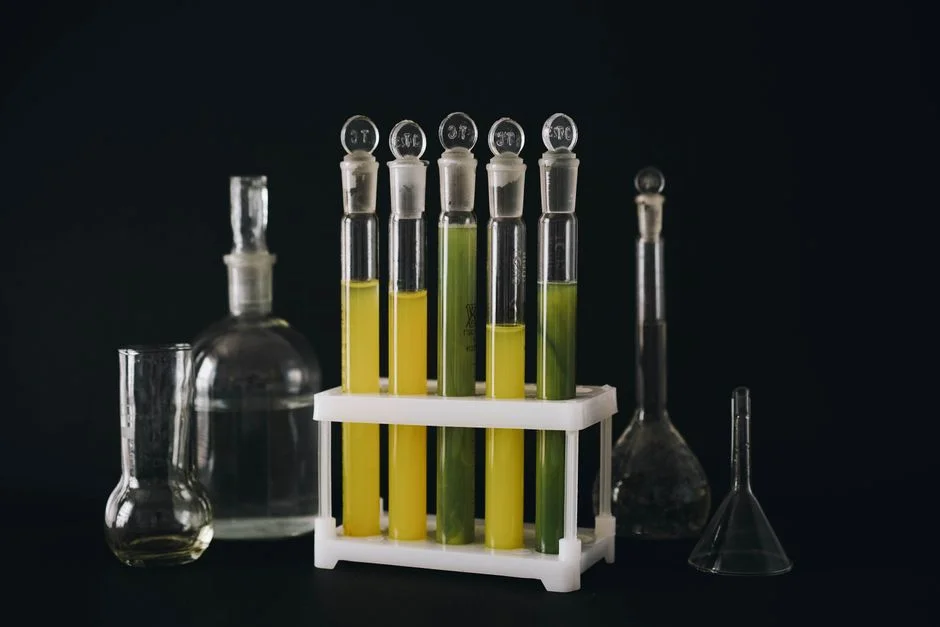
Equalization is the first hydraulic control because treatment chemistry and downstream equipment need a stable feed. Size it around the highest anticipated daily discharge rather than average flow, but obtain the site’s measured peak, duration, and batch-discharge data; the supplied research does not publish an Evergreen flow range.
Follow equalization with automatic pH adjustment, coagulation, and flocculation. A 2024 peer-reviewed review describes lime raising pH above 10 before thickening for metal hydroxide precipitation (PMC review, 2024-02). The chemical system must be selected from the water chemistry rather than from a generic dose. For this application, a PLC-controlled chemical dosing system should coordinate lime, coagulant, flocculant, and pH-adjuster addition through the train’s control system.
Coagulation and flocculation convert suspended solids and fine metal particles into flocs that can be separated. DAF suits buoyant floc and streams carrying oil or floating fines; lamella clarification is favored where metal-hydroxide sludge volume and footprint are the main constraints (Genesis Water Technologies, 2025-11). Both options still require review of sludge density, underflow solids, withdrawal reliability, and downstream membrane protection. The detailed DAF versus clarifier selection for mining wastewater explains those selection checks.
After clarification, multimedia filtration removes remaining turbidity and colloids. Specify an SDI target for the filtered outlet rather than treating inlet turbidity as proof of membrane readiness. Add UF when finer colloidal removal or RO feed conditioning is required. RO becomes necessary when dissolved metals or salts remain above the sewer limit; industrial RO is reported to reject more than 99% of dissolved metals and salts, with 50–70% recovery for AMD feed and 70–85% for the RO stage of a ZLD train (AMPAC USA, 2025-09).
| Process step | Primary purpose | Design evidence to obtain |
|---|---|---|
| Equalization | Smooth peak and batch discharges | Measured peak flow, discharge duration, and storage turnovers |
| pH adjustment and coagulation | Precipitate metals and form removable flocs | Representative pH, metal profile, alkalinity, and jar-test results |
| DAF or lamella | Remove precipitated solids and floatable material | Floc behavior, sludge density, underflow solids, and footprint |
| Multimedia filtration | Reduce turbidity and colloids | Outlet SDI target and demonstrated loading |
| UF, if required | Provide finer separation and RO conditioning | Feed chemistry, flux basis, and backwash cycle |
| RO, if required | Remove residual dissolved metals and salts | Recovery curve, rejection basis, concentrate destination, and pretreatment limits |
| Sludge dewatering | Stabilize and reduce chemical-precipitation residue | Sludge yield, cake target, cycle time, and disposal route |
Close the train with PLC/HMI control, continuous pH, flow, and conductivity monitoring, self-monitoring records, and sludge dewatering. The supplied research identifies filter presses as a standard fit for chemical-precipitation sludge (HydropureWater, 2026-02).
Choose DAF, lamella or integrated treatment for the discharge objective
Clarifier selection follows from the solids and sludge behavior demonstrated in representative testing, not from a generic flow preference. DAF is the stronger starting point when floc floats or oil and fine material are present; lamella becomes more attractive when installation area and metal-hydroxide sludge volume constrain the layout. Neither removes every dissolved contaminant, and neither should be accepted as automatically compliant.
| Operating condition | Preferred equipment | Selection evidence | Design caution |
|---|---|---|---|
| Buoyant floc, oil, or floating fines | DAF | Representative flotation and solids-removal tests | Verify air-to-solids ratio, polymer compatibility, and floatable loading |
| Heavy metal-hydroxide sludge with constrained footprint | Lamella clarifier | Sludge density, settling tests, and site-area constraint | Check plate spacing, underflow solids, sludge removal, and membrane protection |
| Compact automatic train for smaller sites | Integrated purification system | Measured peak flow and required unit operations | Catalog capacity does not replace site-specific sizing or chemistry verification |
| Dissolved metals or salts remain above sewer limits | RO after clarification and filtration | Complete water profile and recovery scenario | Verify feed conditioning, concentrate disposal, and site recovery |
The integrated purification system’s published catalog range is 10–200 m³/h, while the DAF product’s catalog covers 4–300 m³/h and addresses suspended solids, FOG, oil and grease, and colloidal matter (HydropureWater, 2026-02). These are catalog ranges, not Evergreen design flows. The industrial DAF system for mining solids separation should be evaluated only against the plant’s measured peak flow and wastewater characteristics. DAF does not replace chemical precipitation or RO when dissolved contaminants determine compliance.
For a separate equipment-selection comparison, see the DAF and clarifier decision framework. Acceptance must be tied to the final sewer limits and applicable permit conditions, using demonstrated treatment of the site’s representative influent.
Size the system around peak flow, reuse and operating evidence
A project-specific quotation is the only defensible cost basis because the supplied research publishes neither Evergreen flows nor complete-system prices. The RFQ should require peak and average flow in m³/h, representative influent pH and metal profile, sewer-authority limits for metals, pH, and TSS, and a desired recovery percentage when reuse is in scope. Small operations and larger process plants should not be assigned universal capacity bands; the supplied research characterizes the former as generally smaller and the latter as materially larger, with customized sizing required (LiqTech, 2025-08).
| RFQ input or deliverable | Why the buyer must define it | Evidence requested |
|---|---|---|
| Peak and average flow | Drives equalization, pumps, and treatment capacity | Measured hydrograph and discharge-duration record |
| Representative influent | Defines chemistry, chemical demand, and separation behavior | Sampling results by stream and operating condition |
| Final discharge limits | Sets the required removal and polishing objective | Current POTW conditions and applicable NPDES conditions |
| Recovery and reuse target | Distinguishes direct-discharge from reuse economics | Recovery curve and proposed reuse destination |
| Supplier performance package | Makes proposals technically comparable | Rejection basis, chemical consumption, sludge yield, controls scope, and O&M assumptions |
RO-enabled internal reuse has a 40–60% freshwater-consumption reduction estimate in the supplied research, but it is an economic scenario rather than a guaranteed Evergreen result (AMPAC USA, 2025-09). Require a site-specific recovery curve rather than treating nameplate recovery as an operating guarantee. Also request chemical consumption, sludge yield, controls scope, monitoring requirements, membrane-cleaning assumptions, and O&M staffing.
Before purchase, verify chemical-feed ranges against representative water, establish membrane-conditioning targets, set baseline monitoring, and provide contingency capacity for storm-driven or batch discharges. A comparable sizing and reuse discussion is available in the metals-wastewater equipment-sizing framework.
What evidence should a pretreatment supplier provide?
Require one integrated control scope linking chemical dosing, DAF or lamella clarification, multimedia filtration, optional UF and RO, sludge dewatering, and the HMI. The supplier should show how setpoints, interlocks, alarms, and compliance records work together rather than quoting each unit as an isolated product. This is especially important where mining chemistry can vary with geology and production conditions.
Ask for installed references covering the same unit operations at flows in the same order of magnitude as the Evergreen site. The comparison must include the selected clarification mechanism, filtration and membrane configuration, sludge handling, and controls—not only a DAF or clarifier installation. The supplied research recommends checking that proposed equipment matches the site’s unit operations and flows (HydropureWater, 2026-02).
Request a documented O&M plan covering chemical consumption, cleaning, backwash, membrane recovery, sludge handling, calibration, monitoring records, and spare parts. Also request site-specific design values tied to the current permits, representative influent testing, and the final equipment proposal.
Acceptance should depend on demonstrated performance against the final sewer limits and applicable NPDES or pretreatment conditions, not a general promise of compliance. Online pH, flow, and conductivity monitoring should be considered alongside the wider compliance chain in the industrial online-monitoring engineering guide. Controls and maintenance scope should also be addressed through the industrial membrane-maintenance protocol.
Frequently Asked Questions
What does a mining pretreatment system near Evergreen cost?
The supplied research contains no complete-train price for Evergreen, so a generic price range would not support procurement. Request a project-specific quotation using peak and average flow in m³/h, representative influent pH and metal profile, final POTW limits, required recovery percentage, controls scope, and sludge-disposal assumptions. Chemical consumption and membrane pretreatment should be included because they materially affect operating cost.
How should the equipment be sized for peak flow?
Size equalization and treatment around the highest anticipated daily discharge rather than average flow, but use measured site data for the final design. Distinguish sustained flow from storm, dewatering, and batch discharges. A generic mining-plant capacity does not establish the required basin volume, pump capacity, filtration rate, or membrane area.
How should a pretreatment supplier be selected?
Request integrated controls, comparable installed references, a site-specific recovery curve, and a documented O&M plan. The supplier should also demonstrate how chemical dosing, clarification, filtration, optional UF and RO, sludge dewatering, and HMI records form one operating system. Check the proposed performance against the final sewer limits rather than selecting on equipment name alone.
What compliance risks remain after treatment?
The operator must reconcile NPDES conditions with POTW local limits and confirm whether the applicable federal mining subpart is active or reserved. Variable AMD, process chemistry, storm flows, and batch discharges can change the load after a unit is sized. Baseline monitoring, alarms, representative testing, and contingency operating rules are therefore part of the compliance case, as discussed in the industrial membrane cost and procurement guide.
Should the treated water be reused or discharged to the sewer?
Direct discharge is governed by the final sewer limits, while reuse requires a defined quality target and an approved destination. Even with RO, unrecovered water and concentrate require disposition. Request a site-specific recovery curve rather than assuming the reported 50–70% AMD-feed recovery or 70–85% ZLD-stage recovery applies to the installation.