What Tampa-Area Chemical and Industrial Gas Plants Must Control Before Sewer Discharge
Chemical and industrial gas plants near Tampa generally meet sewer pretreatment requirements by controlling wastewater at the source, characterizing each regulated waste stream, and installing a treatment train matched to the pollutants and local POTW permit. A typical sequence is equalization, pH control, oil and grease or solids removal, dissolved treatment, biological processing where needed, and final disinfection or polishing. The final limits are site-specific; facilities should obtain the current sewer-use ordinance, industrial user permit, and written discharge authorization from the receiving authority. Equipment selection should then be verified against measured flow, pollutant loading, variability, and pretreatment requirements.
Pretreatment is enforced through the receiving publicly owned treatment works’ industrial user control program. A chemical plant’s SIC code, an industrial gas supplier’s market description, or a generic industry description does not establish enforceable discharge limits. Air Products identifies itself only as an “Industrial Gas Supplier,” while Insurance Xdate lists SIC 5169 as “Other Chemical and Allied Products Merchant Wholesalers”; neither source establishes a Tampa sewer requirement (Air Products, accessed 2026; Insurance Xdate, accessed 2026).
Before designing equipment, request these binding and supporting records from the receiving authority:
- The current sewer-use or pretreatment ordinance.
- The facility’s industrial user permit and discharge authorization.
- Approved monitoring frequencies, sampling methods, and reporting forms.
- Local discharge limits and any categorical or permit-specific conditions.
- Requirements for batch discharges, bypasses, sampling stations, and control equipment.
Supplier qualification records should support procurement without being mistaken for discharge standards. The NBS directory published by OpenAlex covers 109 US private-sector organizations engaged in product-certification activities and records certification requirements, standards, service availability, and cost (OpenAlex, Private sector product certification programs in the United States). Those entries can help buyers assess relevant certification claims, but they do not create POTW limits. Related pretreatment frameworks for [chemical and process facilities](/blog/14655-how-mining-and-metals-plants-near-evanston-meet-sewer-limits.html) and other industrial users provide useful process context, not Tampa authorization.
Build the Compliance Path from Waste Characterization to Written Authorization
The compliance path begins by separating every wastewater source before selecting a treatment unit. For chemical and industrial gas facilities, that means tracing cleaning-chemical rinses, condensate, product carryover, off-spec batches, floor washings, and laboratory drains to the point where each enters the sewer system. Combining these streams early can conceal the contaminant responsible for an exceedance and make corrective action difficult.
Industrial wastewater characterization should include flow, pH, oil and grease, suspended solids, coliforms, metals, toxicity, and pollutants identified by the receiving authority. Where those parameters have not been measured, they remain open design inputs—not assumed compliance values. Sampling should capture normal production, cleaning, startup, shutdown, and batch-discharge conditions. Continuous discharge and batch discharge must be recorded separately because averaging across a full operating cycle can hide a short, high-concentration release.
| Decision stage | Required information | Engineering output |
|---|---|---|
| Source characterization | Stream-by-stream flow, pollutant concentrations, batch volumes, discharge timing, and upstream recycling | Wastewater mass balance and pollutant-loading basis |
| Pretreatment design | Binding POTW conditions, treatment objectives, variability, utilities, residuals, and operating constraints | Conceptual treatment train and preliminary sizing |
| POTW review | Design basis, analytical methods, monitoring plan, and proposed operating controls | Written comments or permit conditions incorporated into the design |
| Pilot or commissioning | Representative wastewater, startup procedure, calibration records, and controlled trial discharge | Verified performance and operating limits |
| Authorization | Accepted treatment performance, sampling plan, bypass controls, reporting procedures, and emergency response | Written authorization before production discharge |
The approval sequence is therefore: characterize the wastewater, develop the conceptual treatment train, submit it for POTW review, conduct pilot or commissioning work where needed, and secure written authorization before discharge. The supplied research contains no Tampa-specific numeric sewer limits, so this article cannot establish pH, mass-loading, or concentration thresholds. The plant must obtain those values from its current permit and the receiving authority rather than infer them from another facility.
Choose a Pretreatment Train for Variable Chemical Process Wastewater
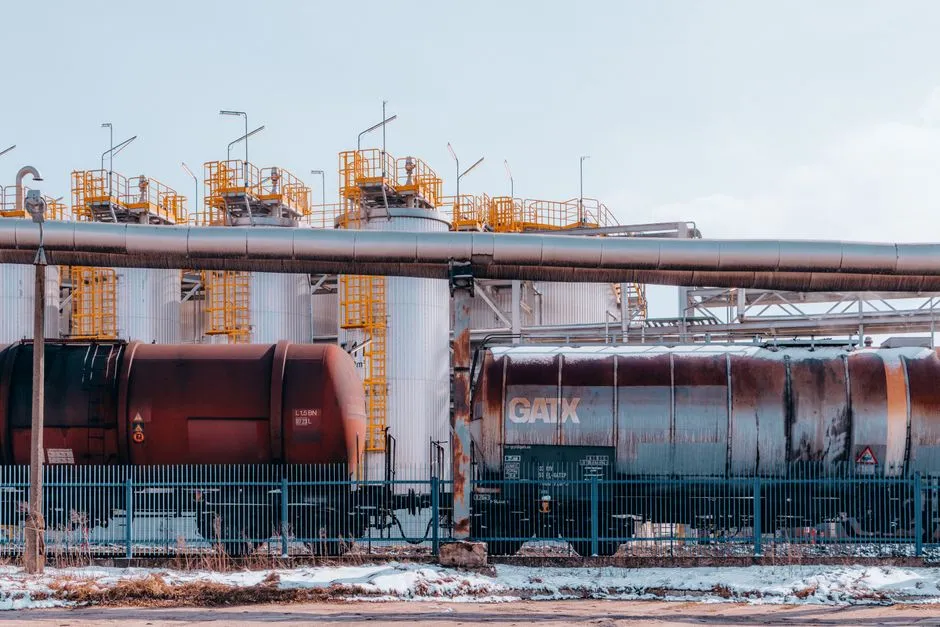
A defensible treatment train assigns each unit a specific compliance function. Equalization controls hydraulic and concentration peaks; physical removal targets separable contaminants; chemical dosing creates the conditions needed for aggregation or pH correction; biological treatment addresses biodegradable load; and disinfection controls microbial indicators where required. A plant should add or omit stages based on measured wastewater and permit conditions, not on a universal chemical-process template.
| Treatment function | Primary application | Key design question |
|---|---|---|
| Equalization | Buffer batch discharges, production surges, and fluctuating concentrations | What volume and mixing behavior are needed to prevent downstream shock loading? |
| Dissolved air flotation | Suspended solids, FOG, oil and grease, and colloidal matter | What flow and contaminant loading govern flotation and solids removal? |
| Chemical dosing | pH adjustment, coagulation, flocculation, and specialty-chemical application | Which chemical and dose range are supported by testing? |
| MBR treatment | Biological treatment combined with fine solids separation | Is biological treatment necessary, and what effluent solids limit applies? |
| Chlorine dioxide | On-site microbial control for suitable streams | What dose, contact time, generation method, and residual criterion are required? |
| Filter press | Separation of generated sludge or spent chemical solids | What solids volume, moisture target, and disposal route must be handled? |
Equalization should be sized from measured inflow, batch-discharge frequency, batch volume, and operating constraints. A DAF system for chemical wastewater pretreatment is a physical-removal option for suspended solids, FOG, oil and grease, and colloidal material; the referenced catalog specifies 4–300 m³/h across 13 standard models. That range is a selection boundary, not proof that every unit within it can meet a permit.
A PLC-controlled chemical dosing system can support coagulant, flocculant, pH adjustment, and specialty-chemical applications. The controls should automate metering, but chemical selection and dosage must be established through testing rather than catalog assumptions.
Where biological treatment and fine solids separation are both required, an MBR treatment system for industrial process wastewater is a candidate. The referenced catalog describes filtration below 1 μm and near-reuse-quality effluent, but those product claims do not replace permit-specific acceptance criteria.
An on-site chlorine dioxide generator can provide microbial control for suitable streams; available configurations span 50–20,000 g/h, including fully automated industrial systems. Where treatment generates sludge or spent chemical solids, a filter press for treatment residuals provides solid-liquid separation. The referenced specification gives filtration areas from 1 m² to 500 m² and manual, hydraulic, or PLC-automatic operation.
Size Equipment from Plant Data Instead of Catalog Capacity
Equipment sizing should start with a wastewater mass balance, not a catalog flow rate. The mass balance must reconcile average and peak flow, operating hours, batch volumes, pollutant concentrations, and upstream storage or recycling. The same mass balance should identify which streams are continuous, which are intermittent, and whether equalization prevents a batch from reaching treatment at full concentration.
The DAF catalog range of 4–300 m³/h can screen candidate equipment, but it does not replace hydraulic calculations or contaminant-loading checks. A buyer should require the proposed DAF to state its design flow, hydraulic loading, contaminant basis, solids-removal objective, and operating envelope. The equipment review also covered in the [DAF versus clarifier comparison for chemical wastewater](/blog/14647-daf-or-clarifier-for-agricultural-chemical-wastewater-in-houston-2026.html) is relevant to screening; it does not establish Tampa acceptance criteria.
For chemical dosing, request the complete chemical list, target pH range, required dose range, storage arrangement, control signals, duty cycle, and containment requirements. For chlorine dioxide, evaluate generator capacity against the selected chemical or electrolytic method, process flow, target dose, contact time, and site utility constraints. The applicable dose must come from the process test and treatment objective; the supplied research provides no universal dosage for chemical or industrial gas wastewater.
Procurement scope should also address redundancy, bypass prevention, maintenance access, sludge or spent-media handling, and instrumentation. An equalization tank should be checked for mixing, dead zones, cleanout access, and the consequences of an upset. Auxiliary equipment should be included in the hydraulic and electrical design rather than added later as unqualified accessories.
Compare Treatment Options by Compliance Function and Operating Risk
DAF, chemical dosing, MBR, chlorine dioxide, and solids dewatering solve different compliance problems; they should not be compared as interchangeable products. Selection follows the contaminant, variability, permit objective, and consequence of equipment failure. For a high-oil or high-FOG stream, excessive solids loading should be prevented before biological treatment. For variable chemical process wastewater, equalization and monitoring become part of the compliance strategy rather than optional accessories.
| If the compliance need is… | Screen first for… | Do not assume… |
|---|---|---|
| Removal of floatable oil, FOG, or settleable solids | DAF with an appropriate solids-handling route | That DAF will remove dissolved contaminants not addressed by coagulation or biological treatment |
| pH control or improved aggregation | Chemical dosing followed by jar or pilot testing | That a standard dose applies across changing wastewater chemistry |
| Biological treatment with fine solids separation | MBR or an equivalent biological-solids separation train | That catalog reuse-quality language is a sewer discharge guarantee |
| Microbial control | Disinfection process matched to stream chemistry and permit criteria | That generator capacity alone demonstrates an effective residual |
| Residual sludge dewatering | Filter press or another verified solids-separation method | That treatment equipment eliminates the residual-disposal obligation |
A plate-and-frame filter press is relevant where residual sludge requires dependable dewatering before disposal. The referenced catalog specifies filtration areas from 1–500 m² with manual, hydraulic, and PLC-automatic operating modes. Treat these values as screening data, not proof of moisture content, cake strength, cycle time, or disposal acceptance at the Tampa site.
Final acceptance should use site data, pilot results where needed, and the receiving POTW’s written conditions. The OpenAlex/NBS count of 109 organizations belongs only to the certification and procurement context; it is not a treatment-performance statistic. The [regional pretreatment compliance framework](/blog/14655-how-mining-and-metals-plants-near-evanston-meet-sewer-limits.html) offers another way to structure permit review, but the Tampa receiving authority’s documents control.
Verify Performance Before and During Sewer Discharge
Commissioning should demonstrate that the installed train performs as designed before production wastewater is discharged under the new authorization. Start with dry-run checks to verify power, interlocks, instrument signals, alarms, and control logic. Follow with wet commissioning, leak checks, instrument calibration, and controlled trial discharges. Record every operating condition and analytical result, including deviations rather than excluding them as atypical.
Establish baseline and corrective-action limits for pH, suspended solids, oil and grease, flow, and every pollutant identified in the industrial user permit. These limits should come from the permit and the POTW’s written instructions. Define the alarm, diversion, and shutdown response for abnormal pH, excessive solids loading, chemical inventory loss, and treatment-equipment faults. Equalization should have a defined operating response when incoming flow or concentration exceeds the treatment envelope.
Operational records should connect each sample or event to the source stream, treatment step, corrective action, responsible operator, and applicable discharge authorization. Separate batch-discharge records from continuous monitoring logs so the plant can explain how it managed an off-spec release or treatment upset. The [pretreatment workflow for food and beverage plants](/blog/14516-how-food-beverage-plants-meet-sewer-pretreatment-limits-in-2026.html) illustrates the same basic traceability principle, while the [mining pretreatment workflow](/blog/14641-how-mining-plants-near-malvern-meet-sewer-limits-in-2026.html) emphasizes the need to connect operating events with corrective action.
Coordinate sampling methods, notification requirements, monitoring frequencies, and reporting deadlines with the receiving authority. An equipment startup report proves that the system ran; it does not prove ongoing sewer compliance. Authorization should be secured in writing before the plant relies on the treatment train for permitted discharge.
Prepare a Supplier and Compliance-Risk Checklist
A request for quotation should contain enough plant-specific information for suppliers to price and design against the same basis. Require a process basis, flow range, pollutant-loading basis, hydraulic calculations, materials of construction, control philosophy, utilities, maintenance plan, and commissioning protocol. Identify the receiving POTW’s written conditions as customer-supplied acceptance criteria. Do not leave the supplier to infer permit limits from an industry description.
Ask whether treatment performance is supported by comparable wastewater data. The supplier should identify any guarantee that depends on the receiving POTW’s limits and should explain which results are contingent on representative feed conditions. Require a written list of customer responsibilities, especially chemical characteristics, equalization behavior, discharge timing, and permit acceptance criteria.
Certification evidence can help evaluate supplier systems, but relevance matters. The NBS directory published by OpenAlex records standards, certification requirements, service availability, and cost for 109 US private-sector organizations (OpenAlex, Private sector product certification programs in the United States). Buyers should verify that the cited program applies to the relevant equipment, scope, and procurement requirement rather than treating directory inclusion as automatic approval.
Before award, confirm lead time, delivery scope, installation boundaries, operator training, replacement-part availability, and local service support. Also define acceptance tests, calibration responsibilities, performance demonstrations, documentation deliverables, and response times for equipment faults. Auxiliary requirements for [treatment valves, media, and related parts](/product/25-water-treatment-parts-valves-media.html) should be allocated to avoid an incomplete installed system.
Frequently Asked Questions
What treatment data must a Tampa chemical or industrial gas plant provide before selecting equipment?
Provide measured flow by stream, operating and batch-discharge schedules, pollutant concentrations, pH, oil and grease, suspended solids, and any facility-specific contaminants. Also provide the current industrial user permit, sewer-use requirements, equalization details, utility constraints, residual-disposal route, and peak or off-spec operating scenarios. Missing measurements should be resolved by sampling, not replaced with generic values.
How should a DAF system be compared with an MBR for industrial wastewater?
Compare the DAF system for chemical wastewater pretreatment with an MBR treatment system for industrial process wastewater by compliance function. DAF screens for floatable oil, FOG, colloids, and suspended solids; MBR combines biological treatment with fine solids separation. If both functions are needed, they may appear in one train, but the DAF-versus-clarifier screening method still requires site data and permit criteria.
How should chemical-dosing and chlorine-dioxide equipment be sized without a universal dosage?
Size the PLC-controlled chemical dosing system from the required chemical range, target pH, tested dose range, process flow, storage needs, and control sequence. Size the on-site chlorine dioxide generator from the selected generation method, process flow, dose, contact time, and utility constraints. Request jar, bench, or pilot data and confirmation of residual or microbial criteria in the permit before selecting final capacity.
What should a buyer verify in supplier qualifications and ongoing compliance records?
Verify relevant certification scope, comparable wastewater evidence, engineering calculations, installation responsibilities, commissioning tests, operator training, parts availability, and local service support. For ongoing compliance, retain the industrial user permit, discharge authorization, calibration records, monitoring results, batch-discharge logs, corrective actions, bypass records, and POTW correspondence. These records should allow an auditor to connect each discharge event with its operating condition and response.