Start with the receiving sewer's actual limits
A food and beverage plant discharging to a municipal sewer is an indirect industrial discharger, so its controlling requirements come from 40 CFR Part 403, the receiving POTW’s pretreatment program, and the plant’s written discharge authorization. Hixson identifies 250 mg/L for BOD₅ and suspended solids as commonly cited thresholds while warning that requirements are jurisdiction-specific; those values are not confirmed Boscobel limits. Equipment selection should begin with the receiving sewer’s actual permit, not a generic treatment specification. The sewer pretreatment compliance workflow provides a useful structural reference, but the Boscobel sewer authority’s current requirements must govern the project.
Request the complete pretreatment permit and supporting forms from the receiving sewer authority. The permit package should identify permitted pollutants, local maximum and average concentrations, monitoring frequency, pH range, FOG limits, prohibited discharges, surcharge formulas, monitoring-point requirements, and sampling protocols. Ask which discharge points are covered, whether production wastewater, clean-in-place wastewater, floor washdown, and stormwater have different conditions, and whether self-monitoring reports are required.
Federal pretreatment rules are the baseline framework, but the site’s POTW permit and applicable sector-specific EPA effluent guidelines may control the design. Hixson identifies guideline categories for dairy products, meat and poultry, canned fruits and vegetables, seafood, and other food-processing operations. Determine whether the plant falls within one of those categories and whether the sewer authority has adopted additional local limits.
Cost exposure should also be documented before equipment is specified. Hixson’s San Antonio example charges $1.32 per mg/L of BOD above 250 mg/L and $3.05 per mg/L of TSS above 250 mg/L, multiplied by monthly discharge volume. Those are San Antonio rates, not Boscobel rates; they demonstrate why concentration and volume assumptions need confirmation before a bid is accepted.
| Permit item | What the project team must confirm | Why it affects design |
|---|---|---|
| Local limits | Maximum and average concentrations for BOD₅, COD, TSS, FOG, and pH | Defines the required removal basis and monitoring points |
| Discharge basis | Flow-weighted concentrations, mass limits, monitoring frequency, and averaging periods | Determines whether equalization and downstream capacity are adequate |
| Prohibited discharges | Rules for CIP chemicals, emulsions, solids, stormwater, and other process streams | May require segregation, neutralization, or separate disposal |
| Surcharges | Local formulas, concentrations above which they apply, and fee units | Adds an operating cost that should be compared with treatment expense |
| Compliance evidence | Sampling method, chain of custody, calibration, data logging, and reporting requirements | Turns treatment performance into defensible regulatory evidence |
Characterize the wastewater by source and operating cycle
Food-processing wastewater must be characterized as a set of changing streams, not represented by one plant-wide average. Batch schedules, product changeovers, CIP cycles, sanitization, and seasonal production can change flow, organic load, pH, temperature, and pollutant concentration within hours. Hixson notes that untreated food-processing effluent can be 10 to 100 times stronger than domestic wastewater on BOD₅ and COD terms. That variability, rather than the average concentration alone, is usually the critical design condition.
Map each source separately where practical: product losses, washing, cooking or rinsing, equipment cleaning, sanitization, CIP chemical waste, cooling or wash water, floor washdown, and any stormwater accepted under the permit. Assign measured flow and pollutant data to each stream. Identify clean and dirty streams, determine where dilution is physically available, and establish whether the sewer authority permits dilution to achieve compliance. Clean water should not be used to disguise an exceedance without written authorization.
The sampling program should combine composite and event-based records. Normal production, a representative production peak, a CIP discharge, and a chemical-cleaning event should each be captured. Flow-proportional composite samples characterize sustained discharge, while grab samples isolate short chemical or product slugs. Reconcile the resulting dataset with the POTW’s monitoring basis: a permit that evaluates daily averages, maximum concentrations, or mass loading requires different evidence from a permit based on isolated grab samples.
Contaminant profiles differ by operation. Hixson describes dairy streams containing lactose, milk fats, and proteins; meat and poultry streams carrying suspended solids, FOG, and elevated nitrogen; and beverage streams containing sugars, yeast, and acids. Those distinctions determine whether the primary problem is floatable material, soluble organics, nutrients, or pH shock. A supplier’s package wastewater value should not be substituted for plant-specific measurements.
| Source group | Characterization focus | Design implication |
|---|---|---|
| Product loss, washing, rinsing | Flow, BOD₅, COD, TSS, FOG, and settleability | Defines equalization, solids removal, and biological loading |
| Equipment cleaning and sanitization | Event flow, residual chemical, pH, temperature, and duration | Determines segregation, equalization, and chemical-control requirements |
| CIP chemical waste | Chemical identity, concentration, volume, and release profile | May require neutralization or separate treatment before biological treatment |
| Floor washdown and controlled stormwater | Solids, FOG, detergents, and permitted entry point | Identifies screening, capture, and routing requirements |
| Cooling and wash water | Flow variability, temperature, and pollutant contribution | Separates low-strength dilution from concentrated process waste |
Build a treatment train that follows the contaminants
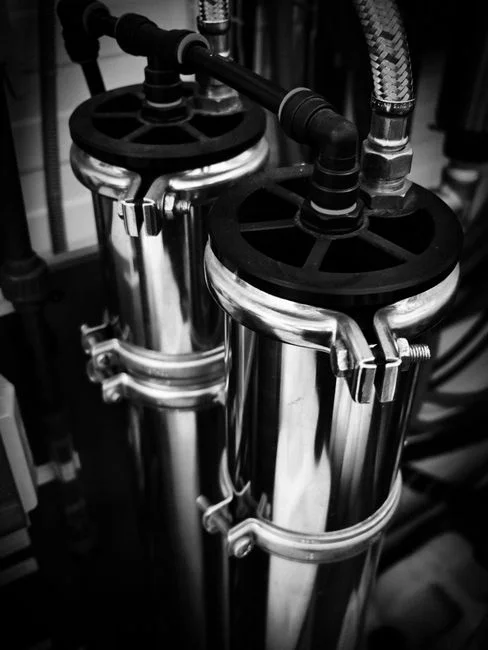
A defensible food-plant treatment train removes contaminants in the order they interfere with downstream processes. It should normally move from segregation and screening through flow equalization, solids and FOG removal, biological treatment, and final polishing. The equipment sequence follows the measured contaminant profile; it is not fixed by the fact that the wastewater came from a food or beverage facility.
- Segregate and screen. Remove product pieces, packaging debris, food particles, rags, plastics, and fibrous material before pumps or biological systems. A mechanical screen protects downstream equipment. Isolate chemical CIP streams and neutralize or treat them appropriately rather than allowing a slug to shock-load the biological process.
- Equalize flow and load. Use a buffer tank to level production surges and concentrated cleaning discharges. Establish working volume, mixing, aeration, and controlled release from measured flow and pollutant data. Equalization reduces hydraulic and organic shock; it does not reduce the mass requiring treatment.
- Remove floatable material with DAF. A DAF system for food-processing wastewater uses microbubbles to float suspended solids, FOG, oil, grease, and colloidal material before biological treatment. Hixson cites optimized poultry DAF results of 74% TSS removal and 99% oil-and-grease removal. It also reports more recent poultry results of up to 99% TSS removal, 85% BOD₅ reduction, and 98% phosphate removal under appropriate operating conditions.
- Remove soluble organics biologically. Aerobic activated sludge or an SBR is appropriate when soluble BOD₅ and COD removal is the principal objective. Anaerobic treatment may suit high-strength streams where energy recovery is viable. Hixson reports COD removal of 89.8% to 96.5% in food-processing applications, methane yields of 0.27 to 0.33 liters CH₄ per gram of COD removed, and energy-demand offsets up to 57.6% in documented cases.
- Polish only as required. An MBR membrane bioreactor for low-solids effluent may be needed when the permit or reuse plan requires consistently low solids and soluble organics. Hixson cites beverage-facility pilot results of 16.9 mg/L effluent COD, 3.8 mg/L effluent TSS, and 92.6% COD removal, while noting higher capital and energy costs.
Hydraulic control is a separate decision from contaminant removal. XPEL reports that organic loading can represent up to 65% to 80% of wastewater-treatment cost and identifies evaporation as a way to manage peaks before treatment or disposal. Evaporation reduces volume; it does not replace required treatment.
| Stage | Primary target | Evidence or acceptance basis | Common failure to avoid |
|---|---|---|---|
| Screening | Large solids and fibrous material | Screen type matched to debris and downstream protection | Clogging or abrasion before solids removal |
| Equalization | Flow, load, and pH variability | Measured operating envelope and controlled release | Concentrations averaged away from peak events |
| DAF | FOG, oil, suspended solids, colloids | Guaranteed removal against measured influent | Conflating DAF results with biological COD removal |
| Biological treatment | Soluble BOD₅ and COD | Load range, temperature, pH, and sludge-handling basis | Under-sizing from average site data |
| MBR or other polishing | Final solids and soluble organics | Permit limit or reuse specification | Buying membrane polishing without a demonstrated need |
Match each discharge problem to the right equipment
Equipment selection should start with the discharge problem and the required final result. The most advanced unit is not automatically the lowest-risk choice. Each comparison must use the plant’s measured wastewater, available footprint, operating resources, sludge-handling route, and written sewer requirements.
| Discharge problem | Compare | Decision inputs | Preferred outcome |
|---|---|---|---|
| FOG and floatable solids | DAF, gravity separation, or lamella clarification | Oil-and-grease content, emulsion characteristics, settleability, and required removal | A stable grease- and solids-removal step that protects downstream equipment |
| Soluble BOD₅ and COD | Aerobic treatment, anaerobic treatment with energy recovery, or MBR | Load variability, land, energy cost, reuse objective, and final quality | A biological process matched to load and operating conditions |
| Suspended solids | Screening, DAF, or lamella clarification | Particle size, fibrous-material risk, sludge characteristics, maintenance access, and space | Reliable solids capture without creating an unmanageable sludge stream |
| pH or chemical control | Automatic dosing with a defined response strategy | Chemical range, mixing, control response, and biological compatibility | Controlled release without over- or under-dosing |
| Final solids removal or reuse preparation | MBR or a simpler biological and physical train | Effluent specification, reuse target, energy use, and maintenance capability | The least complex train that reliably meets the confirmed requirement |
For pH and chemical control, specify automatic dosing only where characterization demonstrates a need. Request the chemical range, mixing strategy, control response, and downstream biological compatibility from the supplier. A potential sedimentation, chemical-dosing, or membrane solution should be evaluated as part of the complete train rather than as stand-alone purchases.
HydropureWater’s available DAF range covers 4 to 300 m³/h across 13 standard models, while its MBR system range is 10 to 2,000 m³/day. These are equipment ranges, not recommended capacities for a Boscobel plant. The selected capacity must come from the site’s measured hydraulic and pollutant envelope, with downstream treatment and the permitted discharge point checked against peak conditions.
Size, verify, and operate for permit compliance

Pretreatment equipment should be sized from a documented basis of design, not from equipment throughput alone. The package should include measured flow and pollutant data, production and cleaning schedules, unit-process removals, residual sludge generation, redundancy, power demand, controls, odor control, and expected future production growth. Where a value has not been measured or supplied by the sewer authority, identify it as an open design input rather than filling it with an assumed range.
Check the complete train. Primary equipment may have adequate nominal capacity while downstream biology, pumping, or the permitted discharge point becomes the constraint during a production surge or CIP event. A useful review method is the COD-to-BOD₅ screening framework, supplemented by measured COD, TSS, FOG, flow, pH, and operating records.
Monitoring scope should follow the POTW permit. At minimum, define how pH, flow, BOD₅, COD, TSS, and FOG or oil and grease will be measured, sampled, calibrated, logged, and reported. Identify alarm response, sampling methods, chain-of-custody requirements, and the responsible operator for each result.
The operating narrative must address realistic failure modes: a CIP chemical slug, production surge, biological upset, DAF failure, and power interruption. It should state what equipment isolates, what flow is held or diverted, which alarms require shutdown, and how the plant returns to controlled discharge.
Ask each supplier to guarantee performance against the plant’s actual influent envelope and the receiving sewer’s written limits. Require FAT and SAT protocols, operator training, critical spares, maintenance access, and response time for repairs. A supplier should identify assumptions, operating windows, test methods, and unresolved permit inputs in the offer. Any proposed performance or cost comparison should then be tested against the same measured wastewater basis.
Frequently Asked Questions
What pretreatment limits apply to a food and beverage plant discharging to the Boscobel sewer?
The controlling limits are those in the plant’s current POTW pretreatment permit, subject to 40 CFR Part 403 and any applicable sector-specific requirements. Hixson’s commonly cited 250 mg/L BOD₅ and TSS thresholds are not confirmed Boscobel limits. Obtain the permit, local limits, surcharge formula, monitoring basis, and prohibited-discharge provisions before sizing equipment.
Is DAF alone sufficient for food-processing wastewater before municipal sewer discharge?
DAF addresses FOG, floatable solids, and part of the suspended and colloidal load; it does not establish complete soluble BOD₅ and COD removal. It may be sufficient only if measured performance, including subsequent biological treatment if required, demonstrates compliance at the authorized discharge point. Check the whole train rather than relying on DAF removal percentages alone.
How should a food and beverage plant size a wastewater pretreatment system?
Use measured flow, BOD₅, COD, TSS, FOG, and pH data for each source and operating cycle, including production peaks and CIP events. Size equalization and every downstream stage for the resulting influent envelope, then verify the permitted discharge point, sludge handling, controls, power demand, and future growth. Do not size from an average wastewater value or equipment catalog maximum.
What information should a wastewater treatment supplier request before quoting equipment?
Request the receiving sewer’s written limits, source-by-source flow and pollutant data, production and cleaning schedules, chemical inventory, reuse targets, space and utility constraints, sludge-handling expectations, and operating schedule. Also request performance guarantees, operating windows, FAT/SAT protocols, training, spares, and critical-repair response time. The quote should identify which results are measured and which remain design assumptions.
How can a plant compare treatment cost, equipment performance, and compliance risk?
Compare alternatives using the same measured influent and written discharge limits. Request itemized capital and operating inputs, including power, chemicals, sludge handling, monitoring, maintenance, and disposal; do not accept a total price without stated volumes and operating assumptions. Add surcharge exposure and the consequences of a missed limit, then compare DAF, biological treatment, and MBR using the comparison of DAF, biological, and MBR treatment trains as a framework for the technical review.