Separate the Wastewater Sources Before Choosing Equipment
An Irkutsk data center needs a source-specific treatment train for industrial wastewater and cooling blowdown, not a generic “water reuse” package. First characterize each stream by flow, TDS, hardness, suspended solids, pH, temperature, biological risk and treatment-chemical content. Blowdown generally needs solids control, corrosion and scale control, disinfection and monitoring before discharge or reuse; higher-value reuse may require softening or membrane polishing. The final design must also satisfy Russian environmental, discharge and water-use requirements confirmed for the site. Treatment selection should be based on pilot results and the facility’s chosen reuse route.
Start with a flow diagram, not a blended wastewater estimate. Give cooling-tower blowdown, reverse-osmosis reject, domestic sewage, equipment-wash water and each industrial process discharge its own flow line and sampling point. Domestic sewage requires a biological treatment train; concentrated cooling blowdown does not. Conversely, a cooling-water treatment package may be inadequate for process wastewater containing specific organics, oils, colloids or metals. This separation follows the 2026 data-center wastewater treatment guide while adapting it to an Irkutsk site.
Cooling blowdown should be characterized as already conditioned but concentrated water. Genesis Water Technologies identifies dissolved solids, suspended matter and residual cooling chemicals in this stream. Its existing chemical program, temperature and cycles of concentration therefore determine what further treatment is justified. Record where each stream currently goes—sewer, surface water, controlled disposal or reuse—and obtain representative samples rather than relying on incoming-water data.
| Stream to isolate | Field record required | Design implication |
|---|---|---|
| Cooling-tower blowdown | Flow, temperature, conductivity/TDS, cycles of concentration, chemicals | Physical separation, corrosion and scale control; possibly softening or membrane polishing |
| RO reject | Peak and daily flow, salinity, temperature, pressure history | Concentrate handling and a recovery route evaluated separately |
| Process wastewater | Constituents, batch discharges, pH, oils, organics and metals | Stream-specific industrial wastewater pretreatment |
| Domestic sewage | Flow, load, discharge destination | Do not combine with concentrated cooling blowdown |
| Equipment wash water | Cleaning chemicals, suspended solids, episodic volume | Segregate incompatible chemical residues before reuse |
Build the Irkutsk Water Balance and Sampling Plan
Measured blowdown can exceed the theoretical value by 15–30% because of unmeasured losses and emergency discharges, according to Genesis Water Technologies in its cooling-blowdown analysis. That makes metering more reliable than calculations alone. Install or verify separate meters for makeup, evaporation, blowdown, drain losses and operational dumps, then reconcile each term across representative operating periods.
The theoretical blowdown ratio is 1/(CoC − 1). It equals 25% of makeup at 4 cycles of concentration and 20% at 6 cycles. Moving from 4 to 6 CoC therefore reduces blowdown by 20%, not the commonly assumed 50%, as Genesis Water Technologies explains in its cooling-blowdown analysis. Before raising CoC, evaluate scaling, fouling and microbiological risk: the same analysis warns that these risks increase materially above 5–6 CoC without advanced treatment.
Sample source water, circulating water and blowdown across normal and peak load. The program should cover TDS or conductivity, hardness, suspended solids, pH, alkalinity, temperature, residual biocides, anti-scalants, corrosion inhibitors and microbiological indicators. Repeat the campaign seasonally and during worst-case operating cycles. Irkutsk cold conditions can affect viscosity, biological activity and discharge temperature, but they cannot substitute for local measurements: source-water quality and facility load can also vary.
| Water-balance element | Measurement | Decision supported |
|---|---|---|
| Makeup water | Continuous flow and source-water analysis | Baseline water demand and intake chemistry |
| Evaporation | Calculated from the reconciled water balance and checked against operating data | Distinguish consumption from recoverable discharge |
| Blowdown | Continuous metering by destination and operating condition | Size the recovery train |
| Drain losses | Individual drain flow and discharge frequency | Identify losses that can be eliminated |
| Operational dumps | Event volume, reason and chemistry | Account for emergency discharges and batch treatment |
For the business case, obtain Irkutsk utility prices, sewer or surface-water tariffs, potential reclaimed-water sources and conveyance distances. The industrial water-footprint reduction strategies provide a useful calculation framework, but local tariffs and transport distances are required before calculating return on investment.
Match Water Quality to the Intended Reuse Route
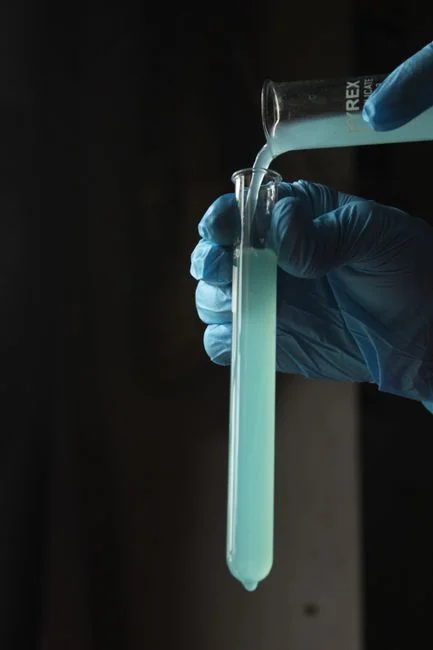
Cooling-water reuse must satisfy the actual cooling-system design, not a generic reuse specification. Genesis Water Technologies gives source targets of 500–1,500 mg/L TDS, hardness below 200–400 mg/L as CaCO₃, suspended solids of 10–25 mg/L, pH of 6.5–8.5 and alkalinity of 50–200 mg/L as CaCO₃ for most cooling towers. These are source-design benchmarks, not Irkutsk discharge limits; the selected chiller, heat exchanger, cooling chemistry and equipment manufacturers’ constraints must set the final acceptance values.
For non-potable cooling makeup, also assess silica, chloride, sulfate, conductivity and residual chemicals. Hardness and alkalinity drive precipitation risk, while chloride, sulfate, conductivity and the chemical program influence corrosion. Fouling and biological growth must be controlled before the recovered water enters the circulating loop. Where more demanding reuse is required, a industrial water-softener system may form part of pretreatment, but only if measured hardness demonstrates the need.
Direct reuse inside the cooling loop also requires continuous microbiological control. Genesis Water Technologies states that bacteria should remain below 10,000 CFU/mL through continuous disinfection. Its cited 2 MW edge data-center case maintained heterotrophic plate counts below 1,000 CFU/mL with a non-oxidizing treatment program, while reporting non-detectable Legionella in quarterly testing. Those results are project evidence, not a performance guarantee for an Irkutsk installation.
Lower-value routes such as washdown, irrigation or toilet flushing may tolerate different quality, but each introduces separate public-health, storage and cross-connection controls. Russian design and environmental requirements must define the final discharge or reuse criteria. The supplied research contains no Irkutsk-specific numerical permit limits, so those thresholds must be confirmed with the relevant authorities and a qualified local designer.
| Intended route | Principal quality barriers | Indicative treatment response |
|---|---|---|
| Compliant discharge | TDS, suspended solids, pH, temperature and site-specific pollutants | Physical separation plus only the treatment required by the confirmed permit |
| Washdown or toilet flushing | Turbidity, solids, biological risk and cross-connection exposure | Filtration and disinfection as required by local reuse rules |
| Non-potable cooling makeup | Hardness, alkalinity, silica, chlorides, sulfate, conductivity, biofouling and corrosion | Solids removal, scale control, optional softening and continuous microbiological control |
Choose a Treatment Train for Each Stream
Physical separation should precede sensitive reuse or membrane treatment. For blowdown or industrial wastewater containing suspended solids, oil, grease or colloids, a DAF system for industrial wastewater pretreatment can remove those fractions and generate a concentrated sludge stream. Its suitability depends on the actual particle distribution, oil content and chemical program shown by the pilot.
Where the feed has low turbidity and the reuse endpoint requires reliable bacteria, colloid and suspended-solids removal, a hollow-fiber ultrafiltration system can provide a barrier before sensitive reuse or membrane pretreatment. Ultrafiltration does not remove dissolved salts, so source-water results must show whether it is sufficient or only a pretreatment step.
Use automatic chemical dosing only when pilot testing identifies a defined control need, such as pH adjustment, coagulation, flocculation, corrosion inhibition or scale inhibition. Dosing rates should follow measured water chemistry, cycles of concentration and the cooling-system chemistry program. For makeup water or pretreatment where hardness removal is necessary, twin-tank softening is an option; the offered range is 1–45 T/h, but Irkutsk flow and hardness data are required before selecting a train.
Apply chlorine-dioxide equipment for an industrial cooling loop or process-wastewater application when microbiological control is required and the chemical can be safely applied, monitored and removed under the final design. Disinfection should follow filtration and precede reuse or discharge as appropriate.
Do not default to high-pressure RO. Genesis Water Technologies reports that nanofiltration reduced hardness from 350 mg/L to 120 mg/L in one industrial-water reuse application, while UF alone removed particulates and microorganisms. Use those results to define pilot questions—not as expected Irkutsk performance. Route residual sludge through a plate-and-frame filter press or another verified dewatering step before disposal.
| Treatment stage | Applies when | Information needed before sizing |
|---|---|---|
| DAF or other physical separation | Solids, colloids, oil, grease or floatable material are present | Flow range, particle distribution, oil content and chemical residuals |
| UF | A low-turbidity feed requires a bacteria and solids barrier | Turbidity, feed temperature, flux condition and required filtrate quality |
| Chemical dosing | Pilot data identifies a specific chemistry-control requirement | pH, alkalinity, hardness, scaling tendency and target residuals |
| Twin-tank softening | Hardness removal is required for makeup or pretreatment | Average and peak flow, hardness, regeneration method and operating philosophy |
| Disinfection | Reuse or discharge requires microbiological control | Microbial indicators, contact conditions, residual target and site safety constraints |
| Sludge dewatering | Physical separation generates a disposable residue | Sludge volume, solids content, chemical conditioning and disposal route |
Compare Discharge, Partial Reuse and Closed-Loop Reuse
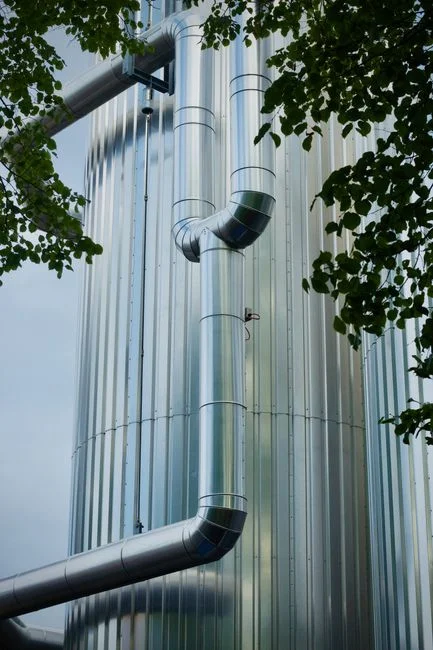
Three outcomes require different investments: compliant discharge after treatment, partial reuse for washdown or another non-critical service, and cooling-makeup reuse. The selected endpoint should follow from water quality, conveyance, operating complexity and the Irkutsk permit route—not from a preferred piece of equipment.
For the lower-complexity route, Genesis Water Technologies reports that physical separation followed by targeted treatment can reduce makeup demand by 15–25% for many facilities. Its larger cooling-water analysis supports a modular, contaminant-specific approach and warns against importing hyperscale treatment complexity into smaller sites. These figures are general program findings, not an Irkutsk savings forecast.
Advanced blowdown-to-makeup integration can justify more demanding equipment where scale and operating expertise support it. Genesis Water Technologies cites a municipal-water application with 88% overall RO recovery and 98% TDS reduction. Treat those as project results, not guaranteed performance: feed salinity, recovery, membrane scaling, reject management and winter operability must be demonstrated locally.
Evaluate cooling-system changes in parallel. KETOS estimates that closed-loop systems can consume only about 5–10% of withdrawn water and return roughly 90–95% as wastewater available for treatment. That could increase the value of treatment, but it also changes flow, heat-rejection and fouling requirements. Dry cooling and heat recovery should be assessed as alternatives or complements rather than assumed improvements.
| Decision | Relative treatment complexity | Main project checks |
|---|---|---|
| Discharge after treatment | Lowest when the permit requires only solids or pollutant removal | Confirmed limits, discharge point, temperature, analytical monitoring and sludge disposal |
| Partial reuse | Moderate; typically physical treatment plus targeted disinfection or conditioning | Demand volume, storage, distribution, public-health controls and variability |
| Cooling-makeup reuse | Highest; may require softening, UF, NF or RO and continuous control | Cooling chemistry, membrane compatibility, reject route, energy demand, redundancy and operator capability |
| Closed-loop or dry-cooling alternative | Not a wastewater-treatment train; changes the underlying water balance | Thermal performance, capital cost, climate, footprint, maintenance and utility requirements |
Electricity demand, footprint, operator skill, fouling, winter operability and replacement-part availability were not quantified in the supplied research. They must be obtained during Irkutsk feasibility work. The broader data-center wastewater treatment in Barnaul demonstrates why local climate and discharge context must remain attached to the equipment decision.
Plan Permitting, Pilot Testing and Procurement
Russian environmental permitting must be resolved before the final treatment train is purchased. The applicable approvals depend on the discharge point, reuse activity, construction scope and water-use conditions. The supplied research does not establish Irkutsk-specific permit thresholds or approval timelines, so the project file should identify the responsible authorities, required studies, monitoring conditions and discharge or reuse authorization needed for the selected route.
Commission a representative pilot rather than a short clean-water trial. It should cover the observed source-water variability, chemical-program changes, seasonal conditions and intended cycles of concentration. For an imported source, test seasonal feed quality and batch discharges; for blowdown, test the complete concentration range and operational dumps. Record membrane flux, backwash or cleaning demand, filtrate quality, chemical consumption, recovered-water stability and sludge generation.
Define acceptance tests in the purchase specification. Include flow, TDS or conductivity, hardness, suspended solids, pH, temperature, microbiological indicators and any substance relevant to the intended discharge or reuse. Before final acceptance, require automatic controls, local instrumentation, bypass or fail-safe arrangements, operator training and documented maintenance responsibilities.
Compare bids using total cost of ownership rather than purchase price alone. The model should include equipment, membranes, chemicals, energy, sludge disposal, operator labor, replacement parts, downtime and avoided potable-water and discharge costs. Require quotations against the same flow basis, duty cycle, feed-water definition and acceptance criteria. Request compatible membrane and filter elements and treatment parts, valves and media with documented operating limits.
Reject suppliers that size the plant from transferable U.S. assumptions. The sizing package should contain Irkutsk source and blowdown data, seasonal analyses, pilot results, the selected reuse route and local operating conditions. A supplier should also demonstrate that its proposed train remains cleanable under the actual chemical regime and can be supported locally.
Frequently Asked Questions
Can Irkutsk use municipal or industrial wastewater as data-center cooling makeup?
Possibly, but only after characterization and pilot testing. Municipal wastewater may offer a more consistent external supply, while industrial wastewater quality can vary with the producing operation. Sample conductivity/TDS, hardness, suspended solids, organics, silica, chloride, sulfate, temperature and microbiological indicators; then compare the results with the cooling-system design and any Russian reuse requirements. The data-center blowdown treatment methodology provides a transferable process framework, not Russian approval criteria.
What treatment is required before cooling blowdown can be discharged in Russia?
There is no single treatment package that applies to every Irkutsk discharge. Suspended solids and floatable material may require physical separation; temperature, pH, dissolved salts, residual biocides and anti-scalants may also affect acceptability. Obtain the applicable Russian environmental and water-use requirements for the selected discharge route and permit the final criteria. The supplied research contains no Irkutsk-specific numerical limits, so request the current permit conditions from the responsible local authorities and the site’s licensed environmental designer.
Should an Irkutsk data center buy UF, nanofiltration, RO or a softer package plant?
Buy only the stage justified by pilot results. UF addresses particulates and microorganisms but not dissolved salts; nanofiltration can provide selective hardness removal; RO is justified when the cooling specification requires broader dissolved-solids control. A soft package is appropriate when measured contaminants are limited and the chosen reuse route is non-critical. Request one feed-water basis, one design flow and one acceptance dataset from each bidder so alternatives are technically comparable.
How should a supplier size a treatment system without reliable source-water data?
Do not release final equipment selection yet. Give the supplier average and peak source flow, operating hours, makeup and blowdown measurements, full seasonal chemistry, temperature, chemical residuals, required outlet quality and the intended reuse route. If those data are unavailable, request a metering and sampling campaign and include provisional sizing with explicit confirmation conditions. For delivery and lead time, require a quoted manufacturing schedule, freight scope, commissioning duration and documented availability of replacement parts in Russia.
When is blowdown-to-makeup reuse more appropriate than simpler partial reuse?
It is more appropriate when the site has sufficient water demand, reliable solids and scale control, a viable reject route, adequate operator capability and a confirmed permit path. Genesis Water Technologies reports that targeted treatment can reduce makeup demand by 15–25% for many facilities, making partial reuse the lower-complexity starting point where those conditions are not met. Compare the routes using measured recovery, stable reuse quality, energy, footprint, winter operation, sludge and lifecycle cost—not the value of recovered water alone.
Related Equipment
- hollow-fiber ultrafiltration system — specifications, capacity range, and technical data