
Separate the Data Center Wastewater Streams Before Designing the Plant
ASCE identifies domestic wastewater and cooling effluent as the two principal data-center wastewater categories, while RSP Engineers separates the industrial process stream into cooling-tower blowdown, water-treatment backwash, equipment-cleaning wastewater and air-handling-unit condensate. Each stream has a different concentration, temperature, flow and chemical profile, so combining them before the outlet is agreed can obscure the treatment duty. Cooling condensate is chiefly heat-transfer condensate; blowdown is deliberately purged to prevent dissolved solids and treatment chemicals accumulating beyond their permitted concentration. This data center cooling blowdown treatment framework can be adapted to Glasgow’s proposed cooling configuration and local consent route.
Domestic sewage, RO reject, softener regeneration wastewater, fire-water testing and contaminated firefighting runoff must also enter the site-wide water balance, even when they will not follow the routine industrial route. Each should be marked as segregated, combined or excluded from routine discharge, with isolation and sampling provisions defined.
| Stream | Primary design issue | Decision to establish |
|---|---|---|
| Domestic sewage | Sanitary load, solids and biological treatment | Separate sanitary connection or validated combined treatment |
| Cooling condensate | Heat-transfer water and possible contamination | Cooling reuse, controlled sewer route or separate treatment |
| Cooling-tower blowdown | Blowdown TDS, heat, biocide and corrosion products | Reuse, pretreatment for discharge or another lawful route |
| RO reject | Concentrated dissolved salts | Return to blowdown, separate recovery stage or approved disposal |
| Softener regeneration wastewater | Salinity and treatment-chemical residues | Segregated pretreatment or controlled combination |
| Equipment-cleaning wastewater | Variable pH, detergents and suspended solids | Segregated collection and treatment |
| Fire-water test or contaminated runoff | Potential firefighting chemicals and contamination | Exclude from routine discharge; provide containment and response |
Industrial process wastewater should not be assumed to enter a stormwater system. RSP describes US sanitary-sewer and permitted surface-water routes, but its US permits and Clean Water Act references do not apply in Scotland. For Glasgow, the discharge route must instead be confirmed with the Scottish Water Authority, the relevant local authority and SEPA, as applicable to the site and proposed outlet.
Build a Glasgow Water Balance Around the Cooling Design
Make-up-water quality determines whether the cooling loop can accept the proposed source and which contaminants the treatment plant must remove. ASCE directs engineers to obtain seasonal information covering pH, conductivity, total dissolved solids, chlorides, silicon, hardness, alkalinity and microbial counts, alongside the available sources and climate. The utility should provide its sampling data, but project-specific verification remains necessary because source quality and seasonal variation affect both scaling and recovery.
The balance must then reconcile make-up demand, evaporation, blowdown, recovery, reuse and final discharge for the selected cooling type. A dedicated flowmeter is the practical control for an uncertain blowdown volume, as shown in ASCE’s example data center, whose wastewater system was initially designed for roughly 20–30% of total water supplied before metering established actual flows. The final Glasgow quantities are outputs of the mechanical design, not generic planning allowances.
| Balance input or output | Information required | Use in design |
|---|---|---|
| Cooling configuration | Evaporative, closed-loop, hybrid or other proposed arrangement | Defines which waste streams actually arise |
| Make-up water | Seasonal source analysis and available supply | Sets chemical and scaling constraints |
| Cycles of concentration | Selected operating target | Relates circulating-water concentration to make-up water |
| Evaporation and blowdown | Verified cooling calculations | Sets tank, filtration, dosing and membrane duties |
| Recovery and reuse | Intended endpoint and operating availability | Determines concentrate handling |
| Discharge | Consented route and measured flow | Sets final treatment and monitoring requirements |
Genesis Water Technology provides an operating reference: at 4 cycles of concentration, approximately 25–30% of make-up water is lost to blowdown; for a facility using 10 million gallons monthly, this equates to 2.5–3 million gallons discharged or wasted. These are examples, not Glasgow design values. Reclaimed water can also increase corrosion, scaling and microbiological growth, as ASCE notes, so reuse requires a controlled chemistry programme rather than simple substitution of a new water source.
Use the associated data center wastewater and cooling blowdown engineering guide as a structural reference, but derive Glasgow flows from the proposed cooling design. No facility flow, water analysis or permit limit can be selected from the supplied evidence alone.
Define the Blowdown Chemistry the Treatment Plant Must Handle
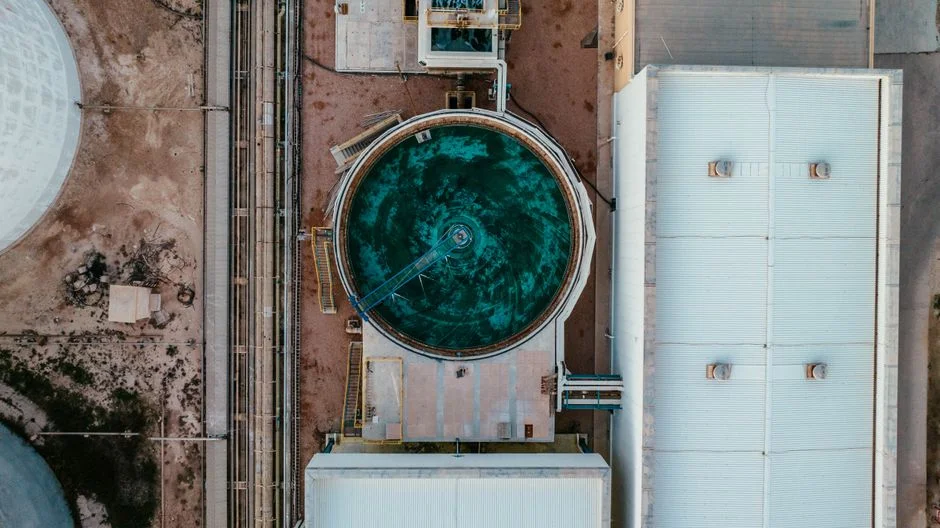
Cooling-tower blowdown quality depends on the make-up source, cycles of concentration and the complete chemical programme. Genesis Water Technology reports that blowdown TDS commonly reaches 4–8 times the make-up-water concentration, with a typical range of 1,200–6,000 mg/L, while suspended solids from corrosion products, biofilm fragments and airborne particulates typically range from 10–50 mg/L. These figures describe the US commercial source’s operating context; they do not establish Glasgow discharge limits.
The treatment objectives should be converted into a constituent-specific sampling and control plan. Calcium, magnesium, silica and alkalinity indicate scaling risk; chlorides, sulfates, phosphates and treatment chemicals influence corrosion, biological control and downstream acceptability. Biocides, corrosion inhibitors, antiscalants and dispersants must be reviewed as one package because a chemical selected for cooling performance may determine whether the outlet is suitable for sewer discharge or membrane recovery.
| Parameter or constituent | Design implication | Proposed control |
|---|---|---|
| pH | Acidic or alkaline effluent may corrode infrastructure or affect biological treatment | Neutralisation where required; online pH monitoring |
| Temperature | Hot blowdown can affect receiving infrastructure and biological processes | Cooling or holding before the agreed outlet |
| TDS, chlorides, sulfates and phosphates | Concentrated dissolved material may constrain sewer acceptance or reuse | Source control, recovery and laboratory analysis |
| Calcium, magnesium, silica and alkalinity | Scale formation and membrane fouling | Side-stream filtration, chemical conditioning and recovery design |
| Biocides and corrosion inhibitors | Residuals can affect sewer operation, environmental discharge and membranes | Complete chemical review and targeted treatment |
| Metals | Corrosion products may require removal where controlled by consent | Monitoring and treatment selected after authority review |
| Suspended solids | Fouling, biological debris and membrane protection | Filtration, backwash controls and laboratory verification |
RSP gives a 6.0–9.0 pH range and a 150°F maximum-temperature example for blowdown treatment, but these are US examples rather than Glasgow consent conditions. Obtain the actual pH, temperature, metals, biocide, flow and monitoring requirements from the relevant Scottish authorities. The automatic chemical dosing system can form part of the final scope, but its controls should follow the confirmed chemistry and treatment objectives rather than precede them.
Match Treatment to Reuse, Discharge and Operating Requirements
Treatment selection should begin with the required outlet: cooling reuse, a controlled sewer connection or another lawful environmental discharge. The decisive question is which contaminant limits the outlet, rather than which technology is available. A practical sequence is segregation and flow measurement; solids removal; pH control where required; chemical treatment compatible with the cooling programme; recovery for reuse; and final monitoring before discharge.
| If the principal requirement is | Potential treatment | Selection criterion |
|---|---|---|
| Removal of suspended solids, corrosion products and debris | Multi-media or side-stream filtration | Particle loading, backwash waste and required filtrate quality |
| Removal of colloids, microbes or membrane-fouling material | ultrafiltration system for blowdown pretreatment | Genesis reports 90–95% UF recovery; confirm feed compatibility and cleaning strategy |
| Removal of hardness and selected dissolved solids | Nanofiltration | Genesis reports 70–85% recovery and permeate TDS at 30–50% of feed concentration |
| Low-TDS cooling make-up | industrial RO system for cooling-water recovery | Genesis reports 50–85% RO recovery and permeate at 10–50 mg/L TDS |
| Concentrate volume reduction | MVC or thermal concentration | Genesis reports 95–98% recovery for MVC concentrate treatment |
| No routine liquid discharge | Full zero liquid discharge | Genesis reports 95–99% overall recovery, with higher capital and operating costs |
| Domestic wastewater treatment or reuse | MBR | Biological and filtration duty must fit the non-process stream and reuse standard |
Multi-media filtration is appropriate where particulate removal and automated backwash are required before recovery. UF is primarily a barrier for suspended solids, colloids and microorganisms and should precede RO or NF where the feed demands it. NF becomes attractive when hardness and selected dissolved solids, rather than total TDS, drive the constraint. RO supports a broader dissolved-solids removal objective, but scaling, antiscalant control, concentrate management and cleaning remain part of the design.
MVC and full ZLD should follow assessment of membrane recovery, reuse and disposal routes because their energy and capital consequences require an explicit whole-life comparison. Domestic sewage should also remain separate from the blowdown train unless the design authority has validated their combination and the resulting discharge or reuse quality.
Footprint belongs in equipment selection. RSP notes that pH neutralisation may occupy a few hundred square feet, while filtration and chemical precipitation may require several thousand square feet for equipment, tanks and chemical storage. Treat those figures as US-source footprint warnings, not allowances to insert into a Glasgow layout.
Plan the Glasgow Consent, Monitoring and Operating Route
Authority engagement determines the discharge route before the treatment train is frozen. Identify the Scottish Water Authority, relevant local authority and SEPA roles for the proposed site, then confirm whether the outlet will be a controlled-sewer discharge, another lawful route or a permit for direct environmental discharge. Do not transfer US industrial pretreatment or NPDES assumptions into a Glasgow consent application.
The review submission should contain expected flow, source-water analysis, cooling configuration, chemical programme, proposed treatment process, reuse plan, monitoring method and operating ownership. Where a limit is not yet known, state that explicitly and identify who will confirm it. This avoids building the plant around a generic pH, temperature or TDS value that the reviewing authority may not accept.
The operating design should include representative sampling points, online flow and pH monitoring, laboratory analysis, instrument calibration, chemical containment, drainage, maintenance access and operator competence. Include bypass or fail-safe arrangements that prevent an off-spec stream from reaching an unauthorised outlet. Operational records should cover freshwater use, blowdown, recovered water, discharge, excursions, chemical consumption and membrane performance.
Water-use monitoring is material to the business case as well as compliance. ASCE, citing a 2021 Uptime Institute survey, reports that only 51% of surveyed operators track water usage and only 10% track it across their full portfolio. That evidence is US survey data from 2021, but it demonstrates why site metering should be specified rather than left as an optional operational task.
Engage early enough to influence site layout, pipe diameters, cooling selection and chemical procurement. RSP identifies late restrictive limits, underestimated footprints and chemical-package mismatches as causes of redesign and delay. The location-specific treatment guide illustrates the importance of resolving treatment route and equipment scope before design commitments are made.
Specify the Treatment Plant and Verify Performance
A supplier-ready schedule should define the design flow, surge provision, incoming and outgoing quality, operating mode, utilities, footprint, containment, access, controls, alarms and duty or standby arrangement. Unsupported numerical allowances should remain marked as “to be confirmed” until the cooling design, site analysis and consent conditions are available.
| Supplier information required | Verification at tender |
|---|---|
| Process basis and flow envelope | Traceable calculation linked to the agreed water balance |
| Incoming and outgoing quality | Requirements tied to the reuse or consent endpoint |
| Filtration and membrane arrangement | Feed suitability, cleaning, backwash and concentrate routes documented |
| Controls and alarms | Automatic responses for dosing, pH, flow, conductivity, differential pressure and tank levels |
| Containment and site requirements | Chemical storage, drainage, access and future maintainability verified |
| Commissioning and acceptance | Calibrated instruments, stable design-flow operation, samples, training and records agreed |
Automatic controls should respond safely to high or low pH, flow excursions, membrane differential pressure, high conductivity and abnormal tank levels. Specify membrane cleaning, filter backwash or waste handling, media replacement, chemical delivery, safe storage, spare parts and maintenance access. A purchase-price comparison that omits these items will not represent the plant’s operating requirement.
Genesis recommends filtering membrane feed to less than 10–15 microns and chemically conditioning it where required before RO or NF. Make that a procurement prerequisite rather than relying on the membrane supplier to compensate for inadequate pretreatment. Include membrane and filter elements, together with treatment parts, valves and filter media, as defined supply items with approved alternatives and replacement arrangements.
Commissioning acceptance should be tied to the agreed discharge or reuse parameters, stable operation at design flow, calibrated instruments, representative laboratory results and documented operator training. Where a sewer application or environmental permit is still open, do not present provisional values as final acceptance criteria.
Frequently Asked Questions
What discharge limits apply to cooling blowdown from a data center in Glasgow?
No Glasgow-specific limit is established by the supplied evidence. Request the controlling discharge route, quality limits, monitoring frequency, sampling protocol, temperature conditions and chemical restrictions from the Scottish Water Authority, relevant local authority and SEPA as applicable. Do not use the US examples of 6.0–9.0 pH or 150°F as Glasgow criteria.
How should wastewater treatment equipment be sized for the project?
Size from the verified site water balance, not equipment catalogues. Provide the cooling design, make-up-water analysis, evaporation and blowdown calculations, selected cycles of concentration, recovery target and reuse schedule. The supplier should then confirm design flow, surge duty, tank volume, filtration capacity, membrane recovery, chemical storage and concentrate handling against those inputs.
How much should the data-center wastewater treatment package cost?
A defensible quotation cannot be produced without the flow, chemistry, treatment objective, footprint and utilities. Request a capital estimate and total operating-cost breakdown covering chemicals, energy, media, membranes, waste disposal, monitoring and maintenance, together with stated exclusions. Any route to reuse or a controlled sewer discharge must be priced separately from equipment supply so that avoided freshwater or discharge costs are not double-counted.
Which supplier qualifications should be checked before appointing an equipment provider?
Require evidence relevant to the actual Glasgow duty: completed water balances, treatment guarantees for the specified feed, membrane or filtration performance data, control philosophy, chemical compatibility, utility requirements, maintenance access and commissioning support. Also ask who owns permit-interface design, membrane cleaning, waste handling and operator training; use the location-specific data center wastewater treatment guide as a procurement-structure reference, not as a substitute for Glasgow inputs.
What pretreatment is required before UF, NF or RO?
Protect the selected barrier according to the confirmed feed chemistry. Genesis identifies filtration below 10–15 microns and chemical conditioning where needed before RO or NF. A [multi-media filter](/product/7-multi-media-filter-ultrapure-water.html) may provide the solids barrier, while UF can remove colloids and biological material ahead of RO. Confirm the complete chemical programme, expected fouling, cleaning method and concentrate disposal route before accepting the guarantee.