Which Wastewater Stream Should Stafford Factories Evaluate?
DAF is usually the stronger primary separator when agricultural chemical wastewater contains emulsified or low-settling solids that can be conditioned into flocs; a conventional or lamella clarifier is more economical when solids settle readily and the stream is relatively uniform. Neither device alone removes dissolved active ingredients, toxicity, or COD. A 2026 selection should begin with source-separated samples, jar tests, and a treatability study, then compare hydraulic loading, chemical consumption, sludge removal, downstream treatment, and the applicable discharge permit.
The decision starts by separating manufacturing and formulation wastewater, equipment and container rinse water, and contaminated stormwater. Mixing those streams can conceal the chemistry that determines whether flotation or gravity separation is appropriate. The supplied Wastewater Treatment Overview identifies pesticide and herbicide production among industrial process sources and lists suspended solids, emulsions, extreme pH, and toxic waste as constituents that may occur. It also distinguishes particulate material and emulsions from soluble organic material and toxins such as pesticides and herbicides.
Ask the factory for a process inventory, batch-generation schedule, maximum and average flows, current pH range, and analytical results for TSS, oil and grease, COD, and the agricultural active ingredients or surfactants relevant to its products. Also identify the discharge route before selecting equipment: a sanitary sewer, industrial pretreatment system, or other authorized route may impose different requirements.
DAF and clarifiers are separation steps, not substitutes for source control or treatment of soluble contaminants. The required endpoint must therefore be tied to the receiving authority and current permit. This is the same source-separation and selection framework used in the 2026 comparison of DAF and clarifiers for agricultural chemical wastewater.
How DAF and Clarifiers Remove Agricultural Chemical Solids
Dissolved air flotation is a clarification method in which dissolved air forms microbubbles, conditioned solids attach to the bubbles, float, and are removed by a skimmer. Clearwater Industries, in its 2026 DAF specification, states that its systems use 30–50 µm microbubbles to lift solids to the surface, where skimmers remove them. Chemical coagulation and flocculation increase particle size and improve contact with the microbubbles.
Gravity clarification depends on particles settling from the water column. A lamella clarifier uses inclined plates to increase effective separation area within a compact vessel, making it a lamella clarifier for readily settleable solids. DAF instead provides a flotation path for particles that are difficult to settle reliably after conditioning. An industrial DAF system for agricultural chemical wastewater should therefore be evaluated against the physical behavior of the factory’s solids, not simply against its nominal capacity.
The wastewater overview separates particulate material, emulsions, and colloidal matter from soluble organic material, soluble agricultural chemicals, and toxicity. Clarification and flotation can remove particulate-associated material, and properly conditioned emulsions may be separated physically. They do not, by themselves, demonstrate removal of dissolved active ingredients, soluble COD, or toxicity. Those pollutants may require biological treatment, adsorption, oxidation, or another verified treatment process.
The EPA petroleum-refinery assessment, Environmental Assessment Data Base for Petroleum Refining, evaluates DAF alongside coagulation, activated sludge, and activated carbon for complex organic industrial wastewater. That evidence supports treating DAF as one part of a treatment train, not as a universal substitute for biological or adsorptive treatment. Refinery results should not be transferred directly to agricultural chemical performance.
DAF vs Clarifier: Technical and Procurement Comparison

DAF is the preferred primary option when conditioned solids are not consistently buoyant enough for reliable gravity separation; a clarifier is favored for simple, uniformly settleable streams, while staged treatment may be best for variable feeds. The following table provides a technical framework for selecting equipment based on wastewater behavior and whole-train obligations.
| Criterion | DAF | Conventional sedimentation | Lamella clarification |
|---|---|---|---|
| Preferred feed | Conditioned solids, emulsions or particles with unreliable settling | Uniform feed with readily settleable solids | Uniform feed with settleable solids and a compact footprint requirement |
| Separation mechanism | Microbubbles attach to conditioned solids, which float and are skimmed | Solids settle to the bottom | Solids settle onto inclined plates and slide into a collection zone |
| Chemical conditioning | Usually required; performance depends on chemistry and floc quality | May be required, but excessive chemical use can increase sludge | May be required for marginal settling performance |
| Main operating issues | Recycle stability, compressed air, skimming, conditioning and sludge withdrawal | Longer settling, scraper operation and sludge removal | Plate fouling, sludge withdrawal and access |
| Best use in this application | Primary separator after coagulation and flocculation | Simple, predictable streams with settled solids | Readily settleable solids where compact separation area is valuable |
Clearwater Industries lists 304SS as its standard DAF construction and 316SS, polypropylene, and other materials as options on request. Confirm compatibility during supplier review because the wastewater chemistry governs material selection; neither the standard nor the available option is proof of suitability.
Distinguish supplier-reported capability from guaranteed project performance. Require an agreed performance basis after pilot testing rather than treating generic removal claims as plant guarantees. Clarifier and DAF proposals should also identify sludge withdrawal, automatic skimming, controls, maintenance access, instrumentation, operator time, and downstream treatment needs.
Total cost includes more than purchase price. Compare coagulant and polymer use, sludge volume and disposal, compressed-air demand, floor area, maintenance access, instrumentation, operator time, and downstream treatment. A staged clarifier-plus-DAF arrangement can protect downstream flotation from heavy settleable solids while capturing residual conditioned flocs, but it adds vessels, controls, and operating steps that must be justified by test results.
Build a 2026 Equipment Selection and Sizing Checklist
Equipment selection should be based on measured hydraulic and contaminant loads, not average flow alone. The available HydropureWater DAF range is 4–300 m³/h across 13 standard models, but that range does not establish the correct model for a Stafford plant.
| Procurement field | Required information |
|---|---|
| Wastewater characterization | Average and peak flow, batch flows, TSS, oil and grease, COD, pH, temperature, target agricultural chemicals, surfactants and permit-relevant toxicity indicators |
| Test basis | Jar-test results for coagulation and flocculation, followed by pilot comparison of DAF flotation and gravity settling where relevant |
| Design basis | Design flow, solids-loading basis, surface-overflow criteria, pressure and recycle arrangement, chemical storage and dosing duties |
| Mechanical scope | Material schedule, drives, pumps, controls, skid dimensions, utilities, installation requirements, access and commissioning tests |
| Commercial scope | Supply boundary, delivery schedule, training, commissioning, operating documentation, warranty scope and exclusions |
Jar tests should compare coagulation and flocculation chemistry. The pilot should record dose, pH, solids capture, residual contaminant levels, and sludge characteristics. For a mixed or variable feed, test each segregated stream and the combined worst-case condition rather than relying on an averaged sample.
Require proposals to state the complete performance basis. Generic guarantees such as a removal percentage without defined influent concentration, flow, pH, temperature, target pollutant, and sampling protocol are not useful acceptance criteria. Put accepted influent and effluent sampling conditions directly into the purchase order.
Where additional polishing is required, assess ultrafiltration as a downstream solids-separation step when the target application calls for it, while keeping the distinction between particle removal and dissolved-contaminant treatment. Any biological polishing requirement should be established from biodegradability and toxicity data, not from visual clarity.
Prevent a Clarification-Only Compliance Mistake
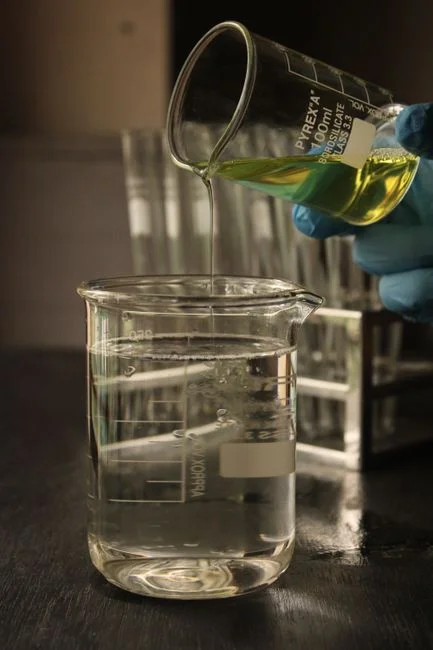
A visually clear effluent can still contain dissolved active ingredients, persistent organics, toxicity, or COD above the applicable limit. Clarity is therefore not a compliance test.
The Chesapeake Bay Program’s September 2019 assessment, Wastewater Treatment Plant Nutrient Control Upgrade Benefits on Toxic Contaminants, states that sorption processes are typically the dominant removal mechanisms in wastewater treatment. That finding supports evaluating source reduction and compatible downstream adsorption or biological treatment alongside clarification. It does not establish that one downstream process will fit a particular pesticide stream.
The same report reviewed effluent data from 45 facilities across 18 states. Source-control actions and limited influent or sludge data can prevent confident attribution of effluent changes to an equipment upgrade. For a Stafford factory, retain representative influent, intermediate, and effluent samples so later equipment changes can be assessed against a stable baseline.
Check the treatment train against the actual Stafford discharge route and current permit. Do not assume that meeting TSS or oil-and-grease criteria establishes compliance with limits for active ingredients, toxicity, or COD. Obtain those requirements from the receiving authority and map each to a treatment step and verification method.
Integrate sludge handling into the design. Recovered chemicals and coagulant precipitates may require controlled disposal or dewatering. A plate-and-frame filter press for sludge dewatering may be relevant if the pilot confirms the resulting solids are filterable and the waste classification and destination are known.
Pilot Test Before Ordering the 2026 System
A representative pilot is the only defensible way to confirm that a separation device can handle the factory’s batch chemistry and operating variability. Test each segregated wastewater stream at the pH, temperature, and chemical concentrations expected during normal production and peak batch discharge.
- Establish source-separated baseline samples and analytical results for TSS, oil and grease, COD, target agricultural chemicals, surfactants, and toxicity indicators relevant to the permit.
- Screen coagulants and flocculants with jar testing. Compare dose, pH, floc appearance, settling or flotation response, residual contaminants, and sludge generation.
- Run the preferred DAF or clarifier configuration in pilot testing. Measure flow, TSS, oil and grease, COD, target agricultural-chemical concentrations, toxicity indicators, and sludge yield.
- Challenge the trial with representative production variability. Verify controls, interlocks, recycle stability, automatic skimming, solids withdrawal, operator access, and chemical-dosing response.
- Use the results to finalize the chemical storage and dosing arrangement, electrical requirements, utilities, maintenance plan, train layout, and enforceable performance guarantees.
Do not sign off a generic guarantee before the trial has established the operating envelope. For mixed feeds, include the agreed combination ratio and the sequence in which batches enter the system. This approach also helps identify whether an automatic chemical dosing system can respond reliably to changing chemistry without creating an excessive chemical or sludge burden.
Frequently Asked Questions
What will DAF or clarifier equipment cost for a Stafford agricultural chemical factory?
Request a site-specific quotation rather than applying a generic equipment price. The quote should identify the treatment capacity, conditioning equipment, sludge handling, utilities, controls, installation boundary, commissioning, training, warranty, and downstream treatment. Also ask for chemical consumption and sludge-disposal assumptions so operating costs can be compared. No defensible total-cost figure can be produced until flow, pollutant loading, chemical dosing, pilot results, and disposal requirements are known.
Which DAF model should a factory select?
The available DAF range is 4–300 m³/h across 13 standard models, but model selection requires measured average and peak flow, solids loading, duty cycle, chemical demand, and pilot results. Check that the selected configuration handles batch shocks, recycle stability, solids withdrawal, and skimming, not just nominal flow.
How should a supplier be selected and qualified?
Ask each supplier to submit its pilot basis, design-flow and loading calculations, material schedule, controls narrative, utility requirements, commissioning plan, and warranty exclusions. Require project-specific performance guarantees with defined sampling conditions. A generic product capability does not demonstrate that the proposed equipment will treat the factory’s wastewater.
Does a clear effluent prove the factory can comply with its discharge permit?
No. Clarification and flotation primarily address solids and physically separable material. Soluble active ingredients, toxicity, persistent organics, and COD require permit-specific verification and may need adsorption, biological treatment, oxidation, or another validated process. Confirm the discharge route and current limits with the receiving authority before finalizing the treatment train.