What Counts as Coal Mining Wastewater?
Coal mining wastewater COD removal is usually designed as a treatment train, not a single COD-removal machine. First identify the source and characterize COD, pH, salinity, suspended solids, phenols, metals, and toxicity. Biological treatment can degrade biodegradable organics; oxidation can address refractory compounds; adsorption and coagulation can polish residual load; and DAF or clarification can remove solids created during treatment. In one 2025 coal chemical wastewater study, micro-nano bubbles with acclimated bacterial consortia achieved 88.9% COD removal within 24 hours at 600 mg/L phenol. Actual wastewater at 1300-1600 mg/L COD averaged 76.2% removal. These results are application-specific and require pilot testing before equipment selection.
The US EPA Coal Mining Effluent Guidelines, 40 CFR Part 434, cover wastewater discharges from mine drainage, coal storage facilities, and coal preparation plants. Regulated parameters vary by subcategory, so the applicable category and permit conditions must be confirmed before treating COD as the governing design constraint (US EPA, Coal Mining Effluent Guidelines, accessed 2026).
These sources should not be combined into one assumed influent. Mine drainage may have a different COD and solids profile from coal preparation plant wastewater or storage-facility contact water. The Xiejiaji coal mining area study of DDNP industrial wastewater illustrates why associated industrial streams may require separate characterization rather than automatic treatment under the mining category (Journal of Anhui University of Science and Technology, 2007).
Coal chemical, semi-coking, and electroplating wastewater studies can explain mechanisms, but they are not direct performance guarantees for every mine effluent. Before comparing DAF and clarifiers for mining wastewater, identify whether the stream is drainage, preparation wash water, storage contact water, or a segregated industrial process discharge.
Characterize the Wastewater Before Choosing COD Equipment
A defensible COD design begins with the discharge endpoint and a source-specific sampling program, because a measured COD value does not reveal whether the organics are biodegradable, soluble, particulate, toxic, or refractory.
- Define the required endpoint from the NPDES permit, sewer authority, reuse specification, or site water balance before selecting unit types.
- Obtain COD and BOD testing to establish biodegradability and the treatment objective.
- Include pH, temperature, suspended solids, salinity, phenols, toxicity, metals, and conductivity in the analytical plan.
- Separate soluble COD from solids-associated organics. Coagulation, DAF, filtration, and clarification can change measured COD performance and downstream solids loading.
- Sample normal and worst-case conditions across wash-water plant operation, coal storage contact, mine dewatering, and transport runoff.
Seasonal and batch variability can control equipment loading more strongly than an annual average. A preparation plant may receive intermittent wash-water slugs, while storage contact water can vary with rainfall, coal handling, and inventory turnover. Equalization should therefore be evaluated against actual production and drainage sequences rather than assigned a nominal residence time without flow evidence.
| Design question | Required evidence | Decision consequence |
|---|---|---|
| What must the effluent achieve? | Permit, sewer, reuse, or water-balance endpoint | Sets the performance target and test method |
| Which organics dominate COD? | COD, BOD, soluble and particulate COD, phenols | Defines biological, oxidation, adsorption, and separation duties |
| Will biological treatment be inhibited? | pH, temperature, salinity, conductivity, toxicity | Determines whether acclimation or pretreatment is required |
| How much solids will be generated or received? | Suspended solids and process-batch data | Sizes equalization, DAF or clarification, filtration, and sludge handling |
| Which contaminants remain after COD reduction? | Metals and other regulated or reuse parameters | Prevents COD treatment from obscuring unresolved compliance duties |
The supplied research does not establish a universal mine wastewater COD limit or one universally optimal process. Site data and jurisdiction-specific requirements are required. An automatic chemical dosing system should therefore be specified around jar-test results and the confirmed treatment train, not around generic feed rates.
Choose the Treatment Role for Each COD Fraction
Biological treatment, oxidation, adsorption, and solids separation perform different functions; assigning each process the right contaminant role is more defensible than comparing headline removal percentages.
| Treatment role | Best-fit application | Evidence and limits |
|---|---|---|
| Biological degradation | Biodegradable organics where pH, temperature, salinity, toxicity, and residence time support the selected process | Requires acclimation, controlled conditions, biomass separation, and residual-COD polishing |
| Oxidation | Refractory organics or pretreatment to improve biodegradability | Reagent demand, by-products, and site conditions require validation |
| Adsorption | Polishing or temporary shock-load control | Coal-derived adsorbent concepts do not establish a universal dosage or service life |
| Chemical and solids treatment | Microelectrolysis with site-specific redox, adsorption-flocculation, coprecipitation, and Fenton-like mechanisms | Evidence is from simulated electroplating wastewater, not mine effluent |
| DAF, clarification, or filtration | Suspended solids, emulsified contaminants, and solids created during treatment | Should not receive credit for dissolved-COD removal without test data |
Biological treatment is often the core chemical oxygen demand reduction step when a meaningful biodegradable fraction exists. Acclimation is not a minor detail: the 2025 Environmental Technology study domesticated microbial consortia under micro-nano bubble aeration, phenol concentrations up to 400 mg/L, and salinity of 1-15 g/L. Its MNBs@DP-1 system achieved 100% phenol degradation and 88.9% COD removal within 24 hours at 600 mg/L phenol, across pH 6-9 and salinity of 1-15 g/L. In long-term treatment of actual coal chemical wastewater at 1300-1600 mg/L COD, the sequencing batch biofilm reactor averaged 76.2% COD removal with less than 1.6% fluctuation (Environmental Technology, 2025-11-20).
Those results support phenol biodegradation and acclimation as design concepts, but the wastewater was coal chemical effluent rather than general mine drainage. Oxidation may be appropriate for refractory compounds or as pretreatment, yet reagent demand, transformation products, and downstream effects require testing. For broader industrial context, see the COD removal trains for industrial wastewater and plastic-manufacturing wastewater treatment approaches.
Adsorption is better positioned as polishing or a controllable response to intermittent loads than as the default COD-removal machine. The semi-coking wastewater study of acid-modified coal gasification fine slag supports the concept of removing COD and volatile phenols with coal-derived solids, but does not provide a transferable mine-site dose or service life (Elsevier BV, 2025).
Microelectrolysis can combine chemical and solids treatment, but its evidence must be labeled accurately. The ACS Omega study used iron-carbon filler in simulated electroplating wastewater and achieved 70.58% COD removal at 500 g/L filler dosage, an 8-hour reaction time, 150 rpm oscillation speed, and initial pH 3 (ACS Omega, 2026-07-11). These are laboratory conditions to test, not defaults for a mine installation.
Build an End-to-End Coal Mining Wastewater Treatment Train
A complete treatment train separates COD reduction from the solids and metals controls that may determine discharge or reuse compliance.
- Equalization and screening: blend variable flows and remove coarse material.
- pH and toxicity control: adjust conditions needed by the selected biological or chemical process.
- COD reduction: apply biological degradation, oxidation, adsorption, or a validated combination.
- Coagulation and solids separation: remove suspended solids, oil and grease, colloids, and treatment-generated precipitates or flocs.
- Secondary clarification and polishing: add filtration or membrane separation when the required effluent specification demands it.
- Sludge handling: establish collection, conditioning, transport, and dewatering rather than treating sludge disposal as ancillary.
DAF is principally a solids and emulsified-contaminant separation step. It can remove material that otherwise contributes particulate COD or creates downstream solids loading, but dissolved-COD credit requires mass-balance testing. The available industrial DAF system for coal mining wastewater pretreatment spans 4-300 m³/h across 13 standard models; those are selection ranges, not evidence of COD-removal performance.
An MBR membrane bioreactor for biological COD removal and solids separation combines activated sludge with submerged PVDF membrane separation and filtration below one micron. That combination may suit a compact biological treatment and solids-retention duty where the effluent specification requires more separation than a conventional biological system provides.
| Train element | Primary duty | Procurement input |
|---|---|---|
| Equalization and screening | Flow and load stabilization | Batch profile, peak flow, screenings route |
| pH control | Create a compatible treatment environment | Target range and chemical demand from tests |
| Biological reactor | Degrade biodegradable COD | Acclimation, loading, toxicity, salinity, temperature |
| Oxidation or adsorption | Remove refractory COD or control shocks | Reagent or media consumption and replacement basis |
| DAF or clarification | Separate suspended solids and flocs | Solids loading, oil content, flotation or settling test |
| MBR or filtration | Retain biomass and polish solids | Effluent target, membrane fouling, cleaning and replacement |
| Sludge dewatering | Manage residuals from treatment | Solids generation, cake route, filtrate destination; a plate-frame filter press is one equipment option |
Chemical dosing must follow jar or pilot trials. Coagulants, flocculants, pH adjusters, and specialty chemicals should be selected for the measured stream and downstream solids route. Generic literature doses are not equipment specifications.
Pilot-Test Before You Commit to a COD Removal Train
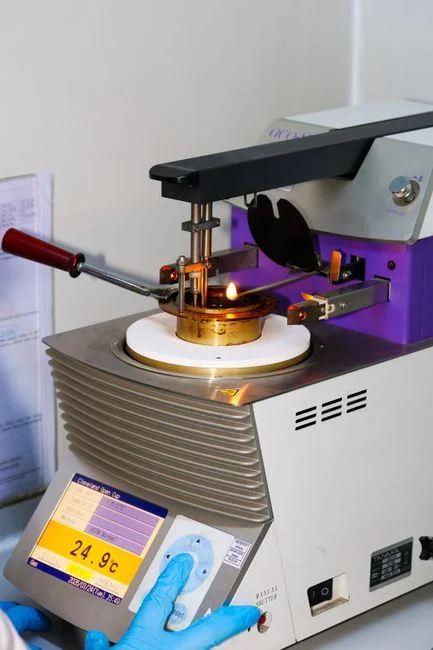
Pilot testing should demonstrate the complete train on representative mine wastewater because the supplied studies use coal chemical, semi-coking, or simulated electroplating matrices rather than a universal mine effluent.
| Pilot stage | What to test | Acceptance evidence |
|---|---|---|
| Characterization | COD, BOD, pH, suspended solids, temperature, salinity, phenols, toxicity, metals, and conductivity | Representative sampling across normal and worst-case conditions |
| Unit comparison | Biological, oxidation, and adsorption conditions against the defined endpoint | Residual COD measured after solids separation |
| Integrated run | Equalization through final solids separation or polishing | Stable performance under variable loads with complete mass balance |
| Operations | Reagent use, sludge generation, fouling, operator demands, and media or filler condition | Documented consumption, maintenance, and residual-disposal needs |
| Performance basis | Guaranteed effluent at the characterized influent and agreed test method | Defined sampling frequency, analytical method, and remedy for non-compliance |
For an iron-carbon microelectrolysis trial, the ACS Omega conditions—500 g/L filler dosage, 8-hour reaction time, 150 rpm oscillation speed, and initial pH 3—should be treated as laboratory reference points. Testing must determine whether the mine stream supports comparable COD removal, how solids and iron behave, and whether reagent demand, filler consumption, or regeneration remain practical (ACS Omega, 2026-07-11).
Run long enough to expose variable loading and fouling. Measure COD before and after solids separation so biological conversion is not confused with capture of particulate material. Record chemical consumption, sludge volume, filter or membrane cleaning, and media replacement. The engineering review should also cover mining wastewater characterization and sewer-limit compliance.
Require a guarantee tied to the characterized influent, agreed operating envelope, sampling protocol, and test method. A literature removal percentage applied to an untested mine stream is not a performance guarantee.
Match Equipment to Flow, Influent Quality, and Discharge Risk
Catalog capacity is only the first equipment filter; influent duty, footprint, utilities, controls, residuals, and compliance risk determine whether a train works in service.
| Procurement input | DAF selection question | MBR selection question |
|---|---|---|
| Hydraulic duty | Does the selected unit fit the required flow within the available 4-300 m³/h range? | Does the system fit the duty within the available 10-2,000 m³/day range? |
| Influent quality | What solids, oil, colloids, and batch loads require flotation? | What organic load, biodegradability, salinity, and toxicity suit activated sludge? |
| Effluent basis | What solids reduction is required before downstream treatment? | Does PVDF membrane separation meet the specified solids and reuse requirements? |
| Site constraints | Are footprint, power, recovery, sludge handling, and chemical storage adequate? | Are membrane cleaning, replacement, controls, and footprint acceptable? |
| Commercial risk | Does the offer state contaminant duty, performance basis, and service scope? | Does it state influent envelope, fouling assumptions, guarantees, and consumables? |
Before requesting offers, define average and peak flow, pretreatment needs, footprint constraints, power availability, chemical storage, sludge route, automation requirements, and the discharge or reuse target. Compare DAF and clarifiers for mining wastewater using contaminant duty, not nominal throughput alone. For membrane-based options, the supplier should explain how the specified organic load interacts with activated sludge, mixed-liquor solids, and submerged PVDF separation.
Replenishment and regeneration belong in the commercial comparison. The 2026 iron-carbon filler study reported 60.51% COD removal after 10 reuse cycles in simulated electroplating wastewater and found that long-term service consumed Fe(0), gradually reduced activity, and required timely filler supplementation or replacement (ACS Omega, 2026-07-11). Treat that as a warning to price media life and regeneration, not as a mine-site lifetime.
Ask whether the supplier can support pilot validation, controls, documentation, commissioning, performance testing, and a clearly bounded sludge strategy. A proposal that omits the influent envelope, effluent test method, consumables, or remedy for failed performance leaves the buyer carrying the compliance risk.
Frequently Asked Questions
What is the best treatment for COD in coal mining wastewater?
Biological treatment is often the core COD-reduction step when the wastewater contains a substantial biodegradable fraction. Oxidation addresses refractory organics or can precede biology; adsorption can polish residual load or handle shocks; and DAF, clarification, or filtration manages solids and solids-associated COD. The correct train depends on source-specific characterization and pilot performance, not a universal technology ranking.
How much does a coal mining wastewater COD treatment system cost?
Reliable pricing requires average and peak flow, COD and BOD, suspended solids, biodegradability, toxicity, target endpoint, pretreatment needs, and pilot-derived chemical or media consumption. The supplied research contains no universal mine-site price or unit cost. Request a capital and operating-cost breakdown covering equipment, tanks, utilities, chemicals, media replacement, sludge handling, controls, commissioning, and performance testing.
How should a treatment-system supplier be selected?
Require site-relevant references, pilot data from a comparable wastewater matrix, a defined scope boundary, control philosophy, chemical and media consumption estimates, sludge strategy, commissioning support, and a performance basis tied to the actual influent. Also require the guarantee to identify the characterized influent, operating envelope, sampling method, analytical method, and remedy for non-compliance.
Does 40 CFR Part 434 establish the COD limit for my mine discharge?
No project-specific limit should be inferred from Part 434 alone. The US EPA states that 40 CFR Part 434 covers mine drainage, coal storage facilities, and coal preparation plants and that regulated parameters vary by subcategory (US EPA, Coal Mining Effluent Guidelines, accessed 2026). The project jurisdiction and issued NPDES permit must be reviewed, together with any sewer-authority or reuse requirements, before defining the guaranteed effluent.