Why an Acquisition Changes the Wastewater Risk
When BMW acquires an auto plant in Mexico, wastewater is an inherited operating obligation, not a clean-start utility project. The buyer must file a CONAGUA Formato de Cambio de Titularidad so the Título de Concesión is reissued in the successor operator’s legal name, and file a SEMARNAT change-of-operator notice within 90 days of closing under the supplied LGEEPA Article 29-bis guidance. Unresolved PROFEPA matters, monitoring history, permit conditions, and any required retrofits remain part of the acquisition risk. Before signing, request 36 months of rights-payment records, eight quarters of monitoring data, and the complete open-expediente list.
The 2016 San Luis Potosí case provides a benchmark, not a transferable design. Automotive News reported that BMW planned to use treated wastewater for painting vehicles; BMWBlog reported a closed-circuit body-shop cooling tower and zero paint-shop process wastewater (June 2016). Neither report establishes that an acquired plant has the same segregation, treatment, reuse demand, or operating controls.
A 2026 Querétaro study on the auto-parts sector found that market dynamics can generate tensions between public environmental commitments and actual operating practices (José Jaime Paulín Larracoechea, Environmental Management in Querétaro’s Auto Parts Industry, 2026). That finding supports a specific acquisition rule: do not sign a wastewater CAPEX number until permit, influent, drainage, and equalization evidence has been reconciled.
Build a Five-Rail Environmental Liability Map
The acquisition team should track five liability rails simultaneously because a permit reissue does not resolve every obligation associated with the site. Assign one owner to every instrument and make the deliverable a complete instrument file, not a summary of the headline permit.
| Liability rail | Instrument and current holder | Transfer or notice action | Evidence to request | Risk if missed |
|---|---|---|---|---|
| CONAGUA | Título de Concesión; determine whether it covers supply, discharge, or both and identify the holder. | File the Formato de Cambio de Titularidad so the title is reissued in the successor operator’s legal name. | Concesión, rights-payment history, annexes, operating conditions, amendments, and correspondence. | Operating conditions carry forward, while rights and prior non-compliance remain tied to the asset. |
| SEMARNAT | Environmental authorization, discharge permit, satellite coverage, and operating conditions. | File the Article 29-bis change-of-operator notice within 90 days of closing. | Authorizations, permit limits, reporting history, renewal status, and satellite notices of intent. | Authorization and reporting obligations may not align with the new legal operator. |
| PROFEPA | Open expedientes, inspection findings, closure orders, and unpaid fines; confirm the current holder and status. | Obtain a complete docket and place every open item in the remediation register. | Expediente files, inspection reports, orders, evidence of closure, and payment status. | Open matters do not reset on closing. |
| Local and basin | State, municipal, CEA, sewer, surface-water, groundwater, or septic requirements for the actual receiving route. | Determine the responsible authority and reconcile its conditions with federal permits. | Drainage map, receiving-water classification, sewer agreements, basin bulletins, and local permits. | Seasonal or local limits may be more restrictive than the federal ceiling. |
| Waste and sludge | Current sludge destination and applicable NOM-052-SEMARNAT-2005 classification record. | Confirm that the successor has an authorized route for each waste stream and residue. | Waste manifests, analytical results, generator records, transporter and disposal contracts, and treatment receipts. | Metal-finishing residues may be unsuitable for the buyer’s ordinary disposal route. |
For drainage, confirm whether discharge reaches surface water, groundwater, a septic system, or a municipal sewer; that answer determines the applicable federal and local framework. Review basin bulletins for seasonal constraints. The supplied Mexico acquisition guide reports dry-season ceilings in San Luis Potosí, Silao, and Ramos Arizpe can be 20–30% tighter, based on CONAGUA basin bulletins from 2025.
Request Evidence That Sizes the Real Retrofit

The pre-signing evidence package should be capable of revealing both regulatory drift and physical retrofit needs. The supplied Mexico acquisition guide specifies 36 months of CONAGUA rights-payment history, eight quarters of monitoring data, and the complete open-expediente list; these are minimum requests, not substitutes for representative sampling.
Reconcile every monitoring record against the permit condition and applicable national standard. A parameter consistently approaching its limit is more important than a headline permit that appears satisfactory. Build a stream-by-stream mass balance for body-in-white, paint shop, general assembly, and any EV or battery operation. Request source information for drawing compounds, lubricant emulsions, phosphate, E-coat, detackifier COD, NMP, graphite slurries, and electrolyte salt flushes where those sources exist.
Do not extrapolate plant-wide flow to every stream. Require flow-paced monitoring and a representative influent dataset before selecting equipment. The automotive wastewater acquisition framework provides a useful structural comparison, while DAF versus clarifier for EV automotive wastewater addresses the equipment-selection logic once stream characteristics are known.
Inspect the equalization-basin influent-channel count. The supplied Arizona guide uses one channel as evidence that streams were not segregated and five or more as an indication that the seller may already have made the capital investment; this is a diagnostic indicator, not a substitute for flow verification. Check flow meters, sample taps, automatic controls, chemical storage, sludge dewatering, backup power, bypasses, and records showing that regulated discharges are measured as required.
Segregate Wastewater Before Choosing Equipment
Equipment selection should follow segregation and pollutant objectives. A practical process flow is segregated collection into equalization, DAF for oil and suspended material, chemical precipitation and clarification for dissolved metals, biological treatment where soluble organics require it, RO polishing for reuse, and controlled disinfection where the selected discharge or reuse point requires it.
A DAF system for automotive wastewater pretreatment is applicable to oil, grease, suspended solids, and colloidal material removal; its stated availability is 4–300 m³/h. That range is a product specification, not a recommendation for the acquired plant. Flow-paced data must establish the duty assigned to the unit.
Do not blend paint-shop COD, phosphate, and detackifier streams indiscriminately with body-in-white streams. Segregation preserves manageable solids and biological loading conditions and avoids forcing the whole treatment train into a less favorable design envelope. For metals, precipitation and lamella clarification can remove precipitated Ni, Co, and other metals before polishing, but actual dose and pH must be established through site testing rather than promised as guaranteed effluent results.
The MBR system for industrial wastewater reuse can provide near-reuse-quality effluent, while industrial RO serves as a polishing stage where the site water chemistry and reuse specification support it. NMP vacuum distillation is solvent recovery for in-house cathode coating, not a conventional wastewater stage; do not include it unless an identified source exists.
Carry metal-rich sludge dewatering as a separate design and budget line. A plate and frame filter press addresses the solids-handling requirement, while chemical conditioning must remain connected to the sludge chemistry and destination. Otherwise, the plant estimate can conceal one of the most consequential waste-management interfaces.
Compare Discharge, Reuse, and ZLD-Ready Options
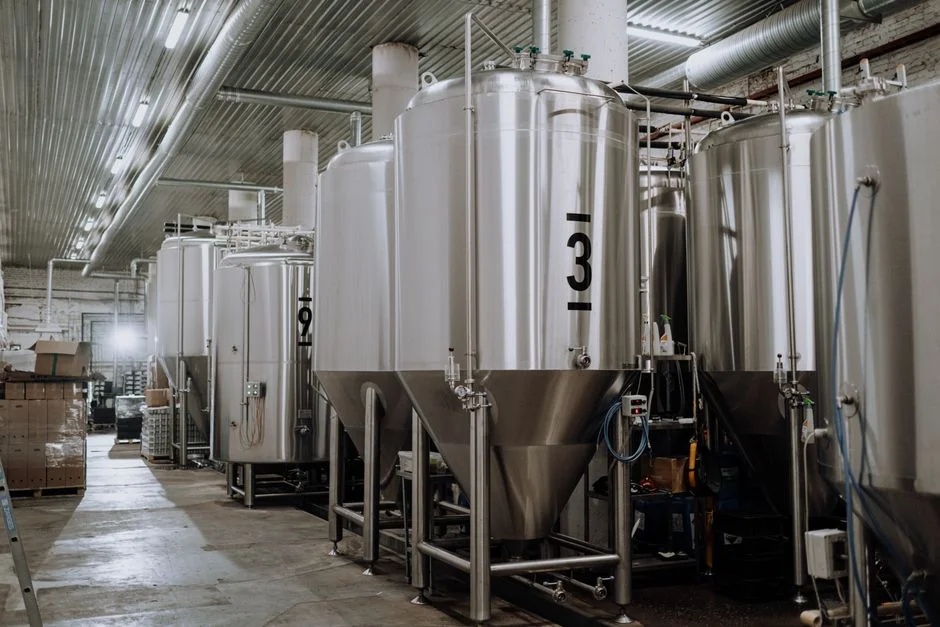
The treatment decision is a comparison of compliance outcomes, reuse value, capital effect, operating burden, and unresolved site evidence. A discharge case may be sufficient where the receiving route and permits support it; reuse adds value where the plant has a defined demand and water-quality target; ZLD-ready design becomes credible only when basin constraints, water scarcity, reuse obligations, or corporate targets justify the added equipment.
| Outcome | Compliance basis | CAPEX reference | Operating implication | Diligence sensitivity |
|---|---|---|---|---|
| Discharge | Meet the applicable site permit and receiving-water conditions. | Base train: $1.5 million–$6 million for the 1,500 m³/day reference case. | Requires sustained control of regulated parameters and reliable monitoring. | Confirm receiving classification, seasonal limits, outfall capacity, and permit compliance history. |
| Reuse | Produce water matching a defined process specification and any applicable discharge route. | The same reference base train includes RO; actual cost depends on site flows, chemistry, and construction. | Requires a reliable demand, membrane pretreatment, concentrate management, and water-quality validation. | Identify each reuse destination, required quality, seasonal demand, and reject route. |
| ZLD-ready | Reduce liquid discharge and support reuse objectives under tighter basin or corporate constraints. | Adding an evaporator/crystallizer increases the base-train figure by 1.5x–2.5x. | Adds energy, maintenance, concentrate handling, and more complex controls. | Test whether permits, water availability, reuse demand, or corporate targets justify the premium. |
The base-train estimate comes from the supplied Mexico acquisition guide: $1.5 million–$6 million, or approximately $1,000–$4,000 per m³/day, for DAF, MBR, and RO at 1,500 m³/day, excluding NMP distillation and an evaporator. These are reference estimates, not quotations for the acquired facility.
At 15–30% RO reject, the same reference case produces 225–450 m³/day of liquid reject. The supplied disposal range is $0.40–$0.90 per 1,000 gallons, depending on state and hazardous classification. The worked example of 300 m³/day at $0.60 per 1,000 gallons yields approximately $48 per day, or about $17,500 per year in avoided-disposal credit. That credit does not by itself justify an evaporator.
The industrial RO system for reuse polishing has a stated recovery rate of up to 95%, but that is a product capability rather than a guaranteed site recovery rate. Site feed analysis governs actual performance. Select ZLD-ready equipment only when the evidence justifies it, not simply because it provides the highest treatment standard.
Execute Permits, Controls, and Commissioning in Parallel
Closing should start five coordinated workstreams rather than a sequential permit queue. Legal, environmental, operations, and engineering must share one calendar because a permit deadline, equipment outage, or laboratory gap can become the binding constraint.
| Timing | Parallel actions | Verifiable deliverable |
|---|---|---|
| Day 0–30 | Preserve permits and operating records; prepare the CONAGUA ownership-change documentation; begin the SEMARNAT successor process; place inherited monitoring and enforcement items under formal remediation tracking. | Controlled permit register, evidence-preservation record, and open-items register. |
| Day 30–60 | Verify flow and load data; conduct representative sampling; inspect equalization and the treatment train; reconcile the permit file with monitoring records; confirm sludge arrangements. | Signed field-verification report, sampling dataset, drainage diagram, and reconciled compliance matrix. |
| Day 60–90 | Complete the SEMARNAT change-of-operator filing identified in the supplied guidance; lock the Phase 1 treatment scope; establish the monitoring and laboratory schedule. | Filing evidence, approved Phase 1 design basis, and laboratory schedule. |
| Day 90 onward | Commission or repair flow-paced measurement and automatic controls; validate reuse-water quality; begin corporate EMS integration; train operators. | Commissioning records, validated water-quality results, EMS legal register, environmental calendar, and training records. |
The corporate EMS benchmark calls for ISO 14001 conformance within 24 months of acquisition, according to the supplied S4 §5.1.1 pattern. That benchmark does not replace Mexican filing dates or permit conditions; it provides a framework for the legal register, sampling, reporting, and renewal calendar. The wastewater engineer, environmental manager, and M&A counsel should maintain that integrated calendar, including the installation and operation of an automatic chemical dosing system where dosing performance is required.
Make These Acquisition Go/No-Go Decisions
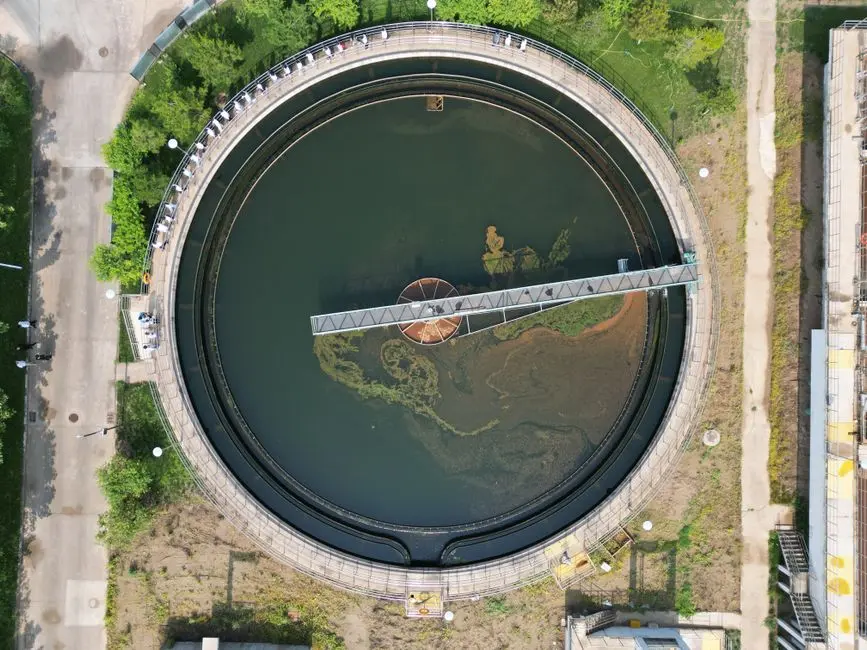
The buyer should not sign if the seller cannot provide 36 months of CONAGUA rights-payment history, eight quarters of monitoring data, and the complete open-expediente list. Those documents are the minimum evidence needed to test permit continuity and identify inherited non-compliance.
Escalate when a stream lacks valid authorization, monitoring repeatedly approaches permit limits, or reported operations differ materially from observed equipment and flow. Require a field-verified process and drainage diagram showing flow meters, sample points, equalization channels, treatment bypasses, sludge removal, and reuse destinations.
Set the Phase 1 budget only after representative influent characterization and confirmation of the receiving-water classification. Verify every design value against current permits and final equipment proposals. The historical San Luis Potosí benchmark of zero paint-shop process wastewater and treated wastewater for painting should be evaluated against the acquired facility’s actual infrastructure, permits, reuse demand, and monitoring record—not assumed to be reproducible.
A conditional proceed is appropriate only when the buyer knows which instrument governs each obligation, who will perform each transfer action, what evidence supports each treatment assumption, and what unresolved condition could stop closing or Phase 1 expenditure.
Frequently Asked Questions
How should BMW transfer wastewater permits after acquiring an auto plant in Mexico?
BMW should file the CONAGUA Formato de Cambio de Titularidad so the Título de Concesión is reissued in the successor operator’s legal name. Separately, file the SEMARNAT change-of-operator notice within 90 days of closing under the supplied LGEEPA Article 29-bis guidance. Preserve permits, operating records, monitoring results, and correspondence before either filing, and track both actions on the same closing calendar.
What will wastewater treatment cost for an acquired 1,500 m³/day Mexican auto plant?
The supplied reference estimate for a DAF-MBR-RO base train is $1.5 million–$6 million, excluding NMP distillation and an evaporator. Adding an evaporator or crystallizer increases that figure by 1.5x–2.5x. Require stream flows, representative influent testing, receiving-water classification, reuse demand, and current permit limits before requesting site-specific pricing or setting a capital budget.
How should the buyer size equipment for an acquired BMW plant?
Size from measured stream flows, flow-paced records, and representative influent characterization—not the acquired plant’s historical vehicle output. Document body-in-white, paint-shop, assembly, and EV or battery sources separately. The San Luis Potosí plant’s historical capacity of up to 150,000 cars per year is a benchmark, not a hydraulic basis for sizing treatment equipment at another facility.
What inherited environmental liabilities survive the acquisition?
Permit reissue does not erase monitoring history, open PROFEPA expedientes, inspection findings, closure orders, unpaid fines, or required retrofits. Obtain the complete expediente list and permit file before signing. Treat each inherited matter as an owner-assigned remediation item with a dated deliverable, then include any resulting capital work in the acquisition model.
How should a supplier be selected for wastewater reuse and ZLD-ready equipment?
Require a supplier to map every proposed unit to a named wastewater stream, pollutant objective, verified flow range, sludge destination, and measurable reuse or discharge target. Require current site influent data and permit limits to govern the proposal. Do not accept product recovery, flow capacity, or treatment performance claims without confirming how they apply to the acquired plant.
When does automotive water reuse justify a ZLD-ready investment?
Select ZLD-ready equipment when current permits, basin constraints, water availability, a defined reuse demand, or corporate water targets justify the additional capital and operating burden. In the supplied reference case, RO reject disposal produces only a limited avoided-disposal credit, so an evaporator should not be selected solely to maximize treatment capability. Test the decision against confirmed site conditions and the final life-cycle model.