Which Rules Govern Sewer Discharge Near Eolia?
Mining and metals plants near Eolia meet sewer pretreatment limits by treating each wastewater source as a defined stream, then routing the combined flow through equalization, pH adjustment, metals precipitation, solids removal, filtration and any required disinfection before discharge. The governing requirement is the strictest applicable federal, state, POTW and permit limit at the point of connection, not simply the federal categorical standard. Design and sizing must use the site’s worst-case wastewater blend, while metals-bearing sludge requires a separate characterization, dewatering and disposal plan.
Sewer discharge to a publicly owned treatment works (POTW) is regulated through Clean Water Act Section 307(b) and 40 CFR Part 403. An NPDES permit separately authorizes direct point-source discharges to surface waters; a mine can therefore need NPDES coverage for a separate outfall even when its sewer discharge is handled under a pretreatment permit. EPA’s Industrial Wastewater guidance states that mining point-source discharges require NPDES authorization.
Federal categorical standards establish a floor, while POTW local limits protect the biological process, sludge operations and receiving water. EPA’s Pretreatment Standards and Requirements-Local Limits guidance says local limits are site-specific, can be numeric or narrative, and apply at the industrial user’s point of connection.
| Requirement layer | What it controls | Procurement input |
|---|---|---|
| 40 CFR Part 403 | Indirect industrial discharge and POTW pretreatment program | Industrial discharge permit, monitoring and BMP requirements |
| Federal categorical standard | Pollutant limits for the applicable industrial category | Current part and subcategory confirmed with the permit writer |
| State requirements | Additional restrictions applicable to the facility | State permit and agency correspondence |
| POTW local limits | Site-specific discharge limits at the point of connection | Current sewer-use ordinance and local-limit worksheet |
The research contains an unresolved inconsistency: it identifies both 40 CFR Part 430 and Part 437 for ore mining and dressing. The permit writer or POTW must confirm the correct categorical part and subcategory rather than relying on vendor literature. Use Part 433 only where the facility includes applicable metal-finishing operations such as electroplating, printed-circuit production or surface-finishing rinsate.
Representative Part 433 values—copper at 3.38 mg/L daily maximum and 2.07 mg/L monthly average, and total chromium at 2.77 mg/L daily maximum and 1.71 mg/L monthly average—are federal examples, not Eolia targets (HydropureWater, “How Mining & Metals Plants Meet Pretreatment Limits Before Sewer Discharge”). The binding procurement package is the POTW’s written sewer-use ordinance, industrial discharge permit, local-limit worksheet, monitoring requirements and approved BMPs. Related industrial permitting discussions are provided in the Menominee industrial sewer-limit guide and Green Bay chemical-plant pretreatment guide.
Build the Wastewater Profile Before Sizing Equipment
A defensible treatment train starts by separating streams with different pollutant fingerprints rather than blending them at the design stage. Pit dewatering, concentrator slurry water, contact stormwater, acid mine drainage (AMD) and any finishing-shop rinsate should each be sampled and characterized independently before the combined flow is used for sizing. Mining wastewater can vary with ore grade, mill throughput, weather, campaign milling and batch discharges (HydropureWater, “Mining Pretreatment for Sewer Discharge in the US: 2026 Compliance Guide”).
The supplied research gives screening values, not design guarantees. Raw AMD may have pH of 2–4 and sulfate of 1,000–5,000 mg/L, while mining TSS can range from hundreds to several thousand mg/L (HydropureWater, 2026 mining pretreatment compliance guide). These values identify treatment drivers, but they do not replace site sampling or a worst-case composite.
Map each candidate constituent against the actual permit. Depending on the waste blend, the review may need to address Pb, Cu, Zn, Cd, Ni, As, mercury, cyanide, fluoride, TSS, COD, oil and grease, pH and sulfate. A 24-hour composite sampler and online pH and conductivity monitoring at the headworks provide the minimum basis of design described in the research. Continuous data should cover ordinary production, storms, clean-outs, dump-leach cycles and campaign-to-continuous changes.
- Separate and sample each source.
- Construct representative and worst-case composites.
- Measure flow duration, rainfall response and batch loads.
- Use site-specific jar tests or pilot work to establish chemical demand, precipitation windows and solids behavior.
- Size each unit against both peak load and the applicable permit limit.
Ask bidders for test data generated with the site’s matrix, not clean water or a generic synthetic stream. That requirement is consistent with the mining sludge-settling troubleshooting guide, which emphasizes diagnosing process chemistry before changing equipment. The RFQ should state the actual wastewater variability and require explicit design margins against the written limits; a general claim that a unit will “meet limits” is not a sizing basis.
Use a Staged Treatment Train at the Point of Connection
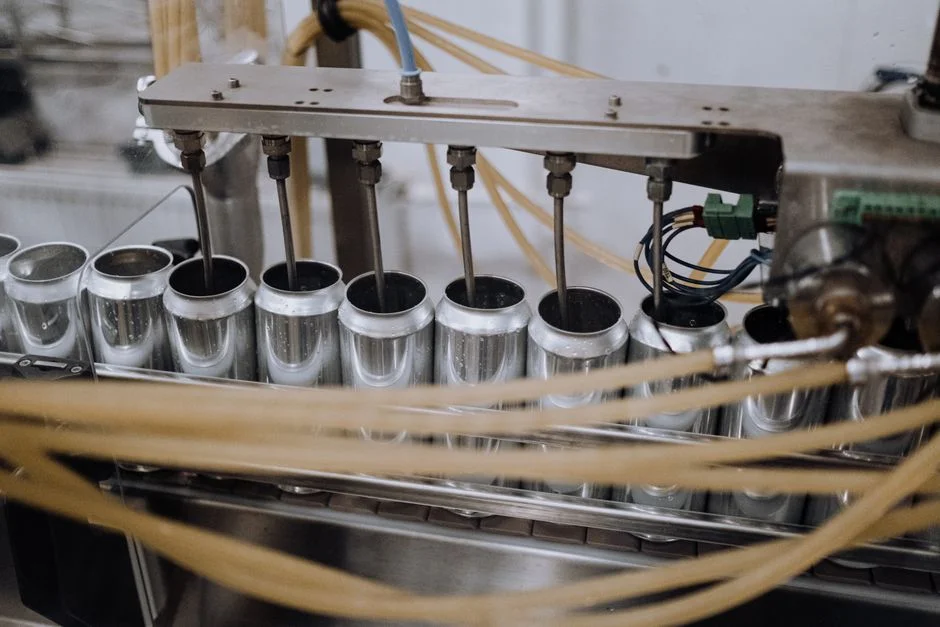
Equalization is the first engineered control because it dampens batch discharges before they overload chemical feed or solids separation. The supplied research specifies 8–24 hours of average daily flow and calls out shift changes, dump-leach cycles and mill clean-outs (HydropureWater, “How Mining & Metals Plants Meet Pretreatment Limits Before Sewer Discharge”). It should also be checked against the site’s peak flow and storage turndown.
Follow equalization with staged pH adjustment and precipitation. Copper precipitation begins near pH 6.5, reaches full removal by pH 8.5, and zinc precipitation occurs between pH 7 and 9; chromium(III) and aluminum may resolubilize above approximately pH 10.5 (HydropureWater, 2026 mining pretreatment compliance guide). A PLC-controlled pH and coagulant dosing system should hold pH within a ±0.2 band, with the operating window established by jar testing rather than a generic value.
Hydroxide precipitation is the normal primary stage because the chemistry is established and comparatively straightforward. Sulfide treatment is a polishing option where hydroxide cannot meet a particularly stringent residual-metal limit. The cited hydroxide-stage results for Cu, Pb and Zn are generally below 1–2 mg/L, while sulfide residuals of 0.01–0.05 mg/L are cited for Cu, Zn, Cd and Ni (HydropureWater, 2026 mining pretreatment compliance guide). Sulfide also requires sealed equipment and H₂S controls because NaHS can generate gas when pH falls.
DAF and lamella clarifiers solve different separation problems. Use an industrial DAF system for mining wastewater where oil, grease or colloidal particles dominate. The research cites DAF removal of 90–98% of TSS and 85–95% of oil and grease at 5–25 m/h hydraulic loading. Use lamella for high-flow metal-hydroxide sludge where footprint is constrained; the cited surface-loading range is 20–40 m/h. For a stream-specific decision, compare DAF and clarifiers for mining wastewater.
A multimedia filter provides a final solids barrier before the sewer connection. The research cites filtration at 1–2 m/h, differential-pressure-triggered backwash and residual TSS below 10 mg/L. Add chlorine dioxide or UV only when required by the POTW or site risk assessment; the cited chlorine dioxide dose is 1–5 mg/L. Biological polishing may be necessary where an MBR can produce TSS below 5 mg/L and more than 95% COD removal, according to HydropureWater’s 2026 mining pretreatment guide.
| Stage | Primary function | Control and evidence |
|---|---|---|
| Equalization | Buffers flow and load peaks | 8–24 hours of average daily flow in the supplied research; verify against batch and storm data |
| pH adjustment and hydroxide precipitation | Removes dissolved metals | Online pH, ±0.2 control band and site jar tests |
| Sulfide polishing, if justified | Reduces selected residual metals | Sulfide residual and H₂S safeguards |
| DAF or lamella | Removes floatable material or precipitated solids | Flow and loading matched to oil, colloid and sludge characteristics |
| Multimedia filtration | Polishes residual TSS | Filtration rate, backwash trigger and differential-pressure control |
| Disinfection or biological polishing | Addresses POTW or site-specific risk | Include only where required by permit or risk assessment |
Every stage needs a measurable permit output. The control narrative should identify online pH, conductivity, flow and chemical-dose interlocks, sample locations, alarm actions and the operating response to an excursion. An high-efficiency sedimentation tank can form part of the solids stage, but its selection still depends on the actual DAF-versus-lamella decision.
Treat Metals Sludge as a Compliance Stream
Metals hydroxide or sulfide precipitation creates a residue that must be characterized independently of the sewer permit. HydropureWater’s 2026 mining pretreatment guide states that this cake may be RCRA-hazardous under TCLP for regulated metals such as Pb, Cd, Hg or As; dewatering does not remove that legal status. The receiving landfill’s waste-acceptance criteria, including its paint-filter test, therefore belong in the treatment design rather than in a disposal note added after equipment selection.
The research reports different plate-and-frame results: one source gives 25–35% dry solids and another gives 30–45%. Those figures are not a basis for guaranteeing cake dryness. Final performance must be established through pilot testing and site-specific sludge conditioning. A plate-and-frame filter press for metals sludge can reduce sludge volume, but the operating result depends on sludge chemistry, feed solids, polymer selection and conditioning.
Return press filtrate to the head of the treatment train for retreatment. It can carry suspended solids, residual metals and chemical demand, so treating it as a separate clean discharge would be incorrect.
Compare total operating cost using reagent consumption, polymer demand, dewatering energy, cake transport and disposal—not reagent cost alone. Automatic polymer conditioning and feed-linked PLC dosing can reduce variability in cake dryness and haul frequency. To identify the relevant cost categories for an RFQ, use the filter-press maintenance and operating-cost optimization guide.
Choose Between Sewer Discharge, Partial Reuse and ZLD
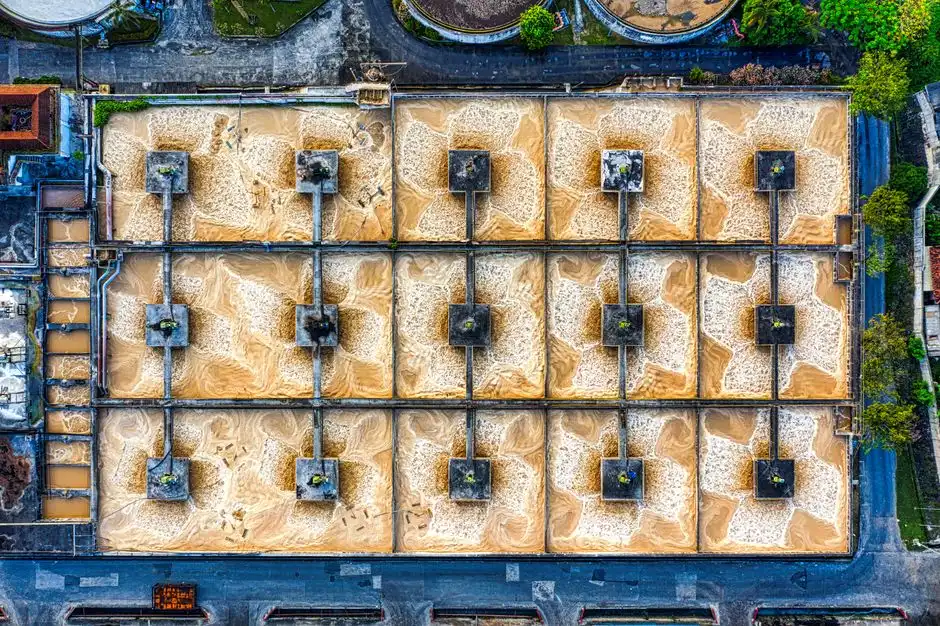
The appropriate route depends on receiving-POTW capacity, enforceable local limits, fees, water economics and the likelihood of tighter permit conditions. Sewer discharge remains rational when the treatment train can reliably meet the point-of-connection limits, capacity is available and the avoided water-supply and disposal costs exceed the cost of pretreatment and sewer charges.
Partial reuse is appropriate where discharge reduction has measurable value and the effluent can feed further treatment. An MBR can produce TSS below 5 mg/L with more than 95% COD removal, providing a low-solids feed to UF or RO (HydropureWater, 2026 mining pretreatment compliance guide). A combined MBR wastewater-treatment system can therefore support a reverse-osmosis water-recovery train, subject to membrane-feed quality and recovery testing.
Zero-liquid discharge should be evaluated when water scarcity, fresh-water cost, community pressure or tightening discharge requirements make continued sewer discharge untenable. Evaporation and crystallization still require air-permission review and a defensible solids-disposal route. A site-specific ZLD capacity assessment for a mining wastewater project provides a useful format for that evaluation, but its economics cannot be transferred to Eolia without local inputs.
The research describes mining water demand as concentrated in the arid West, while mining represented under 1% of total US water demand based on 2015 figures cited in DOE/OSTI mine-water studies (HydropureWater, 2026 mining pretreatment compliance guide). Local concentration—not the national share—drives the decision.
| Decision | Use when | Required evidence |
|---|---|---|
| Pretreatment to sewer | POTW capacity and enforceable limits permit continued discharge | Local limits, fees, flow allocation, treatment train and permit cost |
| Partial reuse | Reducing sewer volume and fresh-water purchases has quantified value | MBR/UF/RO test data, recovery, membrane life and water balance |
| ZLD | Water scarcity, high water cost, community constraints or tightening limits dominate | Validated mass balance, evaporation load, crystallizer solids and disposal path |
Do not publish generic dollar ranges as a procurement estimate. Obtain POTW fees, fresh-water cost, expected permit-tightening cost and validated lifecycle operating costs. The research also recommends designing for the peak 2-hour flow with 20–30% turndown capacity (HydropureWater, “How Mining & Metals Plants Meet Pretreatment Limits Before Sewer Discharge”). Include train redundancy, chemical-storage contingency and a route for low-flow operation; otherwise, a reuse or ZLD decision can create a new hydraulic risk.
Turn the Permit into a Vendor Procurement Checklist
The RFQ should begin with the permit, not the equipment price. Request the receiving POTW’s current sewer-use ordinance, local-limit worksheet, industrial discharge permit, categorical-subcategory determination, monitoring frequency and approved BMPs. Also provide representative worst-case composites, flow-duration curves, storm and batch assumptions, reagent-demand data and the complete wastewater blend.
Require bidders to map every proposed unit to a permit parameter. Each proposal should include sizing calculations, control narratives, materials of construction, hydraulic and chemical-reserve assumptions, sludge-balance calculations, commissioning tests and O&M requirements. Performance guarantees should be tied to site data or a defined test protocol and address reagent consumption, cake dryness and wastewater variability.
Sludge handling must be included in the same package as water treatment, not deferred to a later bid. The mining DAF and clarifier comparison can support equipment discussions, but the final design must be verified against current permits, influent testing and the complete equipment proposal.
Frequently Asked Questions
Does a mine near Eolia need an NPDES permit if it discharges to a sewer?
Not for the sewer discharge itself. Indirect industrial discharge is handled through Clean Water Act Section 307(b), 40 CFR Part 403 and the POTW’s industrial discharge permit. Separate mining discharges to surface waters may require NPDES coverage under EPA’s mining-point-source requirements. The permit writer should map every outfall and receiving connection before the equipment scope is fixed.
Which limits control the final treatment design?
The final target is the strictest applicable requirement among the federal categorical standard, state rules, POTW local limits and the industrial discharge permit, measured at the point of connection. A generic federal limit table is not enough. Obtain the written local-limit worksheet and applicable BMPs, and map each numerical or narrative requirement to a treatment stage and sampling point.
How should equalization, peak flow and turndown be sized?
The supplied research supports equalization of 8–24 hours of average daily flow, peak 2-hour-flow design and 20–30% turndown capacity (HydropureWater, “How Mining & Metals Plants Meet Pretreatment Limits Before Sewer Discharge”). Apply those checks to the site’s measured flow-duration curve, batch-discharge schedule, storm response and minimum operating flow. Do not size equalization from production averages alone.
How should a supplier be selected for a near-Eolia mining pretreatment train?
Select on verifiable capability rather than catalog claims. Require site-matrix jar tests or pilot data, permit-mapped performance, automatic pH and chemical controls, DAF-versus-lamella justification matched to the stream, a solids-dewatering plan and O&M records for comparable wastewater. Also request reagent and polymer consumption, cake-moisture results, spare-parts support and a defined performance test protocol.
How do we compare sewer discharge with reuse or ZLD without a misleading price?
Request local POTW fees, fresh-water cost, sewer allocation, the expected permit-tightening trajectory and validated lifecycle costs for each reuse or ZLD configuration. The decision should compare the same water balance and disposal boundary. No defensible generic price can be calculated until those inputs and site-specific operating data are available.
Should 2024–2026 regulatory trends be treated as current Eolia requirements?
No. The supplied research identifies Lead and Copper Rule Revisions, PFAS analytical-suite adoption and 2025 ore-mining BAT revisions as permit-cycle risks, not universal Eolia obligations. The research dates these developments to EPA’s 2024 Multi-Sector General Permit, finalized in 2024-09, and the 2025 ore-mining BAT revisions, dated 2025-03. Confirm the POTW’s current monitoring suite, applicable permit conditions and any state implementation before adding equipment or analytical scope.