
What River Rouge Sewer Pretreatment Compliance Requires
Mining and metals plants near River Rouge meet sewer pretreatment limits by treating wastewater to the standards enforced by the receiving POTW, while separately checking applicable categorical requirements and the plant’s direct-discharge obligations. A defensible train starts with equalization and controlled pH adjustment, then coagulation, solids separation, filtration and any required disinfection. Equipment selection must follow the current local permit and sewer-use ordinance, applicable 40 CFR Part 440 subcategory, influent variability and metal-sludge disposal requirements. The mining and metals plant pretreatment compliance guide provides the broader framework.
40 CFR Part 403 establishes the national pretreatment framework, but EPA delegates administration and enforcement to the receiving POTW, which becomes the Michigan industrial user’s immediate compliance authority. The POTW protects its collection system, treatment process and sludge-handling operations, so its enforceable local limits may be more restrictive than a generic benchmark. This is a sewer discharge, not an authorization to discharge directly to surface water.
40 CFR Part 440 supplies federal categorical effluent limitations for applicable metal-mining sources; it does not replace the current POTW limits. The applicable subcategory must be confirmed rather than inferred from the presence of mining or metals processing. The project file should contain the current POTW pretreatment permit or authorization, sewer-use ordinance, applicable 40 CFR Part 440 subcategory, discharge monitoring reports and a 12-month influent characterization.
| Governing document or input | Decision it controls | Evidence required before purchase |
|---|---|---|
| 40 CFR Part 403 | National pretreatment framework and local delegation | Confirmation that the POTW administers the applicable program |
| Current POTW permit or authorization | Enforceable discharge conditions, monitoring and reporting | Complete, current document and all conditions and limitations |
| Sewer-use ordinance | Local discharge prohibitions and limits | Current approved version |
| Applicable 40 CFR Part 440 subcategory | Categorical mining requirements | Written subcategory determination and applicable provisions |
| 12-month influent characterization | Design flow, pollutant loads, chemistry and variability | Source-separated results covering normal and upset conditions |
Why the Rouge River Industrial Context Changes the Treatment Design
The lower Rouge River watershed combines petrochemical plants, steel mills, petroleum refineries, and producers of automotive parts, rubber, and plastics, creating multiple industrial pathways for metal-bearing discharges. The d-nb.info study, “Levels of heavy metals distribution near an urban wastewater treatment plant,” identifies chromium, copper, iron, zinc, cadmium and lead in the Detroit and Rouge River watersheds and reports runoff, atmospheric deposition and groundwater as possible entry pathways.
At the Rouge River mouth, the same d-nb.info study reports chromium at 0.11 ppb, iron at 44.1 ppb, zinc at 0.61 ppb and arsenic at 0.55 ppb; copper and cadmium were not detected. It also reports that nearly 100% of Rouge River base flow is groundwater-derived. These measurements establish watershed context, not enforceable sewer limits, and the study’s toxicity-based sediment guidelines do not substitute for the POTW’s permit conditions.
Design methods must adapt to this industrial environment. A plant should segregate stormwater, groundwater, floor wash and process wastewater where practical because their flow and chemistry differ. It should trace potential metal sources rather than assume the sewer carries only one process stream. The receiving POTW still evaluates the combined discharge against its enforceable permit and local limits; local river data cannot be used to relax treatment requirements.
Characterize the Wastewater Before Sizing the Equipment
A treatment train should be sized from a source-separated 12-month influent characterization that captures production, storm, shutdown, variable-flow and upset conditions. Equalization should absorb hydraulic spikes and load variability, limit shock loading of chemical equipment and provide a representative monitoring sample. Sizing must therefore establish maximum and average flows, metal loads and turning-point loads rather than peak flow alone.
The baseline monitoring program should include pH, flow, TSS, oil and grease, metals and conductivity, with additional parameters dictated by the POTW permit and process chemistry. The d-nb.info study supports screening for chromium, copper, iron, zinc, cadmium, lead, arsenic and nickel in the Rouge context. The final analyte list must still follow the plant’s actual materials, reagents, process chemistry and applicable limits.
| Design input | Why it is needed | Procurement consequence |
|---|---|---|
| Source-separated flow record | Separates process, storm, groundwater, floor wash and contact-water contributions | Defines equalization and treatment-unit hydraulic duty |
| Maximum, average and turning-point loads | Prevents equipment selection from relying only on average daily flow | Sets chemical, solids-separation and filtration capacity |
| pH and alkalinity | Defines acid demand and the conditions needed for metal hydroxide precipitation | Determines chemical demand and control requirements |
| Metals, including dissolved fractions | Distinguishes soluble metals from particulate or precipitated metals | Establishes whether precipitation and additional polishing are adequate |
| TSS, oil and grease, conductivity | Characterizes solids separation, floatables and process-water variability | Influences DAF, lamella, filtration and sludge handling |
The resulting design envelope should also identify the sample point used for compliance monitoring and whether any reclassification, dilution or flow-paced sampling is permitted. No equipment flow or chemical dose should be finalized before the engineering team resolves those permit-specific questions.
Build a Pretreatment Train That Removes the Correct Pollutant
The first treatment step is equalization followed by PLC-controlled pH adjustment, because pH correction prepares dissolved metals for precipitation and protects downstream equipment. The operating pH cannot be selected without the local limit and metal-solubility testing; different metals may require different precipitation conditions. A PLC-controlled chemical dosing skid should be evaluated against the actual acid or alkali demand and required control response.
Coagulation and flocculation then aggregate suspended solids, colloids and metal-bearing precipitates into captureable flocs. Solids separation follows. A DAF system for metal-bearing industrial wastewater is a candidate when floatable oil, grease or reagents are present or when metal-hydroxide flocs separate poorly by gravity. Lamella clarification is a candidate when high-rate separation, a constrained footprint, integration with flocculation or sludge recirculation favors inclined plates.
Filtration should polish residual TSS and colloids before discharge. A compact integrated coagulation, flocculation, sedimentation and filtration package may suit sites where a single process line is advantageous, but its turbidity rating does not establish dissolved-metals removal. Add ultrafiltration only where reuse or reverse-osmosis protection is required; the referenced HydroPureWater UF specification is 0.03 micron PVDF, 2,000–40,000 L/h, turbidity up to 300 ppm, automatic backwash and air scour. Those values require validation against the proposed feed.
Metal-rich solids are part of the treatment obligation. Route sludge to a plate-and-frame filter press or another permitted dewatering method, then characterize the cake for disposal or stabilization. Add disinfection selectively where contact water or another stream is subject to microbiological limits; do not assume chlorine dioxide or ultraviolet disinfection is required without the local rule and source-stream assessment.
| Train stage | Primary function | Pollutant or risk addressed | Key design check |
|---|---|---|---|
| Equalization | Flow and load stabilization | Hydraulic spikes, shock loading | Maximum and turning-point flows |
| pH adjustment | Creates controlled precipitation conditions | Dissolved metals and acidity | Solubility tests and local pH limit |
| Coagulation and flocculation | Forms larger captureable particles | Colloids, suspended solids, precipitated metals | Jar-test dose and settling performance |
| DAF or lamella | Separates generated solids | Metal-hydroxide flocs, TSS, floatables | Actual wastewater and target solids capture |
| Filtration | Polishes residual solids | TSS and colloids | Filtrate quality and backwash handling |
| Sludge dewatering | Makes solids manageable | Metal-bearing sludge | Cake characterization and permitted destination |
| Disinfection, if applicable | Controls microbiological risk | Applicable contact-water limits | Local rule and source-stream assessment |
Choose DAF or Lamella Clarification Using the Actual Wastewater
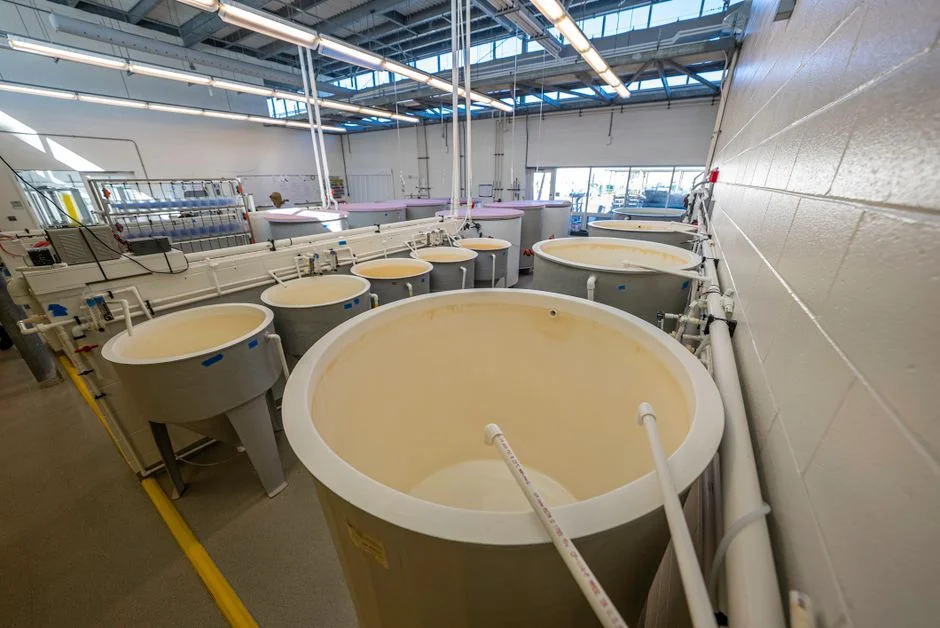
DAF should be the default candidate when floatable oil, grease, process reagents or slowly settling metal-hydroxide flocs are present, while lamella clarification should be evaluated when footprint, sludge recirculation, flocculation integration or existing settling infrastructure favors inclined-plate separation. The DAF versus clarifier comparison for mining wastewater provides a separate equipment framework.
HydroPureWater lists 13 standard DAF models covering 4–300 m³/h, with automatic skimming. Its lamella clarification specification lists 20–40 m/h surface loading and chemical-consumption reduction of up to 30%. These represent catalog inputs, not project guarantees. The DAF system specification and clarifier proposal must therefore be evaluated against the characterized influent envelope and POTW limits.
| Selection factor | DAF | Lamella clarification |
|---|---|---|
| Primary wastewater fit | Floatable oil, grease, reagents or poorly settling metal flocs | Flocculated solids where high-rate separation is wanted |
| Layout | Evaluate vessel, skid and sludge-collection footprint | Evaluate inclined-plate height, support and access footprint |
| Sludge handling | Float removal and residual solids handling | Sludge blanket or recirculation integration |
| Controls | Evaluate recycle, saturation, solids and skimming controls | Evaluate feed distribution, floc conditioning and sludge withdrawal |
| Retrofit feasibility | Check available depth, utilities and recovery loop | Check basin geometry, structural loading and existing sludge system |
| Commercial requirement | Written performance guarantee tied to defined influent conditions and enforceable discharge limits | |
For a compact integrated alternative, the referenced JY system spans 10–200 m³/h and treats turbidity up to 3,000 mg/L to below 3 mg/L. That catalog value describes turbidity performance; it is not a metals-removal guarantee. Selection should be based on the complete train, including controls, chemical systems, sludge handling, utilities and monitoring.
Verify Compliance Before Startup and Every Discharge
Compliance must be demonstrated against a traceable design basis before startup: the POTW permit, sewer-use ordinance, applicable 40 CFR Part 440 subcategory, recent discharge monitoring reports, influent characterization, chemical safety data sheets and waste-disposal information. Missing documents should remain identified as unresolved design inputs rather than filled with assumed limits.
Jar or bench testing should establish chemical dose, pH operating window, settling or flotation performance and filtration behavior. Critical monitoring points include raw influent, equalization, post-pH, post-clarifier, final effluent and sludge. This sequence shows where a failure occurs and supports both permit evidence and operating decisions.
- Calibrate chemical feeders and verify chemical storage, containment and supply arrangements.
- Prove flow measurement and verify that equalization and flow-control responses manage expected upsets.
- Test alarms, fail-safe actions and upset-response assumptions.
- Commission DAF or lamella operation using representative wastewater.
- Verify filter backwash, filtrate capture and sludge withdrawal.
- Confirm dewatering capacity with the selected sludge-handling method.
The final equipment values should be checked against current permits, site-specific influent tests and the final proposal. That verification is necessary because catalog flow ratings, sediment guidelines and river measurements do not establish enforceable POTW compliance or guarantee performance for the plant’s wastewater.
Frequently Asked Questions
What information should a treatment vendor receive before quoting a River Rouge mining or metals wastewater system?
Provide the current POTW pretreatment permit or authorization, sewer-use ordinance, applicable 40 CFR Part 440 subcategory, 12-month source-separated influent data, chemical reagents and SDS, and the waste profile for the expected sludge. Require a written performance guarantee that defines the influent envelope, operating conditions and enforceable discharge parameters. A quote based only on flow is not a defensible basis for equipment
Frequently Asked Questions
What pretreatment limits apply to a mine or metals plant discharging to a River Rouge sewer?
Facilities discharging to the River Rouge sewer system are typically governed by the Great Lakes Water Authority (GLWA) Industrial Pretreatment Program. Specific limits are dictated by the facility's individual wastewater discharge permit, but generally include heavy metal caps such as Total Copper (< 1.0 mg/L), Total Nickel (< 2.0 mg/L), Total Zinc (< 2.0 mg/L), and Total Chromium (< 1.0 mg/L). Additionally, facilities must maintain a pH range between 5.0 and 11.5 standard units and ensure Total Suspended Solids (TSS) remain below 300 mg/L to avoid surcharges.
How much should a metals wastewater treatment system cost to meet POTW limits?
Capital costs for a compliant pretreatment system typically range from $150,000 to over $1,000,000 depending on flow volume, influent concentrations, and the complexity of the metal species present. A mid-sized system designed for 20–50 gallons per minute (GPM) generally requires an investment of $250,000 to $500,000 for equipment, controls, and initial chemical feed integration. Operational expenditures, including chemical reagents, sludge disposal, and labor, usually add $0.05 to $0.25 per gallon treated.
DAF or lamella clarifier: which is better for mine wastewater near River Rouge?
The choice depends on the density and morphology of the metal precipitates. Dissolved Air Flotation (DAF) is generally superior for mine wastewater containing oily residues or light, flocculent metal hydroxides that tend to float, as it achieves higher solids removal efficiency in a smaller footprint. Conversely, a lamella clarifier is preferred if the waste stream contains heavy, crystalline mineral solids or high-density metal precipitates that settle rapidly, as these systems provide more robust performance for high-solids loading and lower maintenance requirements.
What documents and influent data should I provide before requesting an equipment proposal?
To receive an accurate proposal, you must provide a comprehensive laboratory analysis of the raw wastewater, specifically identifying the concentrations of all regulated heavy metals, TSS, oil and grease, and current pH levels. Additionally, submit your facility's current discharge permit from the local POTW, a site plan showing available floor space, the peak and average daily flow rates in gallons per day (GPD), and the specific chemical additives currently used in your mining or metal processing operations.
Will pH adjustment and DAF alone remove dissolved metals to sewer limits?
No, pH adjustment and DAF are insufficient for meeting strict discharge limits if the metals are in a dissolved state. pH adjustment is necessary to precipitate dissolved metal ions into insoluble metal hydroxides, but this process often requires the addition of coagulants and flocculants to create particles large enough for the DAF to capture. Furthermore, if metals are chelated or complexed by organic compounds, secondary treatment steps such as organosulfide precipitation or ion exchange may be required to achieve compliance with stringent numeric criteria.