Which Rules Control a Bridgeport Sewer Discharge?
Mining and metals plants near Bridgeport generally meet sewer-discharge pretreatment limits by controlling industrial wastewater before it enters the municipal POTW. The facility must comply with Clean Water Act §307(b) and 40 CFR Part 403, applicable categorical standards such as 40 CFR Part 437 for ore mining and 40 CFR Part 433 for metal finishing, and stricter state or local conditions. EPA’s industrial wastewater guidance confirms that NPDES covers point-source surface-water discharges, not sewer connections. A practical train typically uses segregation and equalization, pH adjustment, metal precipitation, DAF or clarification, filtration where required, and controlled sludge dewatering, followed by permit-compliant sampling and reporting.
EPA explains that NPDES establishes discharge limits and conditions for industrial and commercial sources to protect receiving waters and prevent interference with POTWs (US EPA, Industrial Wastewater guidance). NPDES addresses point-source discharges to waters of the United States; a discharge through a POTW collection system is instead addressed through pretreatment requirements. The federal pretreatment framework is 40 CFR Part 403. Where the activity falls within the relevant category, ore mining and dressing is addressed under 40 CFR Part 437 and metal finishing under 40 CFR Part 433.
The controlling requirement is not selected by choosing one document in isolation. The facility’s current state-issued pretreatment permit, federal categorical standard, POTW sewer-use requirements, discharge authorization, and applicable local limits must be reconciled. Where more than one applies, use the more stringent applicable requirement for design and compliance. EPA and DOJ have separately enforced pretreatment violations involving POTW interference, pass-through, pH, slug loading, and permitted flow limits (Williams Mullen, 2017-03-30).
Draft Connecticut permit SP0000680 shows the regional chain clearly. Connecticut DEEP reissues the permit under CGS §22a-430, state regulations adopted under that statute, and a modified memorandum of agreement authorizing Connecticut to administer a pretreatment program under 40 CFR Part 403 (Connecticut DEEP, Draft Permit SP0000680, 2025-09). The draft permit identifies a state-issued authorization, not a universal limit sheet for every Bridgeport-area operation.
| Requirement layer | What it governs | Procurement implication |
|---|---|---|
| 40 CFR Part 403 | Federal pretreatment framework for industrial discharges to POTWs | Establishes the regulatory framework, not the site-specific equipment capacity |
| 40 CFR Part 437 or Part 433 | Applicable categorical standards for ore mining and dressing or metal finishing | Determine categorical applicability and applicable categorical provisions |
| State-issued pretreatment permit | Facility-specific limits, monitoring, reporting, and notification conditions | Use the current issued permit in the basis of design |
| POTW sewer requirements | Local discharge conditions, application, sewer-use rules, and local limits | Obtain the current requirements from the receiving authority before ordering |
For a broader regional review, compare this mining and metals pretreatment compliance guide with the regional mining and metals pretreatment limits guide.
What the Connecticut Metal-Finishing Permit Shows
Draft Permit SP0000680 converts a regional permit framework into specific design inputs for a real metal-finishing discharger (Connecticut DEEP, 2025-09). Bridgeport Fittings, Incorporated operates at 705 Lordship Boulevard in Stratford and discharges to the City of Stratford Water Pollution Control Facility. The facility manufactures noncurrent-carrying wiring devices, and the permitted discharge is pretreated metal-finishing wastewater.
The proposed wastewater sources are the zinc electroplating line, Jessup cleaner line, giant burnishing line, Regal burnishing line, vapor-blast rinse unit, polishing-filter backwash, and treatment-floor trench. The proposed maximum flow is 40,000 gallons per day. That is a facility-specific permit value—not a universal sizing rule for mines or metals plants—and it should not be transferred to another site without current flow data and authorization.
The draft permit’s numerical limits must be entered into the equipment basis of design only after confirming that they remain in the issued permit. They also demonstrate why averaging periods, sample types, and maximum-event controls must be designed as one system.
| Parameter | Average monthly limit | Maximum daily or grab limit |
|---|---|---|
| pH | Not applicable | Instantaneous range: 6.0–10.5 S.U. |
| Cadmium, lead, silver | 0.1 mg/L | 0.5 mg/L maximum daily |
| Chromium, copper, nickel | 1.0 mg/L | 2.0 mg/L maximum daily |
| Zinc | 1.0 mg/L | 2.0 mg/L maximum daily |
| Total cyanide | 0.65 mg/L | 1.2 mg/L grab-sample limit |
| Total fluoride | 20.0 mg/L | 30.0 mg/L maximum daily |
| Total iron | 3.0 mg/L | 5.0 mg/L maximum daily |
| Total recoverable petroleum oil | Not applicable | 150.0 mg/L grab-sample limit |
| Total suspended solids | Not applicable | 60.0 mg/L maximum daily; 90.0 mg/L grab-sample limit |
The monitoring design cannot treat all parameters alike. The draft permit requires continuous pH monitoring; daily composite sampling for several metals, fluoride, iron, and total suspended solids; grab sampling for cyanide and oil; and flow measurement with average daily, total daily, and maximum-during-24-hour reporting. The monitoring location is the sampler port from the recirculation-tank effluent, so the compliance point must be defined before equipment layout and sample taps are finalized.
The draft permit also requires notification to the Bureau of Materials Management and Compliance Assurance within 24 hours after the discharger becomes aware that sampling or analysis indicates a limit violation (Connecticut DEEP, 2025-09). That requirement belongs in the operating procedure, alarm logic, and escalation plan before startup.
For practical maintenance and sampling details, use the electroplating wastewater plant maintenance guide. A separate fabricated-metals pretreatment reference can help structure a permit-to-equipment review, but it cannot replace the current Bridgeport-area permit.
Build a Treatment Train from the Wastewater Mass Balance
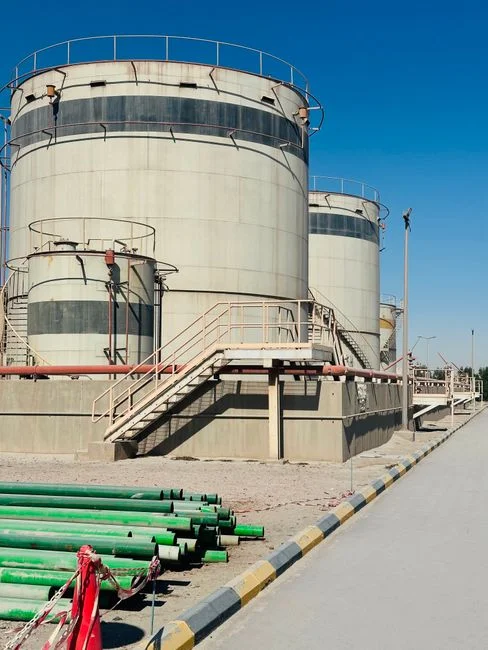
The correct treatment train follows the wastewater mass balance; it does not start with a selected clarifier. Characterize each stream separately for flow, pH, total metals, suspended solids, oil and grease, cyanide where relevant, fluoride where relevant, and batch-generation patterns. The proposed Bridgeport Fittings values are compliance benchmarks to verify against current permit conditions, not substitutes for site-specific influent testing.
- Segregate sources. Keep clean cooling water and uncontaminated stormwater separate from contaminated process streams where feasible. A separate trench or process-waste stream can prevent one slug from overwhelming the treatment system.
- Equalize variable flows. Use industrial wastewater equalization to dampen batch discharges before chemical addition and clarification. Define the basin around actual peak and batch data, not an assumed average.
- Control pH. The proposed permit’s instantaneous range is 6.0–10.5 S.U. Set the operating target from process chemistry, precipitation requirements, and the current permit; do not use a generic vendor range.
- Precipitate dissolved metals. Select the chemical and dose through jar or pilot testing against the current local limit. Confirm the selected chemistry, residual concentrations, and sludge-generating reaction on representative wastewater.
- Separate the precipitated solids. Choose an industrial DAF system for metalworking wastewater when oil, grease, or colloidal material is significant. Choose lamella clarification when the main separation objective is metal-bearing precipitate.
- Polish only where justified. Add filtration when the permit, influent variability, or POTW risk supports it. Include sludge dewatering and filtrate return in the water and solids mass balance.
| Wastewater or pollutant characteristic | Primary control | Monitoring and engineering check |
|---|---|---|
| Variable or batch flow | Segregation and equalization | Record source flow, batch timing, and equalization level |
| pH excursions | Controlled acid or alkali adjustment | Continuous pH, dose interlocks, and operating alarms |
| Dissolved metals | Chemical precipitation | Influent and effluent total metals at the current permit averaging basis |
| Oil, grease, or colloidal solids | DAF with automatic skimming | Oil and grease, suspended solids, and skimming performance |
| Metal-bearing precipitate | Lamella clarification | Solids capture, sludge blanket, and clarified-flow quality |
| Residual suspended solids | Filtration, if justified | Filter differential pressure, backwash, and final TSS |
| Treatment sludge | Thickening or mechanical dewatering | Sludge yield, cake handling, filtrate quality, and return destination |
An automatic chemical dosing system for pH and metal precipitation should be evaluated as part of the treatment control architecture, including reagent storage, duty/standby arrangements, interlocks, and fail-safe response. The product data cited in the research states that lamella clarification operates at 20–40 m/h surface loading and can use up to 30% less chemical than a comparable conventional clarification arrangement. Those supplier claims must be tied to representative wastewater and a defined endpoint before acceptance.
For specialist reviews, the fluoride removal evaluation and online zinc-monitoring guide provide useful technical context, but fluoride applicability and monitoring requirements must come from the facility’s own permit and wastewater data.
Prove Compliance with Monitoring, Controls and Records
Compliance is a control system, not a single final sample. Each permit parameter needs a defined monitoring point, sample type, averaging basis, reporting frequency, analytical method, and responsible operator. The draft Bridgeport Fittings permit illustrates why that mapping matters: it combines continuous pH, composite samples, grab samples, instantaneous limits, and several flow-reporting bases (Connecticut DEEP, 2025-09).
| Control or record | Design requirement | Audit evidence |
|---|---|---|
| Parameter-to-method matrix | Map every permit parameter to its sampling method, frequency, averaging basis, and location | Current permit, sampling instructions, laboratory records, and monitoring reports |
| Continuous pH control | Provide instrument calibration, operator alarms, dose interlocks, and a controlled response to excursions | Calibration logs, alarm history, dose records, and corrective actions |
| Flow control | Track daily total flow, average daily flow, and maximum flow during the 24-hour period | Totalizer records, flow reports, and high-flow diversion or hold-up tests |
| Representative sampling | Use grab and composite samples as specified; do not substitute one compliance sample for the full program | Chain of custody, sampling times, analytical reports, and flow records |
| Violation response | Notify the authority within the permit’s 24-hour period after becoming aware of an indicated violation | Notification log, timestamps, escalation records, and corrective-action file |
| Performance verification | Test influent and final effluent at the permitted monitoring location | Paired sampling results, mass-balance calculations, and commissioning report |
Where continuous pH monitoring is required, high-pH or low-pH alarms should trigger defined operator actions rather than depend on a routine operator noticing a display. Chemical-feed interlocks should prevent dosing when the required flow, tank level, or instrument status is outside its defined operating condition. A high-flow diversion or hold-up provision must be checked against the actual collection-system connection and local requirements.
Flow is both a treatment and compliance variable. The draft permit includes average daily and maximum daily flow requirements alongside its proposed 40,000-gallons-per-day maximum daily flow (Connecticut DEEP, 2025-09). Equipment bids should therefore identify the design flow, equalization basis, maximum-flow behavior, and how the treatment train protects the permitted monitoring point during a batch or slug.
Retain analytical results, calibration records, operating logs, chemical-use records, sludge-disposal records, filtrate-return records, and corrective actions in one auditable system. Demonstrating final compliance with paired influent and final-effluent samples also distinguishes treatment performance from a favorable isolated sample.
Choose Equipment by Application, Risk and Operating Burden
DAF and lamella clarification solve different physical separation problems. The wastewater character—not a universal preference—should drive selection. The available product data describes DAF use across metalworking and pretreatment applications with automatic skimming, while lamella product data states 20–40 m/h surface loading and up to 30% lower chemical consumption. Neither claim establishes performance without a defined feed and endpoint.
| Procurement criterion | DAF | Lamella clarification |
|---|---|---|
| Best-fit physical condition | Oil, grease, or colloidal solids are significant | Metal-bearing precipitate is the primary separation objective |
| Primary mechanism | Air flotation and automatic skimming | Settling of precipitate in inclined plates |
| Evaluation focus | Oil and grease capture, solids capture, skimming, and filtrate or scum handling | Metals-bearing sludge capture, blanket control, and chemical consumption |
| Required proof | Representative feedwater and final-effluent results | Representative feedwater, overflow quality, and sludge result |
Require every supplier to submit its design flow, equalization basis, chemical consumption, expected sludge yield, monitoring point, and performance guarantee in the same bid format. Ask the supplier to define the feedwater and endpoint behind every removal claim. If metals, pH, or batch chemistry remain uncertain, require confirmation through representative-sample testing or a pilot before final acceptance.
For chemical handling, specify an automatic dosing system for pH adjustment, coagulants, and specialty reagents with PLC control. Evaluate duty/standby arrangements and fail-safe handling according to the facility’s flow variability and chemical-storage constraints. The bid should identify reagent strength, dosing range, tank requirements, calibration method, and the operating response to loss of flow or instrument failure.
Evaluate a plate-and-frame filter press when cake handling, filtrate return, or disposal logistics justify mechanical dewatering. The equipment offer should include sludge-feed preparation, plate capacity, cycle assumptions, filtrate collection, cake discharge, washing, and cleaning provisions. Filtrate return must remain inside the documented treatment mass balance.
Make the current pretreatment permit and sewer requirements the procurement baseline, then refine capacity and controls with site process chemistry. A related comparison of mining and metals treatment options and the DAF-versus-clarifier selection guide can support internal review, but the final choice must reflect the actual wastewater and controlling permit.
Requests to Make Before Ordering a Pretreatment System
The most important pre-order request is the current compliance basis, not a generic equipment drawing. Before releasing a purchase order, obtain the following documents and confirm that they form one consistent design package.
- Authorization package: Request the current pretreatment permit, sewer-use ordinance, POTW discharge application, and all written modifications, local-limit correspondence, and approval conditions.
- Representative wastewater data: Obtain at least one seasonal and batch dataset, supported by source-by-source flow, pH, and pollutant analyses. Identify missing streams and analytes before final sizing.
- Engineering package: Require the treatment-train mass balance, hydraulic profile, chemical estimate, sludge estimate, electrical load, utilities demand, controls narrative, and startup-validation plan.
- Compliance map: Ask each supplier to map every monitoring point to a permit parameter and identify the instruments, sample stations, and data functions the owner must provide.
- Sludge pathway: Confirm sludge classification, sampling requirements, disposal pathway, filtrate-return destination, and responsible parties during commercial review—not after installation.
A bid should also identify any assumption requiring owner confirmation, including flow basis, batch duration, chemical form, sludge yield, utility availability, performance endpoint, and compliance monitoring location. This approach makes omissions visible before the plant becomes a procurement dispute. For an adjacent treatment-selection review, see the mining and metals wastewater equipment comparison.
Frequently Asked Questions
Does an NPDES permit authorize a mining or metals plant to discharge to a POTW sewer?
No. EPA’s NPDES framework addresses point-source discharges to surface waters. A discharge to a POTW collection system requires the applicable pretreatment authorization under Clean Water Act §307(b) and 40 CFR Part 403. The POTW may also require approval under its sewer-use rules.
Are the Bridgeport Fittings limits the limits for every Bridgeport-area metals plant?
No. Draft Permit SP0000680 is a nearby facility-specific benchmark for Bridgeport Fittings, Incorporated in Stratford (Connecticut DEEP, 2025-09). Use its proposed values to understand the type of information a permit contains, but obtain the current permit and controlling sewer requirements for the specific facility before selecting equipment.
How should a supplier be selected and the pretreatment system sized?
Require representative wastewater testing, peak and batch-flow data, the current permit’s averaging bases, and a defined sludge-handling route before comparing bids. Ask each supplier to state its design flow, equalization basis, chemical consumption, sludge yield, monitoring point, and performance guarantee. Then confirm those claims using representative samples or a pilot where metals, pH, or batch chemistry remain uncertain.
What should a buyer request to control pretreatment-system cost and implementation risk?
Request a complete commercial basis rather than an equipment-only price. It should include the wastewater mass balance, hydraulic profile, utility and chemical demands, controls, sludge estimate, filtrate-return plan, startup-validation plan, and compliance-monitoring deliverables. This check exposes an undersized equalization or solids-handling train before purchase and prevents a low bid from omitting costs needed for compliant operation.
When should a Bridgeport-area plant choose DAF instead of lamella clarification?
Choose DAF when oil, grease, or colloidal material makes flotation and skimming the better physical-removal mechanism. Choose lamella clarification when separating metal-bearing precipitate is the primary objective and the installation must use a compact settling arrangement. The final selection should follow representative wastewater testing and the resulting sludge-handling requirements.