What Makes Rubber Processing Wastewater Difficult to Treat?
COD is an oxygen-equivalent measure of oxidizable organic demand, but it does not reveal whether that demand is suspended, biodegradable or refractory. One rubber wastewater tested in a 2025 study had a pH of 4.68±0.01 and COD of 43,919.89±0.34 mg/L, while another 2026 study examined wastewater at 32,000 mg/L COD with high baseline turbidity. These matrices can be acidic, particulate and high-strength, but their process origins and soluble fractions may differ substantially. Equipment selection therefore depends on constituent-specific characterization rather than COD alone.
Before procurement, obtain source-separated data for COD, BOD, suspended solids, turbidity, oil and grease, pH, sulfate, ammonia and soluble salts. Include average flow, peak flow, production schedules, cleaning discharges and batch-discharge cycles. Rubber latex wastewater and rubber glove wastewater should not be treated as interchangeable without sampling each process line; a result obtained on one effluent does not establish the duty of another.
This distinction changes the treatment sequence. Suspended latex, filler and oily material affect clarification and biological loading, while soluble refractory compounds determine whether advanced oxidation is justified. A high-strength industrial wastewater may therefore require equalization and batch control before a coagulation stage can protect downstream biological equipment.
The DAF versus clarifier selection for rubber wastewater should consequently follow characterization of the solids and oil fractions, not a generic COD threshold.
Published Performance of Rubber Wastewater COD Treatment
Published percentages establish feasibility within each tested wastewater, not guaranteed plant performance. The studies below used different feed matrices, reactor configurations and operating conditions, so their results should not be transferred directly into an equipment guarantee.
| Treatment and source | Tested conditions | Reported COD result | Engineering interpretation |
|---|---|---|---|
| IFAS with hybrid biomass, rubber glove wastewater; Desalination and Water Treatment, 2022 | HRT of 2, 4, 6 and 8 hours; carrier filling of 5%, 10% and 20% | Maximum 87% at 6-hour HRT; lower-HRT IFAS/biofilm results were 58%–61%, versus 38%–46% for IFAS/hybrid | HRT and carrier configuration materially changed performance. |
| Modified SBR, rubber latex processing wastewater; Vietnam Journal of Science and Technology/Science and Technology | COD/TN of 3.4–6.0 gCOD/gN and COD loading of 0.8–1.7 kgCOD×m⁻³×d⁻¹ | Average removal above 95% | Strong biological COD reduction was demonstrated within the tested loading envelope. |
| Coagulation-flocculation followed by ZnO-assisted UV-Fenton; Springer, 2026 | Initial COD of 32,000 mg/L; CF at 2 g/L alum and pH 5.5; subsequent UV-Fenton treatment | 75% overall sequential removal, from 32,000 to 8,000 mg/L | Process integration produced more COD reduction than CF alone, but did not demonstrate the final discharge target. |
| UV-Fenton with ZnO nanoflakes; Springer, 2026 | 500 mg/L ZnO and 60-minute reaction; the study also reports 55% removal within 25 minutes | 61% COD removal at 60 minutes | The result applies to an oxidation stage on the specific rubber wastewater and includes catalyst-leaching considerations. |
The central procurement lesson is simple: a removal percentage does not establish hydraulic capacity, chemical consumption, residual sludge or compliance. The industrial COD removal treatment train design should separate evidence for bulk COD reduction, solids separation and soluble refractory-COD polishing.
Build a Treatment Train from Solids to Soluble COD

A defensible treatment train assigns each stage a distinct duty: equalize and control batch discharges, remove coarse material, recover suspended solids or oil, reduce biodegradable COD, oxidize residual refractory organics and polish the effluent. Missing links are common when high COD is treated as though it were a single contaminant fraction.
| Stage | Primary duty | Decision input |
|---|---|---|
| Equalization and coarse screening | Buffer production and batch-discharge peaks; remove gross solids | Flow hydrograph, discharge duration, screenability and equalization volume |
| Coagulation-flocculation or DAF | Remove suspended, colloidal and oily material ahead of biological treatment or oxidation | TSS, turbidity, oil and grease, pH, jar-test response and sludge characteristics |
| Modified SBR or IFAS | Biologically degrade the bulk biodegradable COD fraction | BOD/COD behavior, HRT, loading, carrier filling, nutrients and inhibition |
| MBR | Combine biological treatment with membrane solids separation | Organic loading, mixed-liquor solids, fouling tendency, recovery and cleaning |
| Fenton or ozonation | Oxidize residual or recalcitrant soluble COD | Residual-COD target, matrix demand, reaction time, reagent use and by-products |
| Clarification or final filtration | Separate residual solids or deliver the specified effluent quality | Turbidity, TSS, particle size, polishing target and disposal route |
In the 2026 Springer study, coagulation-flocculation removed 35% of COD and 91% of turbidity at 2 g/L alum and pH 5.5. This shows that a solids-focused stage can also capture part of the bulk COD load, although it remained pretreatment in that sequence. An industrial DAF system for rubber wastewater pretreatment therefore serves primarily solids and oil recovery; coagulation performance should be verified with an PLC-controlled chemical dosing system for coagulation and pH control or by jar testing.
Oxidation addresses a different fraction. The same study reported 32.6% COD removal by UV-Fenton, increasing to 40% with 100 mg/L ZnO nanoflakes after 60 minutes. At 500 mg/L ZnO, removal reached 61% after 60 minutes and 55% within 25 minutes. However, residual dissolved zinc was 17.79 mg/L, equivalent to 4.4% leaching relative to the initial catalyst loading. Any ZnO-assisted proposal must therefore include residual-metal control rather than treating catalyst removal as automatic.
For the biodegradable fraction, the modified SBR study reported average COD removal above 95%, while the IFAS study showed that hydraulic retention time and carrier filling changed removal substantially. An integrated MBR system for industrial rubber wastewater treatment combines biological degradation and solids separation; membrane filtration does not itself biodegrade soluble COD.
Pilot testing remains necessary because the studies used different matrices. The 2025 Fenton–ozonation study also optimized Fenton and ozonation through Central Composite Design and Response Surface Methodology, so its operating optimum cannot be assumed to apply unchanged at plant scale.
Compare DAF, SBR, IFAS, MBR and Advanced Oxidation
The correct technology is determined by the contaminant fraction and process duty, not by ranking headline removal percentages. DAF, SBR, IFAS, MBR and oxidation can work together, but they do not perform interchangeable functions.
| Option | Primary duty | Evidence boundary | Selection rule |
|---|---|---|---|
| DAF | Suspended solids, oil and grease, FOG and colloidal-matter removal | Its effectiveness depends on the actual solids and oil characteristics | Use when recoverable solids or oily material could impair downstream biological and membrane stages. |
| Modified SBR | Biological COD reduction with oxic and anoxic operation | Rubber latex study: above 95% average removal at COD/TN of 3.4–6.0 gCOD/gN | Use where the wastewater contains sufficient biodegradable COD and the tested loading envelope can be validated. |
| IFAS | Biological COD removal with biomass carriers | Rubber glove study: 87% maximum at 6-hour HRT; performance varied across 2, 4, 6 and 8 hours | Use when carrier-based biomass retention and the specified HRT can be justified for the actual feed. |
| MBR | Integrated biological treatment and membrane solids separation | HydropureWater specifies an integrated MBR system for industrial rubber wastewater treatment at 10–2,000 m³/day and filtration below 1 μm | Use where a compact biological stage and solids separation are both required; engineering must still address COD loading and fouling. |
| Fenton or ozonation | Oxidation of residual or refractory soluble organics | The 2025 study examined combined Fenton and ozonation; the 2026 study examined UV-Fenton and ZnO-assisted UV-Fenton | Use after bulk-load and solids controls when residual soluble COD remains refractory and the target can be demonstrated. |
The decision sequence is therefore: DAF for recoverable solids; SBR or IFAS for bulk biodegradation; MBR where biological treatment and solids separation must be combined; and Fenton or ozonation for residual soluble COD that resists biological treatment. A factory comparison of DAF and clarifier options remains relevant when the solids-recovery duty drives the front end.
Hybrid trains are credible only when each stage has a measured load-reduction function. A biological reactor followed by oxidation may still need clarification or filtration, while an oxidation stage cannot compensate for unstable equalization or excessive suspended solids.
Size the Equipment from Verified Plant Data
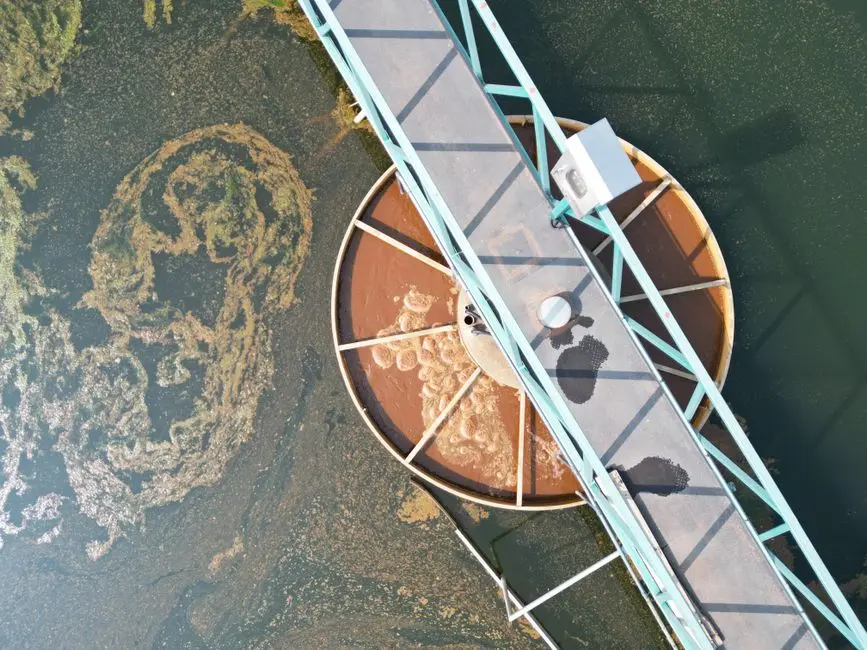
Equipment capacity must come from the plant’s hydraulic and contaminant envelope, not from a published removal percentage. The supplied research does not establish a universal flow-to-capacity rule for rubber wastewater.
- Establish flow. Obtain average and peak influent flows, including production, cleaning and batch-discharge periods. Define how the equalization system controls each batch and what flow the biological and oxidation stages must tolerate.
- Characterize COD by source and shift. The 43,919.89±0.34 mg/L result from the 2025 study and the 32,000 mg/L result from the 2026 study are examples of published high-strength feeds, not default design values for every plant.
- Validate biological loading. For SBR and IFAS, evaluate the actual feed against the tested HRT and loading conditions rather than transferring the 2022 IFAS results or the modified SBR loading range to an unverified wastewater.
- Test chemical pretreatment. Request jar or pilot testing that records COD, turbidity, sludge generation, pH and chemical consumption under the actual wastewater.
- Define oxidation performance. Specify the residual-COD target, reaction time, iron and peroxide demand, catalyst use, downstream solids handling and residual-metal control.
- Define membrane duty. Give the supplier feed turbidity, suspended solids, oil content, temperature, recovery target and cleaning-frequency requirements.
Where gross solids are present, a mechanical bar screen for upstream solids removal may form part of the train. Where dewatered pretreatment sludge is generated, evaluate filtration and disposal with a plate-and-frame filter press.
The procurement specification must separate guaranteed inlet and outlet limits from illustrative research performance. An outlet guarantee without a defined influent envelope, test method and operating condition is not a useful performance commitment.
Choose Suppliers Using Test-Based Acceptance Criteria
A credible offer assigns each proposed unit a specific treatment duty and demonstrates performance at the agreed influent envelope. The supplier should provide the design basis rather than substitute laboratory removal percentages for plant guarantees.
| Item to request | Acceptance requirement |
|---|---|
| Process narrative | Show how each unit removes COD or separates solids and identify the expected residual fraction after every stage. |
| Design basis | Define influent and effluent limits, sampling methods, hydraulic loading, chemical consumption, sludge yield, energy use, controls scope and reference conditions. |
| Scale-up evidence | Provide pilot or site data where the rubber wastewater matrix differs materially from the references used in industrial SBR, IFAS and oxidation studies. |
| Enforcement | State the remedy or operating response when COD, turbidity or batch flow exceeds the guaranteed envelope. |
| Residuals and compliance | Include sludge, iron sludge, spent media and catalyst handling, plus applicable permit obligations and test methods. |
The 2026 Springer study reported a total treatment cost of USD 11.7/kg for its specific coagulation-flocculation and ZnO-assisted UV-Fenton configuration. This is study-specific evidence, not a universal budget rate. A supplier should define whether the quotation includes chemicals, energy, catalyst replacement, sludge handling, labor and equipment depreciation.
For regulatory comparisons, the same study cited CPCB Schedule-VI limits of COD below 250 mg/L and BOD below 30 mg/L for inland waters. These values should be used only where Schedule-VI is the applicable local requirement; site jurisdiction and permit conditions must still govern the specification.
Clarifier proposals should also identify the solids separation mechanism, solids capture duty and downstream sludge route. The high-efficiency sedimentation tank for solids separation can be evaluated on those defined duties rather than presented as an equivalent substitute for every DAF, biological or membrane arrangement.
Frequently Asked Questions
What is the most effective COD removal method for rubber processing wastewater?
There is no single method that can be selected from COD concentration alone. For rubber glove wastewater, the 2022 Desalination and Water Treatment study reported 87% maximum COD removal by hybrid IFAS at 6-hour HRT. For rubber latex wastewater, the Vietnam Journal of Science and Technology/Science and Technology study reported average removal above 95% in modified SBR within its tested COD/TN and loading ranges. The 2026 Springer study reported 75% overall removal by coagulation-flocculation followed by ZnO-assisted UV-Fenton on wastewater at 32,000 mg/L COD. Selection must match the tested duty to the actual wastewater and effluent target.
Can DAF alone meet the COD requirement for a rubber wastewater plant?
DAF alone should not be assumed to meet the COD limit. In the 2026 Springer study, coagulation-flocculation removed 35% of COD and 91% of turbidity at 2 g/L alum and pH 5.5; it functioned as pretreatment for the subsequent oxidation stage. A DAF duty should therefore be defined from recoverable solids and oil characteristics, with biological or oxidation performance specified separately.
How much should a rubber wastewater COD treatment system cost?
The supplied research provides only one study-specific cost: USD 11.7/kg for the configuration evaluated in the 2026 Springer study. It is not a transferable plant price. Request a supplier quotation based on average and peak flow, source-separated feed analysis, required effluent quality, civil works, chemical and energy consumption, controls, sludge handling and residual disposal. The quotation should also state whether catalyst replacement and maintenance are included.
Should the plant choose SBR, IFAS or MBR?
Choose based on biological loading, available footprint, solids-separation requirements and the wastewater’s biodegradability. Modified SBR demonstrated average removal above 95% in the rubber latex study; hybrid IFAS reached 87% at 6-hour HRT in the rubber glove study. The integrated MBR system for industrial rubber wastewater treatment is specified at 10–2,000 m³/day with filtration below 1 μm, but its COD duty and fouling conditions still require site-specific engineering. These results are not directly equivalent performance guarantees.
What should a supplier guarantee before purchasing rubber wastewater treatment equipment?
Require a defined influent envelope and an outlet duty tied to named test methods. The offer should state hydraulic loading, HRT or loading basis where applicable, chemical and energy consumption, controls scope, sludge yield and handling, membrane recovery and cleaning, and the response to out-of-envelope operation. For oxidation, include reagent, catalyst and residual-metal control; for membranes, include feed-quality limits and fouling recovery provisions.