Which Treatment Fits Brierfield Mining and Metals Wastewater?
For mining and metals wastewater in Brierfield, choose dissolved air flotation when the plant must remove oil, grease, FOG, low-density solids or conditioned floc; choose a lamella clarifier when the objective is primarily to capture settleable solids in a sedimentation-based train. DAF uses 30-50 micron micro-bubbles to lift conditioned particles for surface skimming, while lamella clarification uses inclined plates and sludge recirculation. Neither device should be selected from flow rate alone: characterize buoyancy, pH, metals, COD, flow variation, reuse targets and sludge handling, then confirm the decision with jar testing and site-specific pilot work.
The defensible selection starts with the contaminant fraction that must leave the water. Mining and metals streams can contain suspended solids, oil and grease, colloids, dissolved metals and biological or organic loads. Flotation and sedimentation address different physical fractions, and neither automatically establishes compliance with a Brierfield permit or sewer-pretreatment limit.
Before requesting equipment, obtain average and peak flow, production and washdown schedules, contaminant concentrations, pH, temperature where relevant, the required effluent or reuse quality, the applicable permit route and the intended sludge-disposal method. Supplier catalog capacity is useful for preliminary screening; it is not a Brierfield performance guarantee. The final selection should therefore be confirmed through jar testing and pilot work. For related decisions, see the broader DAF versus clarifier selection guide and mining-plant sewer pretreatment compliance guidance.
| Decision condition | Equipment direction | Evidence required before award |
|---|---|---|
| Material that floats or must be floated after conditioning | Evaluate DAF | Floatable-fraction test, jar conditioning trial and pilot skimming results |
| Wastewater dominated by settleable solids | Evaluate lamella clarification | Settleability data, solids-loading profile, sludge-volume estimate and pilot effluent results |
| Meaningful floating and settleable fractions | Evaluate DAF followed by clarification | Mass balance across both separation stages and comparison with a single-stage train |
| Dissolved metals or other dissolved contaminants drive the limit | Add or evaluate a separate polishing process | Complete water analysis, applicable permit criteria and treatment-process review |
Map the Wastewater Before Choosing Equipment
A decision-ready influent profile separates the wastewater into floating, settleable and dissolved fractions. DAF primarily addresses floatable contaminants and particles that can be conditioned into buoyant floc. Lamella clarification primarily addresses settleable solids. Dissolved contaminants require separate evaluation; the supplied research does not establish that either clarification mechanism alone will remove dissolved metals.
Clearwater Industries describes three DAF configuration classes in its 2026 industrial-wastewater guidance. FPAC is intended for small-to-medium flow with very high contaminant loads; FPBC addresses low-to-medium contaminant loads and low-buoyancy particles; FPHF treats large flows with medium-to-large contaminant loads. These are supplier configuration descriptions, not a universal sizing table or a Brierfield performance guarantee.
| Wastewater fraction | What the buyer should measure | Relevant process response |
|---|---|---|
| Floating | Oil and grease, FOG, low-density solids and skimmability | DAF; possible DAF-then-clarifier train |
| Settleable | TSS, settleability, grit and particle-size distribution | Lamella clarification with flocculation and sludge withdrawal |
| Dissolved | Metals and other parameters identified by the permit or reuse objective | Additional treatment selected through water chemistry and compliance testing |
| Flow behavior | Production, shutdown, washdown, storm and upset flows | Hydraulic and operating-window design based on measured variability |
Collect flow data across operating states rather than relying on an average daily value. Sample pH, metals, COD, TSS, oil and grease and settleability at times that represent normal production, cleanup and upset conditions. Record the desired effluent or reuse result alongside the measurements. The supplied research does not establish universal thresholds for these parameters, so the plant’s permit and reuse specification must supply the decision limits.
Chemical selection should follow testing rather than operating habit. Clearwater reports that coagulants and flocculants are regularly used before DAF, while acids and bases adjust pH. Jar tests should compare candidate chemicals, doses and contact times against the actual stream. Additional site-specific context is available in the linked mining-plant sewer-limit guide.
How DAF Removes Mining and Metals Contaminants
D flotation is a clarification process in which air bubbles attach to particles, carry them to the surface and leave the clarified water below. Clearwater’s 2026 guidance identifies 30-50 micron micro-bubbles as the bubbles that attach to impurities and flocculated solids, after which a skimming system removes the floating sludge to a collection trough.
The operating sequence starts with clean water. A recirculation pump draws clarified water into a pressurization and saturation system where it mixes with pressurized air. When the saturated water enters the clarification tank, pressure release forms micro-bubbles. Incoming conditioned wastewater is flocculated; the bubbles attach to the floc and carry it to the surface, forming a floating blanket that is removed by a skimmer. Clarified water can be recovered, reused or discharged, with part returned for recirculation.
This process is most relevant where suspended solids, FOG, oil and grease, low-density contaminants or associated pollutants must be separated. Ecologix also identifies TSS removal and BOD reduction as application capabilities of its DAF system. Those manufacturer statements describe intended applications, not guaranteed performance for a Brierfield stream.
DAF does not eliminate sedimentation as an operating concern. Clearwater states that most DAF systems include some sedimentation and a collection zone or sludge-removal arrangement. Heavy material can therefore settle at the bottom and must be withdrawn rather than allowed to accumulate unchecked.
Startup quality is also a design issue, not an operating detail. Clearwater warns that filling a DAF unit with wastewater can discharge dirty, non-clarified water for an extended period and may damage the recirculation pump and air-saturation system. Clean-water startup capacity and a controlled transition to process feed should be included in the project scope. The HydropureWater DAF system and automatic chemical dosing system should therefore be evaluated as an integrated treatment train, not as isolated tanks.
When a Lamella Clarifier Is the Better Choice
A lamella clarifier is the stronger starting candidate when the required separation is mainly removal of settleable solids and flotation of substantial oil, FOG or low-density material is not necessary. Its inclined plates provide effective settling area within a compact structure, while sludge recirculation and withdrawal support solids handling.
HydropureWater’s published lamella-clarifier figures specify surface-loading rates of 20-40 m/h and chemical-consumption reduction of up to 30%. Those figures belong to the supplier’s equipment design information; they do not establish that a given Brierfield stream will meet its reuse target or permit limit.
| Application finding | Preferred evaluation | Main procurement question |
|---|---|---|
| Predominantly settleable solids | Lamella clarification | Can the plant withdraw and dispose of the predicted sludge volume? |
| Substantial floatable oil or FOG | DAF | What removal and skimming performance does pilot testing demonstrate? |
| Both fractions are material | DAF followed by clarification | Does the added equipment, chemical use and sludge handling produce a defensible benefit? |
| Dissolved metals control the requirement | Clarification plus separate polishing review | Which permitted process addresses the dissolved contaminant? |
A lamella unit still needs site-specific characterization and sludge planning. The supplied sources do not establish that it removes dissolved metals or satisfies a specific reuse objective by itself. If testing shows a meaningful floatable fraction, evaluate DAF or a sequential flotation-and-clarification train rather than assuming one tank can meet every treatment objective.
Request the lamella clarifier for settleable mining solids with performance calculations tied to measured hydraulic and solids loads, not only a catalog surface-loading rate. For the flotation alternative, use the DAF configuration as a comparative basis.
Compare DAF and Lamella Clarifiers for Factory Procurement
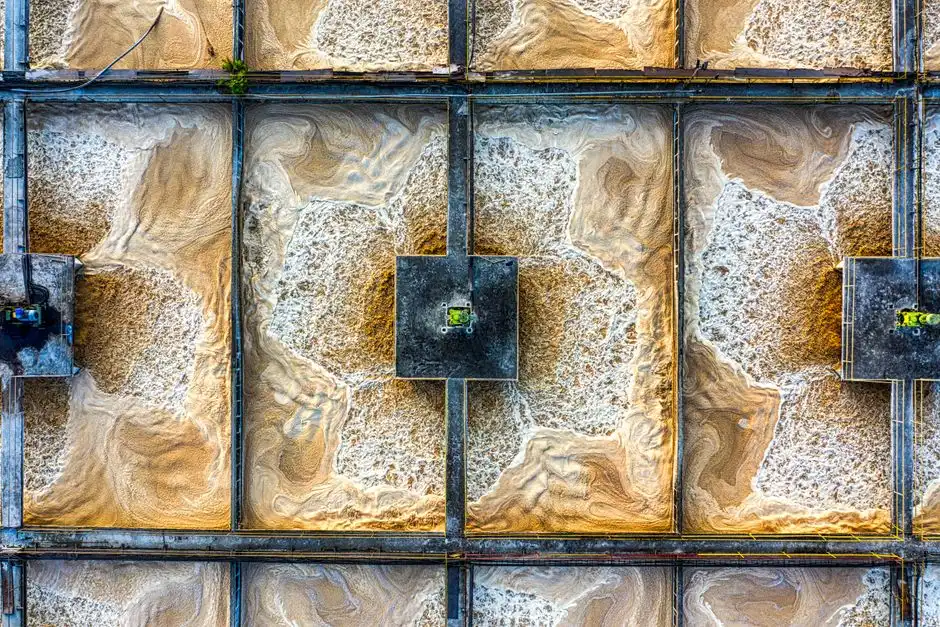
DAF and lamella clarification separate contaminants by different mechanisms and therefore carry different operating and procurement burdens. DAF attaches micro-bubbles to conditioned particles and removes the float; lamella clarification uses inclined plates to improve settling and separates sludge at the bottom.
| Procurement issue | DAF | Lamella clarifier |
|---|---|---|
| Strongest fit | Oils, FOG, low-density contaminants and flocculated solids | Settleable solids and solids-loading objectives |
| Primary separation | Micro-bubble flotation and surface skimming | Inclined-plate settling and bottom sludge withdrawal |
| Operating inputs | Air saturation, recycle, chemical conditioning, skimming and settled-solids removal | Flocculation, sludge recirculation and solids withdrawal |
| Main residuals | Floating sludge plus settled bottom solids | Concentrated settled sludge |
| Commonly required controls | Chemical dosing, pH monitoring, recycle and air system, skimmer and sludge handling | Flocculant dosing, sludge recycle, level and withdrawal controls |
| Supplier configuration evidence | Clearwater reports standard 304SS construction, with 316SS, polypropylene and other materials available | HydropureWater publishes surface-loading and chemical-consumption figures |
Material selection must be verified against the actual process water. Clearwater’s 2026 DAF guidance states that its standard systems use 304SS and that 316SS, polypropylene and other materials are available. That is supplier configuration information, not evidence that one alloy suits every mine or metals stream.
Capacity should be used only as an initial screen. HydropureWater’s DAF catalog covers 4-300 m³/h across 13 standard models. Clearwater reports that its COMPACT DAF uses one skid for flows of 66 GPM or less and a modular two-skid arrangement above that flow. Neither statement establishes the correct capacity for a Brierfield plant; measured peak flow, hydraulic response, contaminant loading, production variability and required redundancy determine the actual configuration.
The procurement comparison should therefore price and scope complete trains. Include chemical preparation and dosing, utilities, controls, access, sludge removal, local service support and any polishing required by the permit. A low equipment quotation that excludes those items is not comparable with a complete operating scope.
Control Chemical Demand and Sludge Handling
Chemical conditioning can determine whether flotation performs as intended. Coagulation and flocculation enlarge particles and improve their contact with micro-bubbles, which increases the likelihood that the intended solids fraction will be removed in the flotation stage. The chemical dose and mixing regime must therefore be treated as variables to test, not fixed operating assumptions.
Clearwater reports that its serpentine flash-mixing tubes provide 15-45 seconds of mixing and recommends jar testing because chemical contact time varies. That range belongs specifically to the described mixing arrangement. A pipe or flash-mixing arrangement should not automatically be substituted for a mechanically mixed tank: some chemicals require longer contact to adjust pH or achieve the intended coagulation and flocculation. The number of tanks depends on the chemicals introduced.
Sludge characteristics affect the next disposal step. Clearwater states that chemical conditioning can create thicker, more dewatered sludge that may need little or no further dewatering. That is a conditional manufacturer observation, not a site-specific dewatering guarantee. The pilot should measure residual sludge solids, settleability, filtration behavior, filtrate quality and handling requirements.
Include pH adjustment, coagulant, flocculant and specialty dosing controls in the equipment scope where required by the tested process. The automatic chemical dosing system should be reviewed together with chemical storage, metering, containment and operator access. If dewatering remains necessary, evaluate a plate-frame filter press against measured pilot residuals rather than assumed sludge characteristics.
Build a Brierfield-Specific Pilot and Supplier Test Plan
A defensible award requires site-specific performance evidence, not only a manufacturer configuration sheet. Clearwater explicitly recommends an application-engineering review because DAF designs vary with flow and contaminant loading and recommends that the application engineer understand actual flow rates, plant operations and production goals.
Require a mass balance across the complete pilot: raw feed, conditioned feed, float, settled solids, clarified water and final sludge or filtrate. Agree sampling points before testing and report flow and solids loading across each stream. The outcome should show where each contaminant went, not merely provide one attractive final sample.
| Pilot stage | Required action | Procurement output |
|---|---|---|
| Wastewater characterization | Sample production, shutdown, washdown and upset conditions | Peak hydraulic and contaminant loads |
| Jar testing | Compare pH adjustment, coagulants, flocculants, doses and contact times | Selected conditioning recipe and measured chemical demand |
| Equipment comparison | Evaluate DAF, lamella clarification and a sequential train where justified | Documented performance, footprint and operating comparison |
| Operating-window test | Vary recycle, air saturation, chemical dose, pH, contact time, skimming and sludge withdrawal | Robust operating range and control requirements |
| Bid evaluation | Require materials, instrumentation, access, utilities, controls, sludge scope and service support | Comparable commercial and technical scope |
| Compliance closeout | Provide applicable permit or sewer-pretreatment criteria to the supplier | Documented treatment train against site-specific limits |
The operating-window test matters. Comparing only each system’s best effluent conceals sensitivity to chemical dose, recycle, air saturation, skimming and solids withdrawal. Require suppliers to identify the conditions that produced each result and the controls needed to hold those conditions.
Materials, instrumentation, access, utilities, controls and local service support belong in the bid. Clearwater states that its DAF systems are automated and available in standard or custom configurations; that statement does not replace site-specific functional and support requirements.
Make compliance and sludge disposition mandatory bid items. Give each supplier the applicable permit, sewer-pretreatment or discharge criteria and the expected sludge route. Use the pilot to finalize whether the train should be DAF only, lamella clarification only, sequential flotation and clarification, or clarification followed by additional polishing. The linked Bates City sewer-pretreatment guidance and Batesville sewer-limit guide provide supporting compliance context.
Frequently Asked Questions
What is the best DAF or clarifier choice for mining and metals wastewater in Brierfield in 2026?
The best choice depends on the contaminant fraction and treatment objective: use DAF for floatable oil, FOG, low-density material or conditioned floc, and use lamella clarification for predominantly settleable solids. Characterize the stream through production, washdown and upset conditions, then confirm the selection with jar testing and site-specific pilot work. Neither catalog capacity nor a manufacturer application statement is a Brierfield performance guarantee.
How should the equipment be sized?
Sizing begins with measured peak flow and contaminant loading, not average daily flow or a supplier model count. Jar testing establishes chemical demand and achievable separation; pilot work then checks hydraulic response, float or sludge production, controls and operating stability across representative conditions. The broader selection guide explains why the train must be sized around the actual application.
How should a treatment-equipment supplier be selected?
Require an application review of actual flows, operations and production goals. Ask for materials compatibility, controls, sludge handling, utility demand, service support, pilot data and a documented mass balance. Also require the supplier to define the operating window rather than submit only a best-case final sample. A catalog capacity does not establish that the proposed train can meet the site’s permit or reuse requirements.
What drives the cost of DAF versus lamella clarification?
Request a quotation that separates equipment, footprint, material grade, chemical consumption, air and recycle utilities, sludge dewatering, controls, installation, pilot work and service support. No supported project quotation was provided, so a defensible price cannot be stated. Compare complete operating scopes; an equipment-only comparison can favor the option with the larger downstream chemical or sludge burden.
Can either system meet the plant’s compliance requirements?
Physical clarification does not by itself demonstrate removal of dissolved metals or every discharge-specific contaminant. Give the supplier the applicable local permit or sewer-pretreatment criteria and require pilot results against those limits. If dissolved contaminants determine compliance, evaluate additional treatment. For metals fabrication applications, compare the DAF versus clarifier guide for fabricated metals wastewater.