Why Refinery Wastewater COD Removal Requires a Treatment Train
Oil refinery wastewater COD removal normally requires an integrated treatment train rather than one universal process. Dissolved air flotation removes free oil, emulsified oil, FOG and suspended solids; biological treatment reduces biodegradable organics; and MBR, adsorption or electrochemical systems provide additional separation or oxidation where required. The right design depends on stream composition, flow variability, oil concentration, phenols and permit limits. Published results range from 72% COD reduction in a 2026 algal-bacterial study to 99.5% in a Wasit University electrochemical study under different tested conditions.
Chemical oxygen demand is an aggregate measure of oxidizable material, not a compound-specific analysis. Dissolved hydrocarbons, emulsified oil, phenols and suspended solids contribute to COD, but they respond differently to physical separation, biodegradation and oxidation. A DAF unit can remove particulate and oil-associated carbon without treating every dissolved biodegradable molecule, while a biological reactor can reduce soluble organics but may be inhibited by excessive oil, phenols or shock loading.
Petroleum refinery wastewater is not a standardized feed. MDPI’s Recent Advancements in the Treatment of Petroleum Refinery Wastewater review reported COD values from 112 mg/L in Brazil to 74,800 mg/L in Doha, Qatar. That range establishes why stream segregation and source-specific characterization precede equipment sizing. Desalted refinery wastewater, stripped refinery wastewater and segregated oily streams have different compositions and should not be represented by one refinery-wide average.
Published removal percentages therefore serve technology screening, not guarantees. They come from different feeds, reactor configurations, operating conditions and scales. A more defensible approach is to map each treatment duty to a defined stream, then compare DAF, biological and MBR COD treatment trains rather than select the highest headline removal percentage.
Characterize the Wastewater Before Selecting Equipment
A composite refinery average cannot establish the feed to a biological or membrane system. Characterization must be stream-specific and time-weighted because batch discharges, oil-layer accumulation and flow variability can change treatment demand faster than a daily average describes.
Request COD, BOD, oil and grease, total hydrocarbons, phenols, TSS, pH, conductivity, temperature and flow for each stream. MDPI’s review summarized average reported effluent qualities as COD below 200 mg/L, oil and grease below 10 mg/L, phenols below 0.25 mg/L and TOC below 75 mg/L. These values provide context for treatment objectives; they are not universal refinery discharge limits and must not be substituted for the applicable permit.
Sample segregated oily drains, tank-bottom effluent and stripped wastewater separately. The same MDPI review reported that oil concentration can reach 5,000 mg/L in tank-bottom effluent. A refinery-wide composite could dilute that condition and understate DAF duty, oil recovery requirements or biological shock risk.
| Design input | Why the engineer needs it | Decision affected |
|---|---|---|
| COD, BOD and TOC | Defines organic load and biodegradability | Equalization, biological loading and polishing |
| Oil and grease, total hydrocarbons | Identifies recoverable oil and membrane-fouling risk | Source separation, DAF and sludge handling |
| Phenols and hydrocarbon composition | Indicates toxicity and refractory organic fractions | Biological acclimation and specialist treatment |
| TSS, pH, conductivity and temperature | Shows solids, reaction and biological constraints | Conditioning, reactor selection and materials |
| Flow, duration and batch profile | Reveals hydraulic and organic shock loading | Equalization and equipment turndown |
Where treated water may be reused, request detailed chemical and hydrocarbon composition rather than relying only on COD and oil and grease measurements. Membrane compatibility, biological inhibition and residual contaminant identity cannot be inferred reliably from bulk COD alone. The same data request should define dosing and conditioning needs for a chemical dosing system, while protected flow paths may require upstream solids screening such as a mechanical bar screen.
Build the COD Removal Process from Front to Back
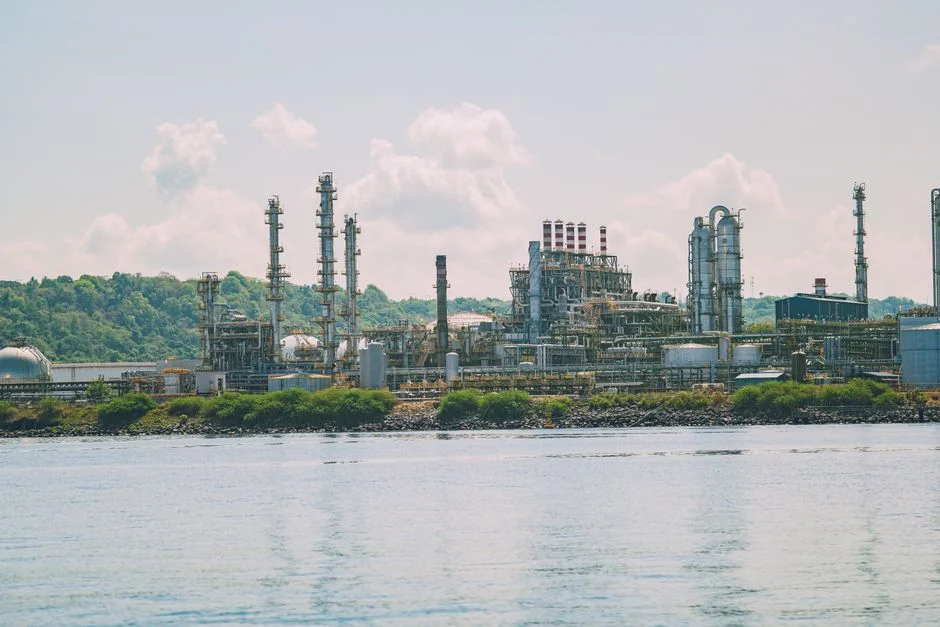
A defensible refinery COD treatment train starts by controlling the source and ends by verifying the residual load, sludge route and reuse or discharge objective. Each stage removes a different fraction of the organic load.
- Segregate and equalize. Keep high-oil drains, desalted wastewater, stripped wastewater and other sources under separate control. Equalization then reduces batch peaks and prevents a concentrated oil release from overwhelming biological or membrane equipment.
- Recover oil and remove floatable material. DAF is the principal pretreatment step for free oil, emulsified oil, FOG, suspended solids and colloidal material. Removing these fractions protects downstream biology and membranes. MDPI’s review cited a DAF study using alum at pH 9.43 that reported 78.75% COD and 98.10% turbidity removal. Those are study conditions, not standard DAF guarantees. A DAF system for refinery oil and COD pretreatment must therefore be specified around site feed, skimming, conditioning and sludge removal.
- Biologically reduce biodegradable organics. The MDPI review reported 96% COD removal and nearly complete phenol degradation in a three-step pilot process using a spouted-bed bioreactor, and 91% COD removal in an aerobic submerged fixed-bed reactor. Biological performance still depends on feed conditioning, temperature, nutrients, toxicity and shock control.
- Separate solids where reuse quality justifies MBR. An MBR membrane bioreactor for refinery wastewater combines biological retention with membrane separation, but it does not replace adequate upstream oil removal. Membrane cleaning, recovered solids and oil fouling remain procurement and operating issues.
- Apply polishing only where its duty is clear. The 2026 Applied Biochemistry and Biotechnology Picocystis study found that an algal-bacterial consortium reduced COD by 72% and polyphenols by 96.4% at 10% stripped refinery wastewater. Hydrocarbon removal reached 80.4% at 25% SWW, while the monoculture removed 62.2% oil and grease at 25% SWW. These were 2-L photobioreactor results, not full-strength untreated-feed proof.
Electrochemical oxidation and advanced oxidation are application-specific alternatives or polishing routes. Wasit University reported 99.5% COD and 94.2% oil removal in a 2-L electrochemical cell at 10.5 V for 50 minutes, with estimated energy consumption of 12 kWh/m³. MDPI’s review also summarized 85% COD removal after 11 hours at 30 mA/cm² and 96% after 7 hours at 100 mA/cm². Power demand, electrode consumption, pH control and scale-up must be evaluated.
Adsorption can also polish residual COD. The MDPI review cited an activated-carbon fixed-bed study that reported 96.70% COD removal after 76 minutes at pH 5.7 with approximately 80% column packing. The missing procurement questions are media life, media replacement, residual waste and performance under variable refinery water.
| Stage | Primary duty | Reported evidence and boundary |
|---|---|---|
| DAF with conditioning | Oil, FOG and solids pretreatment | 78.75% COD and 98.10% turbidity removal at pH 9.43 with alum, as summarized by MDPI |
| Biological treatment | Biodegradable COD reduction | 96% COD in a three-step pilot process and 91% in an aerobic submerged fixed-bed reactor, as summarized by MDPI |
| MBR | Biological treatment plus solids separation | Selection depends on upstream oil control and verified membrane fouling |
| Electrochemical treatment | Oxidation or coagulation of residual contaminants | Wasit University: 99.5% COD and 94.2% oil removal in a 2-L cell at specified conditions |
| Adsorption | Residual-COD polishing | MDPI review: 96.70% COD removal under the cited column conditions |
Compare Treatment Options by Project Objective
DAF is primarily an oil-and-solids separator, not a substitute for biological degradation. Biological treatment is the principal route for biodegradable organics, while MBR adds membrane solids separation. Adsorption, electrochemical treatment and advanced oxidation should be selected for a defined residual or recalcitrant contaminant duty.
| Option | Best-matched objective | Main limitations to verify |
|---|---|---|
| DAF | Recover floating oil and remove suspended or oil-bearing solids before biological or membrane treatment | Chemical conditioning, recycle saturation, skimming, emulsions and sludge handling |
| Conventional biological treatment | Reduce biodegradable COD at scale | Temperature, nutrients, toxicity, shock loading and excess sludge |
| MBR | Combine biological treatment with fine solids separation for a defined water-quality objective | Oil pretreatment, membrane cleaning, energy use and solids handling |
| Activated-carbon adsorption | Polish residual COD or target selected dissolved contaminants | Media replacement, spent-media disposal and variable breakthrough |
| Electrochemical treatment | Specialist treatment of oily or recalcitrant wastewater where power and electrode control are acceptable | Power demand, electrode consumption, corrosion, reaction control and scale validation |
| Photocatalytic and advanced oxidation | Application-specific oxidation where feed chemistry and reactor conditions support it | Catalyst recovery, energy use, residence time and full-scale validation |
Reported removal efficiency alone cannot rank these options. A 96.70% activated-carbon COD result does not disclose media life, capital cost or disposal burden; the value is therefore useful for screening, not for a lifecycle comparison. Likewise, the Picocystis consortium is promising as an emerging biological route, but its 2-L reactor and 10–25% SWW test matrix do not establish full-scale performance.
For most variable refinery streams, DAF followed by biological treatment and optional polishing is the more defensible architecture because it assigns oil removal, biodegradation and final polishing to suitable stages. High-intensity oxidation applied to the entire refinery flow can become unnecessarily costly and complex, while biological treatment without oil pretreatment carries a greater fouling and toxicity risk.
Where polishing and solids separation are required, equipment selection should preserve that sequence. A multi-media filtration system may serve as a downstream polishing or solids-retention step, while a plate-and-frame filter press addresses the separate duty of dewatering treatment sludge. Neither substitutes for DAF, biological treatment or validated polishing.
Turn Lab Performance into a Reliable Equipment Specification
A site-specific wastewater characterization is the minimum basis for converting published efficiency into a full-scale guarantee. Feed variability changes the quantity of COD and oil reaching each unit, while hydraulic shock changes residence time and treatment stability.
Define acceptance parameters around the contract flow and expected influent ranges, COD and oil removal, treated-water quality, throughput, operating availability and sludge handling. Do not convert a single laboratory percentage into a universal guarantee without identifying the test feed, sampling method, operating conditions and correction factors.
For an electrochemical trial, the Wasit University study provides a useful benchmark rather than a plant guarantee: a 2-L cell, pH 7, 10.5 V, 50 minutes, initial COD of 710 mg/L, initial oil of 95 mg/L, TSS of 73 mg/L and estimated energy consumption of 12 kWh/m³. A full-scale trial must test the refinery’s actual stream, including batch discharges, temperature, pH and toxicity limits.
Ask each supplier to define the scale-up basis for mixing, electrode or media contact, residence time, sludge production, chemical consumption and maintenance. Require a mass balance across liquid and sludge streams so COD removal is not confused with transfer into an uncharacterized residue. For biological or membrane equipment, include cleaning strategy and membrane-fouling controls; for DAF, include conditioning, saturation, skimming and waste-removal duties.
| Specification element | Information required from the buyer | Evidence requested from the supplier |
|---|---|---|
| Design feed | Average and peak flow, batch profile, COD, oil, phenols, TSS, pH and temperature | Envelopes of tested performance and operating limits |
| Acceptance basis | Permit, reuse objective and agreed sampling protocol | Guaranteed duty points and deviation treatment |
| Scale-up | Selected reactor configuration | Mixing, contact, residence-time and mass-transfer calculations |
| Residuals | Sludge destination and disposal constraints | Expected sludge quantity, characteristics and handling demand |
| Operating resources | Power, chemicals, operator availability and maintenance access | Consumption, cleaning, maintenance and start-up requirements |
Use the 2026 Picocystis study carefully: its 2-L photobioreactors operated at 10% and 25% SWW, so it does not prove treatment of full-strength untreated refinery wastewater. Pilot verification should include untreated or representative feed, peak-condition challenges and continuous operation sufficient to observe biomass behavior, fouling and residual stability.
Choose and Size the Treatment Train
Size the train by sequence and duty: segregate streams, characterize them, recover oil, reduce biodegradable organics, polish to the required objective and confirm residual and sludge handling. Generic removal percentages do not establish hydraulic capacity.
| If the design condition is | Then evaluate | Required sizing inputs |
|---|---|---|
| Floating oil, FOG, emulsions and suspended solids are prominent | DAF with chemical conditioning, recycle saturation, skimming and sludge removal | Peak oily flow, separated-stream composition, batch discharges and required recovery |
| Biodegradable COD is the dominant residual load | Biological treatment with equalization and appropriate solids handling | COD and BOD loading, temperature, nutrients, toxicity and operating profile |
| Biodegradation plus fine solids separation is required | MBR after confirmed oil pretreatment | Organic loading, membrane flux basis, fouling controls, cleaning and solids route |
| Residual COD or a specific contaminant remains | Adsorption, electrochemical treatment or advanced oxidation | Residual concentration, target compound, utility availability, media or electrode life and residual waste |
Request average and peak flow, duty cycle, operating hours, feed ranges, future expansion and recovery targets before comparing equipment. A DAF should be evaluated against oily peak and batch flows, while a biological system should be checked against organic and hydraulic loading. MBR evaluation must add membrane configuration, cleaning assumptions and solids handling.
The available product catalogue supports pretreatment and downstream separation: the DAF range covers 4–300 m³/h across 13 models, while the MBR catalogue spans 10–2,000 m³/day. These are catalogue limits, not universal design capacities. Confirm actual feed and duty before selecting either a DAF pretreatment unit or an MBR system for refinery wastewater.
Residual solids should be included in the equipment scope rather than left as an undefined downstream issue. A plate-and-frame filter press can be evaluated for sludge dewatering after the main process has established the required solids capture and cake-handling duty.
Frequently Asked Questions
What treatment train is best for refinery wastewater COD removal?
Use DAF for upstream oil and solids control, biological treatment for biodegradable organics, and MBR or another polishing process only where the required separation or reuse objective justifies it. Segregate streams first because MDPI’s review documented refinery COD ranging from 112 to 74,800 mg/L.
How much should the equipment cost?
No responsible price can be assigned from published removal percentages alone. Request quotations using segregated flow and COD data, peak oily loading, operating hours, recovered-oil and sludge destinations, utilities, and the required treated-water quality. Then compare media or electrode life, chemical consumption, power, maintenance and residual-disposal costs—not headline COD removal alone.
Can one pilot removal percentage become a full-scale guarantee?
No. Require the supplier to state the feed, reactor, scale, residence time and operating conditions behind the result, then verify those conditions against the refinery’s complete flow range. Wasit University’s 99.5% COD result came from a 2-L electrochemical cell under specified conditions; it is not evidence of automatic full-scale performance.
Which risks should be checked before selecting a DAF or MBR supplier?
For DAF, verify oily peak-flow coverage, emulsion performance, chemical conditioning, recycle saturation, skimming and sludge removal. For MBR, verify upstream oil control, fouling and cleaning strategy, biological loading, solids handling and treatment under batch discharges. These checks address both equipment suitability and compliance risk.
Related Equipment
- DAF system for refinery oil and COD pretreatment — specifications, capacity range, and technical data