Build the Jaboatao Water Balance Before Choosing Equipment
A data center in Jaboatao dos Guararapes needs a measured, stream-by-stream water balance before treatment capacity is specified. Cooling-tower blowdown and sanitary wastewater generally require separate treatment decisions because their contaminants, reuse options and biological treatment needs differ. The equipment train should reflect measured flows, water chemistry, seasonal cooling demand, the intended discharge route and local utility requirements—not a generic data-center estimate. UF, DAF, chemical dosing and RO may each have a role, but each must be justified by the design basis. This approach follows the data-center blowdown treatment methodology while avoiding unverified Brazilian discharge limits.
Start by separating potable or utility intake, cooling-tower makeup, blowdown, humidification demand, sanitary wastewater, process wastewater and water returned to the municipal supply. Consumption means water permanently removed through evaporation or incorporation; usage also includes water withdrawn, used and returned after treatment. Genesis Water Technologies states that WUE is annual site water usage divided by IT equipment energy, so it does not describe discharge quality or reuse potential.
Measure makeup flow, blowdown volume, evaporation, emergency dumps, conductivity, pH and suspended solids. Use dry-weather and hot-weather datasets where available. Genesis Water Technologies reports that measured blowdown can exceed theoretical calculations by 15–30% because of unmeasured losses and emergency dumps.
| Balance input | Engineering use | Evidence needed |
|---|---|---|
| Makeup and blowdown flow | Sets hydraulic capacity | Logged flow by operating condition |
| Evaporation and consumption | Distinguishes permanent loss from returned water | Measured and reconciled water balance |
| Emergency dumps | Tests peak and worst-case sizing | Event log and volume records |
| Conductivity, pH and suspended solids | Identifies chemistry and pretreatment needs | Dry- and hot-weather analyses |
| Return-to-source flows | Prevents double counting of reuse | Destination, volume and quality |
The regional data-center wastewater treatment approach reinforces the need to establish actual flows and destination constraints before making a train-selection decision.
Characterize Cooling Blowdown and Sanitary Wastewater Separately
Cooling blowdown and sanitary wastewater should remain separate design packages until sampling shows that a combined train can meet both hydraulic and water-quality requirements. Blowdown is concentrated by evaporation and carries cooling-system chemicals; sanitary wastewater requires biological characterization and has different reuse controls. Mixing them can increase biological load on membranes or concentrate sanitary contaminants before downstream treatment.
Commercial Water Lab identifies possible blowdown constituents including salts, minerals, biocides, corrosion inhibitors and heavy metals. North Carolina State University also identifies salinity and chemical additives as discharge concerns. These are screening constituents, not proof that every constituent will be present at the Jaboatao facility.
Test conductivity and the ions associated with local scaling risk, including calcium, silica and sulfate species selected from the actual makeup-water chemistry. IDE Technical identifies silica, calcium carbonate and calcium sulfate as problematic sparingly soluble salts. Also measure suspended solids, pH, temperature, residual biocides, corrosion-inhibitor residuals and organic content before selecting clarification, filtration or membranes.
| Stream | Characterization focus | Design consequence |
|---|---|---|
| Cooling-tower blowdown | Conductivity, scaling ions, suspended solids, temperature, treatment-chemical residuals and organic content | Determines clarification, filtration, scaling control, discharge route and reuse suitability |
| Sanitary wastewater | Flow pattern, organic load, nutrients, solids and pathogen requirements | Determines biological treatment, disinfection and non-potable reuse controls |
| Combined stream | Compatibility, peak loading and final-use quality | Requires a documented combined-train trial; separate packages remain the default |
Warm-water effects must be included in the discharge assessment. North Carolina State University warns that direct warm discharge can create thermal pollution and affect aquatic organisms. The equipment-selection guide for data-center wastewater provides a useful framework for separating technical treatment functions.
Match the Treatment Train to the Required Water Quality
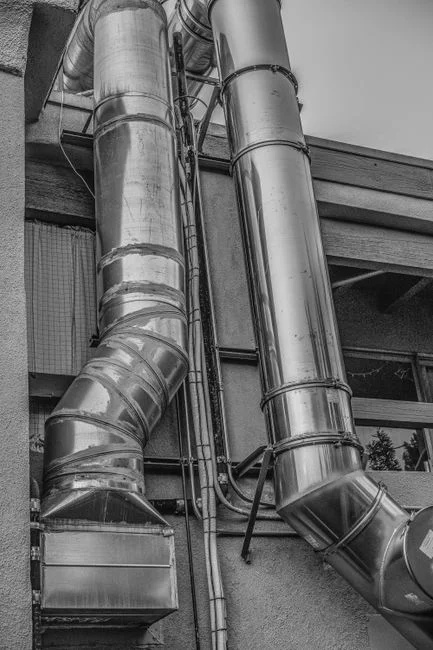
The treatment train should be selected by contaminant-removal function, with every stage protecting the next stage from fouling, scaling or biological overload. A defensible sequence begins with characterization, then removes solids where necessary, applies only the required chemical treatment, and finishes with polishing or disinfection for the specified end use.
- Use clarification where suspended solids, colloidal material, oil and grease or FOG require physical separation.
- Use ultrafiltration before RO or reuse where the design requires removal of bacteria, colloids and suspended solids.
- Add controlled chemical dosing only where the target quality requires pH adjustment, coagulation, flocculation or scale control.
- Use RO for demanding polishing or blowdown-to-makeup reuse only after pretreatment and scaling control.
- Use biological treatment and disinfection for sanitary wastewater, not cooling chemistry alone.
The ultrafiltration pretreatment for data-center blowdown is specified with a 2,000–40,000 L/h catalog range, 0.03-micron membrane pore size, accepted turbidity up to 300 ppm, automatic backwash and air scour. The DAF system for cooling-blowdown solids removal is listed across 13 models with a 4–300 m³/h capacity range.
Chemical dosing should be a controlled process step rather than a substitute for adequate pretreatment. PLC-controlled, skid-mounted dosing can apply coagulants, flocculants, pH adjusters and specialty chemicals where the water-quality target requires them. RO should follow verified filtration, scaling-risk assessment and compatible materials. HydropureWater specifies industrial RO recovery rates up to 95% with automated PLC control; these are equipment specifications, not a Jaboatao design guarantee.
IDE Technical states that conventional brackish-water RO commonly plateaus at 75–80% recovery before scaling becomes unmanageable. Where the design depends on higher recovery, use a side-stream pilot to establish cleaning frequency, energy demand and concentrate management. Open Engineering’s 2026 study found that wastewater reuse using depth filtration, granular activated carbon and chlorination had roughly twice the freshwater scenario’s global warming potential, with treatment energy accounting for about 80% of the difference.
| Technology | Primary function | Use only when |
|---|---|---|
| DAF | Physical separation of solids, colloids, oil and grease or FOG | Characterization confirms the relevant load and downstream solids sensitivity |
| UF | Removal of bacteria, colloids and suspended solids | RO or reuse quality requires a reliable solids barrier |
| Chemical dosing | pH control, coagulation, flocculation or scale control | A defined water-quality target cannot be met through physical treatment alone |
| RO | Dissolved-solids removal and polishing | Upstream pretreatment, scaling control and concentrate disposal are defined |
| MBR | Biological treatment with membrane solids separation | Sanitary wastewater requires biological processing and fit-for-purpose effluent |
For sanitary treatment requiring biological processing, the MBR Membrane Bioreactor is described by the manufacturer as producing near-reuse-quality effluent, with filtration below 1 μm and a 60% smaller footprint than conventional systems. Those claims require project-specific acceptance criteria. Membrane selection can be reviewed alongside the supplied RO and UF membrane elements and multi-media filtration options.
Decide Whether Blowdown Is Discharged or Reused
The preferred reuse route is the one that delivers the required water quality at the lowest justified treatment, energy and compliance burden. For a Jaboatao data center, begin with lower-risk internal uses identified by Genesis Water Technologies—such as toilet flushing, irrigation and outdoor equipment washing—but only after local approval and fit-for-purpose checks. Advanced blowdown-to-makeup reuse should follow, not precede, reliable characterization and cooling-system optimization.
Genesis Water Technologies reports that modular treatment can reduce makeup-water demand by 15–25% when treated blowdown is reused for non-critical applications. It also describes a modular 100–300 GPM configuration as an immediate-impact example for advanced reuse; that is an illustrative configuration, not a recommended capacity for this facility.
| Pathway | Benefits | Principal checks |
|---|---|---|
| Direct municipal sewer discharge | Potentially simpler treatment train | Local sewer acceptance, temperature, pH, solids, conductivity or TDS, chemicals and metals |
| Non-critical internal reuse | Reduces potable demand and blowdown volume | End-use quality, distribution controls, local approval and contamination risks |
| Cooling-tower makeup reuse | Highest direct reduction in external makeup demand | Scaling, biological control, pretreatment, operator competence, energy and concentrate disposal |
| Sanitary wastewater reuse | Separate opportunity for sanitary flows | Biological treatment, disinfection, public-health requirements and approved end uses |
Do not describe reuse as automatically lower-impact. Open Engineering reports that UF+RO treatment used more than five times the energy of the freshwater scenario, although higher cycles of concentration reduced blowdown and chemical consumption. The business case must therefore price water supply, discharge charges, electricity, chemicals, membrane replacement, sludge or concentrate disposal, labor and downtime.
Keep the sanitary and cooling cases separate in both procurement and permitting. A unit suitable for non-critical cooling reuse may not protect public health or meet sanitary reuse requirements. The Tbilisi data-center blowdown treatment project provides a further site-specific reference for comparing reuse routes against local discharge constraints.
Optimize Cooling Chemistry Without Creating a Discharge Problem
Cooling-system optimization should precede capacity purchases because leaks, premature controls and emergency dumping can create blowdown that treatment equipment was never sized to handle. Genesis Water Technologies reports that actual blowdown can exceed theoretical calculations by 15–30% because of unmeasured losses and emergency dumps.
Calculate blowdown from measured dissolved-solids concentrations in circulating water and makeup water. The relationship is:
Blowdown ratio = 1 ÷ (cycles of concentration − 1)
Genesis Water Technologies gives two concrete examples: at 4 cycles, blowdown is 25% of makeup volume; at 6 cycles, it is 20%. Moving from 4 to 6 cycles therefore reduces blowdown by 5 percentage points, or 20%, not 50%.
Do not impose a nominal concentration target without addressing scale, fouling and microbiological risk. Genesis Water Technologies states that biological and scaling risks increase materially above 5–6 cycles without advanced treatment. Inspect leaks, premature blowdown triggers, suspended-solids control and emergency-dump practices first. The Nizhniy Novgorod cooling-blowdown treatment methodology offers a useful operational sequence for separating efficiency work from capital treatment.
Confirm Local Compliance, Climate Risk and Project Economics
The discharge route must be confirmed with the relevant Jaboatao authority and sewer utility before final equipment selection. The supplied research describes U.S. NPDES and municipal pretreatment frameworks, not Brazilian Jaboatao dos Guararapes limits, so no numeric local discharge limit should be assumed. The sewer-pretreatment compliance guide illustrates the type of acceptance interface that must be established, but its jurisdictional requirements must not be transferred directly to Brazil.
Document discharge temperature, pH, conductivity or TDS, suspended solids, residual treatment chemicals and applicable metals against confirmed local and sewer-acceptance requirements. Assess freshwater availability, drought exposure, tariffs, discharge charges and any available non-potable or reclaimed-water supply.
Use a staged business case. Genesis Water Technologies presents a 15 MW water-stressed-region example with a $200,000 capital cost and 60% recovery, yielding an illustrative 6.7-year simple payback before omitted cost savings. This is not a Jaboatao cost estimate; the local model must replace its assumptions with utility tariffs, actual flow, recovery, operating costs and project schedule.
| Decision area | Required local or project input |
|---|---|
| Compliance | Authority, sewer utility, approved destination, applicable parameters and connection conditions |
| Climate and resources | Freshwater reliability, drought exposure, discharge route and alternative water availability |
| Project economics | Water and discharge tariffs, power price, chemicals, media or membrane life, residuals, labor and downtime |
| Delivery | Utility interfaces, installation outage, commissioning access, operator training, chemical supply and redundancy |
| High-recovery design | Side-stream pilot covering permeate quality, scaling, energy consumption and cleaning frequency |
Require a pilot before committing to a chemistry-sensitive, high-recovery reuse design. The pilot should provide local evidence for membrane condition, concentrate generation, chemical consumption, operator workload and availability—not only permeate quality.
Use a Buyer and Commissioning Checklist
A complete bid package should define the duty, performance criteria, interfaces and acceptance tests before suppliers select equipment. Comparing a treatment-system catalogue range with an unmeasured facility flow is not a valid technical comparison. The DAF and clarifier selection guide illustrates how function-based criteria expose differences between equipment options, while the Frankfurt methodology reinforces the need for a complete design basis.
- Issue measured peak and average flows, operating hours, redundancy expectations, source analyses, target water quality and the intended reuse or discharge route.
- Require each bidder to state guaranteed flow, recovery, hydraulic footprint, utility demand, controls, materials, membrane or media life, cleaning method and expected residuals.
- Compare pretreatment compatibility, chemical use, automation, operator access, local service capability and scale controls—not headline recovery alone.
- Define commissioning tests for flow, treated-water quality, differential pressure, controls, alarms, backwash or flushing and fail-safe operation.
- Keep hydraulic and biological treatment as separate packages unless a documented combined train demonstrates acceptable performance for both streams.
| Bid package | Minimum supplier response | Acceptance check |
|---|---|---|
| Design basis | Flow, analysis, target quality, route and operating envelope | Supplier confirms compliance or identifies exclusions |
| Process guarantees | Treated-water quality, flow, recovery and operating availability | Define test method, sampling point and correction remedy |
| Operations | Controls, alarms, cleaning, chemicals and maintenance access | Witness functional tests with site personnel |
| Residuals and shutdown | Waste streams, handling and fail-safe response | Confirm safe isolation, drainage and disposal interfaces |
| Commercial scope | Equipment, installation, training, commissioning and warranty exclusions | Reconcile exclusions before award |
Commissioning should also verify operator competency, chemical delivery, membrane or media condition, redundant equipment operation and disposal arrangements for sludge or concentrate. A supplier that cannot identify these interfaces has not priced the complete operating risk.
Frequently Asked Questions
What treatment capacity should a Jaboatao dos Guararapes data center size?
Size from measured peak and average flows for cooling-tower blowdown, sanitary wastewater and any combined stream, including evaporation and emergency-dump conditions. The design also needs dry- and hot-weather water analyses, operating hours, redundancy, target water quality and the confirmed discharge or reuse route. A catalogue capacity cannot substitute for this design basis.
Is RO necessary for cooling-tower blowdown reuse, or can UF and DAF be sufficient?
UF and DAF may be sufficient for specified non-critical reuse if characterization confirms that their treated water meets the intended use and local approval conditions. RO is needed when dissolved-solids removal is required, including demanding polishing or blowdown-to-makeup reuse. IDE Technical states that conventional brackish-water RO commonly reaches 75–80% recovery before scaling becomes unmanageable, so a pilot should verify chemistry-sensitive recovery.
How much does a data-center blowdown treatment system cost in Brazil?
The supplied research provides no Brazilian equipment quotation, so a responsible budget cannot be assigned without local inputs. Request a vendor quotation based on measured flow, analyses, target quality, recovery, reuse or discharge route, utilities, residuals, installation, commissioning and warranty. The $200,000 capital cost and 6.7-year simple payback in Genesis Water Technologies’ 15 MW example are scenario values, not Brazilian or Jaboatao price evidence.
Which measurements should be included in an equipment supplier request for quotation?
Request dry- and hot-weather makeup and blowdown flows, evaporation, emergency-dump records, conductivity, pH, suspended solids, scaling ions, temperature, treatment-chemical residuals and sanitary-wastewater data. Also state peak and average load, operating hours, required recovery, target quality, discharge route, utility costs, available footprint and redundancy expectations. This lets bidders size and price the same duty.
How can the facility reduce blowdown without increasing scaling and biological risk?
First repair leaks, remove once-through cooling where feasible, correct premature blowdown controls and inspect suspended-solids control and emergency dumping. Then calculate cycles of concentration from measured circulating-water and makeup-water concentrations. Do not increase the target without demonstrating control of scale, fouling and microbiological risk; Genesis Water Technologies states that these risks rise materially above 5–6 cycles without advanced treatment.