Turn the Acquisition Into a Water-Management Design Basis
Wastewater at a Volkswagen EV assembly plant in Mexico should be segregated by source, characterized before design, treated to applicable discharge or reuse requirements, and monitored before release. Volkswagen’s 2025 Annual Report says nearly all production sites use pretreatment, untreated wastewater is not released into receiving waters, and treated wastewater may be reused in production, cooling, sanitary services or irrigation. A practical design should therefore combine flow-paced pretreatment, biological treatment where required, and high-quality polishing where reuse is intended. San José Chiapa is described as wastewater-free because of closed-loop circulation, while Puebla mainly uses ultrafiltration and reverse osmosis for wastewater recycling. Local permits, water-stress exposure and the plant’s phased production ramp must determine the final capacity and reuse targets.
The acquisition decision is therefore not simply whether the existing plant has a discharge connection. It is whether the buyer has enough information to establish a defensible water balance, select treatment objectives, and prove that treatment infrastructure can follow the production ramp. This is the same interpretation required for wastewater design at an acquired industrial plant: source control and reuse decisions should be fixed before equipment procurement.
During due diligence, obtain separate information on sanitary wastewater, cooling and process water, painting or finishing residues, cleaning chemicals, stormwater, floor washing and production wastewater. Map each proposed discharge or reuse point to the receiving sewer, receiving water, irrigation area, cooling system, production process or sanitary demand. Do not combine streams simply because they enter the same final pipe.
Link the design to the construction and production sequence. Separate temporary construction wastewater, provisional flows during commissioning, initial production ramp and future expansion. Volkswagen’s 2025 Annual Report identifies its Site Checklist and internal standard 98000 as references for water-management requirements and uniform metric collection; these should be used as due-diligence inputs, not as a substitute for plant-specific permits or measurements.
Characterize Each Wastewater Stream Before Choosing Equipment
A single average wastewater flow is not a valid design basis for EV assembly plant wastewater because the receiving destinations and treatment requirements differ by source. The buyer needs a source-by-source matrix, with sampled and documented values before final sizing.
| Source to characterize | Inputs to obtain | Design decision affected |
|---|---|---|
| Sanitary wastewater | Flow, headcount, wastewater characteristics and discharge route | Separate sanitary treatment or authorized municipal discharge |
| Cooling blowdown | Flow, temperature, conductivity, chemicals and scaling tendency | Equalization, cooling reuse, treatment or controlled discharge |
| Process and production wastewater | Flow, pH, suspended solids, COD, oil and grease, toxicity, metals where relevant, temperature and cleaning-chemical composition | Solids removal, biological treatment, polishing or external disposal |
| Floor washing and contaminated stormwater | Cleaning frequency, chemical inventory, rainfall exposure and storage requirements | Segregation, equalization, treatment and stormwater controls |
Request production schedules, equipment inventories, cleaning frequencies, chemical-use records, storm-storage requirements and expected headcount. The supplied research provides no numeric plant limits or wastewater values for the acquired facility; those values must be established from the site rather than inferred from the Volkswagen Group examples.
Prioritize sampling where process changes could affect treatment performance. Volkswagen’s 2025 Annual Report states that flow volumes at its sites are usually measured continuously with analog or digital devices. Assess local water stress using the same lens: the 2025 report identifies 25 production sites as hot-spot locations and uses the Verisk Maplecroft index to identify sites at water risk. The wastewater and cooling-blowdown treatment context in Tlaquepaque, Mexico is useful for comparing local design questions, but it does not replace site-specific characterization.
Build a Segregated Pretreatment and Treatment Train
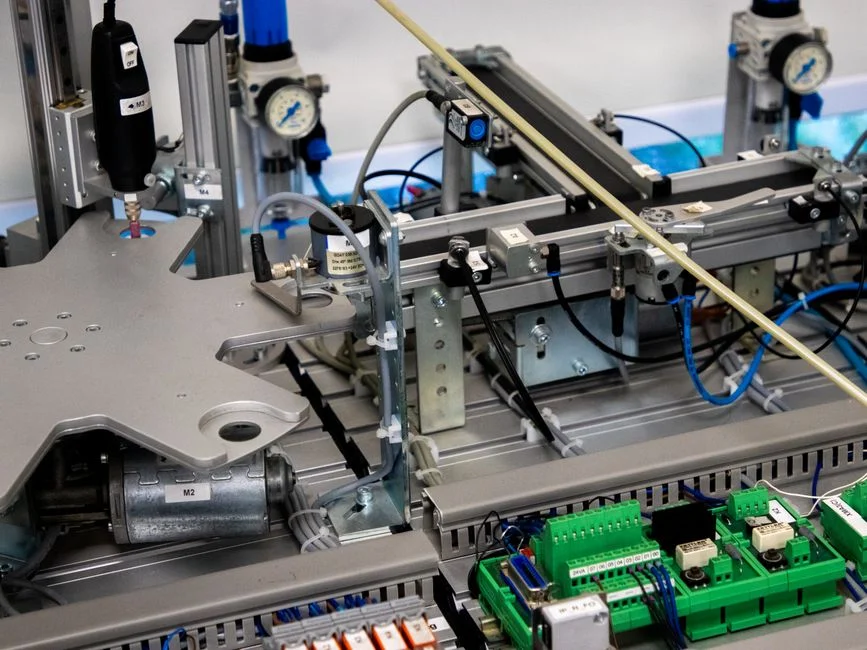
A practical treatment train starts with protection of downstream equipment, then removes pollutants according to the selected discharge or reuse objective. The process should be designed as a sequence rather than as a single treatment unit.
- Headworks: use screening or mechanical pretreatment to remove solids, rags, plastics and fibrous debris that could damage pumps, valves or biological processes.
- Equalization and controlled dosing: buffer flow and concentration variation before biological or membrane treatment. Chemical addition should follow the actual cleaning chemicals and process inventory.
- Solids and oil removal: use DAF or an equivalent stage where suspended solids, oil and grease, FOG or colloidal matter must be removed before biological treatment. A dissolved air flotation system for automotive wastewater pretreatment is one equipment option, subject to characterization and design review.
- Biological treatment: add biological treatment where biodegradable organic loading requires it, followed by filtration and disinfection according to the receiving sewer, reuse application and local permit.
- Advanced polishing: use ultrafiltration for solids removal before reverse osmosis where the intended reuse quality requires it. Volkswagen’s 2025 Annual Report says Puebla and Ingolstadt mainly combine ultrafiltration and reverse osmosis in their wastewater recycling.
Volkswagen’s 2025 water disclosure states that nearly all sites have pretreatment systems, untreated wastewater is not released into receiving waters, and wastewater not treated on site is treated externally or, in individual cases, disposed of as waste. The acquired plant must not assume that sewer connection eliminates the need to characterize or pretreat automotive wastewater. Confirm local sewer pretreatment requirements and discharge conditions.
| Treatment stage | Primary function | Output to verify before proceeding |
|---|---|---|
| Mechanical screening | Remove debris and protect downstream equipment | Screen performance, maintenance access and bypass controls |
| Equalization and dosing | Stabilize flow and chemical conditions | Level, mixing, dosing control and chemical inventory |
| DAF or equivalent solids removal | Remove suspended solids, oil, FOG or colloids | Separated sludge quality and downstream loading |
| Biological treatment and polishing | Remove biodegradable organics and refine effluent | Permit or reuse specification, monitoring and disinfection |
| UF/RO where required | Produce higher-quality water for reuse | Membrane pretreatment, recovery, cleaning and replacement plan |
Treat sludge and chemical wastes as controlled byproducts. Define their collection, dewatering, storage, transport and disposal route before commissioning. The rotary mechanical bar screen and DAF equipment are process components, not complete environmental compliance solutions.
Decide Between Discharge, Internal Reuse and Closed-Loop Circulation
The correct end-of-pipe option depends on authorization, receiving-water capacity, water availability, reuse demand, capital cost and operating responsibility. Compare the options before freezing the treatment train.
| Option | Conditions favoring selection | Key risks to resolve |
|---|---|---|
| Municipal discharge | Authorized sewer route and treatment capacity are confirmed; discharge limits are compatible with the stream | Local pretreatment requirements, sewer capacity, permit limits and off-site treatment charges |
| Internal reuse | Production, cooling, sanitary or irrigation demand exists and water quality can be matched to the application | Process compatibility, storage, distribution, monitoring, residual management and variable demand |
| Closed-loop circulation | Water conservation and reduction of wastewater generation are strategic objectives and the circulation boundary is technically achievable | Higher process-control demands, blowdown, concentrate or sludge handling and proof of water balance |
Use San José Chiapa as a Volkswagen benchmark. The 2025 Annual Report describes the Mexico site as wastewater-free because of closed-loop circulation. Use Puebla and Ingolstadt as evidence that advanced recycling is operational at Group sites: each reused 0.7 million m³ in 2025, while Group production sites reused approximately 4.0 million m³.
The reuse decision must also reflect the Group’s water-risk context. Volkswagen reports that approximately 43.5% of 2025 Group water withdrawal, excluding TRATON GROUP, came from sites in high or extreme water stress. These are Group-level metrics, not an assumption about the acquired plant.
Closed-loop operation does not eliminate environmental permits, monitoring or residual management. It changes the treatment objective from disposal toward controlled circulation. An MBR treatment system for EV plant wastewater reuse or an ultrafiltration system should be selected only after the reuse quality, flow profile and downstream process requirements are known.
Align Capacity, Permitting and Commissioning with the Ramp-Up
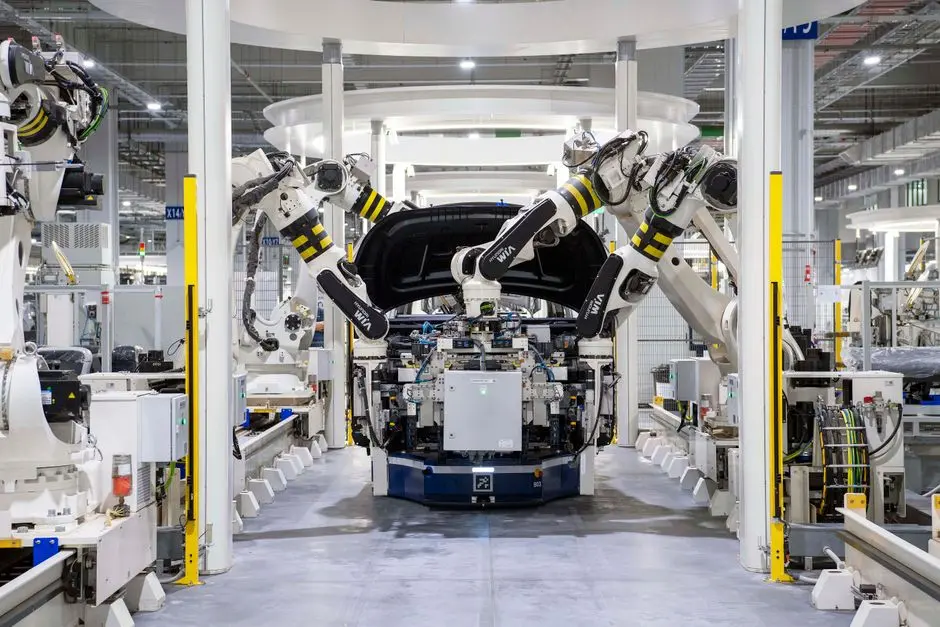
Treatment equipment should be sized from documented production and sanitary flows plus defined operating scenarios. Request actual operating data and production scenarios; do not rely on one design estimate or confuse a single average with peak, ramp-up or upset conditions.
Confirm the industrial discharge permit, sewer pretreatment requirements, stormwater controls, reuse approvals and receiving-water constraints before finalizing the treatment train. The permit and site characterization must agree with the equipment’s operating envelope. A treatment plant sized for an average stream may still be inadequate when cleaning cycles, production changes or rainfall coincide.
Use staged commissioning. First verify installation, utilities, controls and safety interlocks. Then characterize incoming streams and establish sampling baselines. Next prove each treatment stage, including solids handling, membrane performance and disinfection where applicable. Increase loading only as production ramps and operating data confirm the design assumptions.
Require suppliers to document controls, maintenance, spare parts, membrane or media replacement, residual handling, monitoring responsibilities and delivery milestones. Track withdrawal, wastewater generation, reuse volume, discharge quality and energy or chemical consumption with a consistent site measurement approach. Volkswagen’s 2025 Annual Report states that internal standard 98000 governs uniform water-metric collection worldwide.
The plate-frame filter press can be evaluated for sludge dewatering, but its selection still depends on sludge characteristics, cake-handling requirements and disposal logistics. Construction wastewater, workforce sanitary flows and production wastewater should not be added to one another without a time-based water balance.
A Practical Equipment Selection Framework
Select equipment by the contaminant removal required, the reuse or discharge destination, and the operating risks at the acquired site. The shortlist should be reviewed by process engineers, EHS personnel, operations staff and procurement together.
| Selection condition | Equipment to evaluate | Questions the buyer must answer |
|---|---|---|
| Debris protection at the headworks | Rotary mechanical bar screen | What debris types are expected, how will the screen be maintained, and what bypass protection is required? |
| Suspended solids, oil, grease, FOG or colloidal removal | DAF or clarifier | Which contaminant governs the design, and what sludge route is available? |
| Biological treatment with filtration for a constrained footprint | MBR treatment system | Does the required discharge or reuse quality justify the selected biological and membrane process? |
| Solids removal before reverse osmosis | Ultrafiltration | What feed-water quality protects the membranes, and how will cleaning and replacement be managed? |
| Variable chemical demand | Automatic chemical dosing system | Which chemicals are required, what interlocks apply, and how will dosing be verified? |
| Polishing or reuse application | Multi-media filtration | What contaminant and end-use specification must the filter meet, and what residual stream results? |
Do not compare bids on headline capacity alone. Request the wastewater characterization, required water quality, footprint, utilities, controls, maintenance, residual handling, supplier support, installation sequence and delivery schedule. The supplied research contains no product pricing or plant-cost data, so budget decisions must be based on a supplier quotation against a defined design basis. A comparison of DAF versus clarifier selection for automotive wastewater is useful only after the stream and target quality are established.
Frequently Asked Questions
What is the first decision to make when acquiring an EV assembly plant in Mexico?
Build a verified water balance and source-segregation plan before selecting equipment. Obtain production schedules, cleaning records, chemical inventories, headcount projections, stormwater information and proposed discharge and reuse points. Volkswagen’s 2025 Annual Report supports reuse, reduced freshwater withdrawal and protection of receiving waters as group expectations, but it does not provide plant-specific flow or permit limits for the acquired facility.
Can EV assembly plant wastewater be reused instead of discharged?
Yes, if the destination, water quality and authorization are established first. Volkswagen’s 2025 Annual Report identifies production, cooling towers, sanitary facilities and irrigation as reuse applications. It also reports 0.7 million m³ reused at Puebla in 2025, mainly through ultrafiltration and reverse osmosis. Those figures demonstrate an operating approach, not a guaranteed design for the acquired site.
How should treatment equipment be sized during a phased production ramp?
Do not size from one steady-state average. Define separate scenarios for construction, commissioning, initial production and later expansion, then use documented flows and operating records to establish the design envelope. Characterize each stream and test how cleaning cycles, staffing changes and production changes affect hydraulic and pollutant loading before issuing a final equipment order.
What should procurement request when comparing industrial wastewater treatment suppliers in Mexico?
Issue the same design-basis package to each supplier: characterization data, discharge or reuse specification, permitted route, required footprint, utilities, controls, maintenance, residuals, monitoring, installation sequence and delivery schedule. Request itemized pricing rather than comparing headline capacity. The supplied research provides no supplier prices, so a credible budget must come from a quotation against the verified site requirements.
What compliance evidence should be ready for commissioning?
Prepare the applicable industrial discharge permit, sewer pretreatment requirements, stormwater controls and reuse approvals, together with baseline sampling, equipment proving records, calibration records, operating procedures and monitoring plans. Volkswagen’s 2025 Annual Report states that untreated wastewater is not released into receiving waters and that internal standard 98000 defines uniform collection of water metrics; project records must still demonstrate compliance with local requirements and the permit.