Start with an Osogbo water-balance and compliance review
An Osogbo data center needs segregated treatment trains for cooling-tower blowdown and sanitary wastewater. Cooling blowdown contains concentrated dissolved solids, hardness, silica, suspended solids, biocides and scale-control chemicals; Genesis Water Tech reports TDS of 1,200–6,000 mg/L and suspended solids of 10–50 mg/L. The practical starting point is side-stream solids control followed by UF, then RO when low-TDS cooling-tower makeup is required. Equipment sizing and discharge or reuse permissions must be based on Osogbo source-water analysis, operating flows and local requirements.
Do not begin with a generic package. First separate cooling-tower blowdown, process rinse water, storm water and sanitary wastewater into distinct design streams. They have different contaminant profiles, treatment requirements and permitted destinations. A combined treatment train can increase equipment size and complicate chemical control, while sending sanitary wastewater through a membrane system intended for cooling water adds unnecessary complexity and operational risk.
Ask the project owner for the cooling-system configuration, number and type of towers, design circulation flow, evaporation rate, makeup-water source, cycles of concentration, daily blowdown volume and operating hours. These inputs determine the water balance and whether blowdown can be recovered as cooling-tower makeup, used for another non-potable purpose, discharged under a permit or reduced to a managed concentrate.
Collect source-water and circulating-water pH, conductivity, TDS, calcium, magnesium, silica, alkalinity, hardness, turbidity, suspended solids, temperature and iron. Also obtain the complete cooling-water chemical inventory, including biocide, corrosion inhibitor, scale inhibitor and dispersant products, because their concentration in blowdown affects fouling, reuse compatibility and discharge obligations.
The supplied research does not provide Osogbo-specific permit limits, source-water analyses, freshwater prices, sewer charges or facility flows. Those items must be verified with the relevant Nigerian authority and the project owner rather than assumed. The Frankfurt data center blowdown treatment guide and the assessment of data center wastewater treatment in Tlaquepaque illustrate the need for a site-specific engineering basis.
Characterize the blowdown before choosing a treatment train
Cooling-tower blowdown is the controlled purge used to prevent excessive dissolved-solids concentration, corrosion-product accumulation and biological growth as water evaporates in the cooling tower. Genesis Water Tech reports that blowdown TDS is typically 4–8 times the makeup-water TDS, with an overall range of 1,200–6,000 mg/L depending on source-water quality and cycles of concentration. That variability means the system must be designed around measured feed chemistry rather than a generic blowdown label.
Suspended solids are a separate pretreatment concern. Genesis Water Tech gives a range of 10–50 mg/L and identifies corrosion products, biofilm fragments and airborne particulates as contributors. These particles can foul membranes and retain cooling chemicals. Side-stream filtration can reduce loading before the blowdown reaches industrial wastewater pretreatment, while UF provides a finer barrier ahead of RO.
The dissolved fraction determines the treatment objective. Calcium, magnesium, silica and alkalinity increase precipitation risk. Biocides, corrosion inhibitors, scale inhibitors and dispersants can foul membranes or create reuse and discharge constraints. Silica requires particular attention because conventional RO must reject it while concentrate management must prevent uncontrolled silica precipitation. An antiscalant program cannot be selected without the complete chemical inventory and water analysis.
Genesis Water Tech identifies filtration below 10–15 microns as a membrane-protection requirement. That pretreatment specification is distinct from membrane pore size: RO and UF membrane filter elements must be selected for the actual feed, recovery and concentrate chemistry rather than by nominal capacity alone.
| Parameter | Evidence-based screening point | Engineering implication |
|---|---|---|
| Blowdown TDS | 1,200–6,000 mg/L overall; typically 4–8 times makeup-water TDS, according to Genesis Water Tech | Confirm whether RO is needed for the selected reuse or discharge route |
| Suspended solids | 10–50 mg/L, according to Genesis Water Tech | Provide solids removal before RO; assess side-stream filtration and UF |
| Membrane feed pretreatment | Below 10–15 microns, according to Genesis Water Tech | Protect membranes from particulate fouling |
| Scaling constituents | Calcium, magnesium, silica and alkalinity concentrate in blowdown | Set scaling limits, antiscalant demand and concentrate controls from analysis |
| Cooling chemicals | Biocides, corrosion inhibitors, scale inhibitors and dispersants accumulate | Review membrane compatibility, biocide residual and reuse chemistry |
Build the treatment process from pre-treatment to reuse
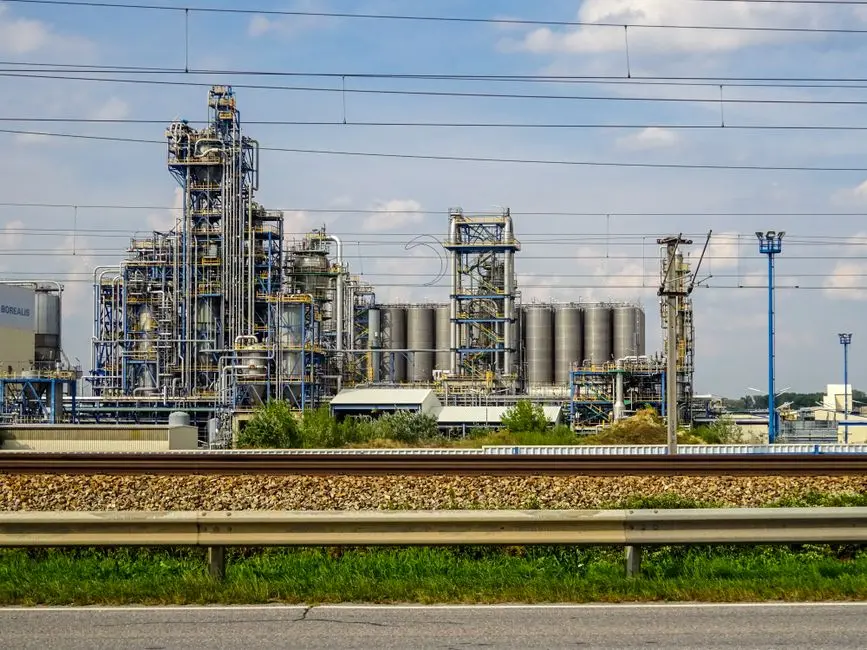
The practical sequence is source-water control and side-stream filtration, chemical conditioning, fine solids removal, RO where required, permeate storage, controlled return to the cooling tower and managed concentrate disposal. Each stage should have a defined operating objective and sample point. Skipping the feed-characterization stage makes the rest of the train a collection of equipment rather than a controlled process.
UF addresses suspended solids, colloids and biological material before RO. Genesis Water Tech describes UF as a low-pressure barrier that removes suspended solids, bacteria, viruses and high-molecular-weight organics while allowing dissolved salts to pass. For blowdown recovery, its principal role is membrane protection; standalone use is more appropriate where biological and particulate removal, rather than dissolved-solids removal, defines the treatment objective.
RO is required when the reuse water must have substantially lower dissolved-solids content. Genesis Water Tech reports 95–99% dissolved-solids removal, permeate TDS of 10–50 mg/L and operating pressure of 150–400 psi. These figures describe the technology envelope, not an Osogbo design guarantee. Feed composition, recovery, temperature and scaling controls determine the actual performance.
Antiscalant dosing, pH control, membrane cleaning and conductivity-based control are operating requirements for a high-TDS blowdown RO system. Automatic antiscalant and pH-control dosing systems should meter chemical against measured flow and control conditions, with alarms for loss of dosing or chemical inventory.
| Process stage | Primary function | Procurement and operating requirement |
|---|---|---|
| Side-stream filtration | Remove circulating-water solids and corrosion products | Size from circulation flow and measured solids loading |
| Chemical conditioning | Control scaling and feed chemistry | Define antiscalant and pH program from full water analysis |
| UF pretreatment | Remove fine solids, colloids and biological material before RO | Specify membrane material, pore size, recovery and cleaning method |
| RO | Remove dissolved salts for lower-TDS makeup water | Define permeate quality, recovery, pressure and concentrate route |
| Permeate handling | Store and return treated water to the cooling system | Include storage, blending or return controls and water-quality interlocks |
| Concentrate management | Handle the residual high-TDS stream | Identify destination, permitted quality and monitoring requirements |
The project can evaluate hollow-fiber UF pretreatment for cooling blowdown and industrial RO for cooling-tower makeup recovery only after the design flow, feed basis, recovery target and permeate quality are fixed. These links identify equipment categories, not approved configurations for an Osogbo facility.
Compare reuse, discharge and maximum-recovery options
Cooling-tower makeup reuse usually offers the strongest balance between water conservation, treatment complexity and operating value, but it also requires permeate quality and cooling-chemistry compatibility. Genesis Water Tech reports 60–85% recovery for this route. Permitted discharge may require a different treatment objective, such as TDS reduction, biocide control or removal of specific contaminants. Zero liquid discharge adds evaporation and crystallization, increasing capital, energy and maintenance requirements.
RO recovery is constrained by scale formation as concentrate TDS rises. Genesis Water Tech reports 50–85% typical blowdown-RO recovery, while IDE reports that conventional brackish-water RO commonly plateaus at 75–80% for cooling-tower blowdown. A higher target should therefore be justified by measured silica, calcium, hardness and antiscalant performance rather than selected on a brochure basis.
Where recovery must increase, MVC or brine concentration can treat the RO concentrate. Genesis Water Tech reports 95–98% water recovery from the concentrate stream and distillate TDS below 10 mg/L. Its cited MVC capital range is $1–3 million for systems processing 10,000–30,000 GPD, with energy consumption of 15–25 kWh per 1,000 US gallons of distillate. These are U.S.-market benchmarks, not Osogbo quotations.
Full ZLD adds crystallization and solid-waste handling. Genesis Water Tech gives a capital range of $3–8 million and an operating range of $5–15 per thousand gallons treated for data center applications. Osogbo evaluation must add local energy availability, climate, residue disposal, transport and brine-management considerations.
| Treatment objective | Typical route | Evidence-based recovery reference | Main procurement issue |
|---|---|---|---|
| Cooling-tower makeup reuse | Solids control, UF, RO and permeate return | 60–85% for cooling-tower makeup reuse, according to Genesis Water Tech | Permeate chemistry and compatibility with cooling program |
| Permitted discharge | Treatment determined by site-specific discharge conditions | No Osogbo recovery value established by the supplied research | Authorization, receiving route and monitoring |
| High-recovery reuse | RO followed by MVC or brine concentration | RO 50–85% for blowdown, according to Genesis Water Tech; 75–80% conventional CTBD plateau, according to IDE | Scaling control, concentrate handling and energy supply |
| Full zero liquid discharge | Membrane concentration, thermal evaporation and crystallization | 95–99% overall, according to Genesis Water Tech | Capital, energy, maintenance and solid-residue disposal |
The Calumbo data center treatment assessment provides a useful structure for documenting this comparison, but Osogbo decisions still require local flow, chemistry and authorization data.
Set the operating and monitoring controls

Monitoring should demonstrate that source water, membranes, permeate and concentrate remain within their operating envelopes. Genesis Water Tech identifies conductivity, silica, hardness, pH, turbidity, suspended solids and biocide residuals as relevant measurements, although the final sampling plan must follow the Osogbo water balance and permit conditions.
Track permeate recovery, concentrate TDS, differential pressure across UF and RO elements, normalized permeate flow, antiscalant dose and cleaning-cycle frequency. A change in normalized permeate flow or differential pressure may indicate fouling, scaling, damaged elements or incorrect chemical dosing; it should trigger investigation rather than automatic chemical adjustment.
Automatic controls and operator alarms are required for high feed TDS, excessive turbidity, abnormal differential pressure, low permeate quality, high recovery and dosing faults. High-recovery operation needs tighter interlocks because an unnoticed loss of antiscalant or pH control can increase scaling risk.
Genesis Water Tech reports UF chemical cleaning every 1–3 months depending on feed-water quality. That interval must be established through commissioning and operating data; it should not be promised as fixed for the Osogbo system. Cleaning frequency will depend on feed solids, temperature, biological load, chemical program and operating hours.
Align cooling-water chemistry with membrane compatibility. This means reviewing active ingredients, phosphate content, biocide residuals, corrosion-inhibitor formulations and dispersants against membrane and chemical-dosing requirements. Treatment valves, filter media and related parts should be selected for the duty and chemical compatibility confirmed by suppliers.
Prepare a supplier-ready scope and cost comparison
Ask each bidder to state design and average flow, source-water basis, required permeate quality, recovery target, concentrate destination, installed footprint, utilities, controls, performance guarantees, commissioning tests and O&M exclusions. Without these fields, a nominal-capacity comparison is technically meaningless.
Genesis Water Tech gives a foreign-market reference of $250,000–500,000 for an installed 50,000 GPD blowdown RO system and $1.50–3.00 per thousand gallons treated. These figures cover a U.S.-reference configuration and operating estimate. They are not Osogbo prices and do not include local equipment, freight, civil works, taxes, financing or site-specific regulatory costs.
Obtain current Nigerian quotations using the same source-water basis and design flow. Require the membrane make, nominal area, test pressure, permeate conductivity, permeate flow and warranty terms for any UF or RO package. A supplier should also identify replacement-membrane pricing, expected cleaning chemicals, cartridge intervals and acceptance testing.
Include local utility reliability, backup power, spare membranes, critical dosing pumps, remote alarms and operator training in the total-cost evaluation. A package that meets the quoted price but lacks application support or critical spares can create greater operating risk. The industrial water-softener system page may be relevant only where the water analysis shows softening is technically justified; it should not be assumed to be required.
Frequently Asked Questions
What flow is needed to size wastewater and cooling blowdown treatment for a data center in Osogbo?
No defensible treatment flow can be calculated from the supplied research. The engineer needs tower evaporation, circulation, makeup-water supply, cycles of concentration and operating hours. Those inputs establish the blowdown balance and whether sanitary, process and storm streams must be sized separately. Do not scale equipment from an assumed data-center flow.
What will cooling-blowdown treatment cost in Osogbo?
A current Osogbo price requires a Nigerian supplier quotation against a defined feed flow, source-water analysis, recovery target and concentrate route. Genesis Water Tech provides only foreign reference points: $250,000–500,000 for an installed 50,000 GPD blowdown RO system and $1.50–3.00 per thousand gallons treated. Request itemized quotations for equipment, freight, civil works, installation, utilities, membranes, chemicals, commissioning and annual O&M.
How should suppliers be selected for blowdown treatment?
Compare bids by feed basis, average and design flow, recovery, permeate quality, concentrate route, membrane guarantees, controls, commissioning tests and lifecycle support. The Osogbo-specific water analysis should be attached to the enquiry so bidders design against the same chemistry. The Manhattan data center cooling-blowdown treatment guide and the Goiânia cooling-blowdown treatment assessment provide useful comparison formats, not substitute site data.
What compliance information is required before discharge or reuse in Osogbo?
Treatment design does not confer legal authorization. The project must confirm the applicable Nigerian discharge or reuse requirements with the relevant authority using site-specific effluent data, the intended receiving route and the proposed end use. Confirm limits for the parameters relevant to the selected route, including TDS, suspended solids, pH, silica and cooling-chemical residuals. Those limits are not supplied by the research and must not be inferred from other jurisdictions.
Should the Osogbo treatment train use UF, RO or both?
Use UF to control particulates and biological material ahead of RO. Use RO when the required reuse water needs substantial dissolved-solids removal. UF alone may be adequate where biological and particulate removal are the primary objectives, but that conclusion depends on measured chemistry and the selected use. The final configuration also depends on antiscalant demand, recovery target and concentrate management.
Related Equipment
- industrial RO system for cooling-tower makeup recovery — specifications, capacity range, and technical data