Determine Which Sewer Limits Apply to the Plant
A chemical plant discharging to a sewer near Marlow must comply with a layered regulatory structure: the applicable categorical pretreatment standard, local limits issued by the receiving POTW, and the plant’s industrial-user permit. The US EPA states that the National Pretreatment Program is part of the NPDES program and is a cooperative effort involving federal, state and local agencies. That framework differs from direct surface-water permitting because the plant sends wastewater to a POTW rather than discharging it directly to receiving waters. The POTW’s definition under 40 CFR 403.3(q) includes treatment works, sewers and conveyances connected to the municipal treatment system, so the receiving authority’s program and local limits are central to the engineering decision. For the broader workflow, see organic chemical plant pretreatment compliance.
Start with the receiving authority, not an equipment catalogue. Obtain the current industrial-user permit, local pretreatment limits, applicable industry category, sampling requirements, monitoring frequency, reporting format and enforcement provisions. EPA’s Attachment 3-1, Summary of Categorical Standards, dated December 2024, identifies categorical standards that may apply to a manufacturing category; Attachment 2-1, State and Territory Program Authorization Status, dated December 2024, identifies the responsible state pretreatment program. Neither document supplies a site-specific limit for a Marlow-area plant.
| Document or decision | What the engineer should establish | Design consequence |
|---|---|---|
| Industrial-user permit | Authorized discharge point, prohibited discharges, monitoring duties, reporting format and compliance schedule | Sets the site-specific treatment and monitoring obligations |
| Local pretreatment limits | POTW concentration, mass and monitoring limits applicable to the plant | May be more restrictive than the categorical standard |
| Categorical pretreatment standard | Industry category, pollutants and applicable prohibitions or standards | Establishes federally applicable pretreatment requirements |
| State program guidance | State-administered program requirements and contacts | Supports permit interpretation and agency coordination |
No numerical limit should be inferred from general guidance near Marlow. The controlling permit, applicable categorical standard and written interpretation from the receiving authority define the plant’s obligations. Equipment should not be selected until those documents and the plant’s waste characterization agree on the same design basis.
Characterize Each Waste Stream Before Selecting Equipment
Wastewater characterization converts permit limits into measurable design inputs. Separate clean cooling water and uncontaminated stormwater from process, wash, laboratory and floor-wash streams only where site drainage controls and the permit support that distinction. For each remaining stream, document flow and mass loading, pH, suspended solids, oil and grease, metals, cyanide, color, temperature and any toxicity constituents associated with the plant’s products. This source-by-source record is more useful than a single plant average because it shows whether incompatible streams should remain segregated, receive dedicated treatment or be combined only after equalization.
40 CFR 403.5(b)(2), as identified by the Wastewater Treatment Chemicals: 12 Types, Programs & Limits source, establishes a fixed screening constraint: wastewater may never be discharged to a POTW at a pH below 5.0. The permit or local limits may require a narrower operating range, so pH control cannot be designed from that screening floor alone. The same source describes pH neutralization as a chemical-manufacturing pretreatment function, while also emphasizing that discharge permits, pretreatment standards and process-protection requirements form different control layers.
| Characterization field | Question answered | Method or record |
|---|---|---|
| Stream and flow | Which source contributes what flow and mass load? | Source-by-source flow records tied to production conditions |
| pH | What neutralization and containment capacity is required? | Permit-specified representative sampling and continuous process data where required |
| Suspended solids, oil and grease, color | Which physical removal steps are needed? | Representative samples analyzed by the methods required by the POTW |
| Metals and cyanide | Are precipitation, reduction or destruction required? | Compound- and species-specific analytical data |
| Production-boundary events | Can the system handle batch dumps and cleaning upsets? | Batch dumps, tank bottoms, cleaning cycles, upset events and slug-load records |
For every regulated parameter, define the sample point, representative production condition, flow-weighted or grab basis, preservation method, holding time and analytical method required by the permit or POTW. Include worst credible operating conditions rather than relying only on routine production. Batch dumps, tank bottoms, cleaning cycles, upset events and slug loads determine whether the wastewater equalization system has enough buffer.
Submit the proposed raw-material change, product mix, production-rate increase or cleaning-program revision for pretreatment review before implementation. Those changes can alter pollutant concentration, flow, mass loading and treatment demand even if the permit itself has not changed. If a pH adjustment system is being considered, use the pH adjustment system specifications and selection guide to structure the equipment and control requirements, not to substitute for characterization.
Match Chemical-Plant Pollutants to Treatment Stages

A defensible treatment train starts with source control and segregation, then assigns each remaining pollutant to a specific process step. Concentrated batches should be excluded or controlled at source where practical because treating every slug at full strength increases chemical demand, residual volume and failure exposure. Equalization moderates flow, concentration and pH variation; screening or grit removal protects downstream pumps and biological processes from solids, rags and debris. These stages serve different purposes and should not be treated as interchangeable.
Dissolved air flotation is relevant where the characterization identifies suspended solids, oil and grease, free oil, FOG, colloids or floatable material. Clarification or filtration may then be needed for finer solids control. As noted in the DAF versus clarifier for chemical wastewater guide, equipment selection must follow the waste profile rather than a generic preference. An industrial DAF wastewater treatment system does not by itself solve pH, dissolved metals, cyanide or soluble organic loading.
| Treatment stage | Primary wastewater problems | Decision basis | Principal verification |
|---|---|---|---|
| Source control and segregation | Concentrated batches, incompatible streams and avoidable slug loads | Production and cleaning records; permit prohibitions | Stream inventories, batch disposition and source inspections |
| Equalization and screening | Flow, concentration and pH variation; solids and debris | Peak flow, mass load, slug characteristics and downstream protection needs | Level trends, flow records and screen or grit inspections |
| DAF, clarification or filtration | Oil and grease, FOG, suspended solids, colloids and floatable material | Characterization data and required solids or oil-and-grease performance | Permit samples and process indicators linked to operating conditions |
| pH neutralization | Acidic or alkaline wastewater | Permit range, 40 CFR 403.5(b)(2) screening constraint and process compatibility | pH monitoring, calibration and alarm or diversion response |
| Precipitation, reduction or destruction | Regulated metals, hexavalent chromium and cyanide | Chemical species, target limits, stoichiometry and treatment sequence | Species-specific analytical results and chemical-use records |
| Biological polishing and disinfection | Biodegradable organics and permit-required disinfection | Receiving-POTW process protection, biodegradability and permit conditions | Toxicity or organic monitoring where required, with disinfectant records |
The Wastewater Treatment Chemicals: 12 Types, Programs & Limits source identifies neutralization, metal precipitation, chromium reduction, cyanide destruction and emulsion breaking as functions used in industrial pretreatment programs. It also describes a treatment sequence in which cyanide is oxidized and hexavalent chromium reduced before metals are precipitated, where those unit operations are required. Follow that functional logic only after plant-specific tests establish chemical form, reaction sequence and required residual treatment.
Use biological treatment for biodegradable organics when receiving-POTW process protection and local limits justify it. Add polishing and disinfection only where the permit or design basis requires them. No generic DAF, dosing package or membrane unit can be treated as a complete chemical-wastewater solution without demonstrating performance for the identified pollutants.
Design Chemical Dosing as a Controlled Process
Chemical dosing must convert wastewater chemistry into a repeatable feed program rather than a collection of manual additions. The Wastewater Treatment Chemicals: 12 Types, Programs & Limits source defines a four-step method: choose the feed point, set the dose from stoichiometry and a jar test, convert the dose into a feed rate, and check that no two chemicals meet in a way that releases gas or heat. Each step should be documented in the operating procedure.
Automatic control can link tank level or wastewater flow to calibrated metering pumps and PLC-controlled injection. The operator should verify the selected feed program against the current wastewater condition rather than assuming the original setpoint remains valid. A PLC-controlled automatic chemical dosing system also requires a defined chemical inventory, pump calibration, low-level response, off-spec diversion or shutdown logic, and a manual operating method for instrument failure.
Jar testing is the practical bridge between laboratory chemistry and field operation. Use it to refine the effective dose and establish the operating range that remains acceptable as wastewater characteristics change. Compatibility checks are mandatory: the cited source warns that hypochlorite must not meet ferric chloride or alum because acidic coagulants can release chlorine gas, and acids must not meet sodium sulfide because they can release hydrogen sulfide.
- Record the chemical, batch, feed point, pump calibration, tank level, dose, wastewater flow and operating condition.
- Record deviations, off-spec results, operator interventions and corrective actions.
- Revalidate the program when the product mix, raw material, production rate or cleaning cycle changes the waste profile.
Verify Performance Before the Wastewater Reaches the Sewer
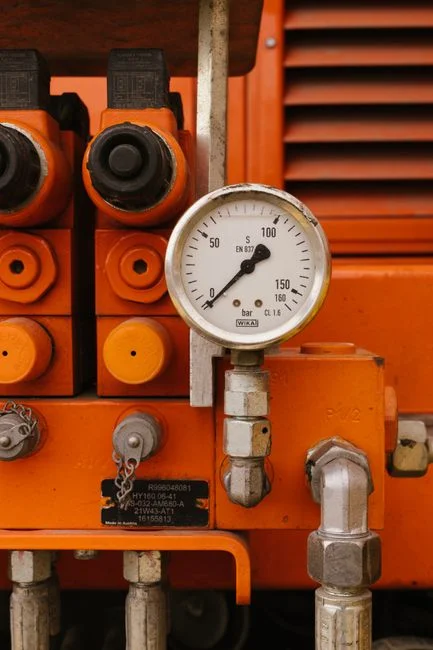
Compliance evidence begins with monitoring at the permitted discharge point, not with the installation of treatment equipment. Install continuous or grab-sample monitoring according to the permit’s parameters and frequencies. A complete record must connect each compliant sample to the controlling requirement, the production condition, the treatment operating state and any deviation. This is the distinction between a treatment concept that may work and a system that can demonstrate dependable control.
Track pH, flow and treatment-process indicators in real time where practical so the operator can isolate, divert or stop an off-spec stream before it reaches the sewer. Compare every result with its applicable categorical, local or permit requirement. Investigate both excursions and rising trends: a value still inside a limit can reveal deterioration in equalization, filtration, chemical feed or biological performance. The receiving POTW should review proposed process changes that could affect concentration, flow or pollutant composition rather than waiting for a monitoring report to reveal the change.
| Verification element | Record required | Corrective trigger |
|---|---|---|
| Sample compliance | Parameter, result, limit source, date and production condition | Result outside the controlling limit |
| Process monitoring | pH, flow and relevant treatment indicators | Adverse trend, failed control loop or off-spec intermediate |
| Equipment assurance | Calibration, maintenance, chemical inventory and pump verification | Drift, failed calibration, depleted stock or unavailable redundancy |
| Event management | Batch dump, power loss, instrument failure, chemical depletion and corrective-action closure | Any event capable of compromising treatment performance |
Maintain the chain of documentation across laboratory results, sampling conditions, operating logs, chemical use, calibration and maintenance. If the proposed treatment train includes mechanical screening, equipment selection and maintenance records must remain traceable to the protected downstream process; the rotary mechanical bar screen is one treatment component, not evidence of whole-system compliance.
Build a Capital and Compliance Decision Checklist
Equipment proposals should be evaluated against the permit and measured wastewater, not presented as complete compliance solutions without defined boundaries. Ask each supplier which permit or local-limit parameters the proposed equipment controls, which parameters it cannot address, and which other unit operations are required. A treatment train assembled from separate performance claims remains only as dependable as the weakest process link.
Request documented performance basis, capacity envelope, footprint, utility demand, chemical consumption, automation, redundancy, maintenance access and sludge or residual-handling requirements. Compare total operating burden rather than purchase price alone: include chemical use, energy, monitoring, maintenance, consumables and downstream residual handling. Where equipment must handle future production changes, require the supplier to state the conditions under which its performance claim applies.
| Procurement check | Information to request | Unacceptable answer |
|---|---|---|
| Compliance scope | Permit or local-limit parameters addressed and excluded | A claim that the equipment handles all chemical wastewater |
| Design basis | Representative characterization, flow, mass load and operating envelope | Performance without stated wastewater inputs |
| Verification | Sampling method, analytical approach and acceptance criteria | Compliance inferred only from equipment installation |
| Operability | Automation, redundancy, utility demand, chemical use, maintenance and residual handling | Purchase price presented as the full lifecycle cost |
| Change and contingency | Response to slug loads, outages, off-spec production and future expansion | Fixed treatment capacity without an operating buffer |
Identify missing design inputs before accepting any performance claim: wastewater characterization, flow and mass load, operating envelope, sampling method, receiving permit and planned production changes. A supplier guarantee is conditional on those inputs. For a comparable expansion-planning question, see chemical plant wastewater capacity expansion.
Frequently Asked Questions
Which requirements control a chemical plant’s discharge to a POTW?
The applicable categorical pretreatment standard, the receiving POTW’s local limits and the plant’s industrial-user permit establish the controlling requirements. Federal and state agencies participate in the broader National Pretreatment Program, but the permit and local authority must be reviewed before equipment selection. Ask the POTW for the current permit, local-limit table, applicable category and monitoring forms, and confirm which document governs each parameter.
Can DAF by itself meet a chemical plant’s pretreatment requirements?
No. DAF can remove suspended solids, oil and grease, FOG and other floatable material when the waste characterization supports that application. It does not by itself control pH, dissolved metals, cyanide or soluble organic loading. Request a unit-operation and pollutant map showing what DAF removes, what remains and which downstream process addresses each residual parameter.
How should a supplier be selected for chemical wastewater pretreatment equipment?
Begin with representative wastewater data and the controlling permit. Then verify the supplier’s scope, capacity basis, performance methodology, automation, maintenance requirements and residual handling against the operating envelope. Require any guarantee to identify the flow, mass load, wastewater chemistry and sampling conditions on which it depends; otherwise, it is not a testable commitment.
What evidence demonstrates compliance before sewer discharge?
Compliance requires permit-required monitoring, representative sampling, calibrated instruments, laboratory results, operating logs, chemical-use records and documented corrective action. Equipment installation alone is insufficient. Compare each result with the controlling requirement and investigate excursions and adverse trends before the discharge point is affected.