Which treatment fits the wastewater, not the factory label?
For fabricated metals wastewater in Amarillo, choose dissolved air flotation (DAF) when oil, grease, FOG, colloids, or floatable solids are the primary treatment challenge; choose a lamella clarifier when the objective is compact separation of settleable flocculated solids. The strongest design may combine source control, equalization, DAF or clarification, sludge dewatering, and downstream polishing. HydropureWater DAF systems span 4–300 m³/h, while its lamella clarifiers use 20–40 m/h surface loading rates. Final selection should follow wastewater characterization, pilot testing, permit conditions, and a full solids-management review—not an equipment name alone.
Fabricated-metals wastewater is not one standardized stream. Machining coolant, wash water, oil and grease, paint-bearing rinses, suspended metal particles, and cleaning chemicals may occur in different combinations. The operating area—not the industry label—should determine which pollutants need removal first.
Use DAF when the primary objective is capturing floatable oil, grease, FOG, colloids, or floatable solids. Use lamella clarification when conditioned solids must settle and be withdrawn as sludge. A factory with both oily wash water and settleable metal-bearing solids may need both functions, either in sequence or on segregated streams.
Before selecting equipment, request characterization of oil and grease, total suspended solids, settleable solids, colloid tendency, relevant metals, pH, temperature, flow variability, chemical use, and the proposed discharge or sewer-pretreatment route. Include production events such as tank dumps, cleanup cycles, and coolant changes.
The EPA’s December 1979 petroleum-refining development document supports a multi-technology treatment framework, but it is not a fabricated-metals permit, an Amarillo discharge standard, or a current compliance determination. Likewise, the 2012 ASABE poultry-processing study examined pre-DAF wastewater from a different facility and profile. Its results are engineering context—not transferable performance guarantees. The fabricated-metals DAF versus clarifier guide provides the selection framework for comparing those differences.
How DAF and lamella clarification work differently
Dissolved air flotation attaches suitable material to generated micro-bubbles and removes it from the water surface by skimming. The treatment result depends on the wastewater and on whether chemical conditioning is needed to make oil, grease, colloids, or other floatable material attach effectively. An industrial DAF system is therefore principally a floatables-removal option, not a universal treatment for every metalworking contaminant.
Lamella clarification uses chemical conditioning and flocculation before solids separate through inclined plates and collect for sludge withdrawal. Surface area is only one part of the design basis. Hydraulic loading, sludge withdrawal, solids settleability, chemical application, and the resulting sludge volume all affect performance. The lamella clarifier for solids separation addresses a different physical separation objective from DAF.
The Nalco Water Handbook table of contents includes gravity clarifier design, degasification designs, plant design, commercial-unit design features, and materials of construction. That breadth reinforces why a clarifier cannot be selected from tank surface area alone. The project wastewater, process chemistry, equipment arrangement, operating controls, and construction requirements must be considered together.
Neither DAF nor clarification removes dissolved metals on its own. The EPA’s December 1979 petroleum-refining document treated metals removal as a distinct control-technology component. If the analytical objective includes dissolved metals, precipitation, filtration, biological treatment, or another polishing step may still be required.
Downstream treatment should be defined from the receiving objective. Residual oil can require further separation; settleable solids can require filtration; biodegradable organics can require biological treatment. Separated solids then need a defined route. A sludge dewatering filter press can be evaluated when solids volume, moisture removal, disposal route, and operating labor justify it.
Side-by-side equipment comparison
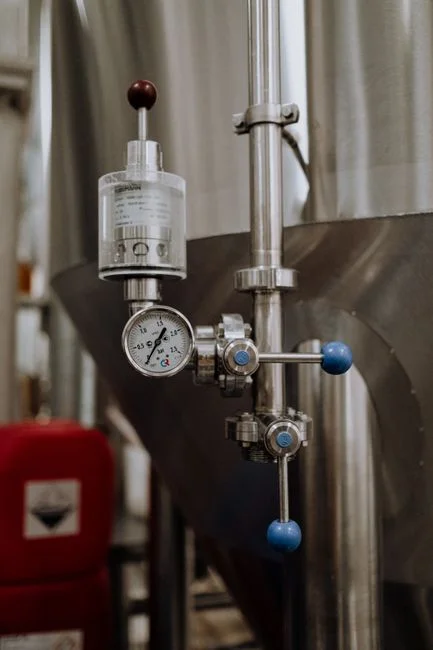
DAF and lamella clarification differ most clearly in what they physically capture: floatable material at the surface versus conditioned solids settling from the water. Their catalog capacity and loading figures define available configurations, not guaranteed performance on an Amarillo wastewater.
| Selection factor | Dissolved air flotation | Lamella clarification |
|---|---|---|
| Primary contaminant target | Floatable oil, grease, FOG, conditioned colloids, and floatable solids | Conditioned settleable solids |
| Separation mechanism | Micro-bubble attachment followed by surface skimming | Flocculation followed by inclined-plate settling and sludge withdrawal |
| Catalog information | HydropureWater range: 4–300 m³/h across 13 standard models; micro-bubble technology and automatic skimming | HydropureWater surface loading rates: 20–40 m/h; sludge recirculation, flocculation, and inclined-plate separation; chemical consumption stated as reducible by up to 30% |
| Footprint logic | Requires a flotation tank, bubble-generation system, and surface-skimming provision | Uses inclined plates to provide compact solids separation; final arrangement depends on hydraulic and solids-loading design |
| Chemical-conditioning role | Can condition material for flotation and bubble attachment | Can condition particles into flocs that settle within the clarification zone |
| Separated-material route | Skimmed float and settled solids require controlled collection | Withdrawn sludge requires controlled collection and treatment |
| Downstream polishing | May still be needed for residual oil, dissolved metals, fine solids, or organics | May still be needed for dissolved metals, residual fines, or organics |
| Best-fit scenario | Floatable contamination is the dominant treatment objective | Settleable solids dominate and compact clarification is the objective |
These ranges and loading rates require project data and supplier design; they are not acceptance guarantees for a specific Amarillo line. The plate-and-frame press comparison is similarly bounded: the catalog offers filter areas from 1–500 m² with manual, hydraulic, and fully automatic PLC-controlled options. That establishes dewatering options, not the correct area or configuration for a particular sludge.
Choose a treatment train from a wastewater profile
The defensible choice follows the production pattern: segregate streams, characterize them, test the proposed separation, define the receiving objective, and then compare operating consequences.
| Decision step | Evidence or action required | Selection consequence |
|---|---|---|
| 1. Segregate streams | Keep high-concentration coolant, oily machine-tool wash, paint-bearing rinse, and general wash water separate where practical. | Each stream receives treatment matched to its concentration and contaminant physics. |
| 2. Characterize each stream | Obtain flow, total suspended solids, settleable solids, oil and grease, FOG, colloid tendency, relevant metals, pH, temperature, and chemical data. | Determine whether floatation, clarification, or another control is the primary function. |
| 3. Test the target separation | Use bench or pilot work to observe floatable recovery or the flocculation, settling, and sludge behavior of the actual wastewater. | Verify that the proposed mechanism works before committing to a design basis. |
| 4. Define the downstream objective | Identify the receiving route and the required source control, biological treatment, filtration, activated carbon, metals removal, or reuse conditions. | Avoid treating one separator as the entire treatment plant. |
| 5. Compare implementation | Evaluate chemical use, footprint, skimming or sludge handling, controls, operator attention, maintenance, energy, and final disposal or reuse route. | Compare whole-system consequences rather than purchase price alone. |
| 6. Validate variable production | Test the proposed train against batch dumps, wash-water cycles, coolant changes, cleanup flows, and peak events. | Establish whether equalization and production-aware controls are required. |
Chemical application may be central to either route. An automatic chemical dosing system can control coagulant, flocculant, pH adjustment, or specialty-chemical injection, but the selected chemical and dose must follow wastewater testing rather than catalog assumptions.
The EPA’s December 1979 petroleum-refining technology review treated source control, biological treatment, filtration, activated carbon, metals removal, equalization, and solid-waste management as separate design elements. That structure remains useful for a fabricated-metals bid review, even though the document is historical and industry-specific.
For mixed wastewater, variable flow can undermine otherwise capable equipment. Equalization may be necessary before DAF or clarification, while controls should account for production rather than average flow alone. The DAF-versus-clarifier comparison for variable industrial wastewater provides related context for evaluating operating assumptions.
Amarillo procurement and compliance checklist
The first procurement question is where the treated water will go: a direct permit, sanitary sewer, industrial pretreatment system, or a zero-discharge or reuse objective. Equipment selection does not replace an industrial wastewater pretreatment permit, local pretreatment limits, or a direct-discharge authorization.
- Request flow-duration data for normal production, cleanup cycles, tank dumps, and peak events. Average daily flow is not a sufficient sizing basis.
- Request a complete wastewater characterization and an integrated mass and solids balance covering liquid, oil, float, sludge, and final destinations.
- Request the proposed hydraulic loading, chemical-consumption basis, controls narrative, materials of construction, utility requirements, startup assumptions, and operating limits.
- Ask each bidder to state whether its proposal and guarantees are based on supplied wastewater data, bench testing, pilot testing, or a standard catalog basis.
- Request commissioning criteria, monitoring points, alarm response, operator training, maintenance tasks, spare-parts strategy, and sludge-management responsibilities.
Use the EPA’s December 1979 petroleum-refining development document as historical technology context only. Its petroleum-refining limitations are not current fabricated-metals requirements for Amarillo. The current permit route and receiving authority’s rules should define the applicable limits.
Selectively use study data as engineering context rather than a design basis. The 2012 ASABE pre-DAF membrane study reported mean COD of 5,263 mg/L and total solids of 3,355 mg/L in poultry-processing wastewater. Those values describe a different wastewater and cannot be used as Amarillo design assumptions.
For pretreatment-risk questions involving metals and sewer discharge, use a metals wastewater pretreatment compliance guide to structure questions for the receiving authority; it does not replace project-specific limits or current local requirements.
Recommended equipment package for typical factory scenarios
Three candidate treatment trains fit common fabricated-metals profiles, but they are starting architectures rather than fixed recipes. Flow, chemistry, production pattern, sludge properties, and receiving-water requirements determine the final configuration.
| Factory scenario | Candidate treatment train | Key validation and downstream requirement |
|---|---|---|
| Oil and FOG dominant | Source segregation → equalization → chemical conditioning as needed → automatic DAF → controlled oil and sludge collection | Confirm floatability and skimming performance with the actual wastewater. Route the residual stream to polishing based on analysis and the receiving objective. |
| Settleable metal-bearing solids dominant | Source segregation → chemical conditioning and flocculation → lamella clarification with sludge recirculation → sludge dewatering route | Confirm settling and sludge properties. Add dissolved-metals treatment if analysis shows that precipitation or another polishing step is required. |
| Variable mixed wastewater | Staged collection and equalization → automatic chemical dosing → DAF for floatables → clarification for remaining settleable solids → required polishing | Test the combined train under batch dumps, wash cycles, coolant changes, and peak production conditions. |
The automatic chemical dosing system is a supporting component in both flotation and clarification. Its value is controlled chemical application, but the dose, chemical selection, injection point, and control logic must be established from characterization and testing.
Each train must also close the solids loop. A sludge dewatering filter press may be appropriate when the separated solids warrant that configuration, but bidders should compare moisture removal, cake handling, labor, cleaning, recovered-material value, and disposal cost. The objective is not to maximize equipment scope; it is to produce a verifiable treatment train with manageable residuals.
The DAF versus clarifier guide for metals wastewater can help structure adjacent-industry questions, but fabricated-metals wastewater and Amarillo receiving requirements still need their own project basis.
Frequently Asked Questions
What does a DAF system cost compared with a lamella clarifier for fabricated metals wastewater?
The supplied research provides no universal DAF-versus-clarifier price. Request a like-for-like budget that includes equipment, installation, controls, chemicals, energy, maintenance, operator labor, separated-material recovery or disposal, downstream treatment, and sludge handling. Ask each bidder to state its pricing basis and exclusions. If the quotation is based on catalog capacity rather than the project wastewater, require that limitation in writing.
How should an Amarillo factory size DAF or lamella clarification equipment?
Start with wastewater characterization and flow-duration data, not an average daily flow. HydropureWater lists DAF capacities from 4–300 m³/h across 13 standard models and lamella-clarifier surface loading rates of 20–40 m/h. These are catalog ranges, not project guarantees. Final sizing requires peak-flow behavior, contaminant loading, settleability or floatability data, chemical demand, and the selected discharge or reuse objective.
How should a buyer select a wastewater-treatment supplier?
Require a proposed process basis, performance basis, written guarantees, controls scope, materials of construction, installation requirements, commissioning plan, utilities, operator training, maintenance support, and sludge-management plan. Ask whether the performance basis comes from supplied wastewater data, bench testing, pilot testing, or catalog data. A supplier that cannot connect its guarantee to one of those bases has not made its proposal auditable.
Can factory DAF or clarifier selection prove regulatory compliance in Amarillo?
No. A separator can remove specified physical contaminants, but compliance depends on the complete treatment train, analytical performance, discharge route, and current requirements of the receiving authority. Establish whether the destination is a direct permit, sanitary sewer, industrial pretreatment system, or reuse/zero-discharge objective, then obtain current local limits in writing and design the system against those conditions and measured wastewater characteristics.