What Makes Hat Yai Sewage Treatment Projects Different
Hat Yai’s groundwater setting makes discharge control and subsurface protection central to decentralized sewage treatment design. Research by the NERC Groundwater Evolution Beneath Hat Yai study reports that urban wastewater seepage has caused substantial deterioration in shallow-groundwater quality directly beneath the city. The same historical study states that groundwater once supplied about 50% of Hat Yai’s urban water supply; that is an earlier condition, not a verified 2026 statistic. Monsoon infiltration, shallow water tables and wastewater already affecting the subsurface therefore require a project-specific hydrogeological and drainage review before equipment is selected. The Thailand wastewater discharge standards guide provides a separate reference for checking the applicable regulatory route.
The NERC study identifies the Hat Yai, Khu-Tao and Kho-Hong aquifers at depths of 25–40 m, 45–80 m and greater than 100 m, respectively. These are geological context, not installation clearances: they do not establish the depth of groundwater beneath an individual parcel or prescribe where a tank can be installed. A site investigation must instead establish local soil, groundwater level, seasonal variation, flood exposure and the relationship between the proposed works and the legally approved discharge point.
The research also explains that shallow water tables and monsoon conditions can make infiltration from on-site sanitation systems difficult because effluent may surface. It does not establish current Hat Yai construction setbacks, so no generic setback should be represented as local regulation. The practical conclusion is narrower: an unsaturated soil assumption cannot safely justify a disposal or treatment layout without site evidence.
Stormwater must be handled as a separate design issue. The US EPA Municipal Wastewater resource explains that sanitary sewers are intended to collect wastewater, whereas combined sewers receive stormwater and can overflow during wet weather. Although the EPA describes US systems rather than Thai requirements, the engineering distinction remains useful. A Hat Yai project should keep stormwater out of the treatment train where practicable, assess infiltration and inflow, and prevent wet-weather flows or overflows from bypassing treatment.
Start with the Wastewater and the Permitted Discharge Route
No treatment unit should be selected before the waste, reuse objective and legal receiving route are documented. The supplied research provides no site-specific Hat Yai effluent limit, so the project owner or relevant authority must identify the receiving point and applicable Thai discharge conditions. Process guarantees should follow those requirements rather than precede them.
| Input to establish | Evidence to request | Why it changes the design |
|---|---|---|
| Waste source and composition | Domestic sewage; employee, guest or resident flows; kitchen and laundry wastewater; any industrial contribution | Determines biological loading, pretreatment, equalization and whether streams should be segregated |
| Flow profile | Verified daily flow, average and peak hourly flow, operating duration and seasonal occupancy | Determines hydraulic capacity, equalization and peak-flow controls |
| Discharge route | Named receiving point, responsible authority and applicable permit or discharge conditions | Sets the effluent performance that can be guaranteed |
| Reuse objective | Discharge, on-site reuse, or a defined higher-grade reuse application | Changes solids-separation, disinfection and monitoring requirements |
| Stormwater and I/I | Site drainage, sewer connections, infiltration sources and wet-weather observations | Establishes whether peak inflow must be intercepted or equalized |
Representative influent information should cover seasonal occupancy and peak-period discharge rather than relying only on an occupancy multiplier supplied by a vendor. The US EPA Municipal Wastewater resource warns that infiltration and inflow can cause sanitary sewer overflows and treatment-plant operational problems; it also states that significant wet-weather flow increases can adversely affect efficiency, reliability and control. That evidence supports a contingency and peak-flow review, although it does not provide a Hat Yai design factor.
Reuse must also be defined precisely. A general intention to irrigate or reuse water does not establish the required treatment quality. Each discharge or reuse route changes the solids separation, disinfection, monitoring and operating-control scope. The regional domestic sewage treatment equipment comparison and packaged sewage treatment selection guide provide additional context, but neither substitutes for a Hat Yai site design.
Compare Packaged A/O, MBR and Decentralized Treatment

The correct comparison is between complete treatment architectures under a verified project duty, not between the widest capacity ranges offered by manufacturers. A packaged A/O system may satisfy many decentralized sites, while MBR becomes more relevant when the required solids separation, footprint or reuse pathway cannot be met reliably by the proposed A/O train.
| Treatment architecture | Potential fit | Land and installation | Separation and disinfection | Key checks | Maintenance considerations |
|---|---|---|---|---|---|
| Packaged A/O biological contact oxidation | Residential communities, hotels, hospitals, factories and rural sites | Integrated package; the WSZ catalog describes below-grade installation with landscaping above | Catalog design combines A/O contact oxidation, sedimentation and disinfection | Verified flow variation, soil, groundwater, flood level, discharge route and pretreatment needs | Inspect biological condition, solids removal, disinfection, controls and scheduled servicing |
| MBR | Projects requiring compact solids separation or membrane-based reuse readiness | More equipment-intensive installation; verify the actual site footprint | Activated sludge coupled with submerged membrane filtration | Effluent target, membrane flux, cleaning method, redundancy and solids removal | Monitor fouling, cleaning demand, membrane condition and replacement planning |
| Decentralized treatment with pretreatment | Remote, constrained or operationally simple sites requiring protected biological capacity | Treatment package plus screen, equalization, pumping and other civil works | Depends on the selected biological and separation stages | Debris characteristics, peak flow, access, utilities and operator competence | Screen servicing, solids removal, pump maintenance and plant-condition monitoring |
The underground packaged sewage treatment plant in the WSZ Series combines anoxic/aerobic biological contact oxidation, sedimentation and disinfection in one buried package. Its manufacturer-stated capacity is 1–80 m³/h, and the catalog identifies residential communities, hotels, hospitals, factories and rural applications. That makes it a credible candidate for many Hat Yai decentralized sites, but the range describes available equipment rather than the required capacity of any particular project.
The integrated MBR wastewater treatment system is described as activated-sludge treatment coupled with submerged PVDF membrane filtration. Its manufacturer-stated range is 10–2,000 m³/day, with a claimed footprint 60% smaller than conventional systems. The buyer should require the comparison basis, design duty and included balance-of-plant items; the claim alone is not a site-specific footprint guarantee.
Academic evidence supports treating membrane maintenance as a design variable. A 2017 Chemosphere laboratory study found comparable bulk organic removal in entrapped-cell and suspended-cell anaerobic MBRs. The entrapped-cell system operated for 11 days before chemical cleaning was required, compared with 7 days for the suspended-cell system. Those results apply only to the tested laboratory systems, but they identify cleaning interval and membrane condition as metrics a supplier should support for its own design.
Size Around Daily Load and Wet-Weather Peaks
A defensible capacity basis comes from measured wastewater behavior and the selected discharge route, not from a product’s headline range. The procurement file should document daily wastewater flow, average and peak hourly flow, operating duration, retention variation, infiltration risk and the concentration and timing of commercial or industrial streams. The published WSZ range of 1–80 m³/h and MBR range of 10–2,000 m³/day are equipment envelopes; neither is a Hat Yai design capacity.
- Establish verified daily flow from metered data, operating records or a defensible project basis.
- Identify average, peak-hour and wet-weather behavior, including employee shifts, guest occupancy and seasonal demand.
- Confirm whether the receiving route requires continuous operation, standby capacity or equalization.
- Check the selected process against the verified hydraulic and contaminant loading, with seasonal operation stated explicitly.
- Resolve industrial or high-strength contributions before combining them with domestic sewage.
The US EPA Municipal Wastewater resource states that wet-weather peak flows can create operational challenges and potentially adversely affect treatment efficiency, reliability and process control. Where rainfall, groundwater or defective sewer connections can add substantial flow, the design should therefore address peak inflow through interception, segregation, equalization or additional treatment capacity. The source does not justify choosing an arbitrary peak factor.
Seasonality also affects biological performance. The academic study Microbial assessment and effect of seasonal change on the removal efficiency of FAB based sewage treatment plant, published in the Journal of Environmental Engineering and Ecological Science, focuses on seasonal change in removal efficiency. It does not supply a Hat Yai design value; its relevant procurement implication is that suppliers should explain how the proposed biological process responds to seasonal wastewater temperature, flow and composition changes.
Where factory wastewater enters a domestic train, characterize it before combining streams and determine whether segregation, pretreatment or equalization is necessary. The NERC Hat Yai groundwater study reports that Khlong U-Tao Phao and Khlong Toei receive large quantities of urban wastewater. This supports treating receiving-water sensitivity as a design concern, but it does not establish current water-quality conditions or a site-specific discharge limit.
Equipment that protects downstream pumps and biological processes may also require an upstream headworks decision. A rotary mechanical bar screen can be evaluated where rags, plastics or fibrous debris could affect pumps, valves or the selected process. Its necessity should follow a documented debris and flow assessment rather than inclusion by default.
Protect Installation, Groundwater and Effluent Quality
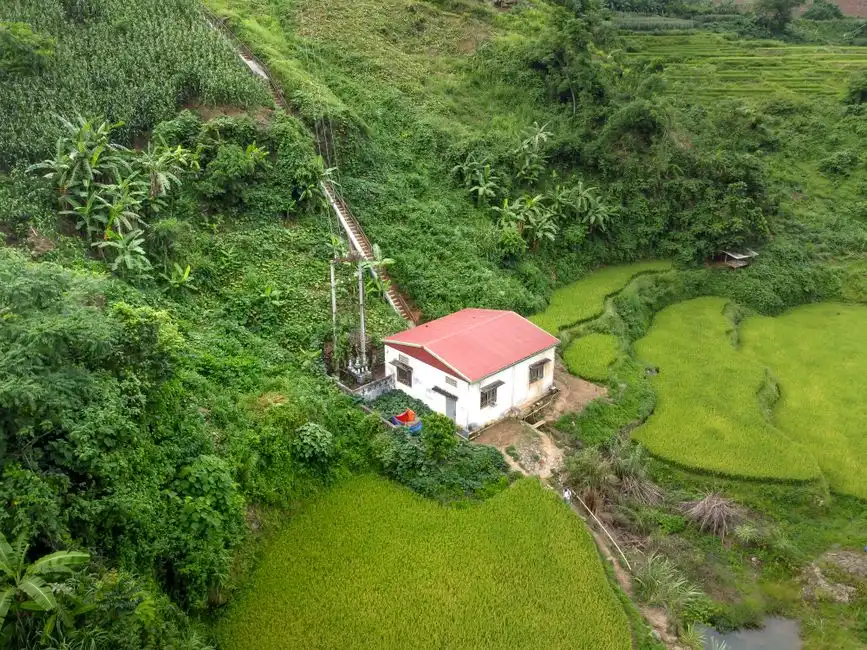
Groundwater assessment, watertight construction and flood-resilient installation are part of the treatment concept rather than civil-works details added afterward. Confirm local geology, groundwater levels and seasonal variation, flood exposure, maintenance access and the route to the legally approved discharge point. No generic setback should be treated as a Hat Yai requirement unless it appears in the applicable approval or permit.
The WSZ catalog describes a buried package with landscaping above it. That configuration can preserve usable space, but burial does not eliminate groundwater or flood exposure. The civil design must address vessel flotation, access for lifting and inspection, watertightness, ventilation requirements and the consequences of external groundwater entry.
Pretreatment should be assessed against the actual waste stream. Rag and plastic entry can affect pumps, valves and biological processes; fibrous material may also interfere with the selected separation stage. Where screening is needed, the supplier must define the screen aperture or classification, extracted-solids handling, cleaning method, bypass arrangement and its effect on head losses.
For MBR, fouling should be managed as an operating condition with measurable triggers. The 2017 Chemosphere study found less fouling in its entrapped-cell anaerobic MBR than in the suspended-cell system and linked this to lower suspended biomass, bound extracellular polymeric substances and soluble microbial products. Because the study used laboratory systems, it supports asking for membrane-specific evidence rather than transferring the result directly to a commercial Hat Yai plant.
Handover should establish sampling points and frequencies for influent and effluent, process and membrane condition checks, solids or sludge management, spare-parts planning, operator training and a defined preventive-maintenance schedule. The treatment objective should be linked to documentation the operator can actually use, including alarm response, cleaning records and responsible escalation. The plate-frame filter press described in the dewatering equipment product information may be relevant to solids management where that duty is demonstrated, but it should not be added to the scope without a solids-volume and moisture-content basis.
Build the Supplier Selection and Procurement Checklist
A comparable bid should define the design basis, treatment scope and lifecycle responsibilities before price is assessed. Ask each supplier for a process flow diagram, hydraulic loading rationale, guaranteed treatment objectives, control philosophy, utility demand, sludge estimate, above- and below-grade footprint, installation drawings and commissioning plan. For MBR bids, request membrane-life evidence, cleaning criteria and replacement planning rather than accepting a general efficiency claim.
| Procurement item | Minimum information required from each bidder | Buyer check before award |
|---|---|---|
| Design basis | Daily flow, peak flow, wastewater characteristics, operating hours, discharge route, reuse target and permit conditions | Inputs are site-specific and traceable, not generic assumptions |
| Process performance | Flow diagram, loading rationale, guarantees and treatment objectives | Guarantees are measurable and tied to the approved route |
| Installation | Above- and below-grade footprint, civil interface, delivery and installation method, groundwater and flood provisions | Drawings match verified site constraints |
| Controls and commissioning | Control philosophy, utilities, alarms, testing, commissioning duration and operator training | Roles and acceptance criteria are documented |
| Maintenance | Cleaning requirements, wear parts, membrane or media plan, solids handling, spares and local technical support | Maintenance obligations and costs are assigned |
| Price | Equipment, civil works, piping, pumping, pretreatment, electrical controls, installation, commissioning, monitoring, sludge removal, energy and maintenance | All bidders quote the same scope and exclusions |
The academic comparison between 7 days and 11 days of operation before chemical cleaning is useful as a category of maintenance evidence, but it must not be used as a commercial guarantee. The supplier should demonstrate performance under its proposed configuration, operating conditions and cleaning method. The regional containerized MBR sizing guide and packaged MBR hotel selection guide can inform that review, but neither establishes the Hat Yai duty.
Price comparison must be scope-based. Separate treatment equipment from civil works, piping, pumping, pretreatment, controls, installation, commissioning, monitoring, sludge removal, energy and maintenance. Require each bidder to list missing project inputs—particularly daily flow, peak conditions, influent characteristics, discharge route, reuse target and permit conditions—rather than presenting a catalogue model as a final design.
Frequently Asked Questions
What is the best domestic sewage treatment system for a hotel or factory in Hat Yai?
Compare verified flow and variation, effluent requirements, land availability, groundwater conditions and reuse objectives. A packaged A/O unit may suit many decentralized sites; MBR should be selected when compact solids separation or reuse requirements justify the additional membrane-specific design and maintenance.
How much does a domestic sewage treatment plant cost in Hat Yai?
The supplied research provides no Hat Yai price range. Request itemized quotations separating treatment equipment, civil works, pumping, pretreatment, electrical controls, installation, commissioning, monitoring, sludge removal, energy and maintenance, and ask bidders to state exclusions and validity conditions.
How do I size a sewage treatment plant in Hat Yai?
Require verified daily flow, average and peak-hour flow, wastewater characteristics, operating duration, discharge criteria, reuse targets and groundwater constraints. Do not size from the WSZ or MBR capacity ranges alone; the selected duty must be derived from the project evidence.
Is a buried sewage treatment package suitable for Hat Yai?
It may be, because the WSZ package can be installed below grade, but suitability depends on verified geology, groundwater level and variation, flood exposure, maintenance access, watertight construction and the approved discharge route. A buried installation should not be approved on footprint alone.
When should I choose MBR instead of packaged A/O?
Choose MBR when the required effluent quality, solids separation, footprint or reuse pathway cannot be met reliably by the proposed A/O train. Require project-specific validation of membrane performance, cleaning demand, redundancy, solids handling and operating resources before making that selection.