Which treatment is right for a Lancaster plastics or rubber factory?
For Lancaster plastics and rubber factories, DAF is usually the better choice when wastewater contains FOG, oil, plastic fragments, or solids that do not settle readily; a lamella clarifier is usually more suitable when settleable solids dominate and gravity separation is adequate. Clearwater Industries describes DAF as using 30-50 micron microbubbles to float suspended solids, oils, fats, and associated pollutants, while lamella technology reduces separation-zone velocity. Neither option should be selected from flow rate alone: wastewater characterization, required effluent quality, chemical conditioning, footprint, sludge handling, and downstream treatment determine the better fit.
The selection rule is conditional. Prioritize dissolved air flotation where buoyant material, FOG, oil, plastic fragments, rubber particles, or poorly settling solids govern the treatment objective. Prioritize a lamella clarifier when the solids have useful settling velocity and gravity separation can meet the required effluent quality without the same flotation and recycle requirements.
A factory may have several distinct waste streams. Cooling-water blowdown, wash water, cleaning solutions, polymer or additive residues, and concentrated production wastewater should be characterized separately where practical. Combining them by default can dilute treatable concentrations while increasing flow, which may push the equipment beyond its useful hydraulic and solids-loading range.
Require each bidder to evaluate actual flow range, peak production discharge, TSS, FOG, oil and grease, settleability, COD, pH, colloid behavior, and the applicable discharge or sewer requirement. DAF is also a clarifier in broad process terms. Here, “DAF” means dissolved air flotation, while “clarifier” means a gravity-based separator, commonly a lamella inclined-plate unit.
The U.S. EPA’s Process Design Manual for Suspended Solids Removal, issued in January 1975, remains foundational process-selection guidance for sedimentation, flotation, coagulation, and flocculation. Its criteria are historical and must be applied with current engineering judgment and site-specific data; this plastics and rubber wastewater comparison follows that distinction.
Map the wastewater before comparing equipment
Wastewater characterization determines whether flotation or gravity separation is technically credible. Sample each source stream during normal production, representative cleaning operations, and shutdown or washdown periods rather than relying on one grab sample. The resulting dataset should connect particle behavior to the treatment objective instead of treating TSS as the sole sizing parameter.
The EPA manual states that particle size, specific gravity, and the strength or shear resistance of wastewater solids can affect separation performance (EPA, January 1975). It also distinguishes soluble, colloidal, supracolloidal, and settleable fractions. That distinction matters in plastics and rubber plants: a stream can contain substantial COD while presenting limited gravitational settling because much of the organic load is dissolved or colloidal.
| Input or stream characteristic | What the engineer should determine | Selection implication |
|---|---|---|
| Flow profile | Average flow, production peaks, cleaning discharges, shutdown flow, and equalization need | Tests hydraulic capacity, controls, and whether segregation reduces peak loading |
| TSS and particle behavior | Buoyant, neutrally buoyant, readily settleable, or poorly settling solids; settleability under representative conditions | Favors flotation when gravity settling is unreliable |
| Oil, grease, and FOG | Concentration, free versus emulsified oil, and whether material tends to float | Strengthens the case for DAF and determines source control and conditioning |
| COD and colloid behavior | Soluble versus particulate organic load and response to coagulant or flocculant | Determines whether clarification alone can meet the final objective |
| pH and temperature | Conditions affecting chemical demand, mixing, viscosity, and equipment materials | Sets conditioning requirements and operating controls |
Keep streams separate where practical. Segregation may protect a DAF unit from bulk plastic fragments, released fibers, or rubber debris that could overload pumps, recycle lines, skimming systems, and downstream biological or membrane processes. A rotary mechanical bar screen may be relevant where bulk debris must be removed before equalization and clarification, but screening requirements must follow the actual waste stream rather than a generic specification.
Run jar tests before fixing the treatment concept. Clearwater Industries states that its serpentine flocculation tubes provide 15-45 seconds of flash-mixing time, while mix-tank contact time varies and jar testing is needed to establish appropriate mixing time (Clearwater Industries, 2026-04-27). The test should establish chemical type, dose, pH, mixing sequence, settling or flotation behavior, and the resulting sludge characteristics.
How DAF and lamella clarification remove plastics and rubber solids
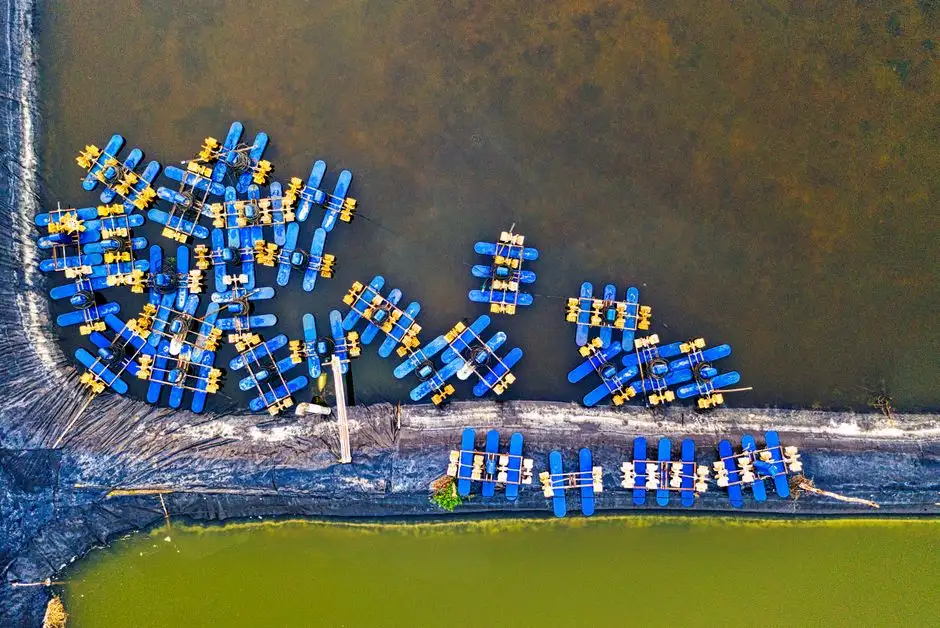
DAF separates floatable material by attaching conditioned particles to microbubbles, while lamella clarification separates settleable material by gravity within an inclined-plate arrangement. The mechanisms are different, and neither converts all pollutants into removable solids.
In DAF, water is pressurized and mixed with air; pressure release in the clarification tank produces microbubbles. Clearwater Industries states that these bubbles measure 30-50 microns and carry conditioned solids to the surface for paddle skimming (Clearwater Industries, 2026-04-27). Chemical coagulation and flocculation normally precede flotation because conditioning increases particle size and bubble contactability. Heavier material can settle into a bottom collection zone, so DAF still requires a defined route for settled solids; it is not a substitute for complete sludge management.
A lamella clarifier uses inclined plates to compact the effective settling area and reduce the horizontal separation distance. HydropureWater states that its lamella tanks achieve surface loading rates of 20-40 m/h and reduce chemical consumption by up to 30% under its specified design. Those are product-specific catalog claims, not universal performance guarantees. Chemical coagulation and flocculation may still be needed where particles are colloidal or settle slowly, so chemical use should not be assumed away without jar-test evidence.
The physical removal mechanisms differ as well. DAF recovers a surface float and a bottom settled-solids stream. A lamella clarifier primarily produces settled sludge. Either may need polishing when the target includes low turbidity, reuse, dissolved organics, nutrients, or other pollutants outside the clarification objective.
For a clearer process comparison, request an industrial DAF system for plastics and rubber wastewater against a lamella clarifier for gravity-settleable solids, with both bids using the same wastewater characterization and final treatment objective.
Compare the two options against factory decision criteria
DAF is the stronger option when floatable or conditioned solids govern the problem; a lamella clarifier is stronger when gravity-settleable solids and simpler separation govern it. Neither catalog capacity nor nominal removal claims establishes suitability without actual wastewater and flow data.
| Decision criterion | Dissolved air flotation | Lamella clarification |
|---|---|---|
| Dominant contaminant | FOG, oil, buoyant plastic or rubber particles, and poorly settling solids | Suspended solids with adequate gravity-settling behavior |
| Separation mechanism | 30-50 micron microbubbles lift conditioned solids for surface skimming, according to Clearwater Industries, 2026-04-27 | Gravity settling assisted by inclined plates |
| Chemical conditioning | Normally paired with coagulation and flocculation before flotation | May use coagulation and flocculation; requirement must be established by testing |
| Recovered solids | Surface float plus bottom settled solids | Predominantly settled sludge |
| Downstream treatment | Clarification followed by biological, membrane, or other polishing where required | Clarification followed by biological treatment, filtration, MBR, or other polishing where required |
| Configuration and controls | Saturation and recycle equipment, compressed air, skimmer, sludge withdrawal, instrumentation, and PLC controls | Lamella pack, inlet and sludge-collection arrangement, flocculation integration, and withdrawal controls |
| Flow and loading variation | Must be checked against hydraulic peak, solids loading, recycle requirements, and equalization | Must be checked against site-specific hydraulic and solids loading rather than a municipal default |
| Final recommendation | Use when floatable or conditioned solids govern | Use when settleable solids and a gravity-separation objective govern |
Model architecture must follow the stream. Clearwater Industries identifies FPAC as a low-profile cross-flow separator for small-to-medium flows with very high TSS and FOG loads; FPBC as a high-profile separator for low-to-medium loads and low-buoyancy particles; and FPHF as a system for high flows with low-to-large loads (Clearwater Industries, 2026-04-27). Its Compact DAF is preassembled with conditioning equipment, sensors, instruments, and a control panel; one skid handles flows of 66 GPM or less, while larger flows use a modular two-skid arrangement, according to Clearwater Industries, 2026-04-27.
HydropureWater’s available DAF range spans 4-300 m³/h across 13 standard models. That range is a catalog statement, not proof of site suitability. Compare it with measured average and peak wastewater flows, the selected operating mode, and the proposed chemical and recycle requirements.
Where the wastewater contains both settleable and floatable solids, or conflicting characteristics appear between production and cleaning streams, do not force the decision from a matrix. Conduct bench or pilot work using actual wastewater, including chemical conditioning and representative flow variation. Automated chemical dosing systems should be specified from that evidence, not from a generic equipment list.
Build a treatment train that handles the whole waste stream
A clarifier is one stage in a treatment train, not a complete treatment train. The process sequence should preserve opportunities for source control and segregation before the separator commits the factory to chemical consumption, power demand, and sludge handling.
- Segregate and characterize streams. Separate concentrated production wastewater, wash water, cooling-water blowdown, and cleaning solutions where practical.
- Remove bulk material. Use screening or source control for plastic fragments, fibers, rubber debris, and other solids that could damage or obstruct pumps, recycle lines, skimmers, or biological systems.
- Equalize where needed. Apply flow equalization when production peaks, cleaning events, or chemical dosing would otherwise exceed stable separator performance.
- Condition the wastewater. Adjust pH and apply coagulant or flocculant according to jar-test results.
- Clarify. Select DAF for floatable or conditioned solids and lamella clarification for suitable gravity-settleable solids.
- Polish or treat biologically. Add biological, membrane, or other advanced treatment when the clarification stage cannot meet the final objective.
- Manage solids. Collect, store, dewater, and dispose of floated and settled sludge through defined routes.
HydropureWater’s automatic chemical dosing system can meter coagulants, flocculants, pH adjusters, and specialty chemicals, but the control strategy should follow actual wastewater characterization and tested chemical demand. A dosing skid does not remove the need to establish pH, mixing sequence, dose, and residual behavior.
High-COD or soluble-organic streams may require downstream biological, membrane, or other advanced treatment. Where low-turbidity reuse quality or filtration is required, lamella clarification can precede an MBR system; HydropureWater states that its MBR membrane bioreactor provides filtration below 1 μm.
Sludge design is part of separator selection. DAF produces float plus bottom solids, whereas lamella clarification produces settled sludge. Their water content, chemical content, handling behavior, and disposal route may differ. HydropureWater’s MBR integrated wastewater treatment and plate-frame filter press can form part of the downstream train, but their selection should follow characterization of the actual solids rather than the separator name.
Budget, supplier, sizing, and compliance questions to ask before ordering
A defensible purchase starts with a stated design basis. Ask every bidder to identify average and peak flow, production and shutdown conditions, hydraulic loading, solids-loading basis, chemical assumptions, recycle-flow requirement, footprint, utilities, controls, and sludge-removal method. A model number or catalog flow range is not a substitute for those inputs.
Require a proposed performance demonstration or pilot using the factory’s actual wastewater. Do not accept general removal percentages or manufacturer brochures as application-specific evidence. For a DAF proposal, confirm compressor or saturation-system requirements, recycle-pump configuration, clean-water startup requirements, skimmer access, instrumentation, PLC controls, and local service support.
For a lamella proposal, confirm lamella-pack access, sludge withdrawal, surface-loading basis, flocculation integration, corrosion-resistant materials, and whether the proposed loading reflects site wastewater rather than a municipal default. HydropureWater’s catalog claims of 20-40 m/h surface loading and up to 30% lower chemical consumption apply only under its specified design; request the calculation and operating conditions behind any comparable claim.
Request a lifecycle-cost comparison covering equipment, chemical conditioning, aeration or recycle power, operator attention, maintenance, sludge handling, controls, installation, and replacement parts. The lower purchase price may not produce the lower total cost if one option requires more chemical, recycle utility, or downstream treatment.
Final permit, sewer, or reuse compliance must be checked with the authority having jurisdiction. The supplied research contains no Lancaster-specific discharge limits, so local requirements must be obtained before a vendor demonstrates a guaranteed effluent basis.
Frequently Asked Questions
Does DAF or a lamella clarifier cost less?
Neither option is inherently cheaper. Total cost depends on wastewater chemistry, conditioning demand, recycle utilities, sludge handling, footprint, and downstream treatment. Request a site-specific lifecycle comparison using the same wastewater data, required effluent objective, and utility assumptions.
How should equipment be sized for plastics and rubber wastewater?
Provide measured average and peak flows, TSS, FOG, settleability, COD, pH, colloid behavior, and the required effluent objective. A catalog range is only a shortlist tool; hydraulic and solids loading must be calculated from the actual stream and production schedule.
What should procurement check when selecting a supplier?
Check wastewater-specific testing, transparent design assumptions, comparable application references, controls documentation, maintenance access, service support, and delivered-system performance criteria. Also require written confirmation of the test basis and conditions behind removal or loading claims.
Can DAF alone meet plastics and rubber wastewater limits?
No general claim can be made. DAF is primarily a physical separation process for suspended solids and floatable FOG; soluble organics and other dissolved pollutants may require biological or advanced treatment. This 2026 treatment comparison should be used with the current permit or sewer criteria.
What local compliance information is needed?
Obtain current discharge, pretreatment, reuse, and monitoring requirements from the Lancaster-area sewer authority or other permitting authority. No Lancaster-specific limits were supplied in the research, so final compliance cannot be inferred from equipment literature.