
Separate Sanitary Sewage from Industrial Process Wastewater
A Portland data center generally needs separate treatment pathways for cooling-tower blowdown, sanitary sewage, and smaller process-wastewater streams. Cooling blowdown requires characterization for pH, suspended solids, TDS, treatment chemicals, metals, and temperature before the local sewer authority determines the required pretreatment. Discharges generally require an industrial-user permit for sanitary-sewer service or an NPDES permit for direct surface-water discharge. The treatment train may combine pH neutralization, filtration, precipitation, dechlorination, cooling, and reuse; exact equipment and limits must be based on site chemistry and Portland-area utility requirements.
Cooling-tower blowdown is not diluted sewage. As water evaporates, dissolved minerals remain behind, while treatment chemicals used to control scale, corrosion, and biological growth concentrate in the remaining liquid. The discharge therefore needs its own discharge characteristics and approval pathway. Sanitary sewage comes from domestic functions such as restrooms and kitchens and normally remains within the sanitary-sewer service, subject to the receiving utility’s connection and discharge requirements.
RSP Engineers identifies two principal routes for industrial process wastewater: sanitary sewer under an industrial permit or surface water under an NPDES permit. It expressly warns against routing process wastewater through a stormwater system. A stormwater outfall generally receives no treatment designed for industrial contaminants and should not be treated as a substitute sanitary or process sewer.
Other streams belong in the same site water balance: reverse-osmosis or softener backwash, equipment-cleaning wastewater, and air-handling condensate. Their flows may be smaller than blowdown, but their chemistry and compatibility can determine whether they can be combined in an equalization tank. The Portland-area action is to ask the receiving sewer authority for its pretreatment standards, identify the applicable industrial-user permit process, and confirm whether separate discharge approval applies to each stream. Use the data-center cooling blowdown treatment guide to structure that early utility coordination.
| Stream | Typical source | Engineering distinction | Portland decision |
|---|---|---|---|
| Sanitary sewage | Restrooms, kitchens, employee facilities | Domestic wastewater with a sanitary-sewer service requirement | Confirm capacity, connection terms, and whether any industrial flow enters the same system |
| Cooling-tower blowdown | Evaporative cooling system | Concentrated minerals, solids, treatment chemicals, possible metals, and elevated temperature | Seek industrial-user permit criteria and define pretreatment from issued limits |
| Water-treatment backwash | Softener or reverse-osmosis units | Constituents depend on the upstream water-treatment process | Characterize separately before deciding whether to combine it with blowdown |
| Cleaning wastewater | Equipment and membrane cleaning | Potential pH, solids, and cleaning-chemical residuals | Establish collection, treatment, and discharge status |
| Air-handling condensate | Cooling coils and air handlers | Usually lower-volume stream with site-specific chemistry | Confirm whether it may enter an approved collection system |
Map the Portland Data Center's Water and Wastewater Flows
The source-to-discharge map must distinguish water withdrawal from consumption: the Congressional Research Service defines consumption as water withdrawn and no longer available for reuse, while withdrawal is the amount taken from the source. CRS Report R49057, dated July 31, 2026, also reports that municipal public water systems supply an estimated 97% of water provided to U.S. data centers. That makes municipal supply planning and potential reclaimed-water discussion relevant at the concept stage, but it does not establish a Portland source or approval.
Trace the flow in this order:
- Source: municipal water, reclaimed water, groundwater, or another documented supply.
- Cooling service: evaporative cooling, heat exchange, or a closed-loop arrangement.
- Cooling-water treatment: biocides, corrosion inhibitors, anti-scaling agents, and any makeup-water treatment.
- Stream separation: blowdown, backwash, cleaning wastewater, condensate, and sanitary sewage.
- Collection and equalization: dedicated or combined piping, tanks, metering, and diversion provisions.
- Treatment: only those unit operations required by chemistry and the selected discharge route.
- Destination: sanitary sewer, surface water under an NPDES permit, approved reuse, or an off-spec disposal route.
KETOS provides useful contextual ranges: evaporative systems typically lose 70–80% through evaporation and discharge 20–30% as liquid wastewater, while closed-loop systems may consume approximately 5–10% and return approximately 90–95%. These ratios are not design values for a Portland installation. Final design should replace them with meter data, a completed water balance, operating schedules, makeup-water data, and measured blowdown.
The map should also expose storage and equalization requirements. If blowdown is intermittent but must discharge continuously, the engineer needs to know the actual flow profile before selecting tanks and pumps. Closed-loop cooling may reduce liquid discharge, but it does not eliminate backwash, cleaning, or sanitary flows. Conversely, an evaporative design may produce the dominant process-wastewater stream even when sanitary sewage remains separate.
Characterize the Blowdown Before Choosing Treatment Equipment
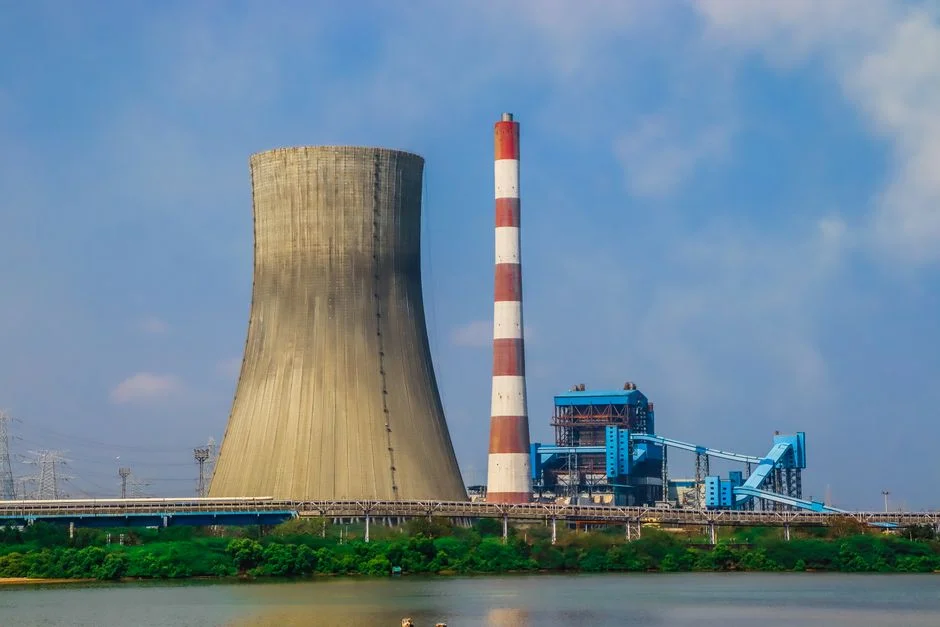
Cooling-tower blowdown composition cannot be specified from source-water quality alone; the final cooling-water chemical package is the design basis for treatment. RSP Engineers identifies concentrated minerals, suspended solids, treatment chemicals, elevated temperature, biocides, and corrosion-derived metals such as copper and zinc as constituents that can change the required pretreatment train. The pollutant profile also depends on source-water quality, cooling technology, site operations, and whether discharge occurs during normal operation or construction and commissioning, according to CRS Report R49057 dated July 31, 2026.
Request representative source-water and blowdown data for:
- pH and conductivity or TDS;
- suspended solids and turbidity;
- total hardness, chlorides, sulfates, and phosphates;
- copper, zinc, and other metals associated with the selected materials and corrosion program;
- temperature;
- the selected biocides, corrosion inhibitors, anti-scaling agents, and any residual oxidant;
- flow variation across normal operation, shutdown, cleaning, and commissioning.
Representative samples must reflect the intended chemical program and operating range. A single clean-water sample is not a basis for equipment selection. If the chemical package remains provisional, treat the pretreatment specification as provisional and require bidders to confirm final chemical compatibility. Warm blowdown may require cooling or holding before discharge where temperature limits apply. Residual chlorine or another controlled biocide may require dechlorination or a change toward a non-persistent biocide strategy, subject to equipment-operability and authority review.
Use the pH sensor selection for wastewater pretreatment to define pH instrumentation and control requirements, but do not select a pH sensor before establishing the expected chemistry and flow regime. The pH control scope should include sensor location, calibration access, reagent strength, duty cycle, fail-safe routing, and treated-water verification.
| Design input | What it controls | Procurement requirement |
|---|---|---|
| Source-water analysis | Expected mineral load entering the cooling system | Representative laboratory results and stated sampling conditions |
| Blowdown analysis | Treatment objectives and residual contaminants | Representative samples across the expected operating range |
| Final chemical package | Residual biocide, inhibitor, and antiscalant behavior | Product, dosage, application method, and safety data |
| Temperature profile | Cooling, holding, and discharge timing | Measured or calculated temperature at collection and discharge points |
| Operating profile | Peak flow, batch discharges, cleaning events, and redundancy | Hourly or event-based flow assumptions with operating scenarios |
| Discharge criteria | Permit limits and authority-approved monitoring | Issued or preliminary written limits from the receiving authority |
Select a Discharge Route and Portland-Area Pretreatment Train
The receiving authority’s written discharge criteria—not a generic industrial range—must determine the final treatment train. For sanitary-sewer service, obtain acceptance from the receiving sewer authority, identify its industrial pretreatment program, and use the issued limits to define pH control, solids removal, metals management, dechlorination, and temperature controls where applicable. A automatic wastewater chemical dosing system may be needed for pH or reagent control, but the equipment specification should follow the confirmed chemistry and limits.
For a direct surface-water discharge, evaluate the NPDES pathway identified by RSP Engineers and CRS Report R49057. Meeting a generic pH range or an example temperature value is not evidence that the site can discharge directly. The discharge route, receiving water, permit conditions, monitoring, and any application-specific limitations must come from the authority with jurisdiction over the proposed outfall.
RSP Engineers cites a required pH range often between 6.0 and 9.0 as an example; it is not a Portland-specific limit. Where the utility limit or site chemistry requires it, specify automatic acid or caustic dosing with mixing, flow-paced control, treated-water verification, and a fail-safe response. For suspended material, filtration is a candidate unit operation. If the issued limit identifies copper, zinc, or another dissolved constituent, chemical precipitation or ion exchange may be necessary. Ultrafiltration pretreatment for data-center wastewater can remove suspended material, but it does not by itself remove dissolved TDS or metals.
Where residual chlorine is controlled, include dechlorination. Where temperature limits apply, include cooling or holding capacity. Evaluate reuse alongside sewer discharge: treatment for cooling makeup, landscape irrigation, or construction dust control serves a different endpoint and requires its own water-quality and operational approval. Treated blowdown should not be assumed suitable for reuse merely because it meets a sewer limit.
| Discharge route | Triggering information | Potential unit operations | Approval evidence |
|---|---|---|---|
| Sanitary sewer | Utility acceptance, flow estimate, industrial-user requirements, constituent data | Equalization, pH neutralization, filtration, metals removal, dechlorination, cooling | Industrial-user permit or other written connection approval |
| Direct surface water | Proposed outfall, receiving-water information, site discharge analysis | Route-specific treatment determined by NPDES requirements | Issued NPDES coverage and site-specific conditions |
| Cooling makeup reuse | Cooling-system chemistry, make-up demand, treatment objective | Filtration plus constituent-specific removal and water-quality control | Facility approval and confirmed cooling-system compatibility |
| Other approved reuse | End-use standard, distribution system, application controls | Treatment and disinfection or polishing required by the end use | Authority or owner acceptance for that application |
Size the Skid, Pumps, Tanks, and Monitoring for Early Site Planning
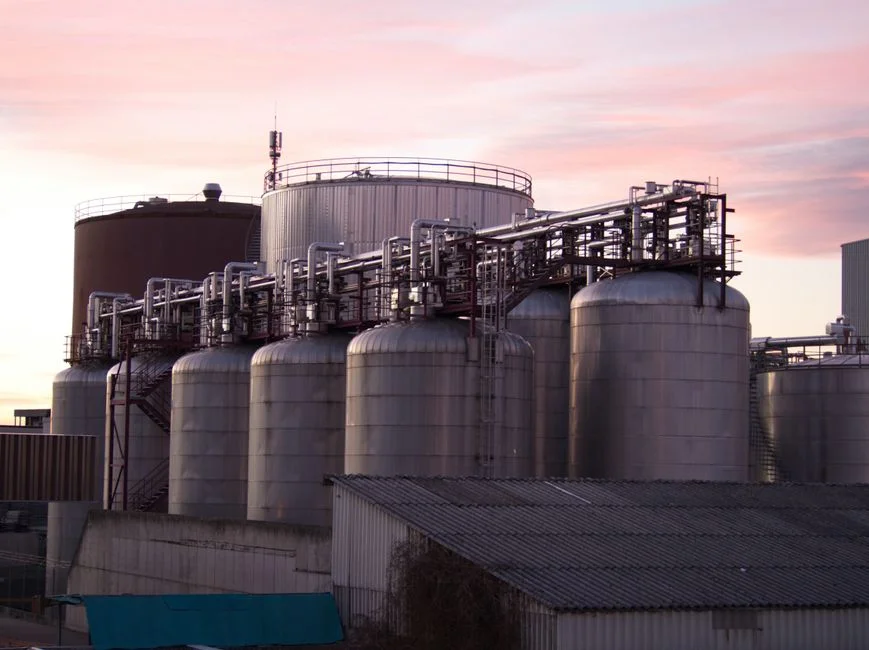
No universal Portland flow rate can be applied: the supplied research does not provide one, and every sizing number must come from the site’s water balance and operating profile. Establish peak blowdown, wastewater-treatment backwash, cleaning wastewater, and sanitary flow separately, then identify which streams can be combined and which require dedicated treatment or diversion.
RSP Engineers provides a useful footprint warning: simple pH neutralization may require a few hundred square feet, while filtration plus chemical precipitation can require several thousand square feet for equipment, tanks, and chemical storage. These are planning comparisons, not guaranteed Portland areas. Reserve additional space for equalization, access, drainage, containment, and future maintenance rather than fitting the skid into the area occupied by the process equipment alone.
The site plan should address:
- equalization volume and whether each stream can enter the tank;
- chemical storage with spill containment;
- drainage that prevents untreated or off-spec wastewater from leaving the treatment area;
- maintenance access and vehicle access for chemical delivery;
- sampling ports for each permit-required monitoring point;
- automated flow and pH monitoring where required;
- off-spec storage or disposal arrangements.
Include routine laboratory sampling, permit reporting, calibration, chemical inventory, and operator labor in operating cost. Monitoring is part of compliance, not an accessory to the treatment skid. For reuse, reserve space for storage, distribution pumping, quality verification, and overflow or off-spec disposal. Specify the required water-treatment valves and media early enough that access, compatibility, and replacement strategy can be evaluated.
| Planning item | Required input | Reservation or design output |
|---|---|---|
| Hydraulic capacity | Measured or calculated peak flows and operating scenarios | Tank volume, pump capacity, redundancy, and controls |
| Treatment footprint | Selected unit operations and chemical storage | Equipment area, maintenance clearance, containment, and drainage |
| Monitoring | Permit parameters and sampling locations | Instrumentation, sample taps, data handling, and laboratory program |
| Reuse infrastructure | End use, demand profile, and quality criteria | Storage, distribution pumping, verification, and off-spec route |
| Operational compliance | Reporting frequency and operating responsibility | Staffing, calibration, laboratory, and chemical costs |
Build a Decision Framework for Equipment Procurement
A comparable bid package starts with the site’s source-water analysis, representative blowdown chemistry, final chemical package, water-flow diagram, operating profile, discharge destination, reuse target, utility limits, and monitoring requirements. If an item is unavailable, identify it as an open design input with an owner and resolution date rather than asking bidders to assume it.
Require each bidder to state the design basis and performance objective for every proposed unit operation. The response should identify treated-water guarantees where applicable, footprint, utility demand, chemical consumption, waste or sludge handling, controls, redundancy, commissioning requirements, and utility connections. Bidders should also identify which items remain contingent on permit conditions or final source-water and blowdown data.
Require written confirmation that the proposed discharge route is acceptable to the relevant authority. Equipment selection alone cannot create permit eligibility. If the project is still in concept development, obtain a utility pathway letter or equivalent confirmation before treating the treatment skid as a committed design.
CRS Report R49057, dated July 31, 2026, reports that direct data-center water consumption is approximately 2% of total U.S. consumption. The same report states that a 100 MW U.S. data center may directly consume roughly as much water per day as 2,600 households, averaged across cooling strategies. These are national planning references, not Portland design loads or local approval thresholds.
Lifecycle comparison should include freshwater savings, sewer charges, chemical use, energy, monitoring, maintenance, waste handling, and the cost risk of permitting delay or site redesign. A sedimentation tank or high-efficiency sedimentation package should be evaluated against the constituent and solids-removal duty; a plate-frame filter press should be evaluated against the resulting waste-handling stream. Neither substitutes for an accepted discharge route.
| Bid requirement | Acceptable response | Reason to enforce |
|---|---|---|
| Design basis | Flow, chemistry, operating profile, and governing discharge or reuse criteria | Prevents assumptions from becoming hidden equipment scope |
| Performance | Stated treated-water objectives and applicable guarantees | Creates a testable comparison basis |
| Site integration | Footprint, drains, containment, access, utilities, and waste routing | Exposes civil and architectural impacts early |
| Operations | Controls, redundancy, calibration, maintenance, chemical use, and reporting support | Defines life-cycle cost and compliance burden |
| Regulatory pathway | Named authority, permit status, and unresolved assumptions | Separates accepted discharge from proposed equipment |
Frequently Asked Questions
What wastewater treatment does a Portland data center need?
It needs an engineering basis for each stream: cooling-tower blowdown, sanitary sewage, softener or reverse-osmosis backwash, cleaning wastewater, and condensate. The actual train depends on source-water chemistry, the final cooling chemical package, measured flows, temperature, the selected discharge or reuse route, and requirements issued by the receiving Portland-area authority.
What is the cheapest compliant way to treat cooling-tower blowdown?
There is no defensible site-wide price or universal “cheapest” train in the supplied research. Request a cost comparison using the same confirmed flow, chemistry, utility limits, and monitoring scope. Have each bidder separate equipment, installation, chemical consumption, energy, maintenance, laboratory sampling, waste handling, and permit-related costs; an apparently lower capital bid can be more expensive if the operating or compliance scope is incomplete.
How do you size a pH-neutralization and filtration skid for data-center blowdown?
Size it from measured or calculated peak blowdown and backwash flow, representative source-water and blowdown chemistry, required pH limits, solids characteristics, operating temperature, and the selected treatment objective. Include mixing and reagent demand, treated-water verification, equalization, solids or backwash waste, and off-spec handling. Generic flow percentages are not a substitute for the site water balance.
Can treated blowdown be reused inside the data center?
Yes, if the treated water meets the cooling makeup specification and is compatible with the cooling and chemical program. CRS Report R49057 identifies treated wastewater and reclaimed water as potential data-center sources, but reuse does not bypass water-quality verification, storage, distribution pumping, controls, and an approved off-spec disposal route. Sewer compliance alone does not establish suitability for cooling reuse.
When should a supplier be selected for a Portland data-center wastewater package?
Select a treatment supplier after the discharge pathway is defined and the utility or permitting authority has confirmed the applicable review route, while still allowing conceptual equipment planning for site space. Require the supplier to submit its design basis, performance criteria, utility demands, waste handling, controls, redundancy, and commissioning plan. Do not release a final equipment order if flow, chemistry, chemical package, or acceptance criteria remain unresolved, because those gaps can force redesign after the site layout is fixed.