What Changes When a Panasonic Battery Plant Expands in Germany?
Wastewater from a Panasonic Energy battery-plant expansion in Germany must be handled as a site-specific industrial discharge, not ordinary factory sewage. Expansion or an operator change requires review of the BImSchG Genehmigungsbescheid, indirect-discharge authorization under WHG §58, AbwV obligations, the local Wasserzweckverband permit, and any protection-zone prohibitions. Cathode-coating rinse water should be segregated because it can carry refractory phosphorus and organic nitrogen that biological treatment cannot fully remove. Equipment procurement should follow permit review, representative wastewater testing, and confirmation of the binding municipal inlet specification.
Panasonic Energy’s Kansas factory began operating in July 2025 on a site of approximately 1.2 million m², according to Panasonic News, Global Stories. That is a Kansas reference point, not evidence of a specific German expansion. The supplied research does not establish that Panasonic Energy has publicly announced a particular German expansion; the framework here therefore addresses a German expansion, acquisition, or operator change as a planning scenario.
A greenfield expansion generally requires a new approval basis, while an acquisition or operator change may require the existing approvals to be amended or re-issued in the new operator’s name. The responsible engineering team must obtain written confirmation of which route applies rather than assume that a transfer is administrative. This review is detailed in the battery-plant expansion ETP design guidance and the electronics-fab wastewater treatment after expansion framework.
The governing principle is straightforward: lower discharge volume does not establish acceptability when the wastewater chemistry still exceeds the receiving plant’s inlet specification. Expansion and acquisition diligence should therefore begin with source segregation and permit mapping, not with equipment selection.
Map the Five Layers of German Wastewater Approval
German wastewater acceptance is a layered approval problem, and the municipal sewer authority may impose the operative limit where the broader permits establish only general requirements. The five-layer review should identify the responsible authority, required action, current conditions, and evidence needed for an expansion or operator change.
| Approval layer | Decision to establish | What must be verified |
|---|---|---|
| BImSchG Genehmigungsbescheid | Amend or re-issue; determine whether a fresh Genehmigungsverfahren is triggered. | Approved production capacity, wastewater-generating processes, treatment system, monitoring, and operator identity. |
| WHG §58 and Indirekteinleiterverordnung | Re-issue or amend the indirect-discharge authorization in the new operator’s name. | Authorized discharge route, substances, analytical requirements, and applicable implementing provisions. |
| AbwV sector annexes | Re-baseline the applicable substance and sector requirements. | The research cites Annex 3 for inorganic chemicals and Annex 22 for surface treatment; these are not universal classifications for every battery line. |
| Wasserzweckverband permit | Re-notify the authority, negotiate the discharge signature, and confirm the liability and flow conditions. | Local inlet parameters, flow caps, monitoring, sampling, abnormal-operation rules, and consequences of exceedance. |
| Protection-zone overlay | Map Wasserschutzgebiet, Heilquellenschutzgebiet, and Überschwemmungsgebiet restrictions. | Any statutory Verbotstatbestand affecting hydrocarbons, halogenated solvents, heavy metals, or other listed discharges. |
The Wasserzweckverband can impose stricter inlet parameters, flow caps, and liability conditions than broader BAT/AEL or AbwV requirements. It therefore becomes the acceptance ceiling where its conditions are stricter. This hierarchy also explains why a “BAT-compliant” discharge can still fail the municipal inlet check.
Not every constraint is negotiable. A permit condition may be renegotiated through an amendment, but a statutory Verbotstatbestand cannot be traded against an equipment proposal. For an operator change, the project file must state whether each approval will be amended or re-issued, the responsible authority, the required financial assurance, and any consequences if acceptance is withdrawn. The approach aligns with the industrial pretreatment framework in fabricated-metals plant pretreatment limits.
Identify the Wastewater Streams That Can Breach the Permit
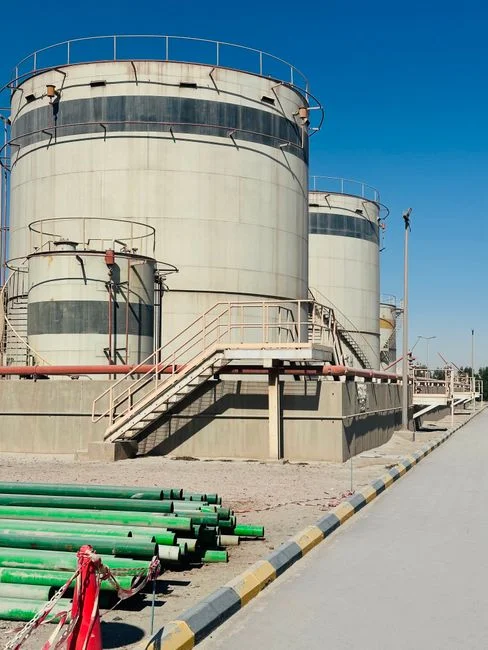
Cathode-coating rinse water carries the highest permit exposure because it combines refractory phosphorus with organic nitrogen in a batch stream that can defeat a municipal-sewage treatment signature. Dilution into cooling water or sanitary sewage may reduce average concentrations, but it does not remove the underlying phosphorus fraction or prove compliance with a mass-based condition.
| Stream | Principal characteristics | First control decision | Indicative pretreatment route |
|---|---|---|---|
| Cathode-coating line rinse water | Batch discharge; high refractory phosphorus and organic nitrogen; possible coating chemicals and solids. | Segregate before dilution and characterize phosphorus and nitrogen species. | Equalisation, DAF, FeCl₃ or PAC precipitation, biological treatment, and polishing. |
| Cooling-tower blowdown | High dissolved solids; comparatively low phosphorus and nitrogen. | Determine whether the discharge is controlled by mass loading, conductivity, or a local concentration limit. | Side-stream filtration and a controlled TDS bleed. |
| Boiler blowdown | Relatively low volume and hot discharge. | Equalise temperature and flow before biological or physical treatment. | Cooling and equalisation. |
| Softener regeneration brine | Periodic salinity and chloride loading. | Establish peak batch flow and chloride concentration. | Equalisation and chloride-resistant biology; MBR where salinity spikes require it. |
Refractory phosphorus is phosphorus bound in organophosphates, polyphosphates, or complexing agents. Conventional biological phosphorus removal removes orthophosphate; it does not reliably remove this bound fraction. The treatment problem must therefore be defined around the actual phosphorus species, not a generic phosphorus number.
Total nitrogen is a separate risk. Electrolyte spillage, cleaning agents, and cathode-line rinse water can produce organic nitrogen and ammonia-associated loads beyond the receiving plant’s domestic-loading basis. HydropureWater’s 2026 research identifies refractory phosphorus and total nitrogen as the two parameters placed on a discontinuation-of-acceptance agenda for a German gigafactory; it also reports a proposed WSE release of 377,000 m³ back to the association in 2025, indicating that volumetric constraints may tighten alongside concentration limits.
Engineering should model each stream separately, then combine the controlled streams only after treatment. The electronics-fab wastewater treatment after expansion approach is useful because it keeps chemistry, flow, and production variability visible during design.
Build a Treatment Train That Meets the Municipal Inlet Specification
A cathode-rinse stream needs a treatment sequence designed around phosphorus chemistry and solids removal, not a generic biological plant. The research-supported sequence is segregated equalisation, DAF, FeCl₃ or PAC precipitation, biological treatment, and residual-TSS polishing.
| Stage | Mandatory function | Decision basis |
|---|---|---|
| Segregated equalisation | Buffers batch flow and concentration; prevents dilute or high-strength batches from controlling the combined signature. | Production batch volume, discharge sequence, and receiving-plant flow cap. |
| DAF | Removes suspended solids and emulsified oil before chemical and biological treatment. | Oil-and-grease load, solids characteristics, footprint, and downstream TSS tolerance. |
| FeCl₃ or PAC precipitation | Captures the refractory phosphorus fraction. | Speciation, mass load, coagulant demand, pH, residual phosphorus, and precipitation sludge. |
| Biological treatment | Addresses biodegradable organics and ammonia-associated nitrogen. | Organics, nitrogen species, temperature, salinity, and inhibition potential. |
| Residual-TSS polishing | Meets the final suspended-solids condition. | Local inlet specification and performance across production variability. |
HydropureWater’s 2026 field-data claim reports effluent total phosphorus below 1 mg/L at the design dose with FeCl₃ or PAC. That is supplier-reported evidence, not a guaranteed Panasonic-site result. The dose must be confirmed through representative influent testing, bench or pilot work, and review against the current permit.
The cathode-coating stream should be managed as chemical-manufacturing wastewater rather than combined uncharacterized with sanitary wastewater. The available industrial DAF system for cathode-coating wastewater and PLC-controlled FeCl₃ and PAC dosing skid address front-end solids and controlled precipitation, respectively. They do not remove the need for equalisation, biological treatment, and final polishing.
Softener brine requires equalisation and chloride-resistant biology; an MBR biological treatment for nitrogen and reuse polishing may be appropriate where salinity spikes require it. MBR and reverse osmosis become reuse options, not substitutes for refractory-phosphorus removal or local inlet compliance. A reuse target should be defined separately from the sewer-discharge contract.
Select Equipment by Function and Verify the Effluent Contract
Equipment selection should start with the contaminant function and then be sized against measured flows, mass loads, and the current permit. Catalogue capacity is not a plant design basis.
| Equipment or function | Procurement criterion | Evidence required before final sizing |
|---|---|---|
| DAF | Removal of suspended solids, oil, grease, and colloidal material without relying on downstream biology to absorb the upset. | Representative solids and oil testing; production and batch-flow data; target removal across variability. |
| Automatic chemical dosing | Controlled FeCl₃, PAC, flocculant, and pH adjustment with documented control logic. | Jar or pilot tests; chemical demand; pH interaction; residual-phosphorus response; sludge generation. |
| MBR | Biological solids separation and reuse-oriented polishing. | Organic and nitrogen load, salinity, temperature, sludge characteristics, and required reuse quality. |
| Plate-and-frame filter press | Dewatering of metal-rich or precipitation sludge after coagulation performance is established. | Sludge solids, permeability, compressibility, cake target, and disposal route. |
HydropureWater’s DAF catalogue covers 4–300 m³/h across 13 standard models, according to its 2026 supplier information. Final selection still requires process testing and sizing against actual flow and mass load. The filter press for metal-rich precipitation sludge and high-efficiency sedimentation tank should be assessed against verified sludge and settling characteristics, not assumed to solve an unresolved wastewater chemistry.
The discharge contract should state permitted parameters, flow, monitoring, sampling, abnormal-operation procedures, and consequences of exceedance. No final recovery rate, project price, or guaranteed effluent limit should be issued without site influent data, the current approvals, and an equipment proposal. Any reuse proposal must also define the destination and its water-quality requirement; reverse osmosis is an option only after the upstream compliance and recovery train are defined.
Prepare for the 2026–2027 Regulatory Delta
The regulatory baseline should not be frozen at the legacy municipal inlet specification. EU Directive 2024/3019 entered into force in 2024 with a 2026 transposition deadline; the supplied research reports tighter nitrogen and phosphorus removal, micropollutant monitoring including PFAS and pharmaceuticals, and energy-neutrality requirements for large sewage treatment plants. Changes at the receiving plant can alter the acceptance envelope against which an indirect-discharge permit is evaluated.
The Bocholt treatment plant provides a measurable reference point. According to Energy Efficiency Movement, dated 2025-08, the 108,000 m³/day facility reduced power consumption by 40% and exported 6.3 GWh per year of renewable electricity following efficiency upgrades. The relevance is operational: a receiving utility may spend time and money altering its own process, changing what industrial pretreatment must guarantee.
Brandenburg adds a separate constraint. The WSE’s proposed release of 377,000 m³ back to the association, reported by iLoveTesla in 2025, signals that volumetric allocation can tighten in parallel with concentration controls. The supplied research also reports that large industrial permits with documented public opposition can experience Genehmigungsverfahren extended by months under Brandenburg administrative practice (SmartWaterMagazine, March 2026). That is schedule risk that should enter the project critical path.
The practical response is to design pretreatment against the expected municipal inlet envelope, including expected nitrogen, phosphorus, and flow constraints, rather than relying only on a historical specification. The regulatory and reuse context in wastewater and cooling-blowdown treatment for a data center provides a useful comparison for separating discharge treatment from discretionary reuse.
Complete the Pre-Approval and Pre-Close Verification Checklist

A German expansion or acquisition should not close, or release treatment-equipment orders, until the approval, wastewater, equipment, and receiving-plant questions are resolved in one auditable file. The required sequence is below.
| Step | Action | Closing criterion |
|---|---|---|
| 1 | Obtain the current BImSchG approval, WHG §58 permit, AbwV applicability review, Wasserzweckverband permit and technical conditions, and protection-zone map. | Named legal owner and written determination of amendment, transfer, or fresh proceeding for each approval. |
| 2 | Commission representative characterization covering flow, refractory phosphorus, total nitrogen, organics, suspended solids, oil and grease, TDS, chloride, metals, and production variability. | Signed dataset with sampling locations, operating states, analytical methods, and identified peak and batch loads. |
| 3 | Bench-test DAF, FeCl₃ and PAC dosing, biological response, and sludge dewatering using representative cathode-coating rinse water. | Documented mass balances, residual performance, reagent demand, sludge characteristics, and scale-up uncertainties. |
| 4 | Confirm amendment or re-issuer requirements, financial assurance, monitoring, liability, and protection-zone constraints. | Authority correspondence and a conditions-compliance matrix for the future operator. |
| 5 | Resolve the discharge route, reuse destination, sludge classification, and receiving plant’s willingness to accept the revised signature. | Written technical acceptance from the receiving plant and approved disposal or recovery route for sludge. |
This is not a post-close discovery exercise. The EV-factory wastewater expansion guide and battery-factory wastewater treatment case study provide useful comparative checks for segregation, pilot evidence, and permit-to-equipment traceability.
Frequently Asked Questions
What will a Panasonic wastewater treatment expansion cost in Germany?
The principal capital drivers for a cathode-rinse retrofit are segregated equalisation, DAF, automatic chemical dosing, and refractory-phosphorus precipitation. Biological treatment and polishing remain necessary where the municipal specification requires them. A defensible budget cannot be issued from the supplied research: request the current permits, representative influent and batch-flow data, pilot results, sludge disposal assumptions, and a supplier quotation tied to the agreed discharge envelope.
How should an equipment supplier for German battery wastewater be selected?
Require evidence against the plant’s actual cathode-rinse chemistry, automatic dosing control, chloride-tolerant biology where needed, and performance testing with representative water. Local service capability matters, but the stronger check is a mass-balance trial covering phosphorus removal, residual TSS, sludge generation, and operation through production variability. Acceptable performance must be tied to the municipal inlet specification.
What information is required to size treatment equipment?
Provide peak flow, batch flow and duration, production schedule, mass loads, the complete discharge signature, protection-zone controls, reuse target, and the receiving plant’s inlet limits. Include variability caused by electrolyte spillage, cleaning campaigns, coating changes, and softener regeneration. Equipment capacity cannot be selected reliably from average daily flow alone.
What are the main compliance risks after an acquisition or operator change?
Distinguish four risks: a concentration exceedance, a flow-cap breach, incomplete transfer of the BImSchG, WHG §58, and Wasserzweckverband approvals, and violation of a statutory protection-zone prohibition. The first two may require operational or treatment changes; the third requires documented authority action; the fourth cannot be resolved by negotiating permit conditions. Complete the pre-approval and pre-close checklist before closing or ordering equipment.
Related Equipment
- industrial DAF system for cathode-coating wastewater — specifications, capacity range, and technical data