
Start by separating the two wastewater streams
A Soacha data center needs two treatment decisions: one for cooling tower blowdown and one for sanitary wastewater. Blowdown should be characterized for dissolved salts, hardness, silica, suspended solids and residual biocides, then routed toward controlled reuse or pretreatment for an identified discharge point. Sanitary wastewater normally requires biological treatment, clarification and disinfection before sewer discharge or non-potable reuse. UF, MBR and RO can each form part of a treatment train, but no final process or discharge limit should be selected until the Soacha sewer destination, permit conditions, makeup source and site water balance are confirmed.
Cooling tower blowdown is the controlled purge used to manage cycles of concentration, scaling and corrosion as water evaporates in the cooling system. Sanitary wastewater comes from restrooms, staff areas, kitchens and support facilities. Combining them can force one treatment train to handle both biodegradable organics and concentrated cooling chemistry, increasing chemical demand, membrane fouling risk and control complexity. Segregating the streams preserves the option to treat each one against its actual destination and reuse specification.
The Medellín guide provides a transferable screening reference, not Soacha measurements. For a cooling system operating at 4–6 cycles of concentration, it reports TDS of 1,500–2,500 mg/L, total hardness as CaCO₃ of 400–800 mg/L, free chlorine or bromine residual of 5–50 mg/L, isothiazolinone biocides of 5–30 mg/L and TSS of 5–30 mg/L. These are HydropureWater field data from 2026 for a Medellín cooling system.
| Input to obtain for Soacha | Why it controls treatment |
|---|---|
| Cooling configuration, makeup source, evaporation and drift | Defines the hydraulic basis of the cooling water balance. |
| Chemical program, current cycles of concentration and measured blowdown chemistry | Determines scaling, corrosion, biocide-control and membrane-fouling risks. |
| Sanitary flow and occupancy | Establishes biological treatment and disinfection duty. |
| Intended reuse and discharge routes | Sets the required water quality, residual handling and permit pathway. |
Build the Soacha water balance before selecting equipment
The Soacha water balance should reconcile makeup, evaporation, drift, intentional blowdown, sanitary discharge and every planned reuse before equipment is sized. The Medellín guide gives the screening relationship B = Makeup/(COC − 1), where B is blowdown and COC is cycles of concentration. It also reports blowdown at 0.3–0.8% of makeup volume at 4–6 COC; that relationship should not replace a site calculation.
Begin with metered makeup and measured evaporation and drift. Add the actual controlled purge, rather than a theoretical bleed alone. Then account for sanitary wastewater, process-water losses, toilet flushing, irrigation and any other on-site reuse. The operating period should reflect dry-weather cooling demand and the chemical program in use, because nominal annual averages can conceal the condition that drives treatment demand.
IDE gives a generic comparison point of up to 2 million liters per day for a 100 MW facility (IDE, 2026). It is useful for checking the order of magnitude of utility consumption, but it cannot size a Soacha installation. A Soacha design needs the campus cooling configuration and local operating data.
| Water-balance component | Required evidence | Equipment implication |
|---|---|---|
| Makeup and evaporation | Meter records and cooling-system operating data | Sets incoming water demand and concentrate-generation potential. |
| Drift and intentional blowdown | Measured or reconciled operating values | Determines equalization and pretreatment flow. |
| Sanitary wastewater | Occupancy-based generation data verified against flow metering | Sets biological treatment capacity independently of IT load. |
| Reuse destinations | Demand schedule and required water quality | Defines whether permeate quality is necessary and how much residual discharge remains. |
If reuse cannot reduce total freshwater withdrawal, compare the treatment scope against sewer-discharge cost and permit risk. Reuse is not automatically economic merely because it reduces nominal discharge volume; residual treatment, operators, energy, membrane replacement and concentrate disposal remain part of the comparison.
Choose between discharge, partial reuse and high-recovery reuse
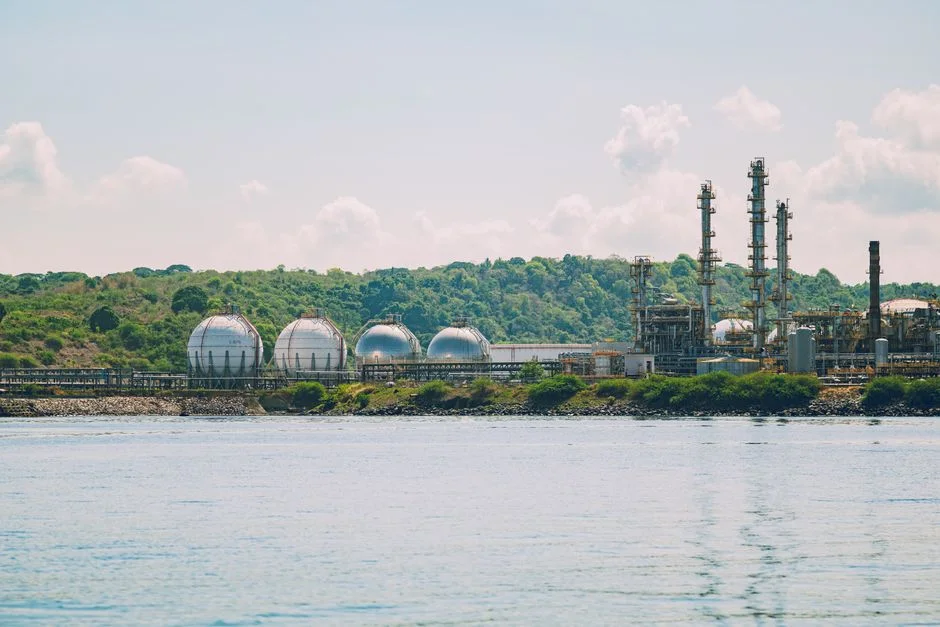
The preferred scope depends on confirmed chemistry, receiving-system acceptance and the value of recovered water, not on a predetermined technology. A discharge-only option may use equalization and chemical control only where the relevant Soacha authority accepts the actual cooling stream and its constituents. This is a regulatory conclusion that requires local confirmation; it cannot be inferred from Medellín practice.
Partial reuse combines pretreatment with RO where dissolved-salt reduction is needed for cooling makeup or another identified non-potable use. It must retain a permitted route for residual concentrate and overflow. High-recovery reuse adds controlled salt removal or crystallization only after the water balance, product-water demand and concentrate-disposal route are established. IDE describes this approach for scale-prone cooling streams; it is an advanced design condition, not a default.
| Scope | Indicative process | Decision gate | Principal residual risk |
|---|---|---|---|
| Discharge | Equalization, chemical control and necessary dechlorination or residual treatment | Receiving sewer or authority accepts the stream and applicable limits | Biocide, scale-inhibitor or dissolved-salt rejection |
| Partial reuse | Pretreatment plus RO, with permitted residual-concentrate and overflow routes | Reuse quality, freshwater savings and disposal route are demonstrated | Concentrate chemistry and membrane scaling |
| High-recovery reuse | RO combined with controlled salt precipitation or crystallization | Full water balance, solids handling and accepted concentrate route | Precipitation control and operational complexity |
Recovery claims require careful comparison. IDE states that conventional brackish-water RO is often limited to 75–80% recovery (IDE, 2026). HydropureWater’s industrial RO catalog states recovery rates up to 95%; neither is a guaranteed Soacha result. The Medellín guide reports that side-stream RO with lime-soda softening can support 7–10 COC and more than 75% blowdown recovery, based on HydropureWater field data from 2026; this is transferable concept evidence, not local proof.
IDE also reports an industrial application operating at around 95% recovery with permeate silica reduced to about 1 mg/L. That application blended several industrial streams and was not a Soacha data-center case. Use it to identify questions for pilot testing, not to specify guaranteed performance.
Design the cooling-blowdown treatment train
Cooling-blowdown equipment should be selected from measured contaminants rather than generic recovery claims. The characterization program should cover pH, conductivity or TDS, total and calcium hardness, silica, sulfate, chloride, TSS, residual oxidizing biocide, non-oxidizing biocide, scale inhibitor and temperature. Temperature matters because membrane performance, chemical demand and scaling behavior can change with feed conditions.
The normal sequence is controlled collection and equalization; chemical or physical pretreatment matched to measured chemistry; solids removal or membrane protection; RO where dissolved-salt reduction is required; and final disinfection where the reuse specification requires it. The exact order should follow pilot results, particularly where biocide compatibility or antiscalant dosing is critical.
| Unit operation | Function | Application point | Buyer’s guarantee to request |
|---|---|---|---|
| Multi-media filter | Removes suspended solids and colloids | Protects downstream RO | Filtrate quality, backwash demand and differential-pressure limits |
| UF system for cooling blowdown pretreatment | 0.03 μm PVDF membrane separation with automatic backwash and air scour | Final solids barrier before RO | Specified feed range, turbidity limit and cleaning validation |
| Industrial RO system for blowdown reuse | Reduces dissolved salts before reuse | Cooling make-up or other approved non-potable use | Permeate quality, recovery, concentrate flow and chemistry |
| Automatic chemical dosing system | Controls coagulant, flocculant, pH adjustment and specialty chemicals | Pretreatment and residual management | Dose range, control response and compatibility with feed chemistry |
The UF catalog specifies a capacity range of 2,000–40,000 L/h, 0.03 μm PVDF membranes, turbidity up to 300 ppm, automatic backwash and air scour, without chemicals. These are catalog limits, not evidence that the system will meet the Soacha feed. The multi-media filter can provide upstream solids removal, while chemical dosing should be controlled according to actual demand rather than a fixed recipe.
RO creates a concentrate stream; recycling permeate does not eliminate that obligation. IDE’s dynamic RO operation and controlled salt precipitation require antiscalant and seed management, solids handling and an accepted concentrate route. Those features should remain conditional alternatives until the pilot and permit pathway support them.
Design sanitary wastewater for sewer discharge or reuse
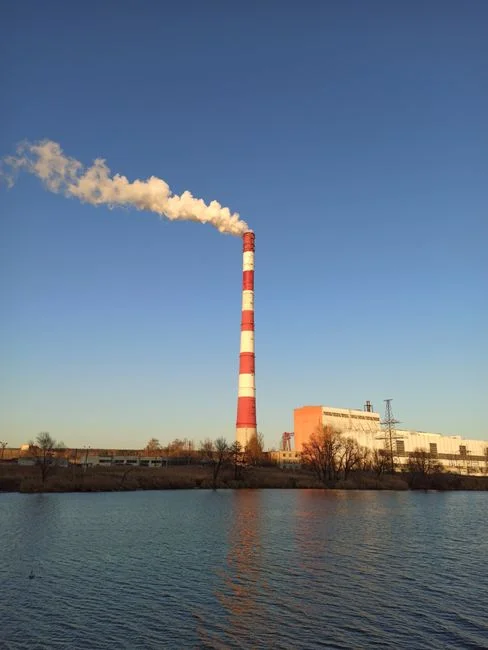
Sanitary treatment must be sized from verified campus wastewater flow and load, not IT power. A packaged biological plant is suitable where a buried, automated installation is acceptable and reuse quality is not the primary requirement. An MBR becomes more appropriate when a smaller footprint or near-reuse-quality effluent justifies the additional treatment and maintenance requirements.
| Option | Catalog scope | Best fit | Key procurement question |
|---|---|---|---|
| Underground packaged sewage treatment plant | A/O biological contact oxidation, sedimentation and disinfection; 1–80 m³/h capacity | Verified flow fits the package and sewer discharge is accepted | Does the quoted capacity include peak and surge conditions? |
| MBR system for sanitary wastewater treatment | 10–2,000 m³/day; submerged PVDF filtration below 1 μm | Compact installation or reuse polishing | How are membrane fouling, cleaning and replacement priced? |
| Chlorine dioxide generator | Configurations from 50 g/h to 20,000 g/h | On-site disinfection where specified for cooling loops or process wastewater | What generation capacity corresponds to the validated residual and contact-time requirement? |
| Plate-and-frame filter press | Filtration areas from 1 to 500 m² | Sanitary sludge dewatering before collection and off-site disposal | What feed solids range and cake-handling duty were used for the guarantee? |
For sanitary reuse, identify the exact destination before selecting the process: toilet flushing, irrigation, cooling makeup or another non-potable application. Each destination requires a defined water-quality and pathogen-control specification, plus the relevant public-health review. A sanitized sewer discharge is not automatically suitable for cooling makeup, where dissolved salts, hardness and silica may determine scaling.
The WSZ capacity range and MBR range are product catalog boundaries, not proof of suitability. Bid documents should state the design flow, load basis, peak factor, effluent specification, sludge generation and required redundancy. If the sanitary train produces sludge, include dewatering and the authorized collection route before awarding the package.
Confirm the Colombian permit and receiving-system pathway
National discharge values do not establish Soacha’s final authorization. The Medellín guide verifies Resolución 631/2015 values of pH 5–9, BOD ≤120 mg/L and oils and greases ≤50 mg/L for its sewer-discharge context. It also identifies biocide toxicity controls. The exact Soacha sewer contract, tariff, pretreatment agreement and residual limits are not supplied in the research and must be obtained from the responsible authority.
Do not transfer Medellín’s EPM Aguas, Cornare or Aburrá–Porce rules to Soacha. The sewer-service operator, receiving water body and environmental authority must be identified, followed by confirmation of the legal route for each stream. The Bogotá domestic sewage treatment guide may help structure a Colombian questions list, but Bogotá conditions are not Soacha conditions.
| Permit question | Evidence the buyer should request | Design consequence |
|---|---|---|
| What is the legal discharge destination? | Written confirmation from the receiving authority | Determines whether treatment targets sewer acceptance or direct-discharge requirements. |
| What analytical limits apply? | Current industrial-user agreement and applicable permit | Defines treatment targets and monitoring. |
| Are biocides or scale inhibitors restricted? | Constituent-specific limits and toxicity test method | May require neutralization, decay time, adsorption or no-discharge controls. |
| Is reuse authorized? | Reuse authorization and public-health pathway | Sets the required treatment and documentation. |
| Where do residuals go? | Accepted sewer, collection or disposal route | Determines whether RO concentrate and sludge treatment can be included. |
Complete a pre-discharge risk check for biocide and scale-inhibitor residuals. These may be more restrictive than ordinary BOD, TSS, pH or sanitary criteria. Confirm whether sewer discharge, direct discharge, reuse or a combination is required for each separate stream before finalizing the treatment train.
Pilot, monitor and procure with measurable guarantees
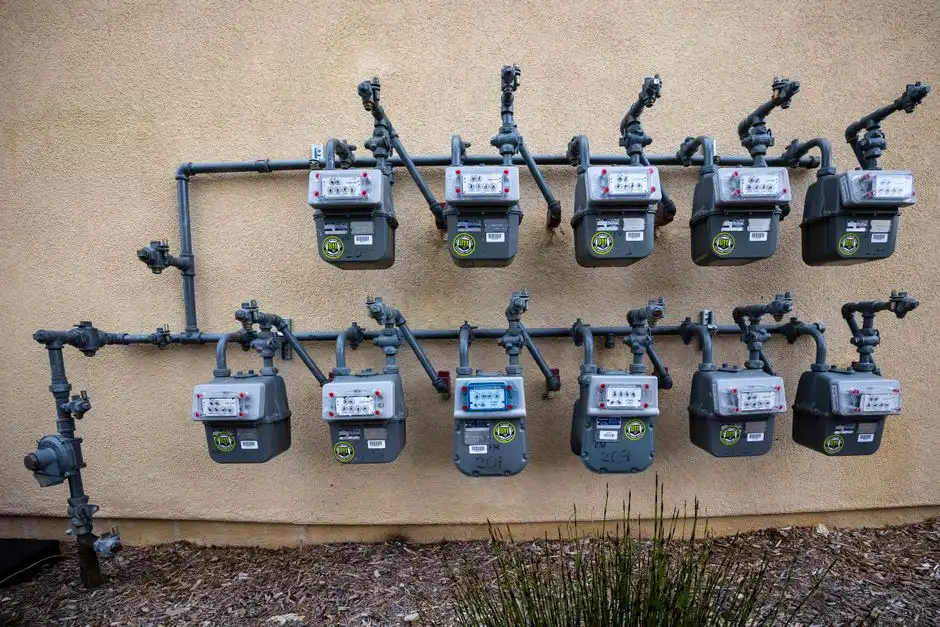
At least one representative sampling campaign should cover cooling blowdown and sanitary wastewater before chemistry-sensitive equipment is finalized. A pilot is useful only if its feed reflects actual cycles of concentration, chemical program, temperature and seasonal variability. For sanitary reuse, confirm the biological process and disinfection performance; for blowdown, validate membrane fouling, chemical demand, biocide effects, precipitate or sludge production and recovery.
Require each bidder to state design flow, feed assumptions, expected recovery, permeate quality, concentrate quantity and chemistry, and the effects of temperature and residual chemicals. Include compliance testing, operator training, PLC controls, automatic backwash, alarms, redundancy, spare-parts availability and maintenance access in the commercial comparison. Generic equipment capacity does not answer these obligations.
Reuse water needs sampling points linked to cooling operation. A failed permeate-quality condition must trigger isolation or diversion rather than silently contaminate the cooling loop. Spares and replacement elements should be procured through the RO and UF membrane elements and treatment parts, valves and filter media schedules, with compatible specifications and lead times stated in the bid. For comparison, the Joinville data center blowdown treatment guide and Aracaju data center treatment guide provide transferable procurement structures, not Soacha regulatory evidence.
Frequently Asked Questions
Can cooling blowdown and sanitary wastewater share one plant?
Yes, if combined flow and chemistry can be treated reliably and one confirmed destination accepts the mixture. Segregation is preferable when the streams have different reuse specifications, chemical-residual limits or treatment technologies. Evaluate common equalization only after separate flow, chemistry, permit and sludge balances are documented.
What capacity data should a supplier receive?
Provide measured and reconciled flow, cycles of concentration, makeup, evaporation, drift, blowdown, chemical program, wastewater generation and reuse demand. Cooling suppliers also need hardness, silica, TDS, conductivity, TSS, biocide residuals and temperature; sanitary suppliers need flow, load, occupancy basis and peak conditions.
Can a supplier specify RO recovery from a generic benchmark?
No. A generic recovery figure is a screening reference, not a performance guarantee. Require site-specific feed assumptions, temperature and chemical effects, permeate quality, concentrate flow and chemistry, plus an accepted concentrate route. Pilot evidence should support the guaranteed operating point.
Which supplier-selection check carries the most compliance risk?
Check whether the supplier has verified the actual Soacha receiving authority, current sewer agreement, analytical limits and reuse authorization. The bid should identify permit assumptions and state which design data depend on authority confirmation. A delivered unit does not resolve a prohibited constituent or an unauthorized discharge route.
How should buyers compare cost without unsupported local prices?
Request itemized quotations for equipment, installation, utilities, chemicals, membranes, sludge or concentrate handling, operator labor, monitoring, training and spares. Request the cash-flow assumptions behind any payback claim. No defensible Soacha price or utility tariff was supplied in the research, so the buyer must obtain current quotations and tariff inputs rather than transfer Medellín costs.