What treatment does a Brampton data center actually need?
A Brampton data center needs a site-specific treatment train selected from four decisions: sewer-compliant disposal, cooling-tower makeup reuse, another non-potable reuse, or zero-liquid discharge where reuse and sewer access are constrained. The usual baseline is filtration, controlled antiscalant and biocide dosing, ultrafiltration and brackish-water reverse osmosis, with the resulting water balance determining whether high-recovery equipment is warranted. Brampton’s governance and receiving-sewer requirements must be confirmed rather than inferred from Toronto rules.
Cooling-tower blowdown is the controlled purge from a recirculating cooling loop. Evaporation leaves dissolved solids behind, so operators purge water to control scale formers, corrosion risk and treatment-chemical residuals. A Brampton design should separate this stream from domestic wastewater, process water and other campus discharges before treating them together.
The endpoint determines the treatment scope. Sewer disposal requires confirmed local limits and concentrate acceptance. Reuse as cooling-tower makeup requires permeate quality, closed-loop compatibility and a return-water balance. A zero-liquid-discharge route adds thermal concentration, crystallization and solid-waste handling; it is not justified merely by a high headline recovery rate.
Do not import a Toronto specification into Brampton. Confirm the authorized receiving sewer, Region of Peel requirements, Ontario water-taking applicability and any surface-water or storm-sewer constraints for the actual site. The regional data center blowdown treatment comparison is useful for route selection, while the related Brampton treatment analysis should be treated as a design framework rather than site data.
Build the Brampton water balance before selecting equipment
Cycles of concentration link tower chemistry to freshwater demand and the required recovery rate. Obtain current operating cycles, makeup and blowdown flow, evaporation, drift, operating hours, seasonal variation and the planned increase in AI or high-density server load before sizing equipment.
HydropureWater’s 2026 GTA guide states that, at a typical 4-COC baseline, approximately 25–30% of makeup leaves the tower as blowdown. IDE’s 2026 analysis reports that a 100 MW facility may use up to 2 million L/day of cooling-tower makeup. Applying the 4-COC relationship to that reference case gives 500,000–600,000 L/day of blowdown, or approximately 15–18 million L/month, according to HydropureWater’s 2026 guide. This is an illustrative reference case, not a forecast for a Brampton facility.
The design must also distinguish RO-stage recovery from whole-train recovery. Permeate may be reused as makeup, but the concentrate still requires a route. The water balance should therefore track freshwater reduction, reusable permeate, residual discharge, evaporation, drift and concentrate volume together.
| Design input | Why it controls the treatment train | Required evidence |
|---|---|---|
| Cooling-tower cycles of concentration | Controls blowdown volume, salt loading and freshwater reduction. | Current operating value and design target. |
| Makeup and blowdown flow | Sets the hydraulic basis for pretreatment, RO and residual handling. | Measured hourly and daily flow with seasonal variation. |
| Evaporation and drift | Completes the tower mass balance. | Measured or validated operating data. |
| Reuse return | Determines how much permeate can be absorbed by the cooling loop. | Makeup demand and return-water quality. |
| Concentrate destination | Constrains recovery and determines whether ZLD equipment is required. | Written acceptance or defined disposal route. |
Characterize the blowdown that will enter the treatment plant
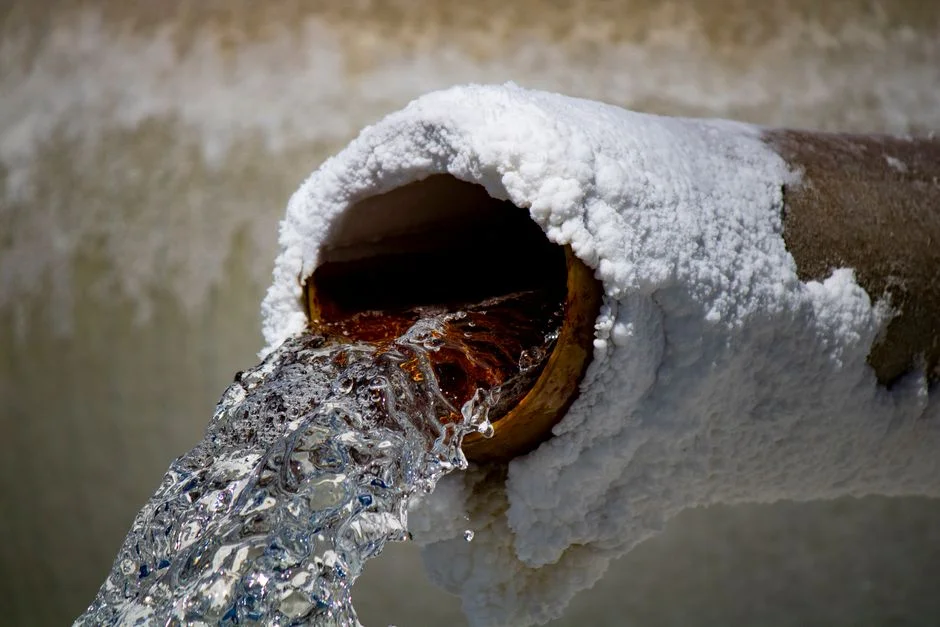
The supplied 2026 GTA screening envelope is TDS of 1,200–6,000 mg/L and suspended solids of 10–50 mg/L. These are preliminary values for a Toronto-focused guide, not final Brampton design criteria. Actual site samples must establish the membrane-feed chemistry and required pretreatment.
Test conductivity and TDS, TSS, turbidity, calcium and magnesium hardness, alkalinity, silica, sulfate, pH, temperature, residual oxidant and biocide, antiscalant and corrosion-inhibitor residuals. HydropureWater’s 2026 GTA guide identifies calcium, magnesium, alkalinity and silica as the principal scaling minerals and notes that biocides, scale inhibitors and corrosion inhibitors can remain in the blowdown.
Sample across operating seasons rather than relying on one composite. HydropureWater’s 2026 guide reports that cold makeup conditions can increase downstream RO feed-pressure requirements and affect outdoor equipment design. Temperature also affects viscosity, membrane performance and any thermal concentration step.
Confirm whether phosphate-based inhibitors are present. HydropureWater’s 2026 guide says they should be avoided because they can foul RO membranes and conflict with municipal phosphorus limits. That is a design warning, not proof of a Brampton limit; obtain the applicable sewer restriction before changing the cooling-water programme. The automatic chemical dosing system should be specified only after the chemicals and control variable are established, while multimedia filtration can screen the pretreatment basis.
| Parameter | Design implication | Decision it supports |
|---|---|---|
| TDS and conductivity | Establish dissolved-salt loading and concentrate volume. | RO capacity and recovery target. |
| Calcium, magnesium, alkalinity and silica | Define scaling risk and chemical-control requirements. | Antiscalant, pretreatment and membrane selection. |
| TSS, turbidity and biofouling indicators | Determine solids and biological protection required before RO. | Filtration and UF scope. |
| pH, temperature and residual oxidant | Influence membrane compatibility, reaction control and cleaning. | Material selection and dosing. |
| Treatment-chemical residuals | Show how cooling-loop chemistry reaches the treatment plant. | Biocide, antiscalant and dewatering strategy. |
Route each stream through a permit-gated treatment train
A Brampton treatment train should operate as a sequence of gates: no stream advances until its contaminant-removal task and downstream route are defined. Separate blowdown from other wastewater so the membrane system is not sized around uncharacterized loads.
- Equalization and side-stream filtration: Remove suspended solids, corrosion products and biofilm fragments before sensitive equipment.
- Controlled chemical dosing: Apply antiscalant and biocide against conductivity or flow and other verified control variables, not a fixed timer alone. Confirm compatibility with the selected membranes and the permitted discharge.
- Ultrafiltration: Use ultrafiltration pretreatment for Brampton cooling blowdown as a barrier against colloids and suspended solids before RO. The supplied GTA treatment train places UF before RO.
- Brackish-water RO: Produce permeate for cooling-tower makeup with an industrial RO system for cooling-tower makeup reuse. IDE’s 2026 article gives 75–80% recovery as the conventional BWRO planning range before scaling becomes difficult.
- Residual route: Send RO concentrate to a confirmed permitted destination. Evaluate MVC and crystallization only when sewer access, reuse objectives and solids handling justify the additional energy and capital.
For on-site microbial control in reuse or ZLD applications, HydropureWater’s 2026 guide includes on-site chlorine dioxide generation in a brine-trucking alternative and identifies chlorine dioxide as suitable for industrial cooling loops. That does not remove the need to verify chemical compatibility, residual limits and worker-safety controls. A chlorine dioxide generator should therefore remain conditional on the approved cooling-water chemistry.
Pretreatment sludge, chemical precipitates and ZLD solids are separate waste streams. Define dewatering, containerization and disposal before selecting the final equipment package; otherwise the RO and thermal equipment can be optimized while leaving an unpriced solids-handling obligation.
| Stage | Required function | Gate before the next stage |
|---|---|---|
| Equalization and filtration | Remove suspended material and stabilize flow. | Feed chemistry and flow are confirmed. |
| Chemical control | Manage scaling and microbial risk. | Chemical residuals are acceptable for downstream equipment and discharge. |
| UF | Protect RO from colloids and solids. | UF filtrate quality satisfies the membrane supplier’s feed limits. |
| RO | Remove dissolved salts and produce reusable permeate. | Permeate quality, recovery and concentrate route are demonstrated. |
| Concentration and solids handling | Manage residual liquid and precipitated solids. | Authorized disposal and waste classifications are confirmed. |
Choose between reuse, compliant discharge and full ZLD
For a sewer-connected Brampton site with manageable discharge chemistry, UF plus RO is the practical reuse option. IDE’s 2026 article gives 75–80% as the conventional BWRO planning range, while HydropureWater’s 2026 GTA guide says this approach can deliver 80–90% of the water benefit at roughly one-third of full-ZLD lifecycle cost. These are regional screening comparisons, not Brampton guarantees.
Where sewer or watershed constraints are tighter, add MVC to the RO concentrate. Reserve crystallization for sites with no practical discharge route or where hauling is the only contracted option. HydropureWater’s 2026 GTA guide estimates a 50,000 USGPD RO skid at $250K–$500K installed and $1.50–$3.00 per 1,000 US gallons of operating cost, including energy, chemicals and membrane replacement.
For the same 2026 GTA guide, full RO plus MVC plus crystallization is estimated at $3 million–$8 million capital cost and $5–$15 per 1,000 US gallons operating cost. These are regional screening figures rather than vendor quotations. The final case must include pretreatment, solids handling, utilities, controls, maintenance and the approved residual route.
Do not adopt approximately 95% recovery as the base case. IDE’s 2026 account of a MAXH₂O Brine Desalter describes an industrial configuration operating at around 95% recovery with permeate silica of about 1 mg/L. That result involved controlled salt precipitation and a specialized architecture; it was not a conventional skid guarantee. Membrane and filtration requirements can also be compared through the RO and UF replacement-element specification.
Carbon belongs in the comparison. Open Engineering’s 2026 LCA found the wastewater-reuse scenario had about twice the GWP of freshwater, with treatment energy accounting for roughly 80% of the difference. That trade-off does not remove the freshwater-saving benefit, but it prevents procurement from describing reuse as impact-free. Solids handling for a concentrate train should be evaluated separately; the filter press for pretreatment sludge is one dewatering option to price against the actual waste stream.
| Route | Recovery basis and residue | 2026 GTA cost screen | Main selection condition |
|---|---|---|---|
| UF plus RO with permitted residual discharge | 75–80% conventional BWRO planning range; concentrate requires acceptance. | $250K–$500K installed for a 50,000 USGPD RO skid; $1.50–$3.00 per 1,000 US gallons operating cost. | Sewer access and compliant residual route are available. |
| RO plus MVC | Additional thermal concentration; distillate reuse and still stream remain. | No supported Brampton quotation supplied. | Tighter residual-discharge constraints justify added thermal equipment. |
| RO plus MVC plus crystallization | Full ZLD architecture with a solids-disposal obligation. | $3 million–$8 million capital cost; $5–$15 per 1,000 US gallons operating cost. | No practical liquid-discharge route or closed contractual discharge scenario. |
Confirm Brampton and Ontario compliance before freezing the design
Brampton discharge requirements must be confirmed with the Region of Peel and the receiving sewer operator before the bid specification is frozen. Establish the authorized route, applicable sewer-use or pretreatment limits, permitted flow, monitoring obligations and whether RO concentrate is accepted. A Brampton design should not inherit Toronto sewer figures merely because both projects are in Ontario.
HydropureWater’s 2026 Toronto guide cites Chapter 681 limits including pH 6–11, total residual chlorine typically 1–2 mg/L at discharge, temperature no higher than 60°C and a TDS ceiling below 1,500 mg/L in some GTA trunk-sewer catchments. These are Toronto reference values. The source guide itself notes that Ontario’s Permit to Take Water framework applies when daily makeup exceeds 50,000 L/day. The project engineer and Ontario authorities must confirm current applicability, source-water justification and reuse documentation for the Brampton site.
Evaluate direct surface-water and storm-sewer routes separately. HydropureWater’s 2026 guide states that heated blowdown more than about 30°C above ambient can trigger a thermal-load review and that direct lake or storm-sewer discharge may involve federal Fisheries Act and Ontario environmental approvals. Do not assume sanitary-sewer access or the absence of thermal constraints.
The basis of design should document four connected routes: freshwater supply, treated-water reuse, residual discharge and solid waste. Each route needs an authority, acceptance condition, operating constraint and responsible party. A data center cooling blowdown treatment guide can support process planning, but it cannot substitute for Brampton’s local approvals.
Turn the engineering basis into a supplier-ready bid package
Give bidders measured hourly and daily flows, seasonal chemistry, current and design cycles of concentration, reuse target, required permeate quality, concentrate route, available footprint, utility constraints and future expansion envelope. Include a measured water balance and list the assumptions that remain to be confirmed.
Require each proposal to guarantee feed and product flow, define whether recovery applies to the RO stage or the complete reuse train, state permeate quality, provide normalized energy use and identify chemical consumption, membrane replacement, cleaning assumptions, availability and the complete pretreatment scope. IDE’s 2026 article describes recovery both around a conservative local RO stage and across an integrated high-recovery system, so an unqualified “recovery” figure is not comparable.
Also ask suppliers to identify scaling controls, membrane materials, cleaning method, redundant capacity, controls, alarms, freeze protection for outdoor equipment and local service support. These requirements should be drafted with input from the cooling blowdown reuse and high-recovery options analysis, but the Brampton water balance and permit route remain controlling.
Compare bids on installed lifecycle cost and permit risk, not purchase price alone. Every option should identify excluded work, assumed residual treatment, sludge route, utility requirements, replacement cycles and conditions that would invalidate its price or recovery guarantee. A compliant bid is one whose supplier has priced the same Brampton basis of design.
Frequently Asked Questions
What will a Brampton data center blowdown treatment system cost?
HydropureWater’s 2026 GTA guide gives a $250K–$500K installed screening range for a 50,000 USGPD RO skid and $1.50–$3.00 per 1,000 US gallons of operating cost including energy, chemicals and membrane replacement. It estimates full RO, MVC and crystallization at $3 million–$8 million capital cost and $5–$15 per 1,000 US gallons operating cost. Request a site quotation using measured flow, chemistry, recovery, concentrate route, pretreatment and utilities because these regional figures are not Brampton vendor prices.
Can the treatment train guarantee 95% recovery?
Do not require approximately 95% as a conventional BWRO guarantee. IDE’s 2026 article gives 75–80% as the conventional planning range, while its roughly 95% industrial result involved a specialized MAXH₂O Brine Desalter and reported permeate silica of about 1 mg/L. Require the vendor to define the recovery boundary, concentrate route, feed chemistry, scaling controls and operating conditions supporting its guarantee.
Which Brampton approvals are needed before equipment selection?
Confirm the discharge route, sewer capacity, applicable limits, monitoring requirements and concentrate acceptance with Region of Peel and the receiving sewer operator. Ask Ontario authorities to confirm whether the Ontario Permit to Take Water framework applies to the site’s daily makeup and what source-water justification and reuse documentation are required. Direct surface-water and storm-sewer options require separate environmental review.
How should treatment suppliers be selected?
Compare suppliers on guaranteed recovery, permeate quality, pretreatment scope, membrane protection, controls, normalized energy use, chemical consumption, availability, replacement assumptions, service support and total lifecycle cost. Provide every bidder with the same measured Brampton water balance and residual-disposal route; otherwise their recovery and operating-cost figures will not be technically comparable.