Which treatment should a Byram petroleum factory choose?
For petroleum wastewater in Byram, factories should choose DAF when free oil, emulsified oil, FOG and other low-specific-gravity contaminants are the main treatment targets. DAF uses conditioned particles and 30–50 micron microbubbles to float oil-rich material for skimming. A lamella clarifier is more appropriate when heavier, readily settleable solids dominate. Neither option alone proves compliance: selection must use site-specific flow, oil, FOG, solids, pH and temperature data, defined outlet targets, sludge handling and applicable local discharge or sewer limits.
Petroleum wastewater often contains several contaminant classes at once. That makes the separator one part of a treatment train rather than a complete compliance strategy. If free oil and FOG are important targets while heavier solids also need removal, staged or combined treatment may be necessary.
| Application condition | Stronger starting point | Reason to verify before purchase |
|---|---|---|
| Free oil, emulsified oil, FOG or low-specific-gravity material dominates | industrial DAF system | Oil behavior, conditioning requirements, skimming and sludge characteristics |
| Heavier, readily settleable solids dominate | lamella clarifier | Particle density, settling properties, hydraulic distribution and sludge inventory |
| Oil and heavy solids are both material targets | Combined or staged treatment | Whether upstream oil recovery reduces downstream solids and chemical demand |
| Dissolved organics, toxicity or other regulated constituents remain | Primary separator plus downstream treatment | Applicable outlet objectives and the downstream process design basis |
Primary clarification does not demonstrate removal of dissolved organics, toxicity or other regulated constituents. The practical selection method for a Byram factory is therefore to characterize the wastewater, define the treatment objectives, compare both bids on one design basis and then confirm downstream compliance. More general context is available in the DAF versus clarifier selection for metal-processing wastewater and the DAF versus clarifier comparison for FOG wastewater.
How DAF and lamella clarification separate petroleum pollutants
DAF separates material by flotation, while a lamella clarifier separates it by gravity, so the mechanisms determine which petroleum contaminants each unit is more likely to recover. Clearwater reports that its DAF process uses 30–50 micron microbubbles to lift solids, oils and fats toward the surface, where a paddle skimmer removes the floating material (Clearwater Industries, 2026-04-27).
During DAF operation, a recirculation pump draws clarified water into a pressurization and saturation system. Compressed air dissolves under pressure. When the saturated water enters the flotation tank and the pressure is released, microbubbles form and attach to incoming impurities and conditioned particles. A floating blanket develops, the skimmer removes it to a collection trough, and clarified water is recovered beneath the float.
Chemical conditioning is part of that mechanism, not an accessory. Clearwater states that DAF should be paired with coagulation and flocculation for optimal performance because conditioning increases particle size and improves contact with the microbubbles. Serpentine flocculator tubes or chemical mix tanks can provide this function, with chemical delivery handled through an automatic chemical dosing system where appropriate.
A gravity clarifier removes suspended material through settling. A lamella clarifier adds inclined plates that shorten the effective settling path, allowing clarification within a smaller footprint under the selected design conditions. It does not generate the flotation bubbles or float oil in the way DAF does.
The removal paths also differ. DAF skims floating solids and oil-rich material while heavier solids settle into a bottom collection zone for withdrawal. Clearwater describes both an auger and a sediment compartment or basin with sludge extraction. A lamella clarifier primarily withdraws settled sludge from the bottom. Either arrangement still requires a defined sludge-removal method; skimming a DAF unit does not eliminate heavier-solids handling.
Match the separator to the wastewater rather than the product name
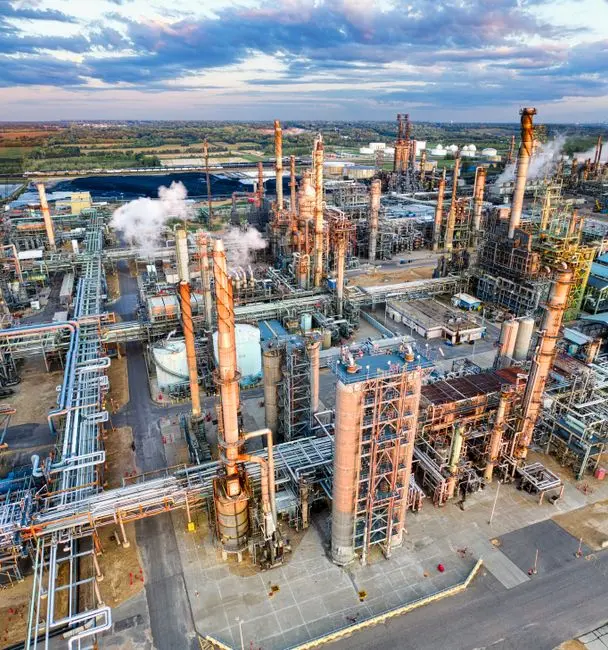
Wastewater characterization determines the defensible equipment choice because nominal flow capacity does not reveal whether the contaminant is floatable, settleable, emulsified or dissolved. The characterization package should establish both hydraulic loading and separation behavior under representative production conditions.
- Document average and peak flow, flow duration, diurnal or batch variation and the selected design flow.
- Measure free oil, emulsified oil, FOG, suspended solids, particle-size distribution, particle density, temperature and pH.
- Identify whether each oily stream comes from production, tank cleaning, vehicle washing, stormwater or another source.
- Determine whether the oil is free, emulsified or surfactant-stabilized.
- Review jar-test results and the expected effects of coagulants, flocculants, pH adjustment and mixing.
- Record site constraints: flow availability, installed footprint, maintenance access, utilities and production shutdown windows.
| Measured or documented input | Selection relevance | Information to require from bidders |
|---|---|---|
| Average and peak flow, duration and production cycles | Establishes hydraulic loading and equalization requirements | Selected design flow, peak treatment behavior and batch-discharge strategy |
| Free oil, emulsified oil and FOG | Identifies floatable targets and conditioning needs | Oil phase, origin, behavior during collection and treatment assumptions |
| Suspended solids, size distribution and density | Separates heavier settleable solids from low-specific-gravity material | Evidence that the proposed mechanism addresses the measured solids |
| pH, temperature and jar-test results | Defines chemical and operating constraints | Conditioning chemicals, mixing sequence, control ranges and resulting sludge effects |
| Upstream controls and equalization | May reduce load, peak flow or recoverable oil | Interfaces with source control, stormwater entry and upstream oil recovery |
Upstream controls should be evaluated before buying a larger separator. An ASABE poultry-processing study cited in the supplied research found that pre-sieving to 106 μm lowered mean COD from 5,263 to 4,390 mg/L and mean total solids from 3,355 to 2,991 mg/L. Those results are not petroleum-performance data, but they demonstrate that upstream solids control can materially change downstream conditions. The poultry-processing wastewater treatment comparison is useful only for that engineering principle.
For the actual petroleum stream, require jar-test results rather than assuming chemical conditioning is interchangeable across oils. Ask how each proposed chemical program changes oil capture, floc structure, sludge quantity and downstream dewatering requirements.
Compare operating mechanisms, dependencies and whole-train costs
The separator with the lower purchase price may have the higher complete operating burden because DAF and lamella clarification depend on different equipment and labor. Compare both options over the same wastewater, flow profile, treatment targets and discharge conditions.
A DAF package needs a flotation tank, recycle and saturation equipment, pumps, skimming, sludge withdrawal, controls and normally chemical conditioning. A lamella clarification system needs hydraulic distribution, a solids-collection arrangement, sludge withdrawal and effective inventory management. Chemical use, mixing and dosing labor, skimming or sludge-removal labor, mechanical maintenance, clean-water startup, utilities and downstream treatment loading must all appear in the comparison.
| Quotation item | DAF-specific question | Lamella-clarifier-specific question |
|---|---|---|
| Design basis | Does selected capacity cover the measured flow profile and contaminant load? | Does the selected settling area and loading condition address the measured solids? |
| Chemical conditioning | Which coagulants, flocculants, mixers, pH controls and dosing systems are included? | Are conditioning and pH controls included, and are they necessary for the proposed duty? |
| Oil recovery | How are floating oil, FOG and skimmings collected and transferred? | How much oil, if any, is expected to report with settled sludge? |
| Sludge withdrawal | How are skum and bottom solids removed, dewatered and disposed of? | How is bottom sludge removed and prevented from accumulating? |
| Utilities and controls | Are recycle, air saturation, pumping, controls and instrumentation included? | Are hydraulic distribution, controls, instrumentation and solids handling included? |
| Downstream interface | What oil, solids and chemical effects are delivered to biological or membrane treatment? | What solids and settleable contaminant effects are delivered downstream? |
HydropureWater lists DAF capacities from 4–300 m³/h across 13 models (HydropureWater, 2026). That is catalog coverage, not proof that any model fits a Byram facility. The selected model must be checked against the plant’s actual flow profile.
The same source lists lamella surface-loading rates of 20–40 m/h and chemical-consumption reductions of up to 30% (HydropureWater, 2026). These are selected-design catalog values, not guaranteed petroleum results. The buyer should ask the bidder to connect each value to the proposed configuration, wastewater data and treatment objectives.
Every quotation should cover equalization, conditioning, separation, oil collection, sludge withdrawal and disposal, utilities, controls and downstream interfaces. The supplied research contains no valid purchase-price, energy-use or chemical-consumption comparison for a Byram petroleum plant, so those costs must be quoted rather than inferred. Sludge may require a separate filter press sizing and sludge dewatering guide.
Size the system around peaks, startup and future operating realities
A nominal catalog capacity establishes only one part of suitability; the design flow must reflect the plant’s actual peak conditions, discharge duration and variation. Both bidders should state how their selected configuration handles batch discharges, stormwater entry and future production changes.
Clearwater states that its COMPACT DAF skid handles flows of 66 GPM or less in a single-skid arrangement, while larger flows use a modular two-skid arrangement (Clearwater Industries, 2026-04-27). This is deployment guidance, not evidence that either configuration is correctly sized for a Byram plant. The bidder must reconcile skid arrangement with the measured flow profile, available footprint, maintenance access and redundancy requirements.
Startup requirements belong in the purchase specification. Clearwater reports that filling the DAF with wastewater instead of clean water can delay clarified-water discharge and may damage the recirculation pump or air-saturation system. Require written clean-water startup procedures, commissioning tests, operator instructions and acceptance criteria from both equipment suppliers.
Ask each supplier to address several operating questions explicitly:
- How does equalization absorb batch discharges and stormwater entry?
- Can the treatment train remain available during maintenance, or is redundancy required?
- Can modular expansion support future production growth?
- Can operators access skimmers, sludge withdrawal points, chemical storage and instrumentation safely?
- Which utilities and maintenance practices are required, and how often must each task be performed?
For a DAF proposal, verify recycle-pump and saturation-system protection, skimmer access, sludge withdrawal, instrumentation and PLC controls. For a lamella proposal, verify hydraulic distribution, sludge removal and access for solids inventory management. Neither should be accepted with only a model designation and a nominal flow figure.
Turn the wastewater permit into inlet and outlet objectives
Equipment selection cannot establish discharge compliance until the applicable Byram-area requirements have been identified and translated into measurable treatment objectives. The supplied research provides no local numeric limits, so the plant must obtain its current permit, sewer-use requirements and applicable pretreatment conditions rather than rely on generic removal claims.
Define the inlet and outlet objectives at agreed sampling points. For each objective, state the representative wastewater conditions, parameter, target, sampling method and operating dependencies. Dependencies may include equalization, chemical properties, sample handling, upstream oil recovery and production conditions.
| Permit-to-equipment step | Information the factory must establish | Evidence required from the bidder |
|---|---|---|
| Identify applicable requirements | Current discharge or sewer conditions applicable to the Byram facility | Written confirmation of the requirements used in the design |
| Translate limits into objectives | Inlet and outlet parameters, targets and sampling points | Performance basis tied to representative wastewater |
| Define dependencies | Equalization, chemicals, upstream recovery and sample handling | Conditions under which the guarantee applies |
| Assess downstream treatment | Influent requirements for any biological or membrane process | Expected downstream load and operating implications |
DAF and primary clarification may provide pretreatment before biological or membrane treatment, but the downstream effect must be evaluated rather than assumed. Elsevier BV’s research title, “Combining Dissolved Air Flotation (DAF) and Modified Moving Bed Biofilm Reactors (MMBBR) for Synthetic Oily Wastewater Treatment,” supports investigating that treatment sequence. However, the supplied excerpt contains no numerical removal result and cannot substantiate an achieved-performance guarantee. The related biological-treatment comparison remains contextual rather than proof of petroleum compliance.
Questions to ask DAF and clarifier suppliers before awarding the order
A defensible bid must answer the same application questions with the same wastewater data and treatment objectives. Give every supplier the complete design basis and require each proposal to explain how its selected equipment meets it.
| Supplier question | Required response |
|---|---|
| How did you select the proposed duty and model? | Show the average and peak flow, duration, batch variation, contaminant data and selected design flow used in the sizing calculation. |
| What performance evidence supports the proposal? | Provide representative wastewater or pilot results where justified, with operating conditions, sampling method and report attached. |
| Which items are included? | List conditioning chemicals, mixers or flocculation equipment, pH control, PLC-controlled dosing, equalization, oil collection, sludge withdrawal, controls and downstream interfaces. |
| What operating and maintenance work is required? | Define clean-water startup, sludge removal, chemical storage, access, utilities, routine maintenance and operator controls. |
| What exactly is guaranteed? | State the wastewater conditions, oil and solids targets, sampling points, methods and dependencies that limit the guarantee. |
| What downstream effect is expected? | Describe the oil, solids, toxicity and chemical effects presented to downstream treatment without claiming unverified removal. |
Do not accept a generic contaminant-removal percentage as evidence that a unit will meet the plant’s oil-removal target under production conditions. Ask each bidder to identify its exclusions as well as its guarantees, particularly whether upstream oil recovery, equalization, chemical conditioning, sludge handling or downstream treatment is assumed to be provided by others.
Frequently Asked Questions
How much does DAF cost compared with a lamella clarifier for petroleum wastewater?
The supplied research contains no valid cost comparison or quotation for a Byram petroleum plant. Request complete treatment-train quotations over the same duty basis, including equalization, conditioning, separation, oil collection, sludge withdrawal and disposal, utilities, controls and downstream interfaces, then compare chemical use, maintenance and labor separately.
How should a Byram factory size DAF or lamella clarification equipment?
Provide average and peak flow, flow duration, production-cycle variation, free and emulsified oil, FOG, suspended solids, particle-size distribution, temperature and pH. Catalog capacity is only a starting point; require the supplier to explain model selection and peak-flow treatment against that complete data set.
What evidence should a wastewater separator supplier provide?
Require application review using representative wastewater and, where justified, pilot or comparable-plant evidence. Any guarantee should state the wastewater conditions, treatment targets, sampling points, methods and dependencies, so a generic removal percentage cannot substitute for an application-specific basis.
Does primary clarification prove petroleum-wastewater permit compliance?
No. Primary DAF or lamella clarification can remove floating oil and suspended solids, but that alone does not establish removal of dissolved organics, toxicity or other regulated constituents. Identify the current Byram-area discharge or sewer requirements, translate them into inlet and outlet objectives, and confirm compliance across the complete treatment train.