Which Treatment Unit Fits the Wastewater Fraction?
For mining and metals wastewater in Raccoon in 2026, choose a clarifier when dense, gravity-settable mineral fines dominate, and choose DAF when oil, grease, emulsions, conditioned colloids, or buoyant solids are important targets. Mixed streams usually require equalization, characterization, clarification, DAF, filtration, and targeted dissolved-metal treatment in sequence. Neither device removes dissolved metal ions by itself, so final sizing requires representative flow and wastewater data, separation tests, total-versus-dissolved metals analysis, and site-specific quotations.
The decision is controlled by the contaminant fraction, not by total suspended solids alone. Mining and metals wastewater can combine tailings or mill discharge, colloidal clay, oils and greases, residual flotation reagents, and dissolved metals in the same stream. A single TSS measurement cannot show whether solids settle, float, remain emulsified, or are dissolved.
Choose a high-efficiency lamella clarifier for settleable mineral fines when gravity settling is dependable under the expected flow, temperature, and chemical conditions. Lamella plates increase effective settling area and reduce the required footprint, but they do not change the underlying mechanism; particles must actually settle.
Choose an industrial DAF system for oil, colloids, and buoyant solids when flotation can remove a material fraction from the water. The reviewed literature reports DAF micro-bubbles of 30–50 microns attaching to flocculated particles, followed by surface collection and skimming. Performance still depends on conditioning, bubble generation, attachment, and float collection (Clearwater Industries, as cited in HydropureWater’s 2026 DAF-versus-clarifier guidance).
Do not convert a literature removal percentage into a design guarantee. Hahn’s Fundamentals of Wastewater Flotation (2010), as cited in HydropureWater’s 2026 guidance, reports 90% oil removal within its reviewed flotation context. That is not a guaranteed performance value for a Raccoon metals plant; site-specific flotation testing remains necessary.
DAF and Clarifier Mechanisms Side by Side
DAF removes solids by attaching conditioned particles to micro-bubbles, floating the aggregate, skimming the float, and withdrawing clarified water below the blanket. Coagulant, pH adjustment, and polymer may be needed where testing supports them; the required dose should come from jar or bench testing rather than a supplier default. A PLC-controlled chemical dosing skid can be included where the documented chemistry requires controlled feed.
A clarifier separates particles by gravity. Settled solids move toward a bottom collection zone, while clarified water overflows through a peripheral or peripheral-and-imperforate arrangement. Lamella plates add settling area, but their performance still depends on particle settleability, hydraulic distribution, solids inventory, and sludge withdrawal.
The solids outlets are different. A properly conditioned DAF train can produce a thick float that needs little further dewatering, whereas a clarifier produces concentrated underflow that still requires a defined sludge route (Clearwater Industries, as cited in HydropureWater’s 2026 guidance). If dewatering is required, a filter press for DAF float and clarifier sludge should be evaluated against actual residual characteristics.
| Procurement issue | Dissolved air flotation | Clarifier, including lamella design |
|---|---|---|
| Target fractions | Oil, grease, emulsions, conditioned colloids, buoyant solids, and selected flocs | Dense, gravity-settable mineral fines and metallurgical solids |
| Primary mechanism | Micro-bubble attachment and flotation | Gravity settling; lamella plates increase effective settling area |
| Conditioning | Coagulant, pH adjustment, and polymer as established by testing | Chemical aid may be used, but settling and sludge withdrawal govern performance |
| Solids outlet | Surface float removed by skimming | Concentrated underflow removed from the bottom |
| Principal limitation | Not well suited to heavy non-floating silt and clay (Fluence, as cited in HydropureWater’s 2026 guidance) | May leave emulsified oil, colloids, and low-specific-gravity precipitates |
| Downstream implication | Usually requires solids polishing before reuse or sensitive discharge | Usually requires flotation or filtration when buoyant or colloidal carryover controls the objective |
Neither mechanism removes dissolved metal ions as a dissolved species. Dissolved metals remain in the aqueous phase unless another process transforms, binds, exchanges, filters, or biologically removes them. DAF can remove metal-bearing particles when they are conditioned and floated; clarification can capture metal-bearing solids that settle. Neither claim authorizes a design that treats dissolved metal as though it were suspended.
Map Each Stream Before You Size the Equipment
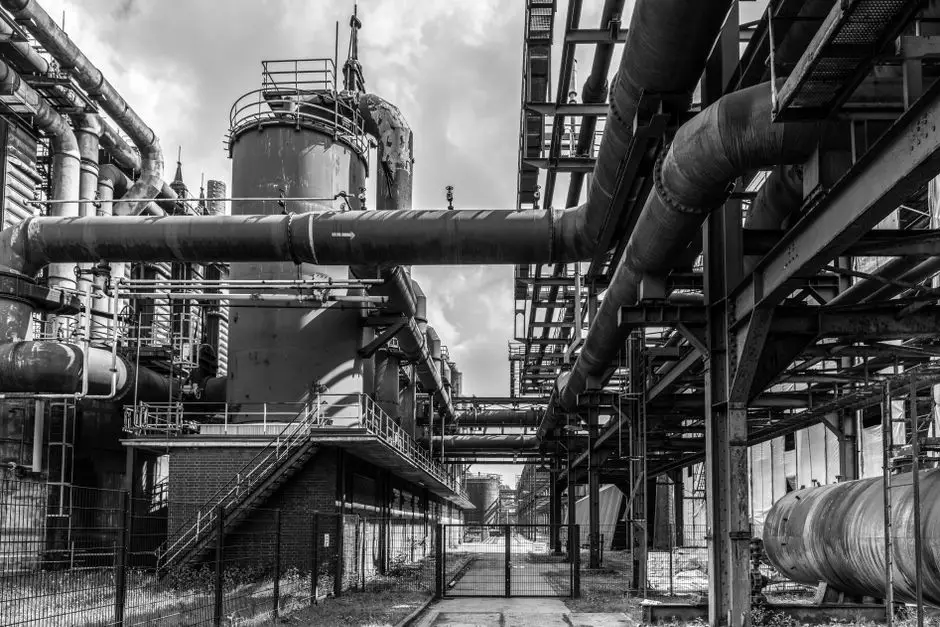
Separate tailings or mill discharge, wash water, metalworking or finishing rinses, and episodic batch or storm discharges before assigning one design flow. These streams have different flow durations, solids distributions, oil contents, chemical residuals, and metal fractions. Combining them before characterization can conceal the event that controls equipment size.
Request a flow-duration history and samples across production shifts, batch peaks, wash-water events, clean-in-place operations, and seasonal flow variation. A single composite sample may average conditions that never occur simultaneously. For each stream, request pH, temperature, TSS, turbidity, settleable solids, oil and grease or soap oil and grease, COD where relevant, and total and dissolved metals with the filtration method defined.
Use mining and metals pretreatment limits as a source of permit questions, not as a substitute for the Raccoon facility’s applicable authorization. The EPA’s Abstracts of Industrial NPDES Permits, second edition, July 1984, warns that permit data and limitations are not directly transferable without case-by-case consideration. Current limits must come from the responsible authority.
Require settling tests for the clarifier route, including settleable-solids concentration, settling behavior, temperature, and chemical conditions. Require flotation or jar tests for the DAF route, recording chemical dose, residual colloid, floatability, float stability, and sludge observations. These results determine whether the candidate unit can meet the stated treatment objective.
Include equalization where hydraulic or chemical variation requires it, but do not add it by default. Equalization can stabilize feed quality and chemical dosing while adding footprint, pumping, residence-time, odor-control, and sludge-management requirements (Hahn, as cited in HydropureWater’s 2026 guidance).
The ASABE poultry-processing study offers a transferable process lesson, not a mining benchmark: pre-screening reduced mean COD by 16.6% and mean total solids by 10.8% (ASABE study, as cited in HydropureWater’s 2026 guidance). It supports investigating upstream solids reduction before sizing treatment equipment.
Build the Treatment Train Around the Discharge Objective
The treatment train should follow the contaminant sequence, not a preferred equipment category. Characterize and equalize the flow, condition it where justified, separate the targeted fractions, handle the residuals, and polish the water for reuse or discharge. The arrangement depends on wastewater evidence and the applicable Raccoon permit or reuse specification.
| Stream condition | Recommended separation sequence | Required downstream checks |
|---|---|---|
| Dense, settleable solids dominate | Equalization as needed → condition if justified → lamella clarification | Test for colloidal carryover, oil, dissolved metals, and required solids polishing |
| Oil, grease, emulsions, or conditioned colloids dominate | Equalization as needed → conditioning → DAF → clarification or filtration | Test float stability, residual solids, dissolved metals, and reuse quality |
| Both settleable and buoyant fractions are material | Clarification for bulk solids → DAF for residual floatable or colloidal material → polishing | Verify each stage with total-versus-dissolved metals and residual-solids data |
| Dissolved metals control the outcome | Separation train → targeted precipitation, ion exchange, biological treatment, or membrane separation | Confirm chemistry, residual concentrations, solids production, and downstream consequences |
For settleable-solids-dominant flows, place clarification first. For oily or particulate-heavy flows, DAF can serve as pretreatment ahead of clarification, filtration, or biological treatment. If dissolved metals determine compliance or reuse, add a targeted step such as precipitation, ion exchange, biological treatment, or membrane separation; DAF and clarification cannot replace that step.
The ASABE membrane findings define a separate polishing duty: maximum mean permeate flux of 115 L m⁻² h⁻¹, 34% total-solids reduction with a 0.3 μm PVDF membrane, and maximum mean COD reduction of 89% with a 100,000 MWCO Ultrafilic membrane (ASABE study, as cited in HydropureWater’s 2026 guidance). These findings came from poultry-processing wastewater, so they do not establish Raccoon performance. They show why an ultrafiltration system requires its own project basis.
Evaluate float and settled sludge separately. Record solids concentration, free oil, chemical residuals, settling or dewatering behavior, storage requirement, and disposal or reuse route. A filter press for DAF float and clarifier sludge is feasible only if the collected solids have suitable dewatering behavior.
Use the Correct 2026 Sizing and Procurement Basis
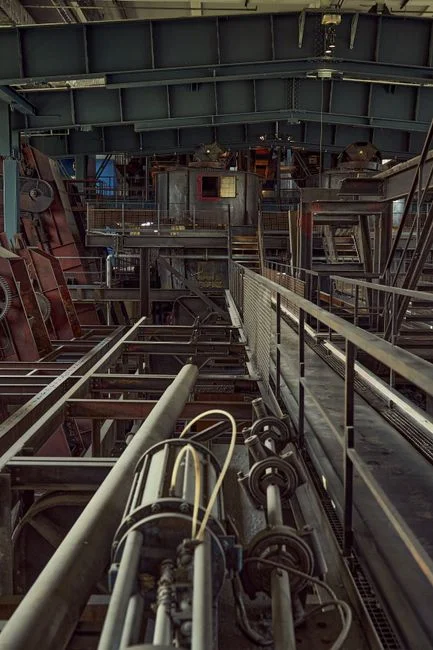
Comparable bids require comparable calculations. The supplied research establishes no universal 2026 purchase price for DAF or clarification, so a generic unit price would hide the project-specific hydraulic, chemical, structural, controls, and residual-handling basis.
| Required quotation item | DAF bid | Clarifier bid | Evidence required from bidder |
|---|---|---|---|
| Flow and treatment duty | Guaranteed flow basis and treated/untreated quality duties | Design flow and clarification criteria | Flow-duration history, batch events, representative wastewater analysis |
| Process calculation | Air-to-solids ratio, hydraulic loading, recycle or saturation concept | Surface-loading basis, solids inventory, feed and hydraulic distribution | Calculations tied to identified wastewater conditions |
| Chemicals and utilities | Chemical addition, operating pressure, flow, air and power demand | Chemical aid, recycle arrangement, pumping, power demand | Jar or bench-test basis where applicable |
| Residuals | Float quantity, solids concentration, oil content, storage and dewatering | Underflow quantity, concentration, withdrawal method, storage and dewatering | Representative sludge observations and downstream route |
| Execution scope | Controls, materials, installation utilities, commissioning, maintenance access | Controls, materials, installation utilities, commissioning, maintenance access | Excluded items, schedule, warranty, and site obligations stated clearly |
For DAF, require the guaranteed flow basis, treated and untreated quality duties, air-to-solids ratio, hydraulic loading, chemical addition, operating pressure, flow, recycle or saturation concept, and the basis for every claimed removal percentage. For clarification, require the surface-loading basis, solids inventory, feed arrangement, recycle arrangement, sludge-discharge method, and clarification criteria.
HydropureWater’s lamella clarifier product information lists surface loading rates of 20–40 m/h and up to 30% lower chemical consumption. These are product-specific values that the supplier must verify against the proposed duty; they are not universal mining-industry values (HydropureWater product information, as cited in HydropureWater’s 2026 guidance).
The HydropureWater DAF catalog covers 4–300 m³/h across 13 standard models, but catalog capacity is not site sizing. Request a project-specific quotation that includes chemical dosing, controls, installation utilities, maintenance access, commissioning, and sludge handling. The bidder should explain how its DAF proposal or lamella clarifier proposal responds to the same documented wastewater basis.
Common Selection Mistakes in Mining and Metals Plants
The most common procurement error is treating TSS as a complete description of the wastewater. TSS does not establish settleability, floatability, oil content, particle size, or dissolved-metal concentration. It can lead to a clarifier that cannot capture emulsions or colloids, or to DAF being asked to lift raw, heavy silt and clay that flotation is poorly suited to handle (Fluence, as cited in HydropureWater’s 2026 guidance).
Do not assume clarification removes oil, colloids, or dissolved metals, and do not assume DAF removes dissolved metal ions. Generic removal percentages, one off-design sample, and a supplier’s default chemical dose cannot replace project testing.
Keep the full operating scope in the budget: equalization, pumping, chemical dosing, controls, corrosion review, sludge storage and dewatering, and downstream polishing. Comparing equipment acquisition alone can make the lower-priced bid appear economical while leaving the residuals and treatment train underfunded. The separation choice should also be coordinated with any biological treatment options for mining wastewater considered downstream.
Frequently Asked Questions
Should a Raccoon metals plant choose DAF, a clarifier, or both?
Choose DAF when oil, grease, emulsions, conditioned colloids, or relatively buoyant solids are the main targets. Choose a clarifier when dense, gravity-settable solids dominate and the hydraulic regime supports dependable settling. Use both when settleable and buoyant or colloidal fractions are both material, with clarification usually handling bulk solids and DAF removing the residual floatable fraction.
What is the 2026 budget for DAF or clarification?
The research does not establish a universal 2026 unit price. Request a project-specific quotation tied to flow and duration, wastewater characteristics, treated-water objectives, conditioning, controls, installation utilities, commissioning, maintenance access, and sludge handling. Ask bidders to identify exclusions separately so the comparison reflects the complete installed scope.
How should a supplier be selected?
Require a documented design basis, representative wastewater data, equipment calculations, chemical and utility demands, materials-of-construction review, control philosophy, commissioning support, and sludge-management details. Request pilot or bench data from a comparable metal-bearing stream and confirm that the proposed calculation uses the Raccoon wastewater results rather than generic catalog assumptions.
What information is needed to size the treatment train?
Provide the flow-duration history, batch and event loads, particle-size distribution, settleability or flotation tests, oil characterization, total and dissolved metals, reuse or discharge objectives, and downstream polishing requirements. Catalog flow alone is not a sufficient sizing basis. Identify each stream before selecting a common design flow or treatment route.
Does either unit guarantee permit compliance?
No. Applicable permit or sewer limits must come from the responsible authority, and dissolved metals may require precipitation, ion exchange, biological treatment, or membrane separation. Confirm the final train through representative testing and site-specific performance criteria.