Which Discharge Rules Govern a Whitwell-Area Plant?
Mining and metals plants near Whitwell that discharge to a sanitary sewer generally comply through the Clean Water Act section 307(b) pretreatment program under 40 CFR Part 403, with 40 CFR Part 437 or Part 433 categorical standards applied where relevant. The receiving POTW’s sewer-use permit and local limits remain the controlling site requirements. A typical train equalizes batch flows, adjusts pH, precipitates dissolved metals, removes metal-bearing solids with DAF or lamella clarification, filters residual solids, and dewateres the resulting sludge. Equipment should be sized and verified against the specific POTW permit, influent variability, batch peaks, monitoring frequencies, and enforcement rules—not a generic mining-wastewater template.
The first engineering decision is not which clarifier to buy; it is which discharge pathway each outfall uses. A sanitary-sewer connection falls under the Clean Water Act section 307(b) pretreatment framework and 40 CFR Part 403, which is enforced through the receiving POTW’s sewer-use requirements. The comparison of mining and metals sewer pretreatment requirements explains the distinction between a sewer outlet and a direct point-source discharge.
EPA’s Industrial Wastewater guidance identifies NPDES as the permitting program for industrial point-source discharges and specifically states that mining point-source discharges, including associated impoundment discharges, require NPDES authorization. That requirement applies to separate surface-water, stormwater, and stormwater-runoff outfalls; it should not be confused with a sanitary-sewer discharge. EPA’s Mineral Mining and Processing Effluent Guidelines also identifies stormwater runoff and mining wastewater as subjects of mining wastewater regulation.
40 CFR Part 437 applies to ore mining and dressing categorical industrial users. Part 433 applies to metal finishing activities such as plating, pickling, and anodizing where those activities are present. A plant can have both an NPDES obligation for a non-sewer outfall and an industrial-user permit for its sewer connection.
| Discharge or activity | Primary compliance pathway | Design consequence |
|---|---|---|
| Sanitary-sewer discharge | Clean Water Act section 307(b), 40 CFR Part 403, the POTW sewer-use permit, and applicable categorical standards | Use the written POTW limits for final sizing and compliance proof. |
| Mining point-source or surface-water discharge | NPDES authorization | Evaluate separately; do not combine its limit with the sewer permit. |
| Separate stormwater or runoff outfall | Applicable NPDES or stormwater requirements | Keep segregated or evaluate treatment under the correct permit. |
| Ore mining and dressing | 40 CFR Part 437 may apply | Determine the correct subcategory and applicable production-based provisions. |
| Plating, pickling, or anodizing | 40 CFR Part 433 may apply | Reconcile categorical requirements with local limits. |
No Whitwell-specific numerical limit appears in the supplied research. Do not convert representative zinc, copper, chromium, or PFAS values into site requirements. Obtain the receiving POTW’s current written permit and sewer-use ordinance, then reconcile both with the applicable categorical standards before issuing an equipment specification. A useful preliminary comparison is available in the Whitwell-area pretreatment compliance comparison.
Build the Compliance Basis Before Sizing Equipment
Clean Water Services describes industrial pretreatment as removing, reducing, or altering harmful pollutants before industrial wastewater enters the public sanitary sewer, and its permit process illustrates the controls a plant should expect: tailored discharge permits, user reporting, compliance monitoring, and enforcement provisions.
Begin by identifying the receiving POTW and asking whether the facility is a Significant Industrial User. Request the sewer-use permit, local limits, monitoring plan, designated sampling points, surcharge provisions, and enforcement-response rules. Clean Water Services requires an industrial discharge permit application before discharge and identifies monitoring and significant-noncopliance reporting as compliance functions; those are examples of permit-administration risk, not Whitwell requirements.
Next, map each stream separately: mine drainage, process water, washdown, floor wash, metal-finishing effluent, stormwater, and clean or segregated water. Sampling should establish pH, total suspended solids, metals, oil and grease, toxicity characteristics, and flow variability. For batch discharges, obtain the generation schedule, dump volume, release duration, and any coincident clean-out flow.
| Design-basis item | Evidence to obtain | Why it changes the design |
|---|---|---|
| Controlling authority and permit status | Receiving POTW, permit, local limits, applicable categorical subcategory | Defines the numerical targets and monitoring obligations. |
| Stream inventory | Source, chemistry, discharge route, batch or continuous status | Determines whether streams can be segregated or need common treatment. |
| Flow generation | Average daily flow, peak two-hour flow, batch-dump profile, clean-out schedule | Sets equalization and treatment capacity. |
| Chemistry | pH range, metals, TSS, oil and grease, sulfate or TDS | Sets precipitation chemistry, solids loading, and reagent demand. |
| Compliance operations | Sampling method, monitoring frequency, reporting, response plan | Defines controls, alarms, records, and contingency equipment. |
Use representative sampling, but do not substitute a generic industry profile for the site’s permit. Require written confirmation of the controlling local limits before final equipment sizing. The industrial pretreatment compliance blueprint provides a useful structure for documenting this gate.
Follow the Wastewater Through a Compliance Treatment Train
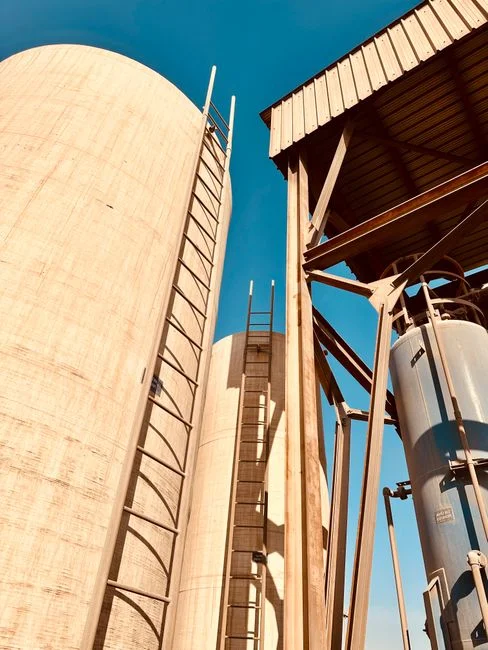
A sanitary-sewer treatment train should be arranged as a sequence of performance gates: equalization, pH and reagent control, precipitation, solids separation, filtration, sampling, and controlled discharge.
- Equalization: Damp shift changes, dump-leach cycles, and mill clean-outs before they reach clarification. Commercial pretreatment guidance identifies 8–24 hours of average daily flow as a common sizing basis and warns that a 4-hour basin may pass batch spikes directly into the clarifier. Final detention must follow measured flow and batch-generation data.
- pH adjustment: Use a PLC-controlled chemical dosing skid for acid or base feed and coagulant or flocculant. The supplied commercial source states that automatic dosing can hold pH within a ±0.2 band and gives 6.5–9.0 as a broad POTW-compatibility target; the receiving POTW’s written limit governs.
- Precipitation: Apply lime or sodium hydroxide for the main hydroxide-precipitation stage. Evaluate sulfide polishing separately where residual-metal objectives justify its reagent cost and hydrogen-sulfide controls.
- Solids separation: Select DAF when oil, grease, or fine colloidal material is present. Select lamella clarification where the primary solids are concentrated metal-hydroxide flocs, flow is high, or footprint is constrained.
- Filtration: Install a downstream multi-media filter to capture residual TSS and colloids before the sewer manhole.
- Sludge handling: Collect, condition, and dewater clarifier or DAF sludge rather than returning it untreated to the process headworks.
| Stage | Primary function | Critical design input |
|---|---|---|
| Equalization | Blend and attenuate batch discharges | Average flow, batch profile, peak two-hour flow, usable volume |
| pH and reagent control | Establish conditions for metal precipitation | Raw pH range, target pH, reagent and coagulant demand |
| Hydroxide precipitation | Convert dissolved metals to separable solids | Metal species, residual targets, jar-test results |
| DAF or lamella clarification | Remove precipitated solids and, where appropriate, oil or colloids | Solids loading, hydraulic loading, floor area or equipment capacity |
| Multi-media filtration | Capture residual suspended and colloidal material | Filtration rate, backwash demand, filtrate destination |
| Sludge conditioning and dewatering | Produce a manageable residual waste stream | Sludge solids, chemical demand, filtrate return, disposal route |
Do not install chlorination or UV by default. Add disinfection only if the POTW permit, collection-system conditions, or industrial-user category expressly requires it. The relevant dissolved air flotation system and high-efficiency sedimentation tank should therefore be selected only after precipitation chemistry and solids-loading tests are complete.
Choose Precipitation and Solids Separation by Performance Risk
Hydroxide precipitation is usually the practical main-stage choice; sulfide treatment earns its place when the written residual-metal objective cannot be met reliably by hydroxide alone.
The supplied commercial guidance reports hydroxide residuals of 0.5–2.0 mg/L and sulfide residuals of 0.01–0.05 mg/L for Cu, Zn, Cd, and Ni. It also states that sulfide reagent cost is 2–4 times higher. These are design-comparison values, not permit limits. Sulfide systems also require sealed reactors and scrubbed vents for H₂S control. Treat sulfide as targeted polishing where residual-metal risk justifies the additional chemical and safety burden.
For solids separation, the same source reports that DAF equipment operates at 5–25 m/h hydraulic loading, removes 90–98% of TSS and 85–95% of oil and grease, and is offered in 13 standard models covering 4–300 m³/h. It reports lamella clarification at 20–40 m/h surface loading, a compact footprint, and chemical-consumption reductions of up to 30%. These are reported product characteristics or supplied guidance, not guarantees of site-specific compliance.
| Decision factor | Prefer DAF | Prefer lamella clarification |
|---|---|---|
| Primary contaminants | Oil, grease, or fine colloidal material is significant | Metal-hydroxide flocs are the principal solids |
| Hydraulic context | Flow can be handled within the selected unit’s rated capacity | High flow or constrained installation footprint |
| Sludge character | Floating or mixed sludge that must be collected and conditioned | Dense settled metal-bearing sludge |
| Final control | Follow with multi-media filtration | Follow with multi-media filtration |
| Required verification | Confirm site removal performance and permit compliance through pilot or representative testing | Confirm floc settleability, solids capture, and hydraulic loading at site conditions |
Use the DAF versus lamella clarifier selection guide to frame the trade-off. A metals plant pretreatment compliance blueprint can then be adapted to the Whitwell site once the permit and characterization data are known.
Prove Compliance at the Discharge, Not Just at the Equipment Outlet
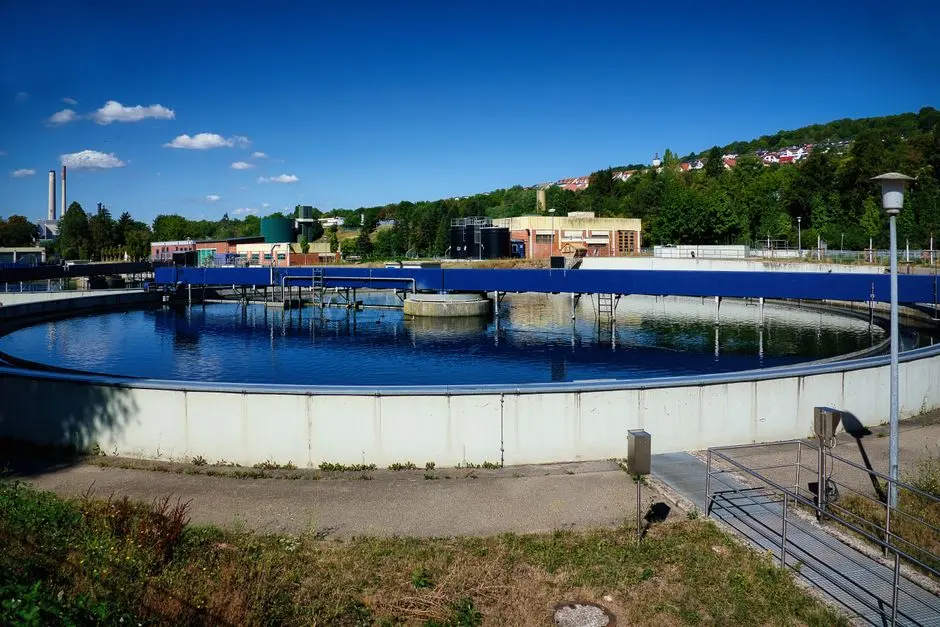
Compliance evidence must come from the permitted discharge point, not only from a vendor’s equipment-outlet performance claim.
Specify continuous or logged flow, pH, and chemical-dosing data in addition to the monitoring required by the POTW permit and applicable categorical standards. Provide representative composite- and grab-sampling locations at the final discharge point and require documented chain of custody. Set alarm and diversion thresholds below applicable permit limits, with approved responses for high pH, excess metals, elevated TSS, excessive flow, and chemical-feed failure.
| Compliance control | Minimum documentation | Failure response |
|---|---|---|
| Flow | Totalized discharge and batch-release trend | Stop or divert discharge and notify operations. |
| pH | Continuous reading with feed-rate and alarm history | Divert to equalization until pH is restored. |
| Metals and TSS | Representative sampling, laboratory records, chain of custody | Investigate treatment performance and follow the permit response plan. |
| Filtration | Differential pressure, filtration cycle, and backwash records | Reduce flow or divert until filtration is restored. |
| Chemical feed | Tank level, pump status, calibration, and dose records | Use standby dosing capacity or divert the stream. |
The supplied commercial guidance calls for design around the peak two-hour flow with 20–30% turndown, but final sizing must use measured flow and batch-generation data. Do not present claims about 2024–2026 PFAS monitoring or revised lead action levels as Whitwell rules unless the receiving POTW or permit expressly requires them. A downstream multi-media filtration barrier can improve solids control, but it does not establish permit compliance by itself.
Control, Dewater, and Dispose of the Metal-Bearing Sludge
Metal-bearing sludge remains a regulated waste after it leaves the clarifier or DAF and must be managed without creating a bypass.
Route sludge to collection, conditioning, and dewatering rather than returning it untreated to the head of the plant. HydropureWater plate and frame filter presses are offered with filtration areas from 1 m² to 500 m² for industrial solid-liquid separation. Specify filtrate return to an appropriate treatment stage and residual-sludge sampling so wash water or equipment leaks cannot bypass compliance treatment.
Prepare the disposal plan from the selected sludge’s actual characteristics. The supplied research does not provide a basis for assigning a specific state or local waste classification to a Whitwell-area mining or metals operation, so that classification must be confirmed with the applicable authorities. Include sludge storage, odor and dust control, loading and transport, and the final destination in both the equipment scope and lifecycle cost.
The plate and frame filter press option should be evaluated against measured solids concentration, batch volume, desired cake handling, and filtrate-return capacity. A press selection without a confirmed disposal route leaves the treatment train incomplete.
Turn the Design Basis into a Supplier and Compliance Checklist
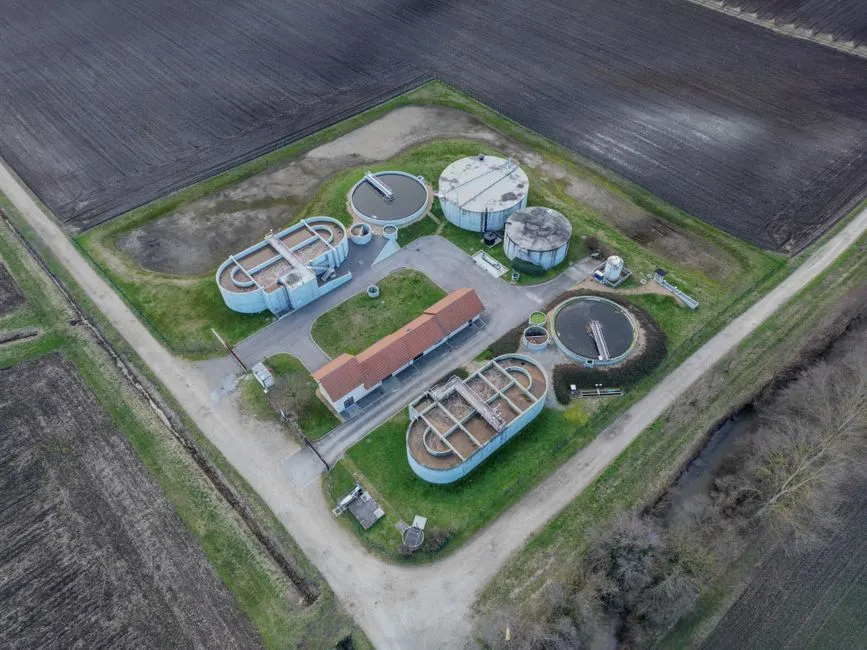
A compliant bid should demonstrate how the proposed equipment meets the written permit, not merely list a flow rate and tank volume.
- Require a process flow, mass balance, hydraulic basis, chemical-consumption estimate, control narrative, sampling plan, and contingency strategy.
- Ask for pilot or jar-test evidence when influent pH swings exceed two pH units or standard hydroxide treatment cannot demonstrate the residual-metal objective.
- State the peak two-hour flow, average daily flow, batch-dump profile, wastewater temperature, pH range, metals, TSS, oil and grease, and sulfate or TDS data in the request for proposal.
- Make final acceptance conditional on the written POTW permit, confirmed local limits, demonstrated flow capacity, automatic controls, and operating and maintenance documentation.
- Compare total installed cost, including equalization, chemicals, sludge dewatering, power, controls, sampling, operator training, and contingency capacity.
| Bid item | Acceptable evidence | Procurement risk if omitted |
|---|---|---|
| Regulatory basis | POTW permit, local limits, categorical applicability memo | Equipment may be designed to the wrong targets. |
| Hydraulic basis | Average flow, peak two-hour flow, batch profile, equalization calculation | Clarifier or basin overload during dumps. |
| Chemical and solids basis | Site chemistry, jar-test results, reagent estimate, solids balance | Unreliable residual-metal or TSS performance. |
| Controls and compliance | Cause-and-effect logic, alarms, diversion response, sampling plan | Excursions cannot be controlled or documented. |
| Sludge route | Mass balance, filtrate-return design, storage and disposal plan | Secondary waste and bypass risk. |
| Commercial basis | Installed scope, utilities, training, spares, support, exclusions | Lifecycle cost is understated. |
Use the industrial wastewater equipment comparison framework as a checklist for technical and commercial completeness. Reject any bid that substitutes representative industry limits for the site’s written POTW requirements.
Frequently Asked Questions
What size equalization basin does a mining or metals plant need before sewer discharge?
Use the site’s measured average daily flow and batch profile. The supplied commercial guidance identifies 8–24 hours of average daily flow as a common basis and warns that a 4-hour basin may pass batch spikes into the clarifier. That is a design reference, not a Whitwell rule. The buyer should request the POTW’s peak-discharge restrictions, the plant’s peak two-hour flow, dump and clean-out schedules, and the calculated usable basin volume before selecting a unit.
Should a Whitwell-area plant choose DAF or a lamella clarifier for metal wastewater?
Choose DAF when oil, grease, or fine colloidal material is significant; choose lamella clarification when the main solids are dense metal-hydroxide flocs, flow is high, or footprint is constrained. The reported DAF and lamella performance figures are vendor or supplied-guidance characteristics, not proof of permit compliance. Require site-representative testing and acceptance based on the written POTW limits.
When is sulfide polishing worth the higher reagent cost?
Consider sulfide polishing when jar tests or operating data show that hydroxide precipitation cannot reliably meet the written residual-metal objective. The supplied guidance reports sulfide residuals of 0.01–0.05 mg/L versus 0.5–2.0 mg/L for hydroxide, with sulfide reagent cost stated at 2–4 times higher. Also require a hydrogen-sulfide hazard review, sealed reactors, and scrubbed vents; do not install sulfide treatment solely from a generic target.
How much does a compliant mining wastewater pretreatment skid cost?
The supplied research contains no defensible Whitwell-area skid price, so a buyer should not rely on an invented equipment-only figure. Request a total installed cost covering equalization, chemical storage and metering, precipitation, DAF or lamella clarification, filtration, sludge dewatering, piping, power, controls, sampling, training, and contingency capacity. Also request POTW permit fees and potential surcharge rules directly from the receiving authority, using the mining and metals sewer pretreatment requirements comparison to frame the technical scope.
What should a buyer request from an industrial wastewater equipment supplier to reduce permit-compliance risk?
Request the written compliance basis, process flow, hydraulic calculations, chemical and solids balances, control narrative, sampling plan, commissioning tests, operating and maintenance documentation, and contingency response. Make acceptance conditional on confirmed POTW limits and demonstrated capacity. A site-specific pretreatment compliance comparison should be used to identify missing information before the order is released.
Related Equipment
- dissolved air flotation system — specifications, capacity range, and technical data