What changes when LG Energy Solution expands in Hungary
An LG Energy Solution Hungary expansion should be treated as a new water-compliance and capacity decision, not as a simple increase in equipment duty. The project team must identify four outputs: additional wastewater flows, changed contaminant loads, revised permit conditions, and peak loads associated with each production phase. Existing plant performance cannot be assumed to cover those outputs without reconciling metered flow, installed treatment capacity, water-consumption limits and current authorizations.
Water availability belongs in expansion planning because, as Greenpeace Hungary reported on 15 May 2025, battery factories have extremely high energy and water demands. That general Hungarian finding supports early review, but it does not establish LG’s flows or limits. The supplied research also cites a public-debate estimate of 1,000 m³/hour for the CATL project and an industrial-park consumption figure of up to 60,000 m³/day for Debrecen. Both relate to CATL or the surrounding park, not LG, and must not enter LG’s design basis.
Create one controlled water balance linking current production, planned production phases, installed meters, treatment capacities, reuse, discharge and permit limits. This is more useful than comparing the expansion with another factory’s headline capacity. For additional context, compare the permit-and-equipment sequence in the battery-gigafactory wastewater treatment framework, but retain LG’s own documents and measurements as the decision record.
Verify the permits and discharge route before sizing equipment
The lawful discharge route must be established before equipment is sized, because a sewer pre-treatment authorization and an industrial environmental permit can impose different objectives. Obtain the current integrated environmental permit and every amendment, water-rights authorization, industrial-wastewater pre-treatment authorization, water-authority findings, discharge-monitoring records, stormwater requirements and relevant authority correspondence.
The regulatory chronology matters. Greenpeace Hungary reported on 15 May 2025 that Hungary’s summer 2024 amendment made battery production—including cathodes, anodes, electrolyte and separator film—subject to environmental-impact assessment. It also reported that battery manufacturing above 15 tons of battery cells falls within the Industrial Emissions Directive scope, with national transposition scheduled by 1 July 2026. That is a project-screening fact, not an LG permit condition; the operative requirements must be confirmed for LG.
Do not copy numeric effluent or sewer limits from the Samsung, CATL or Debrecen material. The applicable values come from LG’s current permit, Hungarian rules in force at the time, and sewer or water-authority conditions. The June 2026 CATL enforcement sequence illustrates the consequence of treating this as optional: the reported alleged sewer-line discharge was followed by withdrawal of industrial-wastewater pre-treatment authorization, required cleanup of the municipal wastewater network and rainwater drainage, and a continuing investigation, according to HydropureWater’s Hungary acquisition analysis.
Map responsibility before finalizing the expansion contract. Determine which obligations attach to the plant operator, real-estate owner, wastewater infrastructure provider and wider industrial park.
| Document or decision | What the project team must establish | Design consequence |
|---|---|---|
| Integrated environmental permit and amendments | Current production limits, monitoring duties, stormwater provisions and required treatment performance | Defines the compliance envelope for every treatment stage |
| Water-rights authorization | Authorized water abstraction and consumption conditions | Links production expansion to the site water balance |
| Industrial-wastewater pre-treatment authorization | Lawful sewer destination and pre-treatment conditions | Sets the required inlet and outlet performance envelope |
| Authority findings and monitoring records | Historical exceedances, corrective actions and enforcement status | Identifies residual compliance risk and required upgrades |
| Real-estate and infrastructure agreements | Ownership, capacity allocation, maintenance and notification duties | Prevents infrastructure gaps from becoming operator liabilities |
Segregate every wastewater stream before selecting a treatment train
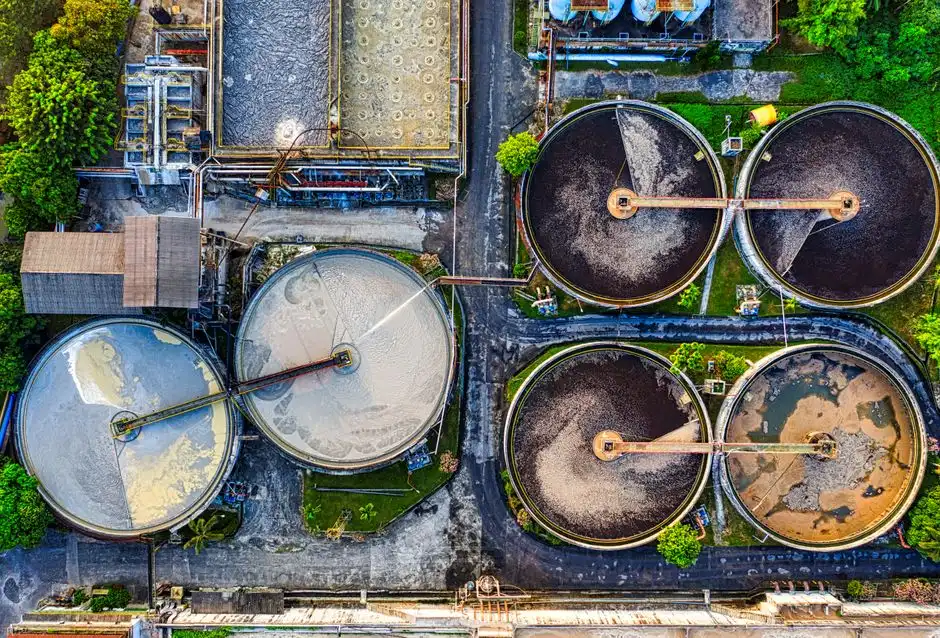
Battery manufacturing wastewater must remain traceable from source to final destination because process chemistry, flow variability and legal classification can differ materially between streams. Create separate sample points and flow meters for cathode production, electrode coating, electrolyte handling, cleaning and rinsing, laboratory and HVAC drains, sanitary sewage, contaminated stormwater and firewater where applicable. Equalization is acceptable only after compatibility has been demonstrated.
The process order described in HydropureWater’s CATL Hungary case is technically useful: segregate at source, equalize compatible streams, remove oil and solids, balance pH and flow, apply biological treatment where suitable, polish for authorized reuse or discharge, and dewater residual solids. Each stage needs its own mass balance, operating envelope, sampling point and contingency route. A broader comparison is available in the CATL battery factory wastewater planning article.
NMP requires both air and wastewater controls. Greenpeace Hungary reported a 1 mg/m³ NMP emission limit for Samsung SDI in Göd and described NMP as a major production solvent, but neither point establishes an LG wastewater limit. LG’s project must instead use representative wastewater samples and its own chemical inventory to determine NMP concentration, variability, discharge route and treatment requirements.
Investigate closed-loop rinsing, dry cleaning, chemical recovery and condensate segregation before sizing downstream equipment. The research identifies avoided contaminant load as the cheapest treatment because source control can reduce both treatment volume and biological or polishing demand. Keep hazardous-waste transfers, sludge disposal and wastewater operation records separate so quantity, legal classification and destination remain auditable.
| Wastewater stream | Primary design questions | Required control before routing |
|---|---|---|
| Cathode production and coating | Does NMP remain present, and are PVDF or carbon-black fines present? | Closed capture, dedicated sampling and confirmed treatment compatibility |
| Electrolyte handling | Which electrolyte, cleaning or hydrolysis products enter drainage? | Dedicated containment, chemical inventory and batch-release criteria |
| Cleaning and rinsing | Can rinsing water be reused or segregated by chemistry? | Closed-loop assessment and metered segregated collection |
| Laboratory and HVAC drains | Are they compatible with process, sanitary or stormwater routes? | Separate sampling and documented disposal route |
| Sanitary sewage | Is municipal treatment the intended route? | Physical separation from industrial wastewater |
| Contaminated stormwater | Which drainage areas can contain process chemicals or solids? | Isolation, monitored collection and permitted contingency capacity |
| Firewater | Is storage, drainage or disposal required? | Hydraulic containment and an approved emergency route |
Characterize the influent across every production phase
Treatment selection should be based on measured loads across operating phases, not on an average laboratory result. Collect representative data for pH, conductivity, COD, BOD, TSS, oil and grease, NMP or other process chemicals, relevant metals, toxicity and flow. The supplied research provides no LG-specific sampling frequency, so the environmental manager and permitting consultant must agree a defensible program.
Sampling should cover commissioning, normal production, electrode-coating changes, cleaning cycles, start-up, shutdown, and abnormal or batch-release events. Batch behavior matters because dilution in an equalization tank may hide a toxic or high-strength release until it reaches the biological system.
Reconcile the sampling program with a chemical inventory covering every process use, concentration, discharge destination, compatibility and proposed treatment method. Include any material that changes between production recipes or coating campaigns. The inventory is also needed to distinguish wastewater from hazardous solid waste so the mass balance remains coherent.
The public-debate 1,000 m³/hour estimate for CATL, reported in HydropureWater’s Hungary acquisition analysis, shows why disputed flow claims require an audit. It is not an LG operating flow. Reconcile it with stream-level meters, plant water records, production schedules and batch consumption before using it as a design check.
Use pilot testing and regulatory confirmation where treatability, reuse quality or permit compliance remains uncertain. A pilot can test biodegradability, membrane fouling, solids separation and chemical dosing, but it cannot replace the authorized discharge envelope.
| Characterization output | Decision supported | Evidence required before equipment selection |
|---|---|---|
| Flow and diurnal profile | Equalization, DAF and downstream capacity | Stream-level metering across normal and abnormal production |
| pH and conductivity | Dosing, compatibility and corrosion controls | Representative measurements with instrument calibration records |
| COD and BOD | Whether biological treatment is technically suitable | Phase-specific analysis and biodegradability assessment |
| TSS, oil and grease | DAF, solids capture and sludge-generation estimates | Mass loading, settleability and floatability testing where relevant |
| NMP and other process chemicals | Source recovery, dedicated treatment and batch-release controls | Chemical inventory and representative wastewater analysis |
| Metals and toxicity | Sludge classification, polishing and disposal requirements | Laboratory results and applicable waste classifications |
Build a treatment train that matches the contaminant
The treatment train should be conditional: each technology enters only when measured wastewater characteristics and the authorized route justify it. A defensible sequence is source segregation, compatible-stream equalization, physical pretreatment where needed, biological treatment where suitable, polishing where required, and solids dewatering. Compliance must be demonstrated against LG’s current permit and sewer conditions rather than inferred from equipment selection.
Use DAF when sampling confirms oil, grease, floatable solids or colloid-heavy material that can be removed physically and would impair downstream biology. An industrial DAF pretreatment system is a separation step, not a final compliance guarantee. HydropureWater DAF systems span 4–300 m³/h across 13 standard models, according to the HydropureWater CATL Hungary article; model selection still requires agreed flow, loading and treatment objectives.
Use biological treatment only for a demonstrated biodegradable fraction. Compare conventional activated sludge with an MBR membrane bioreactor on biodegradability, loading, footprint, energy, membrane fouling, cleaning demand, lifecycle cost and reuse quality. HydropureWater MBR systems handle 10–2,000 m³/day and provide filtration below 1 µm, based on the same source. Those specifications do not establish suitability for NMP-heavy or otherwise toxic chemical wastewater.
Consider ultrafiltration pretreatment where identified solids must be removed before reverse osmosis or another sensitive process. HydropureWater UF systems use 0.03 µm PVDF membranes, have a stated 2,000–40,000 L/h range, and include automatic backwash and air scour. Select them only after defining solids loading, required recovery, membrane compatibility and acceptance tests.
After solids capture, use an industrial sludge filter press before authorized disposal. HydropureWater plate and frame presses are available from 1 m² to 500 m² of filtration area. The choice still requires measured sludge solids, expected dewatering performance, cake-handling requirements and the disposal route.
| If characterization confirms | Then evaluate | Non-negotiable qualification |
|---|---|---|
| Oily, floatable or colloid-heavy material | DAF pretreatment | Measured contaminant distribution and site-specific performance envelope |
| A biodegradable organic fraction | Activated sludge or MBR | Biodegradability, loading, energy and lifecycle-cost comparison |
| Need for solids separation and low suspended solids | MBR or another validated polishing process | Membrane fouling, cleaning demand and final reuse requirements |
| Fine solids before sensitive membrane duty | UF pretreatment | Solids characterization, recovery objective and membrane compatibility |
| Captured residual solids | Plate and frame dewatering | Measured sludge quantity, residual-moisture target and authorized destination |
Design for monitoring, bypasses and production upsets
A permit condition becomes controllable only when it has an owner, measurement point, analytical method, reporting date and documented corrective action. Create a compliance register mapping each condition to its limit source, monitoring location, analytical method, reporting deadline, responsible role and response record. Include water-consumption limits, pre-treatment authorization, discharge limits, stormwater provisions and treated-wastewater requirements.
Use automatic flow-totalizing, conductivity, pH and turbidity instruments at suitable control points, supported by calibrated manual samples that verify analytical results. Specify calibration intervals, data validation, alarm rationalization and chain of custody. Continuous instruments can detect deviation promptly, but the applicable limit must still come from LG’s current authorization.
Provide an automatic chemical dosing system controlled by measured flow, with high-level alarms, high-high diversion and documented batch-release checks. An abnormal batch must be stopped or diverted to the lawful contingency route before it overloads pre-treatment or reaches the sewer. Automatic dosing supplements source segregation; it does not make incompatible streams acceptable.
Define escalation thresholds for exceedance, bypass, chemical spill, rising inlet loading and loss of treatment capacity. The procedure must identify who can stop production, who directs diversion and sampling, where contaminated water may lawfully be held, which authorities must be notified and when cleanup begins. Protect the stormwater system during a release.
Provide resilience for power, aeration, pumping, chemical storage and standby instrumentation based on the site risk assessment. Test the response through tabletop exercises and production-startup drills involving operators, contractors and relevant municipal interfaces. Keep wastewater operations, hazardous-waste transfers and sludge disposal in separate documented systems even during an incident.
Turn the wastewater scope into a procurement decision
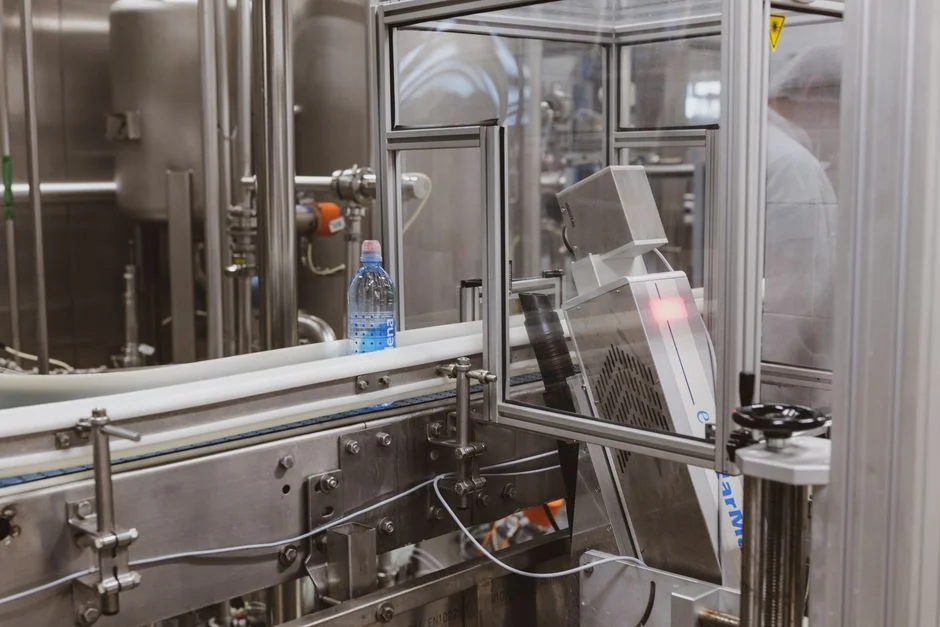
A defensible quotation must be based on mass and load, because the supplied research provides no defensible LG price. Request treatment objectives, design envelopes, power and chemical consumption, sludge quantities, guarantees and exclusions. The quotation cannot be closed reliably until measured flows, representative analyses, permit limits, reuse targets and sludge-disposal assumptions are available.
Require comparable reference performance, factory and site acceptance test protocols, spare-parts availability, local service support and a transparent total-cost model covering chemicals, sludge, energy and maintenance. The battery-gigafactory framework in the battery-gigafactory wastewater treatment framework sets out the same procurement discipline: compare verified compliance risk, not just capital cost.
Ask each supplier to guarantee relevant process parameters against an agreed influent envelope, not an undefined battery-industry average. State what happens when flow or contaminant load moves outside that envelope. The acceptance protocol should test installed hydraulic capacity, product quality, chemical consumption, sludge generation, automatic controls and alarm response.
Compare verified compliance risk as well as capital cost. Price any mismatch among installed capacity, recorded flow and permit conditions as a capital or operating liability. If existing equipment can be rehabilitated, require evidence rather than accepting that conclusion from a supplier’s preliminary review.
Frequently Asked Questions
What is the defensible cost of wastewater treatment for the LG Energy Solution Hungary expansion?
No defensible LG price can be stated from the supplied research. Request a quotation based on metered stream flows, representative phase-specific analyses, current permit limits, the authorized discharge or reuse route, reuse targets and sludge-disposal assumptions. The comparison should separate equipment price from power, chemicals, sludge handling, maintenance, FAT/SAT and compliance risk.
How should LG select and qualify a wastewater-treatment supplier?
Require guarantees tied to an agreed influent envelope, comparable reference performance, defined FAT and SAT protocols, local service support, spare-parts availability and an operating-cost model. Clarify whether performance guarantees include energy and chemical consumption, sludge output, automatic controls and response to abnormal loads. Generic battery-industry performance claims are not an adequate substitute.
How should LG size the treatment system without using another battery project’s flow estimate?
Use LG’s stream-level meter data, representative contaminant characterization and production schedules across commissioning, normal operation, cleaning cycles, coating changes, start-up, shutdown and batch releases. The 1,000 m³/hour CATL estimate and up-to-60,000 m³/day Debrecen park figure are project-specific context, not LG design inputs. Pilot testing should close remaining treatability or reuse uncertainties.
What compliance risks should be resolved before the expansion equipment is ordered?
Confirm permit transfer or amendment, industrial-wastewater pre-treatment authorization, water-consumption limits, sewer route, stormwater conditions, monitoring duties and contingency controls. Map responsibility among the operator, real-estate owner and wastewater infrastructure provider. These items must be compatible with the proposed equipment and production phases before approval; the June 2026 CATL enforcement sequence shows how authorization loss, network cleanup and continuing investigation can become operational and commercial liabilities.