Why Wastewater Treatment Is a Development Issue for Hotels and Resorts in Colombia
Hotels and resorts in Colombia need wastewater treatment designed around occupancy, water use, local discharge conditions and available sewer infrastructure. Colombia has a significant treatment gap: Trade.gov reports that over 40% of wastewater goes untreated because of insufficient basic treatment facilities, while the government allocated USD 1.8 billion for water and sanitation through 2026. For decentralized sites, a buried package plant combining biological treatment, sedimentation and disinfection can handle 1–80 m³/h. Higher-grade reuse or tighter discharge requirements may justify MBR technology, which combines activated sludge with submerged membranes below 1 μm filtration and scales from 10–2,000 m³/day. The correct choice begins with verified flow, waste characteristics, land availability, reuse goals and the applicable Colombian discharge permit.
National infrastructure conditions do not replace site-specific engineering, permit review or receiving-water assessment for a hospitality property. A hotel without dependable sewer access may need an onsite treatment and discharge strategy rather than depending exclusively on municipal collection. That decision should be made at the property level, using verified flows, waste characteristics, land availability and permit conditions.
Trade.gov reports that only 60% of the wastewater generated in rural areas is treated. It also reports that more than 40% of wastewater goes untreated because of the lack of basic treatment facilities, citing Colombia’s Municipal Services Superintendence. These figures explain why decentralized treatment is a relevant infrastructure option, but they do not determine the process or equipment required by an individual resort.
The Colombian government’s USD 1.8 billion investment allocation for water and sanitation through 2026 provides market context for infrastructure development. It is not evidence that any particular hotel qualifies for funding, and it should not be used to justify a technical specification. A property team still needs to establish its discharge route, applicable permit conditions, construction requirements and operating responsibility. For broader background on package-plant deployment, see what a packaged sewage treatment plant can fit.
Define the Wastewater Sources Before Choosing Equipment
Guest-room wastewater alone does not represent the treatment load of a resort. The design basis must separate or clearly characterize guest-room sewage, kitchens, bathrooms, laundry, employee areas, swimming pools and landscaped irrigation. Kitchen and laundry flows may require grease, solids and pH management before they enter the main biological treatment process.
Begin with operating data rather than a vendor’s nominal capacity. Record current occupancy, average daily guests, employee numbers, restaurant covers, laundry cycles, pool make-up and water-saving fixture data. Identify seasonal occupancy, planned expansion, construction wastewater and any non-domestic discharges. The engineer can then convert those inputs into a verified design flow and establish whether the project needs separate treatment or equalization.
Representative laboratory data is required. Request pH, suspended solids, BOD, COD, oil and grease, temperature and any regulated contaminants relevant to the property. The supplied research does not establish a Colombian numerical effluent limit applicable to every hotel or resort, so permit limits must come from the applicable authority and discharge conditions rather than from a generic specification.
| Input | Engineering question | Information to obtain |
|---|---|---|
| Domestic wastewater | What flow and organic load must the biological process handle? | Occupancy, employees, fixture data, seasonal flow record and laboratory analysis |
| Kitchen wastewater | Will grease and food solids overload the treatment train? | Flow, oil and grease, suspended solids, COD and pH |
| Laundry wastewater | Does the stream require pretreatment before biological treatment? | Cycle volume, flow, pH, suspended solids, COD and relevant contaminants |
| Pool water | Is it a separate stream, and can it be reused or discharged? | Make-up rate, water chemistry, backwash flow and intended destination |
| Irrigation | Is treated effluent needed, and at what flow and quality? | Seasonal demand, application, agronomic requirements and applicable reuse conditions |
Where preliminary solids or grease separation is required, evaluate it as part of the complete flow rather than an isolated product. A rotary mechanical bar screen can protect pumps, valves and downstream biological equipment, while a dissolved air flotation machine may be relevant for suitable oil-bearing streams. The selection depends on the wastewater analysis and the supplier’s process design.
Map the Treatment and Discharge Route

A traceable treatment route begins with preliminary screening, followed by flow equalization where required, biological treatment, solids separation, disinfection and authorized discharge or reuse. The sequence should be fixed before selecting a packaged unit because the treatment objective determines whether one integrated train is sufficient or separate engineered modules are needed.
Screening protects pumps, valves and downstream biological processes from material that could interfere with operation. The GX system is described as a continuous-duty fine screen for municipal and industrial headworks. Its suitability for a resort must still be checked against the actual incoming flow, debris characteristics, installation constraints and required head loss.
Preliminary treatment, final disinfection and reuse equipment can be supplied as separate modules rather than treated as automatic inclusions in every package. For example, disinfection may require a separate UV sterilizer module or an engineered chlorine dioxide generation system, depending on the treatment objective, site conditions and permit requirements.
| Process stage | Primary purpose | Decision to close before procurement |
|---|---|---|
| Preliminary screening | Remove material that may damage or clog downstream equipment | Debris type, flow, required screen duty and head loss |
| Equalization | Moderate variable flows and loads where the process requires it | Hydraulic profile, operating variation and available volume |
| Biological treatment | Remove biodegradable organic matter | Process basis, load and required treatment objectives |
| Solids separation | Separate biological solids from treated liquid | Residual-generation method and maintenance access |
| Disinfection | Control pathogens before the specified destination | Permit conditions, receiving environment and application |
| Discharge or reuse | Deliver treated water to an authorized destination | Discharge point, sewer capacity, receiving-water conditions and reuse demand |
Confirm the discharge point, available sewer capacity, receiving-water conditions, reuse destinations and permit conditions before final equipment selection. A reuse objective must be defined by demand and water-quality requirements. It is not a generic benefit of a treatment technology. If reuse is part of the project, specify the intended application, required verification and any applicable Colombian requirements before comparing equipment.
Compare Package Sewage Plants and MBR Systems
Package A/O and MBR systems represent different engineering compromises. The WSZ package plant combines anoxic and aerobic biological contact oxidation, sedimentation and disinfection. The MBR system combines activated sludge with submerged PVDF membrane filtration. That distinction drives the decision more strongly than a generic label such as “decentralized treatment.”
The WSZ system has a stated capacity of 1–80 m³/h and can be deployed below grade or as a trailer-mounted unit. Its integrated treatment train can suit conventional domestic sewage where below-grade installation is acceptable and the required treatment sequence is straightforward. An underground package sewage treatment plant may also reduce above-ground visual impact, subject to excavation, groundwater, buoyancy and structural-installation checks.
The MBR system has a stated filtration specification below 1 μm and a capacity range of 10–2,000 m³/day. Its manufacturer states that the compared product has a 60% smaller footprint than conventional alternatives; this is a product-specific claim, not a universal MBR saving. An MBR wastewater treatment system merits consideration where compactness, fine filtration or reuse readiness materially affect the project.
| Criterion | Package A/O plant | MBR system |
|---|---|---|
| Process configuration | Anoxic/aerobic contact oxidation, sedimentation and disinfection | Activated sludge with submerged PVDF membrane filtration |
| Stated capacity | 1–80 m³/h | 10–2,000 m³/day |
| Filtration specification | Not stated in the supplied research | Below 1 μm |
| Installation | Below-grade or trailer-mounted options | Footprint depends on the proposed system and civil design |
| Land and visual impact | Buried installation can reduce above-ground equipment; site excavation remains a project issue | Manufacturer states 60% smaller footprint for the compared product |
| Mechanical and operating considerations | Conventional biological treatment, solids separation and disinfection | Requires attention to aeration, membranes, monitoring, cleaning and replacement planning |
| Reuse relevance | Depends on the complete treatment train and verified effluent quality | Fine filtration may support reuse objectives, but sub-1 μm filtration alone does not establish suitability for every application |
| Cost and lifecycle | Requires a project-specific quotation | Requires a project-specific quotation, including membrane-related lifecycle obligations |
The available research does not provide comparable Colombian prices, life-cycle costs, membrane lifetimes or universal compliance claims. Those items must be established through a supplier quotation and a project-specific design. A buyer should also compare MBR and conventional activated-sludge principles rather than assuming that membrane filtration is automatically the lower-risk choice.
Select a Treatment System by Site Conditions
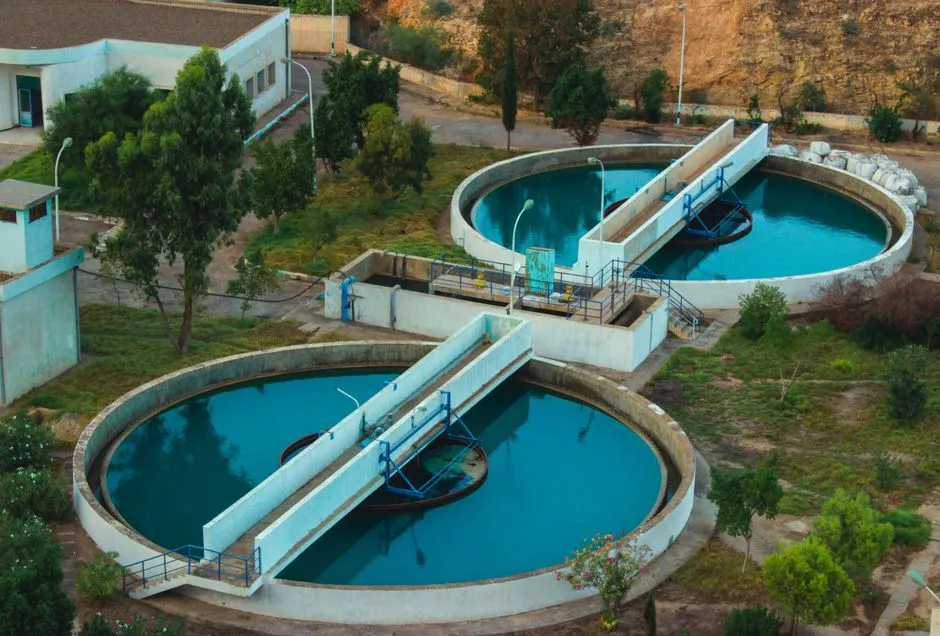
The defensible sequence is to verify the permit route, confirm design flow, characterize wastewater, evaluate land and installation constraints, define reuse goals, compare treatment platforms and request a performance-based proposal. The order matters because a nominal equipment range cannot resolve a permit, wastewater or site-access problem.
Prioritize package A/O treatment where the application is conventional domestic sewage, the verified flow falls within the stated 1–80 m³/h range, below-grade installation is acceptable and a straightforward treatment train meets the objectives. Prioritize MBR where compactness, fine membrane filtration or reuse readiness materially affects the project, subject to verified flow, treatment objectives, aeration and membrane-maintenance considerations.
| Site condition | Provisional preference | Required verification before selection |
|---|---|---|
| Conventional domestic sewage | Package A/O plant | Flow within the stated range, load, treatment objectives and installation method |
| Severe land or visual constraint | Compare package A/O with MBR | Available footprint, civil access, excavation and the manufacturer’s site-specific layout |
| Fine filtration or reuse readiness is material | MBR subject to process design | Intended reuse application, required water quality, verification and operating consequences |
| Variable seasonal flow | Either platform with project-specific equalization | Measured flow range, load variation, equalization volume and operating strategy |
| No confirmed discharge or reuse route | Do not select equipment yet | Authority consultation, sewer capacity, receiving-water assessment and permit pathway |
Require each bidder to receive the site plan, design flow, wastewater analysis, discharge or reuse target, soil and groundwater conditions, utility requirements, installation window and applicable permit requirements. To build a comparison framework, teams can compare packaged sewage treatment options and assess the installation implications of a buried arrangement.
A compliant Colombian application is not a generic equipment certification. The proposal and operating plan must address the conditions imposed by the applicable authority, the receiving environment and any reuse requirements. International equipment documentation can support technical review, but it does not replace a Colombian environmental permit review.
Plan Installation, Operation and Residuals Management
Buried and surface installations require an engineering plan for incoming and outgoing utilities, maintenance access, odor control, noise, site drainage and equipment delivery. A buried package plant adds excavation, groundwater, buoyancy and structural-installation questions. These are site-specific checks, not reasons to reject buried installation automatically.
For an MBR system, the supplier’s operating scope should address membrane cleaning, aeration, monitoring and replacement planning. The procurement file should identify which instruments are included, what readings operators must take and which consumables require regular replacement. Membrane performance evidence must relate to the proposed duty and wastewater analysis.
Conventional solids separation creates residuals that require a defined management route. Specify how sludge will be collected, dewatered, stored, transported and ultimately managed. A plate-and-frame filter press may form part of that train, but the supplied research does not establish its appropriate capacity or economics for every resort. Further engineering guidance is available on screw-press capacity and sizing for wastewater.
Startup, commissioning, operator training, the monitoring plan and the maintenance schedule must be written into the procurement documents. Maintenance access also matters upstream: operators should follow a defined procedure to prevent sand and grit accumulation in wastewater tanks. Otherwise, even a correctly selected treatment train can lose performance through preventable fouling and wear.
Questions to Ask Before Ordering Wastewater Equipment

Comparable quotations must state the design basis, guaranteed treatment objectives and included ancillaries. Ask the supplier to identify the duty arrangement, civil and electrical interfaces, controls, commissioning, training, initial spares and annual maintenance. A headline equipment price is not comparable if the scope excludes site works, discharge modules or long-term support.
| Procurement question | Evidence to request | Commercial check |
|---|---|---|
| What is the proposed treatment capacity and process basis? | Design flow, wastewater analysis, process calculation and treatment objectives | Confirm that the offered configuration matches the stated duty |
| Which ancillaries are included? | Screening, equalization, aeration, solids handling, disinfection, controls and reuse equipment as applicable | List exclusions and separate them from the quoted price |
| How will the equipment be installed? | Civil drawings, excavation or surface arrangement, utility requirements and access provisions | Compare the complete installed scope, not the package alone |
| What support is provided after delivery? | Startup, commissioning, operator training, maintenance plan, spares and warranty terms | Define response obligations and replacement-parts pricing |
| What permit information is required? | Design assumptions and a permit-support schedule identifying owner documents | Clarify which party prepares submissions and bears approval responsibility |
Request evidence for the proposed capacity range, membrane performance if MBR is offered, installation method and operating requirements. The full warranty, consumables, replacement-parts and membrane-maintenance terms must be documented; the supplied research does not support a standard warranty period. For deeper screen-selection review, use the engineering guidance on fine screens for wastewater headworks.
The permit-support schedule should distinguish equipment evidence from owner obligations. It should identify the discharge route, applicable authority, design assumptions, required analyses and documents the hotel or resort must obtain. A supplier’s assertion that a package is “compliant” is not enough; responsibility for each submission and approval should be assigned contractually.
Frequently Asked Questions
How much does a hotel wastewater treatment system cost in Colombia?
The supplied research does not provide a reliable universal price for hotel resort wastewater treatment in Colombia. Request a site-specific quotation using verified design flow, wastewater analysis, installation conditions, discharge or reuse requirements and equipment scope. Also ask for exclusions, civil works, electrical work, commissioning, training, spares and annual maintenance so the bids can be compared on the same basis.
Should a hotel or resort choose a package sewage plant or MBR?
Use package A/O as the baseline for conventional domestic-sewage duties within the WSZ system’s stated 1–80 m³/h range, provided below-grade installation is acceptable and the treatment train meets the objectives. Consider MBR when compactness, fine filtration or reuse readiness materially affects the design, after evaluating aeration, membrane cleaning and replacement obligations. A supplier quotation and project-specific design must establish the final choice and cost.
How do I size a wastewater treatment plant for a resort?
Do not size the plant from guest-room count alone. The supplier needs verified occupancy and water-use data, employees, restaurant covers, laundry cycles, pool make-up, seasonal variation, wastewater analysis, discharge or reuse targets, land availability and utility requirements. These inputs establish both hydraulic flow and process load before the treatment capacity is selected.
What should I check when selecting a wastewater-treatment supplier in Colombia?
Check demonstrated capacity within the proposed duty, the process design basis, included ancillaries, installation method, commissioning, operator training, maintenance support, spare-parts availability and permit-support documentation. Ask separately who prepares the Colombian permit application, who owns operating responsibilities and how performance problems will be resolved. For local implementation context, review the approach to domestic sewage treatment in Belo Horizonte.
Can hotel wastewater be reused after treatment?
Reuse depends on the intended application, required water quality, verification procedures and applicable Colombian requirements. MBR filtration below 1 μm is a product specification, not proof that the effluent is suitable for every reuse purpose. Define the reuse destination and quality requirements first, then require the selected process and monitoring plan to demonstrate compliance with those requirements.