Confirm the Montevideo site's wastewater route before choosing equipment
For a Montevideo housing development, choose a packaged sewage plant only after confirming whether a public sewer connection genuinely serves the parcel and whether foul sewage can remain separate from stormwater. A buried A/O unit is the baseline when conventional biological treatment, disinfection, gravity collection, and disposal are feasible; MBR merits evaluation where compact treatment, membrane solids separation, or reuse is central. The key first step is therefore a written utility and municipal connection check—not an equipment-price comparison.
Montevideo’s sanitation network is expanding, but expansion does not establish parcel-level service. The IDB reported on 2021-03-04 that Montevideo launched a system in September 2020 designed to collect, treat, and dispose of half the city’s wastewater. It also reported that, with project completion, more than 90 percent of the population was expected to gain sanitation access. That city-scale program creates an opportunity, not automatic connection capacity for every development.
Ask the relevant utility and municipality for a written confirmation covering the exact connection point, available capacity, required works, ownership, connection charges, and approval pathway. Record the development boundary, connection location, capacity available, and responsible parties in the design brief. If no verified connection exists, request a site-specific concept covering collection, treatment, final disposal, maintenance access, and future connectionability.
Uruguay drainage guidance provides a screening warning: municipal sewer is not generally available, and an on-site septic tank and soakaway may be required. It does not establish the outcome for a particular parcel, so it should trigger site investigation rather than become an automatic design verdict. The approach is consistent with wastewater treatment planning for infrastructure projects.
Define the design flow and separate foul sewage from stormwater
Design flow and load data must come from the development, not from a nominal plant capacity. The IDB’s city-program assets are not package-sizing inputs: its program description lists 43.6 kilometers of sewage lines, 3.8 kilometers of pressure pipes, 6.4 kilometers of drainage equipment, and an overflow structure with a capacity of 4,000 cubic meters. Those figures describe municipal infrastructure, not a housing-development wastewater balance.
- Request a phased balance covering anticipated occupancy, domestic sewage, communal or commercial flows, groundwater infiltration, and the design horizon.
- Exclude roof runoff and paving drainage from the foul sewage treatment train. The Uruguay drainage guidance identifies separate stormwater and foul systems and directs foul drainage to a sewer or treatment tank.
- State average and peak requirements, including the timing of occupancy changes and any commercial operating profile.
- Check floor levels, collection-pipe inverts, and outfall elevations to determine whether gravity collection is practical or a lifting station is unavoidable.
- Use the resulting peak flow and process-load basis to assess equalization, biological treatment, pumping, and overflow control.
The separation requirement is both hydraulic and regulatory. Combining stormwater and foul drainage can overload treatment and make effluent performance unpredictable. A supplier should therefore receive a drainage plan that identifies the foul collection boundary, stormwater destination, inspection chambers, lifting requirements, and any point where the two systems must remain physically separate.
| Design input | Evidence required from the project team | Equipment or civil-work consequence |
|---|---|---|
| Domestic sewage design flow | Occupancy schedule, unit mix, per-capita basis, and design horizon | Sets the biological and hydraulic duty to be checked against the offered package |
| Peak flow pattern | Daily and seasonal operating profile, including communal or commercial uses | Drives equalization, pumping, treatment capacity, and overflow-control review |
| Groundwater infiltration | Site-specific assessment where infiltration is material | Prevents an apparent sewage flow from being under-sized |
| Stormwater | Roof and paving drainage plan kept outside the foul train | Protects treatment capacity and defines separate civil works |
| Gravity feasibility | Finished floor levels, pipe inverts, outfall level, and required cover | Determines whether pumping and lifting equipment are necessary |
Keep the municipal context in a separate reference, not in the equipment sizing calculation. The local design team should also check gravity feasibility against the city sewage system planning methodology.
Match the treatment process to the development's discharge and reuse goals
The required effluent specification—not the process name—should drive technology selection. Obtain the applicable DINAMA or municipal requirements, receiving-water or disposal conditions, and any irrigation or reuse criteria from the approving authority before comparing a buried A/O package with an MBR system.
The WSZ series provides the baseline biological option. HydropureWater describes the buried WSZ A/O sewage treatment package as an integrated system combining anoxic and aerobic biological contact oxidation, sedimentation, and disinfection in one buried unit. Its stated treatment capacity is 1–80 m³/h.
The MBR route is relevant when the brief gives priority to compact treatment, membrane solids separation, or potential reuse. The integrated MBR wastewater treatment system uses activated sludge with submerged membrane filtration; the stated capacity range is 10–2,000 m³/day and the membrane specification is below 1 μm. HydropureWater also states a 60% smaller footprint than conventional systems. That comparison must be checked against a site layout and the supplier’s stated basis before being applied to a Montevideo parcel.
| Selection criterion | Buried WSZ A/O package | Integrated MBR system |
|---|---|---|
| Treatment configuration | Integrated anoxic/aerobic biological contact oxidation, sedimentation, and disinfection | Activated-sludge process with submerged membrane filtration |
| Stated capacity | 1–80 m³/h | 10–2,000 m³/day |
| Separation mechanism | Sedimentation within the integrated package | Membrane solids separation; stated filtration below 1 μm |
| Footprint claim | Buried installation; site allocation to be confirmed by layout | Supplier states 60% smaller footprint than conventional systems; basis must be confirmed |
| Primary evaluation focus | Standard treatment, available land, gravity collection, and conventional disposal | Compactness, membrane performance, separated solids, and reuse value |
| Operating issues requiring verification | Biochemical process performance, aeration, sludge removal, disinfection, and odor controls | Aeration, membrane maintenance, membrane replacement provisions, sludge handling, controls, and power resilience |
Treat reuse as a separate design workstream. Membrane filtration does not by itself establish fitness for irrigation or other reuse. The project must define water quality, distribution, storage, monitoring, user restrictions, and the approving authority’s approval basis. The same discipline applies to discharge: identify the receiving point, disposal method, connection conditions, and any monitoring required after commissioning.
Choose a buried A/O package or an MBR system
Use A/O as the baseline and MBR as a conditional alternative: choose the buried package when standard treatment, gravity service, and land availability dominate; evaluate MBR when compactness, membrane solids separation, or reuse value justify the additional process and maintenance responsibilities.
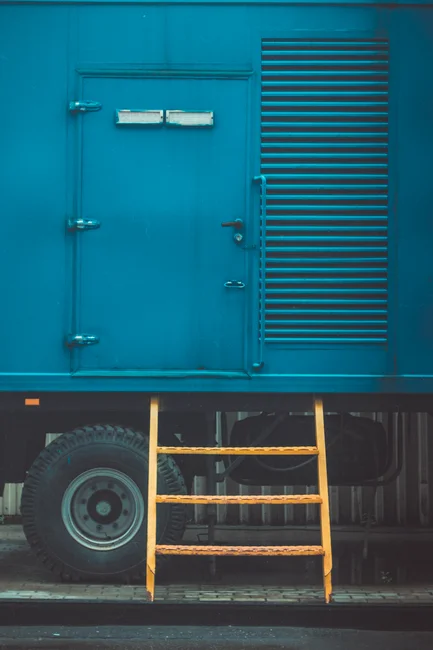
The WSZ package can be installed below grade with landscaping above, or mounted on a trailer for mobile deployment. The latter does not remove the need to resolve foundations, access, lifting, utilities, and final disposal. The MBR route requires the buyer to evaluate an activated-sludge process, submerged membranes, the stated 10–2,000 m³/day capacity range, and the supplier’s 60% footprint-reduction claim against an actual layout.
| Evaluation item | What the buyer should require and compare |
|---|---|
| Process fit | Demonstration that the offered duty range covers the verified design flow and load without relying on stormwater |
| Installation | Buried or above-ground arrangement, excavation requirements, lifting plan, anti-floatation provisions, and landscaping interface |
| Automation and controls | Control philosophy, alarms, data logging, local or remote monitoring, and manual operating arrangements |
| Operator involvement | Routine attendance, response time, laboratory or sampling duties, and operator training |
| Aeration and power | Aeration load, power demand, backup arrangement, and consequences of an interruption |
| Membrane or media maintenance | Cleaning regime, expected service interventions, consumables, and replacement responsibility |
| Sludge and solids handling | Removal frequency, storage, transport, final disposal, odor control, and supplier responsibilities |
| Final disposal | Connection or land-disposal route, access conditions, and required documentation |
| Commercial basis | Itemized bids on one common scope covering equipment, civil work, installation, commissioning, controls, and annual operation and maintenance |
Do not publish a generic capital-cost range for this Montevideo comparison: the supplied research does not establish a defensible local price. Ask suppliers to price the same design basis so technical differences remain visible. The broader method is illustrated in a housing-development comparison of buried A/O and MBR packages and a domestic sewage treatment buyer guide.
Resolve soil, drainage, power, and maintenance constraints before ordering
Ground conditions can invalidate the disposal concept even when the treatment package is technically suitable. Commission a soil-percolation test if the design relies on a soakaway. The Uruguay drainage guidance warns that clay ground may not percolate and may require a different disposal method; therefore, do not leave disposal selection until after foundations or external works are fixed.
Resolve gravity routes, floor levels, pipe inverts, and the outfall before construction. The same guidance specifically warns that drainage must not be solved after building works are settled. Keep stormwater structures outside the foul treatment train and provide inspection chambers at junctions and changes of direction so the foul network can be inspected and cleared.
Then verify the access and service envelope:
- Provide safe access for routine inspection, sludge removal, media or membrane maintenance, and equipment retrieval.
- Confirm electrical supply, control-panel location, communications needs, backup-power implications, and outage response.
- Define ventilation, odor control, noise limits, and landscaping interfaces for any above- or below-grade installation.
- Check that spare-parts delivery and local technical support are credible for the committed operating period.
- Require the supplier to identify buried depth, lifting requirements, anti-floatation provisions, commissioning boundaries, and maintenance clearances as project-specific items.
These checks should be completed before equipment release. Containerized installations may simplify some site interfaces, but they do not eliminate civil works or operating constraints; the containerized MBR sizing methodology provides a useful discipline for checking capacity, site arrangement, and operating assumptions.
Build a supplier-ready specification and approval checklist
A comparable request for proposals prevents suppliers from answering different questions. Include the design flow, flow pattern, load basis, treatment objectives, treated-water destination, disposal method, site constraints, power data, installation date, and required approvals in every bid request.
Require every supplier to state:
- The treatment process, duty range, process-load checks, and effluent commitments.
- Installation arrangement, drawings, access requirements, utilities, controls, automation, and operator involvement.
- Sludge or solids handling, maintenance tasks, consumables, spare parts, and technical support.
- Commissioning tests, acceptance criteria, training, warranty scope, and support for local approvals.
- Annual operation and maintenance costs with documented assumptions.
Require a site-anchored proposal; reject a nominal-capacity unit that has not been checked against peak flow, process loads, effluent duties, and final disposal. The alternatives schedule should compare a verified public sewer, gravity-fed decentralized A/O, MBR, and a direct sewer connection requiring local pumping and treatment. Include an explicit “not available” or “not yet verified” status for options that lack site evidence rather than assigning them assumed benefits.
Evaluate lifecycle requirements rather than purchase price alone, but leave cost fields blank until suppliers provide itemized values and stated assumptions. Separate equipment, civil works, installation, commissioning, controls, power provision, sludge removal, consumables, maintenance, monitoring, and disposal. This checklist follows the structure used in wastewater treatment planning for infrastructure projects.
Frequently Asked Questions
How much does a packaged sewage treatment plant cost for a Montevideo housing development?
The supplied research does not provide a defensible packaged-plant price for a Montevideo housing development. Request like-for-like quotations covering equipment, civil works, installation, commissioning, controls, annual operation and maintenance, sludge handling, and final disposal. Require each bidder to state design-flow, load, effluent, and site assumptions behind its price.
Is an A/O package or an MBR plant better for a Montevideo housing project?
Use the buried A/O package as the baseline when conventional biological treatment and disinfection are sufficient and gravity service and disposal are feasible. Evaluate MBR when compactness, membrane solids separation, or reuse value is central. The final decision should also consider operator attendance, membrane maintenance, power resilience, and sludge handling.
How should a developer size a packaged sewage plant?
Size the plant from verified domestic sewage design flow and loads, occupancy phasing, infiltration, peak conditions, treatment objectives, and disposal constraints. Keep stormwater separate and check whether a lifting station is unavoidable after reviewing floor levels, pipe inverts, and outfall elevations.
Can a housing development rely on Montevideo’s public sanitation network?
Network expansion should be investigated, but it cannot be assumed to serve a parcel. The IDB reported on 2021-03-04 that a September 2020 system was designed to handle half the city’s wastewater and that more than 90 percent of the population was expected to gain access upon project completion. Each development still needs written connection and capacity confirmation.
What should a supplier provide before an equipment order?
Require the site and process basis, site-anchored drawings, flow and load checks, effluent commitments, automation details, sludge-handling proposal, commissioning tests, approvals support, warranty, local service plan, and itemized lifecycle pricing. For the two principal technology options, review the buried WSZ A/O sewage treatment package and integrated MBR wastewater treatment system against the same checklist.