Determine Which Discharge Requirement Applies
Facilities near Prudhoe Bay generally meet sewer-discharge limits by characterizing each wastewater stream, selecting treatment matched to regulated pollutants, verifying performance with representative samples, and obtaining the required discharge authorization. If effluent enters waters of the United States rather than a sewer, an APDES permit may control the discharge instead. Alaska DEC’s proposed AK0029840 permit illustrates this distinction: it authorizes Prudhoe Bay strainer-backwash discharge through Outfall 001, limits contingent discharge duration to approximately 48 hours or less, and applies a marine criterion allowing no more than a 1 degree Celsius increase in weekly average receiving-water temperature. A plant must still address the receiving sewer’s pretreatment limits through sampling, treatment verification, monitoring, and compliance records.
An Alaska Pollution Discharge Elimination System individual permit authorizes a specified discharge of pollutants to waters of the United States. For Permit AK0029840, the permittee is Hilcorp Alaska, LLC, the facility is the Prudhoe Bay Seawater Treatment Plant, and the authorized discharge is strainer backwash to Stefansson Sound through Outfall 001. Alaska DEC’s fact sheet states that the permit establishes proposed effluent limitations, monitoring requirements, mixing-zone provisions, and applicable state and federal water-quality requirements.
The first engineering question is therefore not which treatment unit to buy. It is where the wastewater physically goes. A direct discharge to Stefansson Sound or another receiving water requires the appropriate direct-discharge authorization. An indirect discharge through a sewer operated by a publicly owned treatment works requires the sewer authority’s written pretreatment limits, discharge permit, prohibitions, monitoring rules, and fee or surcharge schedule. The supplied Prudhoe Bay research does not establish those POTW limits, so they must be obtained from the receiving authority rather than inferred from Permit AK0029840.
For direct discharge, compile the permittee, authorized outfall, effluent parameters, mixing zones, monitoring and reporting requirements, and applicable water-quality criteria. For sewer discharge, request an industrial pretreatment program approval or equivalent authorization before accepting waste. A broader review of mining wastewater sewer-limit compliance can support that distinction without transferring another site’s limits to Prudhoe Bay.
| Decision factor | Direct APDES discharge | Indirect POTW sewer discharge |
|---|---|---|
| Regulatory pathway | Individual or applicable APDES authorization for discharge to waters of the United States | POTW discharge permit and written industrial or commercial pretreatment requirements |
| Prudhoe Bay example | AK0029840 addresses strainer-backwash discharge to Stefansson Sound through Outfall 001 | No supplied source establishes a Prudhoe Bay POTW limit set |
| Compliance evidence | Effluent limits, mixing-zone basis, monitoring, reporting, and permit conditions | Representative source testing, pretreatment approval, monitoring, fees, and sewer-authority acceptance |
| Early procurement action | Confirm permit scope and site-specific water-quality analysis | Obtain written limits before selecting equipment or signing a discharge agreement |
Alaska’s Palmer Project dispute reinforces the need to define authorization scope correctly. Earthjustice reported in 2023 that the litigation concerned a mine-exploration wastewater permit, state water-quality standards, and whether the discharge required a more protective APDES framework. It was not a universal mine-effluent standard, and it cannot be used to set pretreatment limits for an unrelated Prudhoe Bay facility. A comparable mining and metals pretreatment workflow should be adapted only after the receiving sewer and discharge route are confirmed.
Characterize the Waste Before Selecting Treatment
Industrial wastewater characterization must establish flow, pollutant loading, variability, and stream compatibility before a treatment train is sized. For industrial wastewater characterization near Prudhoe Bay, build a source-by-source inventory covering process water, washdown, contact water, cooling or wash water, domestic sewage, and storm-water segregation. Do not combine streams until compatibility is demonstrated. A single sample may establish almost nothing about a variable industrial or mining discharge.
Request representative analytical data for each stream under multiple operating and production conditions. The core analytical request should include flow variability, suspended solids, oil and grease, pH, metals, total residual chlorine or other oxidants, temperature, and any constituent specifically regulated by the receiving sewer authority or discharge permit. Do not assume that every parameter appearing in the Prudhoe Bay fact sheet applies to every facility near Prudhoe Bay. For sewer discharge, the local limits determine the required analytical scope; for direct discharge, the applicable permit and site-specific water-quality analysis determine it.
Identify worst-case concentrations and loads rather than relying on one passing grab sample. Distinguish concentration from mass loading: a low-concentration stream can still control treatment if its flow is large, while a high-concentration slug may control equalization and chemical-feed capacity. Record the operating event associated with each result, including production rate, batch or continuous operation, cleanup activity, storm conditions, and chemical additions. That linkage is needed to demonstrate that the selected unit remains effective during demanding conditions.
For waterflood-related backwash, chemical content must be established before discharge. Alaska DEC states that the contingent Prudhoe Bay strainer-backwash discharge must not contain the referenced waterflood conditioning chemicals. It also states that, without chemical additives, temperature becomes the controlling parameter for drain-back duration. A facility should not transfer that conclusion to its own waste without chemical inventory and analytical confirmation.
For a direct outfall, also request receiving-water temperature and flow information. The local permit analysis used ambient intake-reservoir conditions as the reference for temperature, and the modeled assessment depended on critical receiving-water conditions. Flow and temperature are therefore design inputs, not administrative details. If the route is to a sewer, request the POTW’s requirements for discharge timing, continuous versus batch flow, slug loading, monitoring points, and contingency response.
The characterization record should become the package submitted for online analyzer selection and monitoring-system planning. It should show what must be measured continuously, what can be verified through laboratory sampling, and where an alarm or automatic diversion is justified by the applicable limit.
Build a Treatment Train That Addresses the Permit
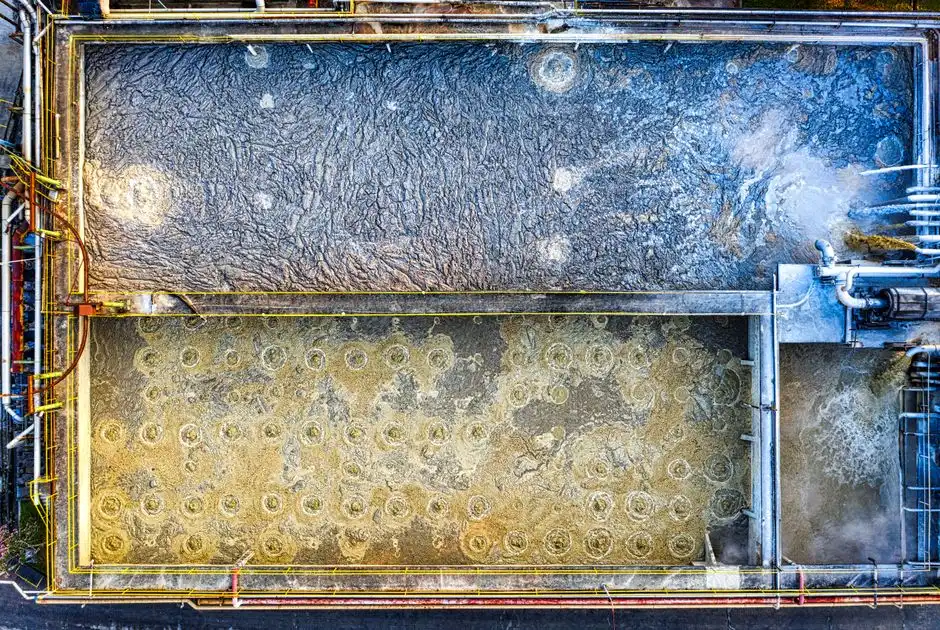
Source control and segregation must come before final treatment because incompatible concentrates, oxidants, oils, metals-bearing slurries, or high-temperature flows can defeat a downstream unit. Separate streams at the point of generation, identify incompatible chemistry, and establish an operational rule for combining them. Equalization may be required to control hydraulic or concentration peaks, but it does not correct incompatible constituents and cannot replace source control.
For suspended solids, colloids, oil and grease, and floatable material, evaluate a DAF system for industrial wastewater pretreatment. DAF serves as a solids and floatables-removal function; it should be selected from characterized oil, solids, and flow data rather than treated as a stand-alone guarantee of permit compliance.
Where the objective includes fine-solids removal before a sensitive downstream process, evaluate the integrated mine-water treatment system. The JY Series is identified as combining coagulation, flocculation, sedimentation, filtration, and automatic backwash. The procurement package should define the required solids-removal duty, hydraulic peak, filtrate or clarified-water demand, and installation constraints before the configuration is fixed.
Where pH or reagent feed must be controlled precisely, evaluate a PLC-controlled chemical dosing system. The design should link chemical demand to characterized flow and concentration, define control logic, and identify alarms, containment, and verification sampling. Generic chemical-use rates are not a substitute for site data.
| Compliance risk | Treatment function to evaluate | Minimum design inputs | Acceptance evidence |
|---|---|---|---|
| Suspended solids, colloids, floatables | Screening, equalization, and dissolved air flotation | Flow range, solids and oil-and-grease concentrations, settling or flotation behavior, peak load | Representative before-and-after sampling and operating log |
| Fine solids before a sensitive process | Coagulation, flocculation, sedimentation, filtration, and backwash | Raw-water data, required removal duty, hydraulic peak, filtrate demand, waste-handling route | Performance test under defined operating conditions |
| pH or chemical inconsistency | Controlled chemical dosing | pH range, alkalinity, chemical inventory, feed demand, control response | Calibration records, trend data, and verification samples |
| Oil, oxidants, metals, or concentrated slug | Source segregation and dedicated pretreatment before final treatment | Compatibility data, constituent concentrations, slug volume, chemical-use inventory | Segregation records, interlocks, and final-effluent compliance testing |
| Final pathogen or oxidant control | Disinfection only when required | Receiving-authority requirement, residual target, contact condition, monitoring method | Required disinfection monitoring and operating records |
Treat the plant as an auditable sequence: screening or coarse removal; equalization where justified; oil or solids removal; pH or chemistry control; polishing; and final disinfection only when the sewer authority requires it. Each stage should have a defined purpose, monitored operating condition, sampling point, and response to failure. DAF, ultrafiltration, filtration, or any other unit cannot independently guarantee a limit without the applicable limit and site characterization.
Final sizing must use characterized flow, contaminant loading, required removal performance, and the receiving authority’s written requirements. For an indirect discharge, include pretreatment charges and any accepted surcharge in the process economics. For a direct discharge, include the permit’s outfall, monitoring, and receiving-water constraints. Equipment selection is complete only when the supplier can trace each major component to those inputs.
Translate Permit Conditions Into Verifiable Operating Limits
Regulatory language becomes enforceable only when it is translated into internal setpoints, sampling points, operating procedures, corrective actions, and retained records. For the Prudhoe Bay example, Alaska DEC identifies strainer-backwash discharge through Outfall 001 as the routinely authorized stream. The contingent discharge is limited in duration—for example, approximately 48 hours or less—and the referenced waterflood conditioning chemicals are prohibited in that discharge.
The marine temperature criterion applies only to its receiving-water context. Alaska DEC’s fact sheet states that the discharge must not increase the weekly ambient receiving-water temperature by more than 1 degree Celsius. This is a site-specific criterion, not a general sewer pretreatment limit and not a general limit for mining facilities near Prudhoe Bay.
The local mixing-zone analysis illustrates the need for site-specific modeling. Alaska DEC modeled a maximum expected total residual chlorine concentration of 100 micrograms per liter with an acute dilution factor of 7.5. It modeled a maximum expected temperature change of 16.8 degrees Celsius with a chronic dilution factor of 16.75. The same fact sheet reports that the maximum observed temperature of 16.8 degrees Celsius occurred at discharge initiation after a no-flow period, when seawater in facility piping had equilibrated to room-air temperature. Startup after a shutdown was therefore more demanding than steady operation.
Set internal alarm and action levels below each applicable permit limit, with an operator response tied to each alarm. Define when to stop dosing, extend drain-back, contain a batch, notify the authority, or switch to an authorized disposal route. Retain analytical results, calibration records, flow logs, chemical-use records, equipment alarms, bypass checks, noncompliance notices, and corrective-action records.
If sampling or conservative operating controls cannot demonstrate compliance, reduce or eliminate the discharge route through containment, hauling, or another authorized treatment and disposal option. Alaska DEC’s fact sheet identifies general-permit authorization for hauling treated domestic wastewater to the Prudhoe Bay Operations Center wastewater treatment plant when the seawater treatment plant cannot be used. That is a specific contingency, not a blanket authorization for every industrial stream.
For equipment evaluation, cavitation and air-flotation efficiency considerations should be tied to the design flow, air demand, loading, power availability, and maintenance plan. Energy performance cannot be separated from remote-site feasibility, particularly where power, access, and winter conditions constrain operations.
Use a Compliance Decision Framework

A discharge decision is defensible only when the waste route, treatment basis, permit conditions, monitoring plan, and records are aligned. Start with the physical destination of the waste, then apply the matching authorization pathway. The mining-plant pretreatment controls offer a useful review structure, but the controlling limits must come from the actual Prudhoe Bay receiving authority.
| Route | Go decision | No-go condition | Next action |
|---|---|---|---|
| A—No regulated discharge | All wastewater is segregated and contained, with lawful treatment or disposal documented | An unpermitted sewer or surface-water discharge is proposed | Select containment, hauling, or another authorized disposal route |
| B—Sewer discharge | Written POTW limits, representative testing, treatment verification, and pretreatment approval are complete | Limits are missing, treatment performance is unverified, or approval has not been issued | Obtain the POTW requirements and close the evidence gaps before discharge |
| C—Direct discharge | The applicable authorization covers the discharge, outfall, limits, mixing zone, monitoring, and reporting | The proposed route is outside the permit scope or the receiving-water analysis does not support compliance | Seek the required authorization or revise the discharge and treatment plan |
Reject any proposal that relies only on equipment capacity, a supplier’s generic compliance statement, or one passing sample. Those items may support a preliminary estimate, but they do not establish treatment performance under variable industrial conditions. Require the supplier to identify the design basis, applicable limits, test protocol, control strategy, redundancy, and documentation package. For the DAF treatment unit, the integrated purification system, or automated dosing equipment, this means traceable inputs and site-specific acceptance criteria.
Before final sizing, confirm cold-climate operation, freeze protection, remote maintenance, power constraints, and winter access. These are feasibility conditions rather than optional engineering details. The selected route should also identify waste or sludge handling, chemical storage, operator training, spare-parts strategy, and the operating response if performance drifts.
Use a final go/no-go record: the facility has a valid route; the applicable limits are written; the design basis matches characterized loads; performance has been demonstrated; monitoring and records are defined; and the responsible operator can implement the required response. If any element remains unresolved, treat that as an open compliance issue rather than a documentation detail.
Frequently Asked Questions
How much should a mining wastewater treatment system cost?
The supplied research contains no project-cost data for a mining wastewater treatment system near Prudhoe Bay, so a defensible budget cannot be based on equipment price alone. Request a quote tied to characterized flow, pollutant loads, treatment objectives, receiving limits, site utilities, cold-weather requirements, controls, monitoring, installation, and maintenance. For sewer discharge, also request the POTW’s written fee and surcharge schedule. Compare offers on the same design basis.
What size DAF or integrated treatment system does a Prudhoe Bay industrial plant need?
Size the system from peak and average flow, batch or continuous operation, contaminant loading, required treatment performance, and the applicable sewer or direct-discharge authorization. The catalogued DAF and integrated-system specifications are product information, not site recommendations. A supplier should provide the calculation basis and identify which facility data remain missing before selecting a configuration.
Which wastewater parameters should be tested before selecting treatment?
Confirm the required scope with the regulator and sewer authority. It should normally address flow, suspended solids, oil and grease, pH, metals, temperature, residual chlorine or other oxidants, and locally regulated constituents. Add source-specific parameters where inventory or process chemistry indicates a risk. Analyze multiple operating conditions and retain the operating event associated with every result.
Can an APDES permit be used to show that industrial wastewater is acceptable to a sewer?
No. The proposed Prudhoe Bay APDES permit applies to a specific strainer-backwash discharge to Stefansson Sound through Outfall 001. Sewer acceptability remains subject to the receiving POTW’s written requirements and pretreatment approval. These documents should be kept separate, even when the same facility ultimately operates both discharge routes.
How should a supplier demonstrate compliance risk control?
Require traceable design inputs, proposed monitoring points, operating setpoints, alarm and shutdown logic, maintenance procedures, and records that support the facility’s permit application. Ask the supplier to map every major treatment function to a characterized risk and acceptance test. A comparison of MBR and conventional activated sludge is useful only when the biological objective, wastewater characteristics, and receiving requirements are already defined.