Porto Alegre's Sewage Treatment Context
Domestic sewage treatment in Porto Alegre must be selected around the site's actual wastewater profile, available sewer connection and required effluent quality—not a citywide coverage figure. A 2024 review reported 90% sewage collection coverage but only 52.72% total treatment using Trata Brasil data, compared with 57% cited by DMAE; it also noted substantial underused treatment capacity and multiple treatment processes across the city's eleven plants. For developers and facilities, the practical options are buried packaged A/O plants, MBR systems or decentralized treatment for sites without reliable sewer access. Final selection requires measured flow and load data, receiving-water and discharge criteria, footprint constraints, sludge handling and a documented commissioning protocol.
The review distinguishes collection, treatment and structural capacity rather than treating them as one performance measure. Approximately 90% of the population had sewage collection service, while the review reported 52.72% total sewage treatment from Trata Brasil data and 57% from DMAE. These indicators use different scopes and should not be treated as project design capacities. The review also reported 80% structural treatment capacity, although that capacity was underused.
Both treated and untreated effluents reach Lake Guaíba, which also supplies drinking water to a significant part of Porto Alegre's population. Porto Alegre's eleven wastewater treatment plants use stabilization ponds, activated sludge, upflow anaerobic digesters, oxidation valves and the unitank process. The city's sanitation targets are 90% sewage collection and treatment by 2033 and universal access by 2035.
| Indicator or condition | Finding in the 2024 review | Meaning for site planning |
|---|---|---|
| Sewage collection | Approximately 90% of the population | Does not confirm that a specific development has a usable connection |
| Total sewage treatment | 52.72% using Trata Brasil data; 57% cited by DMAE | Different reporting scopes; neither is a site design flow |
| Structural treatment capacity | 80%, reportedly underused | Network availability and local connection conditions still require confirmation |
| Receiving water | Treated and untreated effluents reach Lake Guaíba | Discharge destination and receiving-water criteria must enter the design basis |
| Treatment assets | Eleven plants using several process types | Do not infer a project process from the municipal mix |
For developers and facilities, this fragmentation means that historical city percentages can identify a planning risk but cannot answer the engineering questions. A domestic wastewater treatment plant guide structured around local inputs provides a useful format, but Porto Alegre-specific connection, discharge and receiving-water conditions must govern the evaluation.
What Treatment Configuration Fits a Porto Alegre Site?
Porto Alegre projects fall into three procurement paths: connect to an available public collection and treatment network, install on-site treatment where a compliant sewer connection is unavailable, or implement decentralized treatment for multiple buildings or a defined district. The first option reduces the need for private treatment equipment but depends on connection capacity, easements, tariffs and discharge acceptance by the responsible utility. The second requires a complete process, civil works and a clear residual-waste route. The third requires both treatment assets and a governance arrangement covering ownership, operations and funding.
For an on-site biological package, the process train can be defined as inlet screening and equalization where applicable, anoxic/aerobic A/O biological contact oxidation, sedimentation, disinfection, and final effluent discharge or reuse. Equipment should be selected against measured flow, wastewater characteristics and the receiving or reuse specification; the presence of a stage in a catalog is not evidence that it is required at a particular site.
The catalog for the buried WSZ package sewage treatment plant specifies 1–80 m³/h capacity, integrated A/O contact oxidation, sedimentation and disinfection, with fully automated operation and no routine operator requirement. Its buried configuration may be relevant where land is scarce, but excavation depth, groundwater, soil, access and solids removal must be assessed before the footprint advantage can be accepted.
An integrated MBR wastewater treatment system is a different procurement route. Its catalog range is 10–2,000 m³/day, with submerged PVDF filtration below 1 μm. That separation specification may be relevant where the effluent objective or reuse requirement justifies the additional process complexity. It does not remove the need for biological treatment, equalization, disinfection, controls or residual-solids management.
No configuration should advance from this comparison without three answers: whether a compliant sewer is available, what the site's verified hydraulic and organic duty is, and what discharge or reuse quality must be achieved.
Packaged A/O and MBR Compared
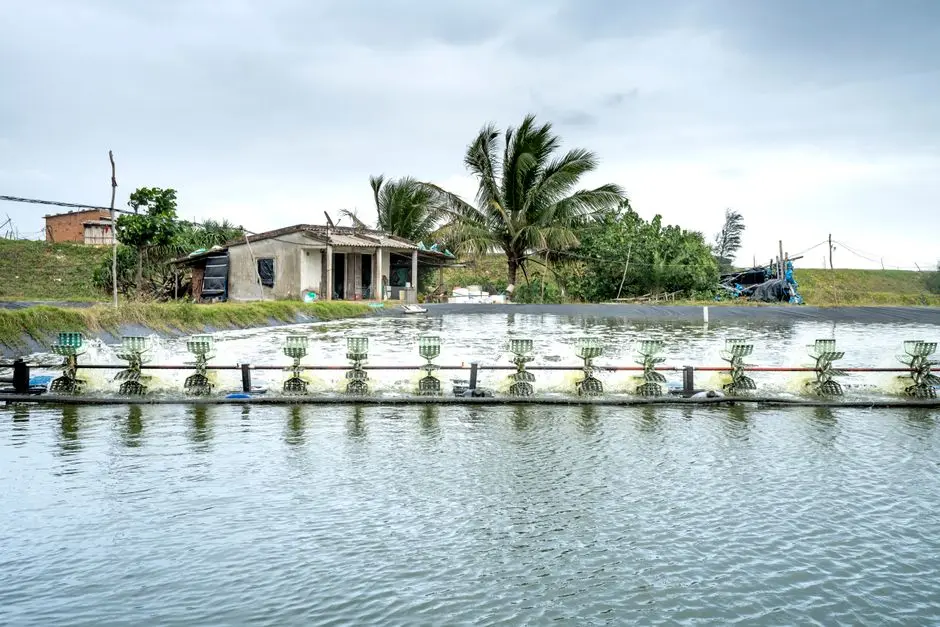
A packaged A/O unit and an MBR system should be compared as complete treatment trains, not as isolated products. The available catalog information establishes their stated scale and process configuration, while site data must establish whether either train meets the duty and compliance objective.
| Decision item | WSZ packaged A/O | MBR system |
|---|---|---|
| Stated catalog capacity | 1–80 m³/h | 10–2,000 m³/day |
| Core process | Integrated anoxic/aerobic A/O biological contact oxidation, sedimentation and disinfection | Integrated membrane bioreactor treatment with submerged PVDF filtration below 1 μm |
| Installation | Buried package arrangement | Configuration-dependent; civil requirements must be established by the supplier |
| Operation | Catalog states fully automated operation with no operator required | Controls, membrane maintenance and monitoring requirements must be defined |
| Module data | Not stated in the supplied research | Flat-sheet module options are listed with 0.1 μm pore size and 32–135 m³/day configurations |
| Residual solids | Sludge and solids removal route must be included in the design | Sludge and solids removal route must be included in the design |
| Local evidence and sampling | The São João/Navegantes study monitored 16 samples over eight months and reported coliform levels ranging from 3.6 × 10^4 to 4.4 × 10^7; these results are local evidence, not transferable project acceptance limits. | |
The buried WSZ configuration can reduce above-ground plant occupation, but excavation and installation risks remain. An MBR arrangement can offer fine solids separation, but its footprint, tankage, piping, aeration, controls and maintenance provisions must be compared at the complete-plant level. MBR performance cannot be assumed to be superior solely because the membrane specification is finer: the final effluent also depends on influent, biological process design, disinfection, controls and operating conditions.
The flat-sheet module information in the supplied MBR module catalog describes component capability, not the performance of an installed sewage treatment plant. For either technology, the tender should identify who owns the membrane, how cleaning and replacement are funded, and how excess sludge is removed, stored and disposed of. Automatic controls reduce routine attendance; they do not eliminate maintenance or environmental liability.
Sizing Treatment Around Verified Porto Alegre Inputs
Treatment capacity must be derived from the site's complete flow and load profile, including peak and minimum conditions. The published collection percentage and a supplier's maximum catalog capacity cannot substitute for project flow. A defensible design basis should combine metered flow data, a verified fixture and occupancy estimate, or another documented method that accounts for temporal variation and the intended connection status.
Wastewater characterization should include BOD, COD, suspended solids, pH and temperature. The data request should also identify grease, oils and industrial contaminants because domestic assumptions may not hold for hospitals, hotels, commercial kitchens, laboratories or mixed-use developments. Local sampling is appropriate where credible variation is expected; one spot sample should not be presented as a design basis without supporting data.
The applicable discharge destination, receiving-water conditions, reuse objective and current permit or regulatory requirements must be established before comparing bids. If the proposal discharges to Lake Guaíba, the receiving-water context identified in the 2024 review should be considered alongside the applicable authority's requirements. A reuse proposal needs its own source, treatment and operational controls rather than inheriting a generic discharge objective.
| Data package | Minimum information to request | Engineering use |
|---|---|---|
| Hydrology | Measured or defensibly derived hourly flow profile, peak flow, minimum flow and connected population or fixture basis | Match total duty and peak-management requirements |
| Wastewater | BOD, COD, suspended solids, pH, temperature, grease, oils and relevant industrial contaminants | Set biological load, pretreatment and membrane requirements |
| Compliance | Discharge destination, receiving-water conditions, reuse objective and applicable permit requirements | Define treatment objectives and acceptance values |
| Civil and site | Footprint, burial depth, groundwater, soil, maintenance access, power, odor control and solids-removal route | Confirm constructability and whole-life operating access |
| Equipment duty | Complete project flow and duty conditions | Check the WSZ 1–80 m³/h range or MBR 10–2,000 m³/day range; neither upper limit establishes suitability |
Flow equalization and peak management are explicit design questions, not details to leave to the package supplier. Variable raw-sewage flow can affect biological treatment, membrane operation, disinfection and hydraulic loading. The preliminary civil scope should also consider mechanical inlet screening where the waste profile and applicable treatment train justify it.
Plan Commissioning and Effluent Verification

Commissioning should test the completed train across operating conditions rather than close the project with a single effluent sample. The São João/Navegantes research provides a local monitoring precedent: the Brazilian Journal of Biology study used 16 samples—eight influent and eight effluent—over an eight-month survey and measured coliforms and enteric viruses. Its reported coliform range of 3.6 × 10^4 to 4.4 × 10^7 must not be converted into acceptance limits for another installation.
The commissioning protocol should define sampling points, operating loads, startup criteria, stabilization period, analytical methods and acceptance values. The protocol should also state how each parameter will be linked to the discharge permit or reuse specification. Microbial and physicochemical monitoring should cover the analytes required by that specification; evidence from one local study cannot supply missing project limits.
Handover documentation should cover operator training, alarm logic, local or remote controls, approved maintenance access, critical spares and support arrangements. A UV disinfection stage, if required, should be accepted through its specified operating and monitoring requirements rather than inferred from the presence of a disinfection component.
Automatic operation is a control strategy, not proof of regulatory compliance. Demonstrated performance, calibrated instruments, traceable records and a corrective-action process are what convert equipment installation into verified treatment.
A Practical Supplier Selection and Procurement Framework
Supplier comparison should proceed in five controlled stages so that each quotation answers the same technical questions. The process separates site definition from commercial selection and prevents maximum catalog capacity from substituting for project duty.
- Define the basis: establish sewer-access status, measured flow, wastewater characteristics, discharge or reuse objective, footprint and civil constraints.
- Issue one data set: send the same verified inputs to packaged A/O and MBR bidders so their proposals address the same duty.
- Require comparable submissions: obtain process flow diagrams, performance commitments, construction materials, controls, alarm strategy, O&M scope, spares, commissioning responsibilities and delivery programme.
- Compare lifecycle commitments: request separately priced O&M, consumables, energy assumptions, solids handling and replacement obligations; do not compare incomplete capital-price quotations.
- Make award conditional: tie acceptance to permit review, site-specific acceptance criteria and demonstrated performance.
The engineering comparison can draw on the structure used for packaged sewage treatment plant sizing for housing and regional packaged sewage treatment comparison, but Porto Alegre's own site data and receiving-water context must remain controlling.
Factory capability claims are inputs to verification, not substitutes for evidence. Ask bidders for local references, general-arrangement drawings, control narratives, test records, proposed sampling points and contractual performance obligations. If references or records are unavailable, treat that as an unresolved technical risk. Likewise, a supplier that cannot identify the solids-removal route or provide a complete commissioning protocol has not submitted a complete treatment offer.
| Stage | Buyer check | Decision output |
|---|---|---|
| Site definition | Verified flow, load, connection, effluent, footprint and civil data | Comparable basis of design |
| Technical proposals | Same process duty, guarantees, drawings, controls and solids route | Shortlisted configurations |
| Commercial comparison | Priced O&M, consumables, energy, replacements and commissioning | Comparable lifecycle commitments |
| Risk review | Permit, references, test records, site constraints and acceptance protocol | Documented technical risks |
| Award | Conditional performance demonstration and site acceptance criteria | Contractual acceptance basis |
Frequently Asked Questions
How should domestic sewage treatment in Porto Alegre be sized for a development?
Size it from the site's measured or defensibly derived hourly flow profile, wastewater loads and complete duty conditions, then check the selected equipment against peak and minimum flows. The WSZ catalog range of 1–80 m³/h and the MBR range of 10–2,000 m³/day are comparison inputs, not automatic selections. Obtain flow and characterization data before requesting a final capacity statement.
Should a Porto Alegre site choose packaged A/O treatment or an MBR?
Choose packaged A/O when the verified duty, footprint, civil conditions and effluent objective support that process train. Review an MBR when the required solids separation, reuse objective or discharge specification justifies it and the supplier demonstrates the complete arrangement. Compare final treatment trains, controls, maintenance and solids handling rather than choosing on membrane pore size alone.
What should the procurement price comparison include?
Require each bidder to price the same supply and responsibility scope, including equipment, civil interfaces, installation inputs, commissioning, operator training, O&M, energy assumptions, consumables, solids removal and replacement obligations. The supplied research contains no comparable project quotation, so request a priced schedule from each bidder and do not infer a capital cost from citywide sanitation percentages.
Which supplier and compliance risks should be checked before award?
Require permit review, site-specific acceptance criteria, a commissioning and sampling protocol, and contractual performance obligations. Check local references, drawings, test records, alarm strategy, maintenance access and the sludge route before selection. If the bidder cannot demonstrate effluent performance or define solids handling, the compliance risk remains unresolved even if the proposed plant is fully automated.
Related Equipment
- buried WSZ package sewage treatment plant — specifications, capacity range, and technical data