Which Treatment Fits a Gainesville Food and Beverage Plant?
For food and beverage wastewater in Gainesville, select MBR when land is constrained, low suspended-solids effluent or reuse is important, and pretreatment can control membrane fouling. Conventional activated sludge is usually the stronger candidate when space is available, the wastewater envelope is manageable, and an existing system has useful remaining life. A membrane bioreactor combines activated-sludge biology with membrane separation; conventional activated sludge separates biomass in a secondary clarifier. The final choice should follow stream-specific characterization, a defined water-quality endpoint, and a Gainesville site-wide life-cycle review—not equipment price alone.
Start by separating three decisions: whether the wastewater is biologically suitable, whether pretreatment can protect the selected process, and whether the site needs the solids-separation performance associated with MBR. A plant with ample land, an effective clarifier-based installation and no compelling reuse driver may obtain more value from rehabilitation or added polishing than from wholesale conversion.
Conversely, an MBR becomes more defensible when a defined reuse endpoint cannot tolerate suspended solids, the available footprint is limited, or the facility needs a compact solids-separation step. That case still depends on reliable operations: fats, oils, grease, fibers and suspended material must be addressed before they impair the membrane.
For preliminary planning, review the discharge permit, reuse standard, footprint, power and labor costs, operator capability, sludge route and production outlook together. The MBR cost-per-m³ guide provides a useful framework, but any local comparison still needs a vendor-specific design basis.
Start with the Wastewater Streams, Not the Treatment Name
A food-processing or beverage plant can send materially different wastewater streams to the same final treatment train, so stream segregation should precede equipment selection. A single compliance sample may not represent the hydraulic, organic, solids or fouling envelope that the system must handle across production, cleaning and shutdown periods.
| Stream to characterize | Design issue | Information needed before selecting treatment |
|---|---|---|
| Sanitary wastewater | Hydraulic and biological loading; possible reuse fit | Daily flow, peak flow, production-linked variation and reuse endpoint |
| Food-processing washdown | Suspended solids, cleaners and variable organic loading | Solids, conductivity, pH, cleaning chemicals and discharge schedule |
| High-strength production wastewater | Organic shock and equalization requirements | Batch strength, volume, production frequency and segregation options |
| Cooling or washwater | Dilution effects and flow variability | Temperature, flow profile, chemicals and potential reuse demand |
| FOG- or solids-bearing waste | Membrane fouling and downstream sludge burden | Oil and grease, settleable solids, fibrous material and pretreatment response |
Representative sampling should cover operating days, cleaning cycles, concentrated production discharges and low-production periods. Mixing sanitary and production flows before characterization can dilute a concentrated stream, conceal its peak load and produce an invalid hydraulic or biological design.
For streams that contain removable oil, grease and solids, the DAF pretreatment machine is documented as suitable for food-processing applications and for removing suspended solids, FOG, oil and grease. That makes it relevant to pretreatment design, not a replacement for biological treatment or MBR.
For sanitary reuse or sensitive receiving-water applications, define the pathogen barrier and polishing sequence during preliminary design. An academic source from the Agence Bibliographique de l’Enseignement Supérieur describes MBR as an approach used to improve treated-water hygiene where discharge requirements are stricter or reuse is intended.
How the Two Treatment Trains Work
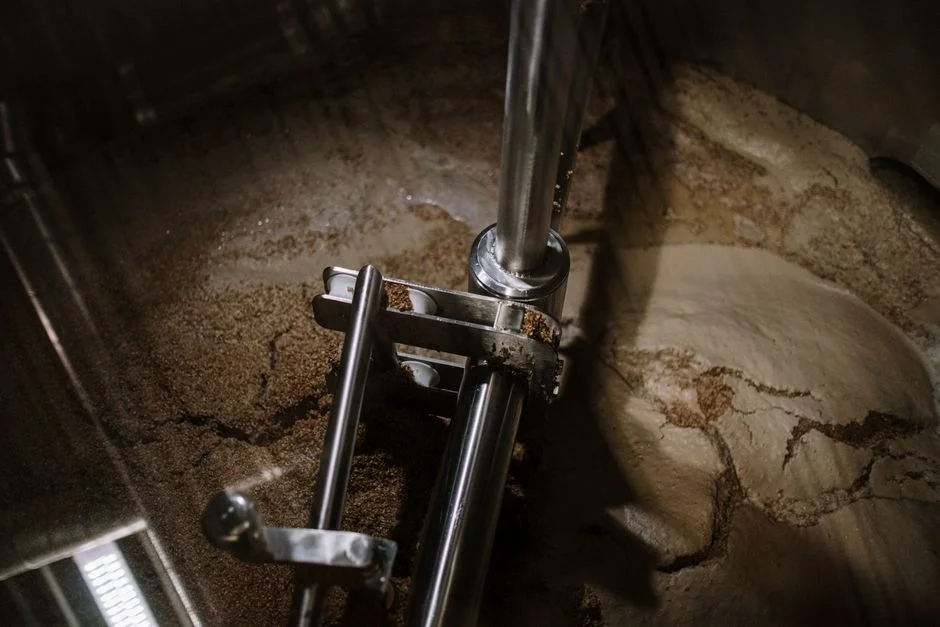
Conventional activated sludge uses aeration to grow microorganisms that remove biodegradable material, followed by a secondary clarifier to separate much of the biomass from the treated water. An MBR retains biomass in the biological reactor and uses submerged or external membranes to filter the mixed liquor, combining biological treatment and solids separation.
| Stage | Conventional activated sludge | MBR |
|---|---|---|
| Equalization and screening | Controls hydraulic variation and removes coarse material | Serves the same basic functions; equalization must also suit membrane hydraulic and fouling controls |
| Stream-specific pretreatment | May be required to protect biology and clarifyers | Particularly important for FOG, fibers, suspended solids and other foulants |
| Biological treatment | Organisms remove biodegradable material in an aerated basin | The biological reactor also feeds membrane separation |
| Solids separation | Secondary clarifier settles biomass | Membrane retains biomass and produces filtered permeate |
| Nutrient or polishing treatment | Added when required by the water-quality basis | May still be required; MBR does not replace every polishing step |
| Disinfection | Applied where the design basis requires it | Applied where required; reuse objectives may also require additional barriers |
For food and beverage production, the engineering sequence is equalization and screening, stream-specific pretreatment where needed, biological treatment, solids separation, any required nutrient or polishing stage, and disinfection where required. The exact sequence depends on the receiving authority’s applicable requirements and the intended reuse endpoint.
Membrane fouling is the central process risk to test during design. Fats, oils, grease, fibrous material, suspended solids and biological solids can deposit on or block membrane surfaces, so pretreatment and operating controls must be based on measured wastewater characteristics rather than a generic food-processing assumption.
A peer-reviewed Elsevier study titled “Fate and distribution of pharmaceuticals in wastewater and sewage sludge of the conventional activated sludge and membrane bioreactor treatment” compares CAS and MBR treatment of pharmaceutical constituents in wastewater and sludge. The supplied research record confirms the study scope but provides no extractable numerical results, so it supports the comparison topic rather than a quantified performance claim.
MBR Versus Conventional Activated Sludge for Food and Beverage Wastewater
MBR’s principal engineering advantage is that membrane separation replaces the secondary clarifier while retaining biomass in the biological system; the trade-off is a new membrane, pumping or scouring, cleaning and eventual replacement burden. Conventional activated sludge remains appropriate when the existing clarifier-based train is hydraulically adequate, land is available and the wastewater can be managed without membrane-sensitive contaminants.
| Selection parameter | Conventional activated sludge | MBR |
|---|---|---|
| Biological treatment | Aerated activated sludge | Activated sludge coupled to membrane separation |
| Solids separation | Secondary clarifier | Submerged or external membrane module |
| Footprint | Requires aeration, clarification and associated hydraulic infrastructure | Can be more compact, subject to site layout and the selected comparison basis |
| Effluent clarity | Depends on clarification and downstream treatment | Membrane separation provides the product-specific filtration described below |
| Reuse potential | May require additional filtration or disinfection | Potentially useful for reuse, but the final endpoint still determines required polishing |
| Maintenance | Clarifier, aeration, pumps and sludge-system maintenance | Adds membrane condition monitoring, cleaning and replacement planning |
| Operator demand | Established process with conventional equipment | Requires membrane-system controls and operator competency |
| Hydraulic flexibility | May accommodate variation with adequate equalization and basin capacity | Must be designed for peak flow, flux behavior and fouling control |
| Residual life | Rehabilitation may preserve valuable existing assets | Conversion requires space, capital and a new membrane-management plan |
Product-specific evidence should be kept separate from general technology claims. The HydropureWater verified product catalog states that the integrated submerged-PVDF MBR system combines activated-sludge treatment with submerged PVDF membrane filtration, provides filtration below 1 μm and is offered from 10 to 2,000 m³/day. The same catalog lists a footprint 60% smaller than conventional systems. That figure is a manufacturer-listed comparison, and actual savings depend on the site layout, aeration arrangement, hydraulic profile and comparison basis.
The DF-series flat-sheet MBR modules are not interchangeable with the integrated submerged-PVDF configuration for every project. The catalog lists a 0.1 μm pore size, membrane areas of 80–225 m² and module output of 32–135 m³/day. Selection must compare available footprint, module replacement method, scouring approach and project flow rather than treating both as one MBR package.
The supplied research does not support a universal energy saving, lower operating cost, pathogen-removal percentage or automatic regulatory advantage. Those claims require a defined design basis and project-specific evidence.
Match the Technology to the Operating Case
The operating case should determine the direction of the comparison before the buyer compares equipment layouts or quotations. Use this sequence:
- Determine whether each stream is biologically suitable and whether equalization, segregation, FOG control or another pretreatment step is necessary.
- Define the discharge or reuse endpoint, available footprint, operator capability, lifecycle cost and continuity requirements.
- Compare MBR and conventional activated sludge against that documented basis.
| Operating case | Initial direction | Conditions that must be resolved |
|---|---|---|
| Constrained land | MBR merits priority review | Confirm the actual footprint saving after including equalization, pretreatment, aeration and sludge handling |
| Defined water reuse | MBR merits priority review, subject to the endpoint | Specify whether ultrafiltration, reverse osmosis, ultraviolet treatment or other barriers are required; evaluate UF water-treatment systems and RO/UF membrane elements where applicable |
| Stable, low-complexity discharge | Conventional activated sludge may be more practical | Verify permit requirements, remaining asset life, sludge handling and life-cycle cost |
| Variable, high-strength production wastewater | Neither technology should be selected before pretreatment is resolved | Equalization, segregation, FOG control and DAF pretreatment may be necessary before biological treatment |
A plant with ample land, an effective existing activated-sludge system and no compelling reuse driver should compare rehabilitation against MBR conversion. The existing system’s remaining aeration, clarifier, pumping, controls and sludge-handling condition may preserve more value than replacing the entire treatment train.
A reuse objective can justify MBR, but “reuse” is not a water-quality specification. Define the required endpoint, then determine whether MBR permeate alone is acceptable or additional treatment is needed. Likewise, variable production waste can overload equalization, foul membranes or upset biological treatment; pretreatment must address the cause rather than merely increase downstream capacity.
Build a Gainesville Cost and Compliance Case
The supplied research contains no defensible MBR-versus-CAS equipment price, cost per cubic metre or return-on-investment calculation for a Gainesville food or beverage facility. A defensible comparison therefore requires a vendor-specific proposal built from the site’s actual design inputs, not a generic price multiple.
| Required input | Why it affects the decision | Supplier response required |
|---|---|---|
| Wastewater characterization | Defines biological loading and fouling risk | State the influent envelope and pretreatment assumptions |
| Design and peak flow | Sets hydraulic and biological capacity | Show how equalization and peak loading are handled |
| Effluent or reuse target | Determines polishing and disinfection scope | Provide a complete treatment train tied to the endpoint |
| Permit limits | Defines applicable discharge obligations | Identify permit conditions and compliance responsibilities |
| Footprint and site layout | Tests the claimed MBR space advantage | Provide dimensions, elevations and installation requirements |
| Power, labor and disposal route | Drives life-cycle operating cost | Quantify consumption, staffing assumptions and sludge handling |
| Production outlook | Tests future hydraulic and organic load | State design margins and expansion provisions |
| Replacement and outage strategy | Addresses membrane and continuity risk | Provide the replacement basis, spares and contingency plan |
Compare lifecycle workstreams rather than equipment price alone: pretreatment, installation, aeration, membrane scouring or pumping, chemicals, cleaning, operator time, sludge handling, downtime and eventual membrane replacement. The industrial wastewater compliance and process-design framework illustrates why project-specific operating and treatment objectives belong in the commercial comparison.
During preliminary design, verify applicable Florida discharge or reuse requirements with the receiving authority and local utility. The supplied sources do not establish a universal numeric permit limit for a Gainesville food or beverage facility. Avoid letting a supplier substitute general literature for the permit or reuse decision that actually governs the project.
Continuity planning belongs in the same review. Document how an MBR module, feed pump or control-system outage will be managed without compromising discharge obligations, and whether temporary operation, standby equipment or an alternate treatment route is required.
Procurement Checklist for a Food and Beverage MBR Decision
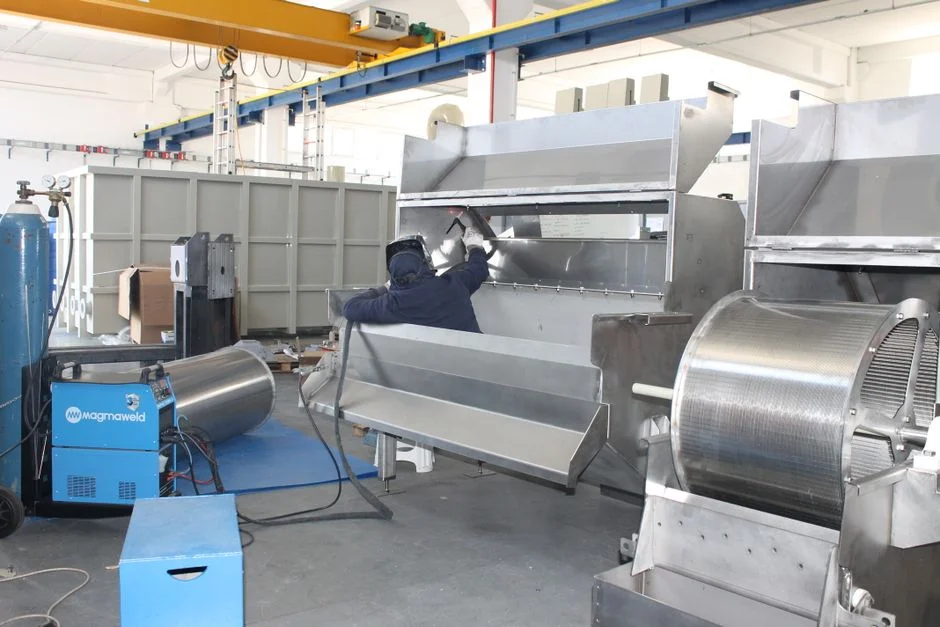
A complete specification should define the treatment obligation and assign responsibilities before comparing supplier quotations. The design basis must tie equipment performance to the measured wastewater envelope, hydraulic profile and reuse target.
| Procurement area | Require the supplier to state | Buyer check before award |
|---|---|---|
| Design basis | Influent envelope, design and peak flow, effluent or reuse target | No critical assumption depends on an untested average |
| Treatment train | Screening, equalization, pretreatment, biology, solids separation, polishing, disinfection and sludge handling | Scope includes all interfaces rather than an isolated membrane package |
| Membrane system | Material, pore size, module arrangement, aeration, controls and performance obligations | Configuration matches site hydraulics and pretreatment |
| DF versus integrated MBR | Footprint, hydraulic profile, replacement method, scouring and project output | Compare like-for-like under the same design flow |
| Operations | Monitoring, cleaning intervals, training, diagnostics, local support and response times | Gainsville operators can maintain and diagnose the system |
| Spares and consumables | Availability, lead time, compatibility and replacement basis | Critical parts and long-term consumables have a support plan |
| Chemical dosing | Duty, controls, maintenance and integration | Assess an automatic chemical-dosing system against the selected pretreatment or polishing requirements |
| Acceptance | Documented test method, guarantee conditions and exclusions | Responsibility for pretreatment, guarantees and consumables is explicit |
Ask each bidder to explain membrane-cleaning frequency assumptions, replacement strategy, spare-parts availability, operator training, remote diagnostics, local service coverage and response times. These are not administrative details: they determine whether the operator can protect the fouling-sensitive separation step.
Evaluate the integrated submerged-PVDF MBR system and the DF-series flat-sheet MBR modules independently against project flow, available footprint, module replacement method and scouring approach. Do not allow a higher-flow configuration to substitute for a documented fit.
Finally, tie acceptance criteria to the documented wastewater and reuse basis. Identify which party owns pretreatment performance, membrane cleaning, membrane replacement, controls integration and downstream polishing. That division of responsibility should be visible in the purchase order, not left to commercial assumptions.
Frequently Asked Questions
Is MBR better for food and beverage wastewater in a Gainesville plant?
MBR is the stronger candidate when the plant has limited land, needs a low-suspended-solids effluent or has a defined reuse objective that membrane separation supports. It is not automatically the better choice. Variable high-strength production flows, FOG or fibrous material can require equalization, segregation and pretreatment before either biological system. The final decision should consider reuse endpoint, footprint, operator capability, fouling control and life-cycle cost.
Is conventional activated sludge cheaper than MBR?
Conventional activated sludge may cost less when an existing aeration and secondary-clarifier system has useful life and the site has enough space, but the supplied research supports no universal price conclusion. Compare aeration, clarifier and sludge equipment, pretreatment, labor, maintenance, chemical use, downtime and residual life. Request a vendor-specific lifecycle quotation using the plant’s measured flow, wastewater envelope, power and labor rates; do not insert a generic MBR price.
How should an MBR be sized for a food or beverage facility?
Size from design flow, peak flow, the full wastewater envelope, pretreatment assumptions and the required reuse quality—not from one average daily flow. Include production and cleaning cycles, equalization behavior and future production changes in the hydraulic basis. If the treatment includes ultrafiltration or reverse osmosis, define those stages separately so membrane and polishing capacities remain aligned with the intended endpoint.
Which pretreatment matters most before MBR?
FOG, suspended solids and fibrous material require priority review because they can foul membranes and interfere with biological performance. DAF is relevant to suitable high-FOG food-processing streams because the HydropureWater catalog documents suspended-solids, FOG, oil and grease removal. However, DAF is pretreatment rather than the biological or membrane stage. Select it only after testing the actual stream and defining the downstream fouling-control basis.
Does MBR effluent automatically qualify for wastewater reuse?
No. Reuse depends on the required endpoint and applicable receiving requirements. MBR can provide the solids-separation stage, but a reuse program may still require additional filtration, disinfection, reverse osmosis or other barriers. Define the water-quality specification first, then size the UF water-treatment system or other polishing equipment needed to meet it.