What an Industrial Effluent Treatment Plant Must Achieve
An effluent treatment plant in Recife is an industrial system that treats process wastewater before discharge to a receiving body or sewer, or before reuse. The right design starts with characterization of flow, pH, suspended solids, oil and grease, nutrients, metals and other process-specific contaminants, followed by equalization, physical separation, biological or chemical treatment, clarification and disinfection where required. DAF is suitable for suspended solids, oil, grease and colloidal matter; MBR combines activated sludge with membrane filtration for compact biological treatment; UF can polish water without chemical cleaning. Final equipment selection depends on the discharge destination, reuse target, effluent variability and the limits issued by the competent authority and receiving utility.
Industrial effluent is wastewater generated by industrial or commercial premises rather than domestic sewage. Wastewater Digest notes that it may flow to a sewer and cannot enter receiving waters without suitable treatment. The practical consequence is that an industrial ETP has no single “finished water” specification until the discharge route is fixed.
For a sewer-connection project, the receiving utility’s connection rules, prohibited discharges and pretreatment requirements define the evidence needed. For direct discharge, the current permit and conditions applicable to the receiving body govern the acceptance limits. For internal reuse, the end use determines whether the objective is process-water quality, cooling, washing or a more demanding application. The regional ETP planning guide provides a useful starting framework, but Recife-specific requirements still have to be confirmed.
Request a characterization package covering hourly and daily flow ranges, pH, suspended solids, oil and grease, BOD or COD, nutrients, metals, color, temperature and contaminants specific to the production process. Include production and washdown schedules, because an average flow can conceal a short high-strength discharge.
Organize the proposed treatment using three functional families: physical, chemical and biological processes, as classified in the research by Asiwal and colleagues in the International Journal of Civil Engineering, 2016. Physical processes remove or recover solids and floatables; chemical processes support precipitation, oxidation or pH control; biological processes address biodegradable organics. A demonstrator should prove the final performance against the applicable permit or receiving-utility criteria—not against a generic description of an ETP.
Map the Recife ETP from Inlet to Effluent
A complete industrial treatment train should trace the wastewater through eight connected functions: characterization, screening and protection, equalization, physical or primary treatment, biological or chemical treatment, clarification, polishing, disinfection where required, and sludge handling.
- Characterize and sample the inlet. Establish the flow, pollutant loads and variability that each subsequent stage must handle.
- Screen and protect the plant. Remove rags, plastics, fibrous debris and other solids before pumps, membranes or aeration equipment.
- Equalize flow and load. Blend variable discharges before treatment so subsequent units receive a more stable duty.
- Apply physical or primary treatment. Recover free oil, floatable material and suspended solids where required by the effluent profile.
- Remove biodegradable or chemically reactive pollutants. Select biological treatment, chemical precipitation or oxidation according to the contaminant and the reuse or discharge objective.
- Clarify and polish. Separate residual solids and, where needed, apply a membrane barrier to prepare the final effluent.
- Disinfect if required. Tie disinfection to the permit, receiving utility or intended reuse rather than adding it by default.
- Manage sludge. Include thickening, dewatering, storage and disposal in the treatment scope.
The GX rotary mechanical bar screen is suited to continuous-duty fine screening of municipal and industrial wastewater, including solids, rags, plastics and fibrous debris. It belongs at the headworks where reliable protection of downstream equipment is required.
Position an industrial DAF system after equalization when the wastewater contains suspended solids, FOG, oil and grease or colloidal material. The supplied DAF catalog covers 4–300 m³/h across 13 models. This is an equipment-selection range, not a substitute for sizing against the measured flow and contaminant loading.
An MBR membrane bioreactor combines biological treatment with membrane separation of solids. Ultrafiltration is a membrane barrier for bacteria, colloids and suspended solids; it does not by itself establish the removal of dissolved contaminants. Both technologies must sit within a defined process train, with sludge dewatering and disposal included through equipment such as the plate and frame filter press.
| Process stage | Primary function | Engineering evidence to obtain |
|---|---|---|
| Inlet characterization | Define flow, loads and variability | Hourly and daily flow records; representative analytical data |
| Screening and protection | Remove debris and protect equipment | Screen duty, solids loading and extracted-material disposal route |
| Equalization | Stabilize hydraulic and organic load | Working volume, mixing method and operating control |
| Physical treatment | Remove floatables, oils and suspended solids | DAF or clarification performance against measured oil, FOG and solids |
| Biological or chemical treatment | Remove biodegradable or chemically reactive pollutants | Reaction basis, loading, controls and residual-sludge production |
| Clarification and polishing | Separate solids and meet the selected reuse or discharge quality | Solids separation and membrane or filtration performance |
| Disinfection and sludge handling | Protect the receiving pathway and manage residuals | Disinfection basis, sludge yield, dewatering route and disposal documentation |
Choose a Treatment Train for the Actual Effluent
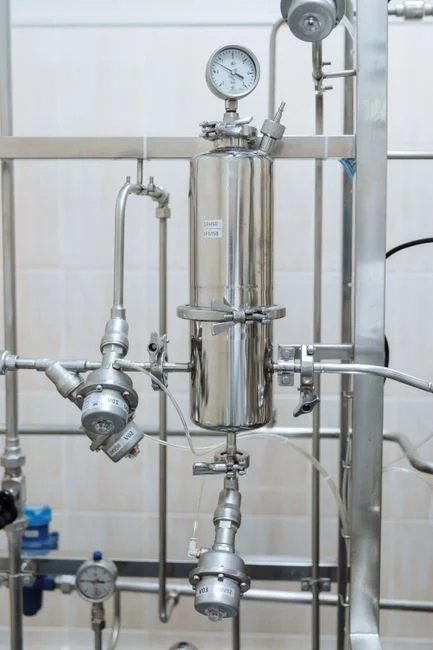
Equipment selection should follow the contaminants and final-use objective: DAF for floatable and colloidal material, MBR for compact biological treatment with membrane solids separation, UF for defined polishing duties, and packaged biological treatment for decentralized sanitary sewage.
| When the effluent contains or the project requires | Evaluate | Published basis | Decision limitation |
|---|---|---|---|
| Oil, grease, floatable solids or colloidal material | DAF flotation system against clarification | 4–300 m³/h across 13 models, according to the supplied DAF catalog | Choose between them using measured contaminant characteristics and the required effluent quality |
| Biologically treatable process wastewater where compact installation and membrane-separated solids matter | MBR membrane bioreactor against conventional activated sludge | 10–2,000 m³/day capacity and filtration below 1 μm, according to the supplied MBR catalog | The MBR versus activated sludge comparison should be adapted to the actual effluent and site constraints |
| Polishing or reverse-osmosis pretreatment | UF water treatment system | 2,000–40,000 L/h flow range, 0.03-micron PVDF membranes, 300 ppm turbidity limit, automatic backwash and air scour, according to the supplied UF catalog | Verify feed-water chemistry and the next process step; UF is not a universal dissolved-contaminant removal process |
| Decentralized sanitary sewage associated with a factory, hotel, hospital or residential development | WSZ underground integrated sewage treatment unit | 1–80 m³/h, according to the supplied WSZ catalog | The package combines A/O contact oxidation, sedimentation and disinfection in one buried unit; industrial process wastewater should not be assumed to fit that basis |
DAF is the stronger candidate when the primary separation problem is oil, grease, floatable material or colloidal solids. Clarification remains relevant where the required duty is conventional settling and the engineering basis supports it. Neither should be selected from flow alone; solids capture, oil recovery, chemical demand and residual-sludge handling determine the practical outcome.
MBR is appropriate where biodegradable wastewater requires biological treatment, a compact installation is valuable and membrane-separated solids simplify the downstream solids boundary. Conventional activated sludge may offer a different balance where footprint, operators, aeration and sludge handling favor a simpler biological system. Confirm whether the wastewater is biologically treatable and identify inhibitory compounds before selecting either route.
UF has a defined polishing role. Schrader’s University of Twente thesis, Direct nanofiltration of wastewater treatment plant effluent, identifies nanofiltration as a technique for polishing wastewater-treatment-plant effluent and supporting reuse applications. That finding does not establish that nanofiltration alone is sufficient for a given Recife effluent, nor does it replace project-specific feed and product analysis.
Build a Sizing and Compliance Brief
Equipment capacity cannot be selected from catalog range alone: peak, average and minimum flow, pollutant loading and operating conditions must define the design basis.
Give prospective suppliers the same engineering brief. It should include peak, average and minimum flow; hydraulic and organic loading; production and discharge schedules; available footprint; electrical, air, water and chemical constraints; and any prohibited upstream materials. Require a pollutant mass balance and a process train showing where each removal step occurs. This converts an equipment selection into an auditable treatment design.
The discharge path must be explicit. A municipal sewer connection, direct discharge to a receiving body and internal reuse require different evidence packages. The supplied research does not establish current Recife-specific numerical limits, so the buyer should obtain the current permit, receiving-utility rules and any sector-specific conditions rather than infer them from generic treatment benchmarks.
The legal review should include Brazil’s Lei nº 9.433/1997, establishing the National Water Resources Policy; Lei nº 357/2005 on water-body classification and environmental guidelines; and the supplied citation for Lei nº 4.301/2011. These references provide legal context but do not replace project-specific permit analysis. The supplied research also points to CONAMA’s national provisions on effluent-discharge conditions, which should be checked against the current regulatory framework and local authority requirements.
| Brief item | Information the buyer must provide or obtain | Evidence expected from the supplier |
|---|---|---|
| Design basis | Peak, average and minimum flow; hydraulic and organic loading; operating schedule | Equipment selection and duty point tied to the stated basis |
| Pollutant mass balance | Representative inlet analysis and removal objectives | Inlet-to-outlet loading calculation for each process step |
| Compliance route | Current permit or receiving-utility requirement for sewer, receiving water or reuse | Performance schedule, monitoring points and test method |
| Physical scope | Footprint, utilities, civil interfaces and pretreatment constraints | General arrangement, utility demand and battery limits |
| Residuals and lifecycle | Sludge destination, maintenance access and operating philosophy | Sludge yield, chemical consumption, automation, spares, warranty and service plan |
Use general performance context carefully. Wastewater Digest reports, citing USGS, that primary treatment removes about 60% of suspended solids and secondary treatment removes more than 90%. These are contextual benchmarks, not acceptance guarantees for a Recife industrial ETP. For the more detailed spray-painting wastewater basis, see the 2026 spray-painting wastewater process guide, but do not transfer its sector assumptions to another factory.
Evaluate Costs, Suppliers and Delivery Risk
The supplied research does not establish a reliable 2026 cost for an industrial ETP in Recife, so any defensible budget must be built from site-specific flow, analysis, treatment objectives and installed scope.
Compare quotations as total installed systems, not as equipment prices alone. The commercial boundary should address civil works; membranes; pumps; aeration; controls; chemical storage; sludge handling; commissioning; training; and warranty. Ask each supplier to identify what is included, what is excluded, which performance data support the proposed duty, and which party owns each interface. That avoids comparing a bare machine with a complete operating plant.
For a sludge-heavy process, include dewatering in the commercial and lifecycle comparison. The supplied plate and frame filter press range extends from 1 m² to 500 m² of filtration area, with manual, hydraulic or automatic PLC operation. Use the filter-press configuration and automation options as a scope question, not as proof that a particular unit fits the project. For deeper dewatering comparisons, use the 2026 screw-press capacity and sizing guide.
Supplier risk should be assessed through membrane replacement or cleaning provisions, local service availability, critical spare parts, control-system documentation, operator training and the named party responsible for performance deficiencies. An industrial ETP versus DAF decision guide can help structure technical questions, but the project outcome still depends on the local effluent and permit basis.
Require lead time, commissioning duration and permit-interface activities to be stated as contractual deliverables. The supplied evidence does not support universal delivery timelines for Recife, so suppliers should confirm them against the approved scope. For an installed plant, an optimistic equipment delivery date is less useful than a dated plan covering fabrication, civil interfaces, utilities, installation, testing, operator handover and permit-related demonstrations.
Frequently Asked Questions
How much does an industrial ETP cost in Recife?
No reliable 2026 Recife price can be quoted from the supplied research because flow, contaminant loading, treatment objectives, civil works and utilities are project-specific. Request itemized quotations for the complete treatment train, including equipment, membranes, controls, sludge handling, commissioning, training and warranty; compare those quotations using the same scope boundary.
How should an ETP supplier be selected?
Require a complete treatment train, a stated performance basis, an exclusion list, a commissioning plan and a lifecycle-support commitment. Check that the proposed duty matches the measured flow and pollutant loading and that the supplier identifies membrane replacement or cleaning, local service support and critical spare parts.
What determines ETP sizing?
Flow and contaminant loading determine the design, not catalog capacity alone. Provide peak, average and minimum flow, hydraulic and organic loading, operating schedule and production variation so suppliers can size equalization, treatment, clarification, polishing and sludge handling against defined duty conditions.
Which compliance requirements apply to the final effluent?
Requirements depend on the discharge path. A sewer connection is governed by the receiving utility’s current rules, direct discharge by the applicable permit and receiving-body conditions, and internal reuse by the intended use. General treatment principles and benchmark removal rates do not replace project-specific effluent limits and monitoring requirements.
Related Equipment
- industrial DAF system — specifications, capacity range, and technical data